Decades of limbs over ranch roofs along Wade Hampton
Drive the side streets off US 29 (Wade Hampton Boulevard) in Taylors and the pattern repeats: a low, wide ranch house from an earlier era, and a hardwood or pine planted when the house was new that is now far taller than the roofline. The limbs that reach over the shingles have been there for decades. They drop leaves into valleys, rub granules off the surface in every breeze, and keep the roof damp long after the sun should have dried it.
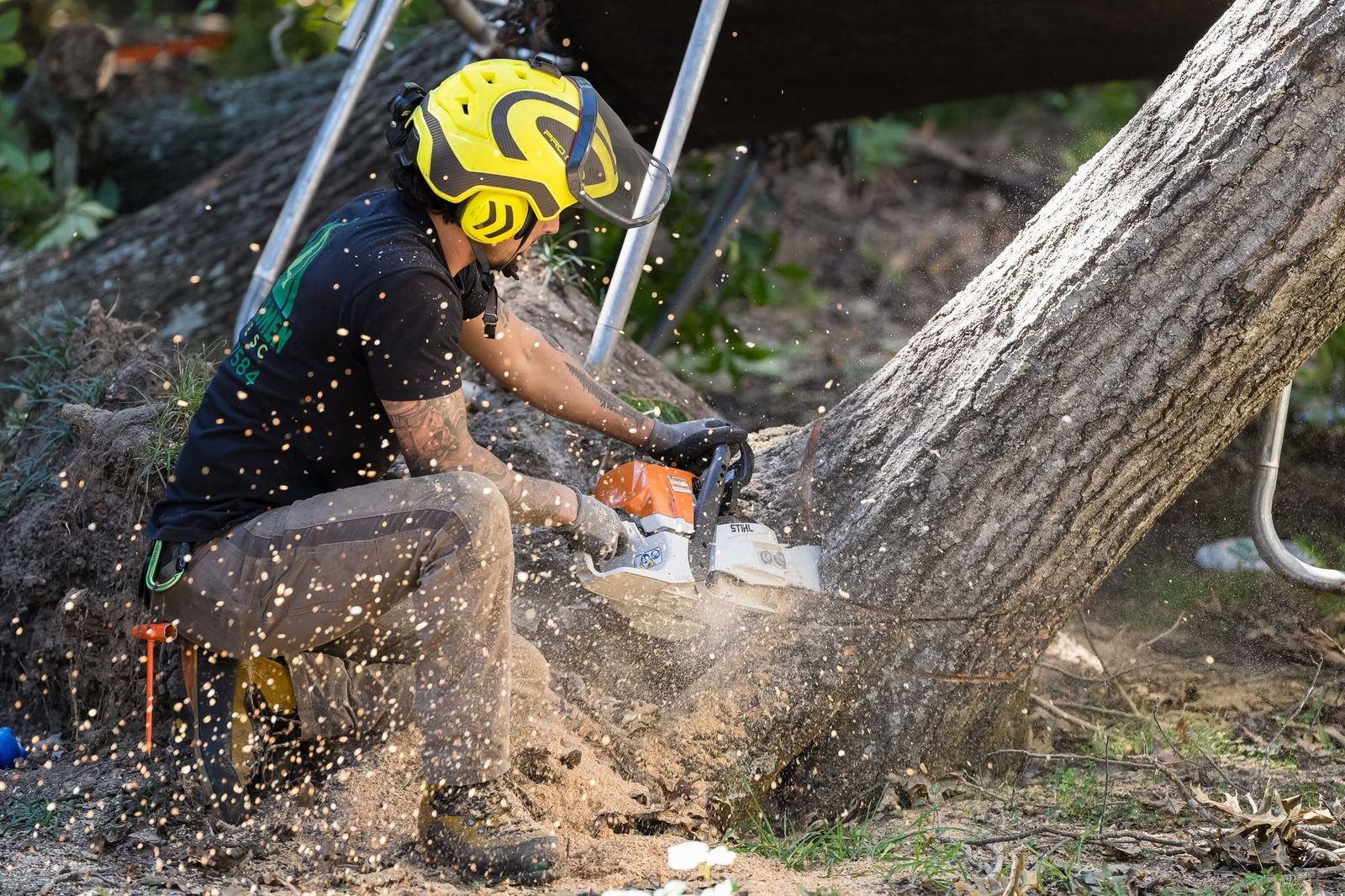
The instinct is to cut the tree back hard. Resist it. Topping, meaning chopping main leaders to stubs, leaves wounds that decay and triggers a thicket of weak sprouts that grow back faster than the original limbs. Proper roof clearance means removing specific overhanging branches back to a healthy parent limb or the trunk, then thinning selectively so the crown keeps its shape. The ISA's Trees Are Good guidance on pruning explains why cuts at the branch collar heal and stubs do not. For the full scope of what a trim covers, see our tree trimming overview.
What a trim costs when the tree is over your house
Around Taylors, typical tree trimming runs $250 to $900 per tree. Where a given job lands depends on height, how much crown has to come off, and what is underneath. Work above a roof costs more because every cut piece has to be lowered or rigged instead of dropped. The ranges below are typical Upstate SC figures, not a quote. Tree Wisemen prices every job after a free estimate. The wider breakdown is on our tree trimming cost page.
| Scope | Typical range |
|---|---|
| Deadwood removal and light cleanup, small to mid-size tree | $250 to $400 |
| Roof and gutter clearance cuts, mid-size tree | $350 to $650 |
| Selective crown thinning on a mature hardwood | $450 to $800 |
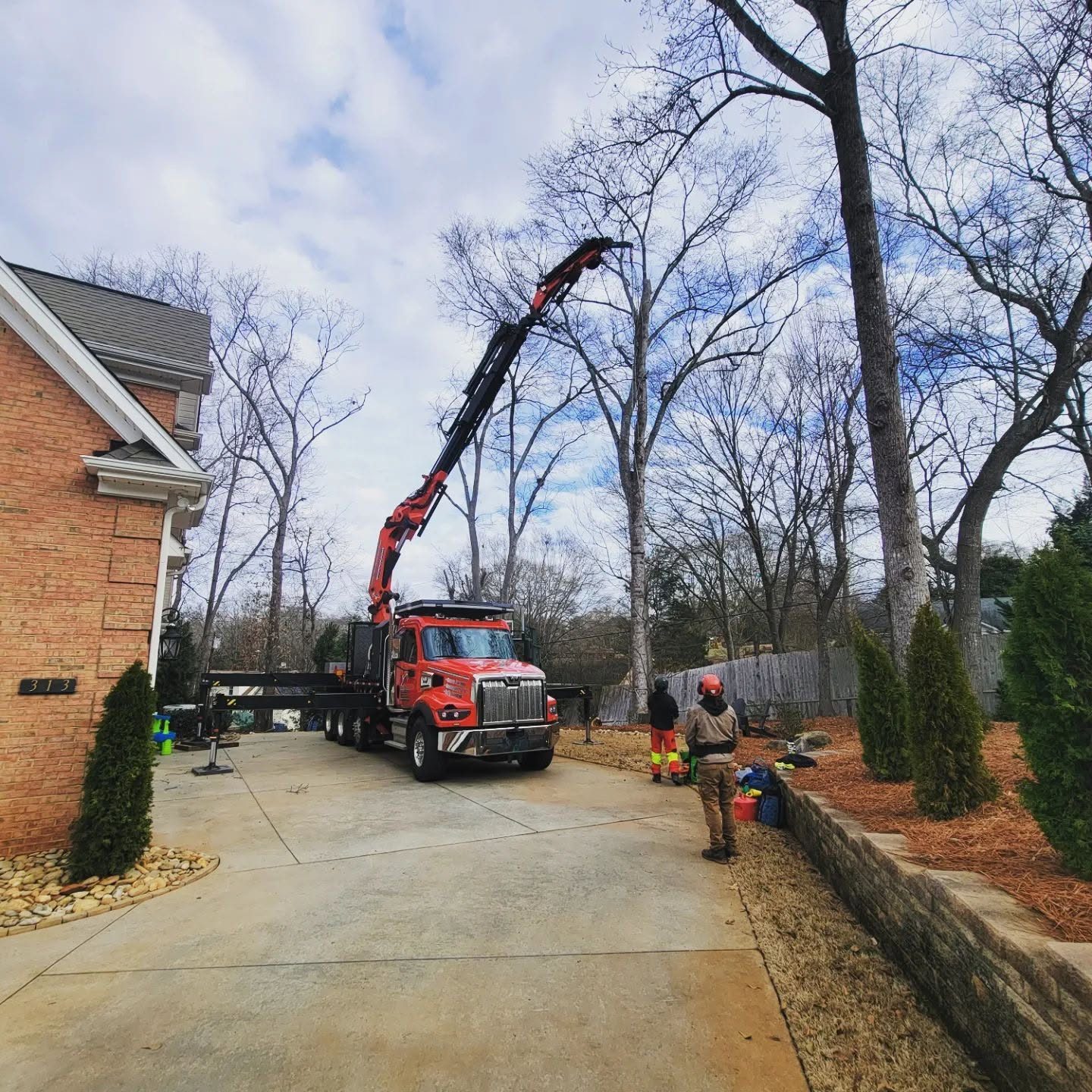
| Tall tree over a roof, requiring rigging or crane work | $600 to $900 |
A job near the top of the band is usually a tall tree over a roof or lines. If a bid for that same work looks far below the band, ask what is being skipped, such as cleanup, chipping, or the limbs that actually touch the roof.
Getting clearance without hurting the tree
A good roof-clearance trim is planned from the ground before anyone climbs. The crew picks which limbs touch or will touch the roof within a few seasons, then traces each back to a sound union. A common working target is several feet of open air between the crown and the shingles, which also keeps wind-whipped twigs off the surface. Not every limb that overhangs needs to go. Taking out one or two large, low limbs often does more than twenty small cuts, and it leaves the tree's food-making canopy intact.
Some trees are poor candidates. If a trunk leans hard toward the house, has a cavity at the base, or has split unions high in the crown, trimming only buys time and removal may be the honest answer. Clemson's Home and Garden Information Center has plain-language fact sheets on pruning timing and tree health. If you want a second opinion on a specific tree, text photos to (415) 850-7584 before booking anything.
Storm history and the limbs that fail first
Greenville County has 23 federal disaster declarations on record (2003-2026), and many of them involve wind, tropical remnants, or ice. Hurricane Helene reached the Upstate in September 2024, and it was a reminder that the limbs most likely to come down are the ones that were already overextended, dead, or crossed over a structure. Pruning ahead of the season is cheaper than a tarp-and-crane emergency afterward. Watch the forecast through the National Weather Service in Greenville-Spartanburg, and treat any high-wind advisory as a reason to walk your yard and look up.
If a limb has already landed on the roof, call for storm response first. Roof or structural repair after a tree strike is a licensed trade, so expect to bring in a roofer once the wood is off. Tree Wisemen runs 24-hour storm response, and for non-emergency work the same crews handle tree service around Taylors.
Power lines and picking a crew
If a limb is close to a line, stop. OSHA's tree care safety guidance sets a 10-foot minimum approach distance for workers near energized lines, and only workers trained as line-clearance tree trimmers (29 CFR 1910.269) may work inside it. That rule binds crews, not homeowners, but 10 feet is the right distance for anyone, including you on a ladder with a pole saw.
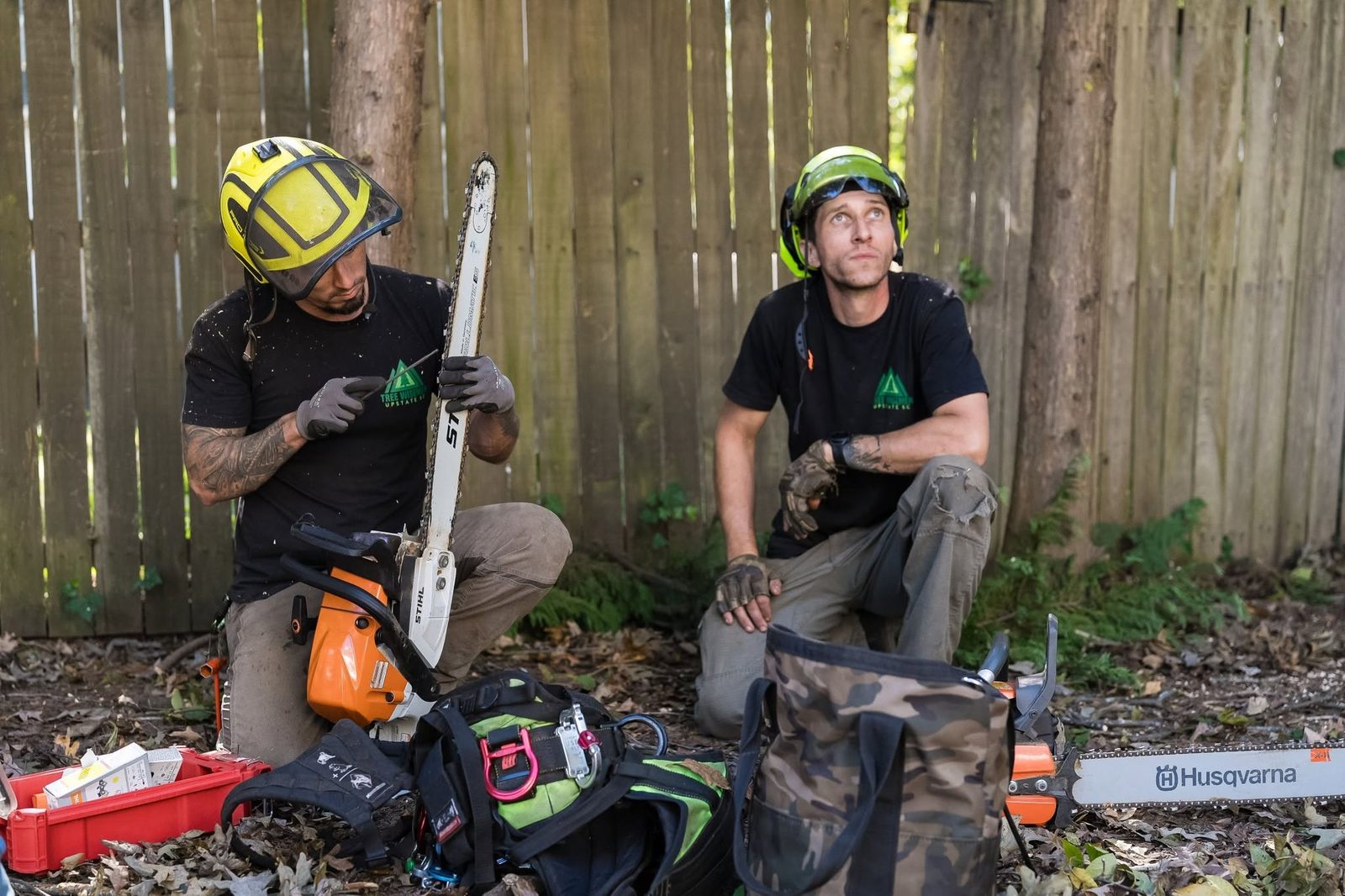
South Carolina has no state license for tree trimming, so a license is not how you vet a crew here. Ask any company, including us, for a current certificate of insurance covering general liability and workers' compensation before work starts, then ask for references and photos of similar jobs. The SC Department of Insurance is the place to learn how coverage works. Tree Wisemen is family owned and based in Easley, has worked the Upstate since 2020, holds 4.9 stars from 71 Google reviews, and gives free estimates within 50 miles of Easley. Taylors is about 16.6 miles from the shop.