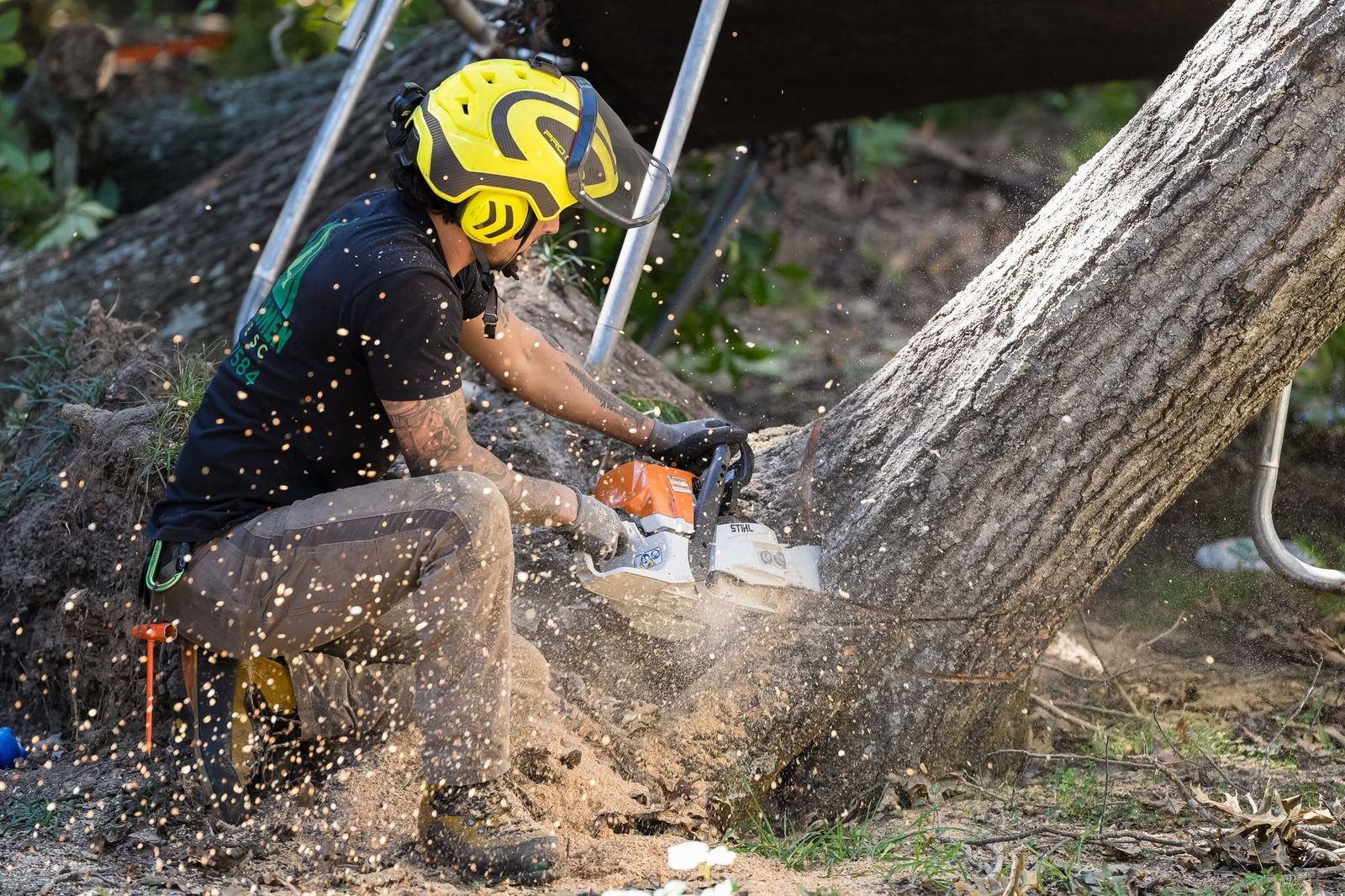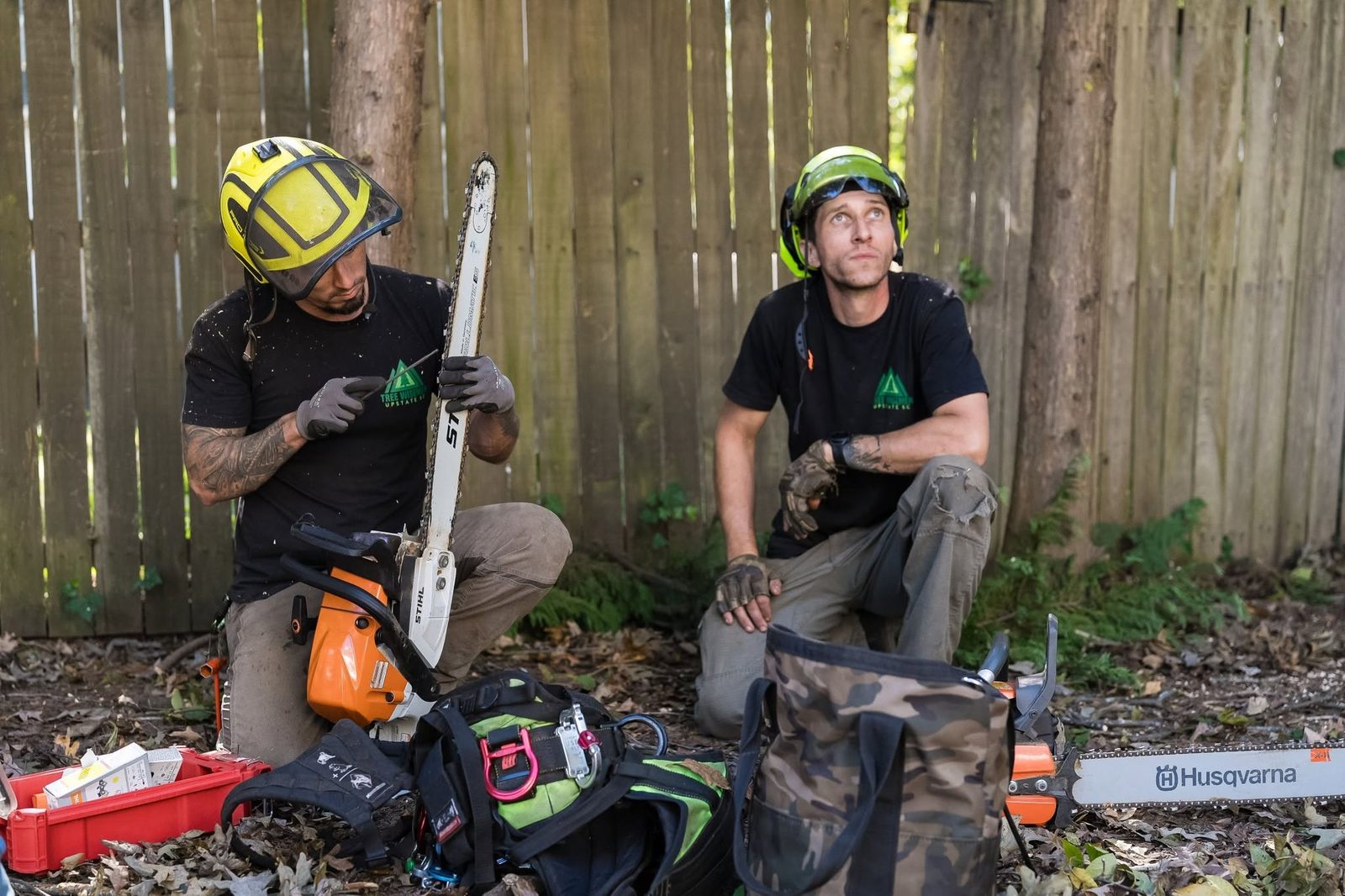
Roof-shading oaks in town, view and line clearing toward Hartwell
Trimming in Anderson County splits into two jobs that share almost nothing but the saw. Inside the older parts of town, the work is usually a mature hardwood leaning over a roof that was built decades before the tree reached it: limbs dragging on shingles, gutters packed with debris, a branch that rubs the siding when the wind picks up. Out toward Lake Hartwell, on the west side of the county, the job changes. There the goal is opening a sightline to the water, lifting a canopy so the lot gets light, or keeping growth off a service drop and a driveway without clear-cutting the shade that made the lot worth buying.
Both jobs get called tree trimming around Anderson, and both are priced very differently. Roof work is about control: where each limb lands, what it touches on the way down, and whether the crew can stage rigging without crushing a flower bed or a septic lid. View and line work is about selection and restraint: which trees to thin, which to raise, and which to leave alone. A crew that treats one like the other will either overcut your view lot or scalp the tree over your roof.
Our general guide to tree trimming covers the basic cuts. This page sticks to what changes when the address is Anderson, the county seat of 29,980 people, about 20.9 miles southwest of Easley, where Tree Wisemen is based.
Cutting for the tree's health, not just the view
Homeowners who want a lake view often ask for the most aggressive cut possible. Resist it. Pruning guidance from Clemson Cooperative Extension and the tree-care public pages at Trees Are Good point the same way: remove no more live crown than the species can tolerate, make cuts at the branch collar, and skip flush cuts and stub cuts that invite decay. Topping, meaning chopping the main leaders to stubs, makes the regrowth weak, fast, and worse for a roof than the original limb was.
For a view lot, the better approach is usually a combination of crown raising (removing the lowest limbs), selective thinning (opening gaps without gutting the canopy), and, where one tree is truly the problem, removing that tree rather than butchering five. For an in-town roof, the usual job is reducing the limbs that overhang by cutting back to a side branch large enough to take over, and clearing deadwood that would otherwise drop on shingles in the next storm.
Ask any crew to explain which cuts they plan and why. If the plan is "take it all off the top," keep looking. Voluntary credentials such as ISA Certified Arborist exist in this trade, but they are optional in South Carolina, so judge by the work plan and the photos of similar jobs.
What trimming costs around Anderson
Around Anderson, typical tree trimming runs $250 to $900 per tree, more for tall trees over a roof or lines. Tree Wisemen does not publish prices and quotes every job after a free estimate, so treat this table as a typical Upstate SC range, not their number. For the full breakdown of what moves a bid, see the tree trimming cost guide.
| Scope | Typical range per tree | What pushes it up |
|---|---|---|
| Deadwood and light crown cleanup, small to medium tree | $250 to $450 | Tight access, steep yard |
| Crown raising for a driveway, walkway, or lawn | $300 to $600 | Tree size, number of limbs |
| Selective thinning for a lake view | $350 to $800 | Slope toward the water, height, hauling distance |
| Limb reduction over an older roof | $450 to $900 | Rigging needed, limb weight, nothing to stand a truck on |
| Tall hardwood near a service drop | Toward $900 | Utility coordination, line proximity |
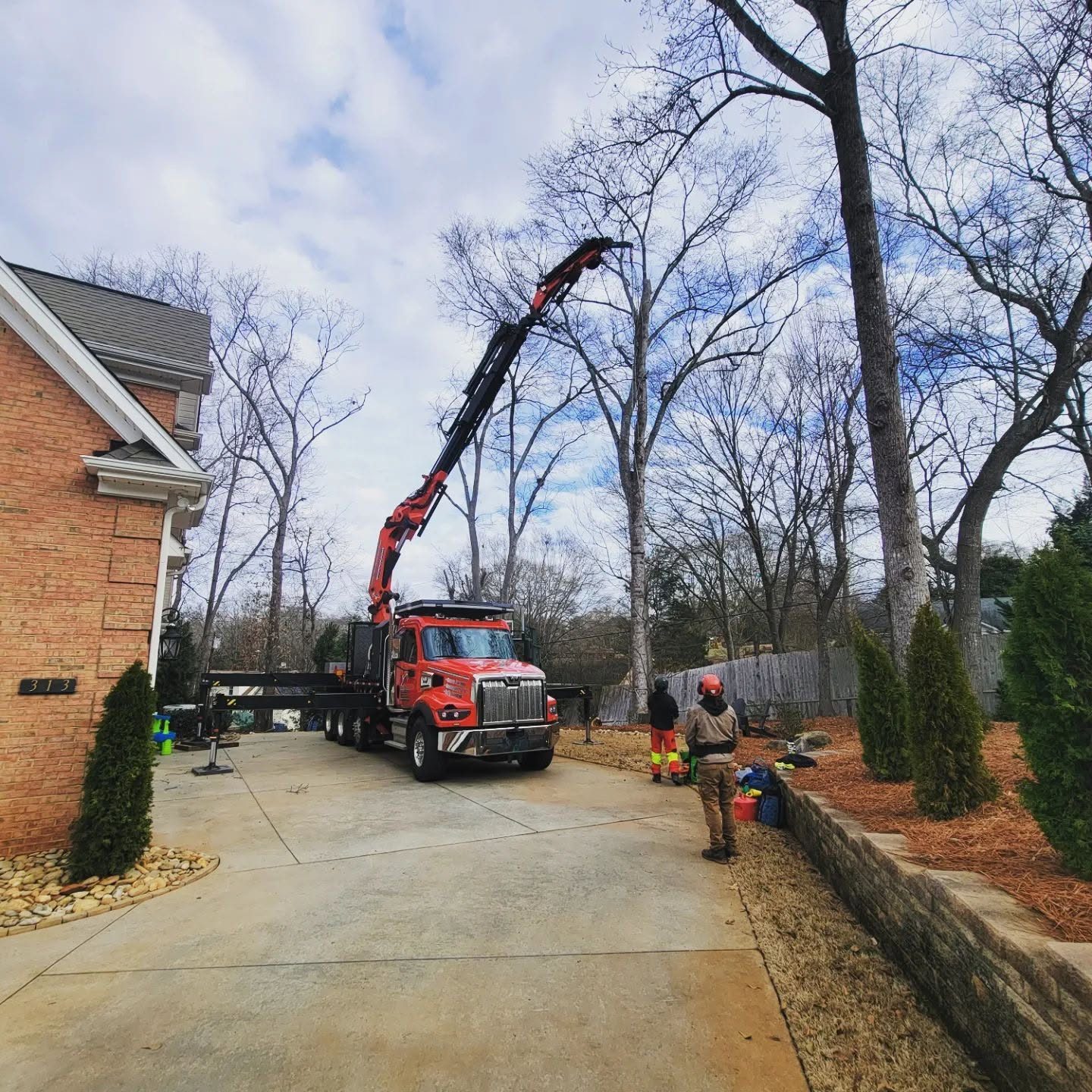
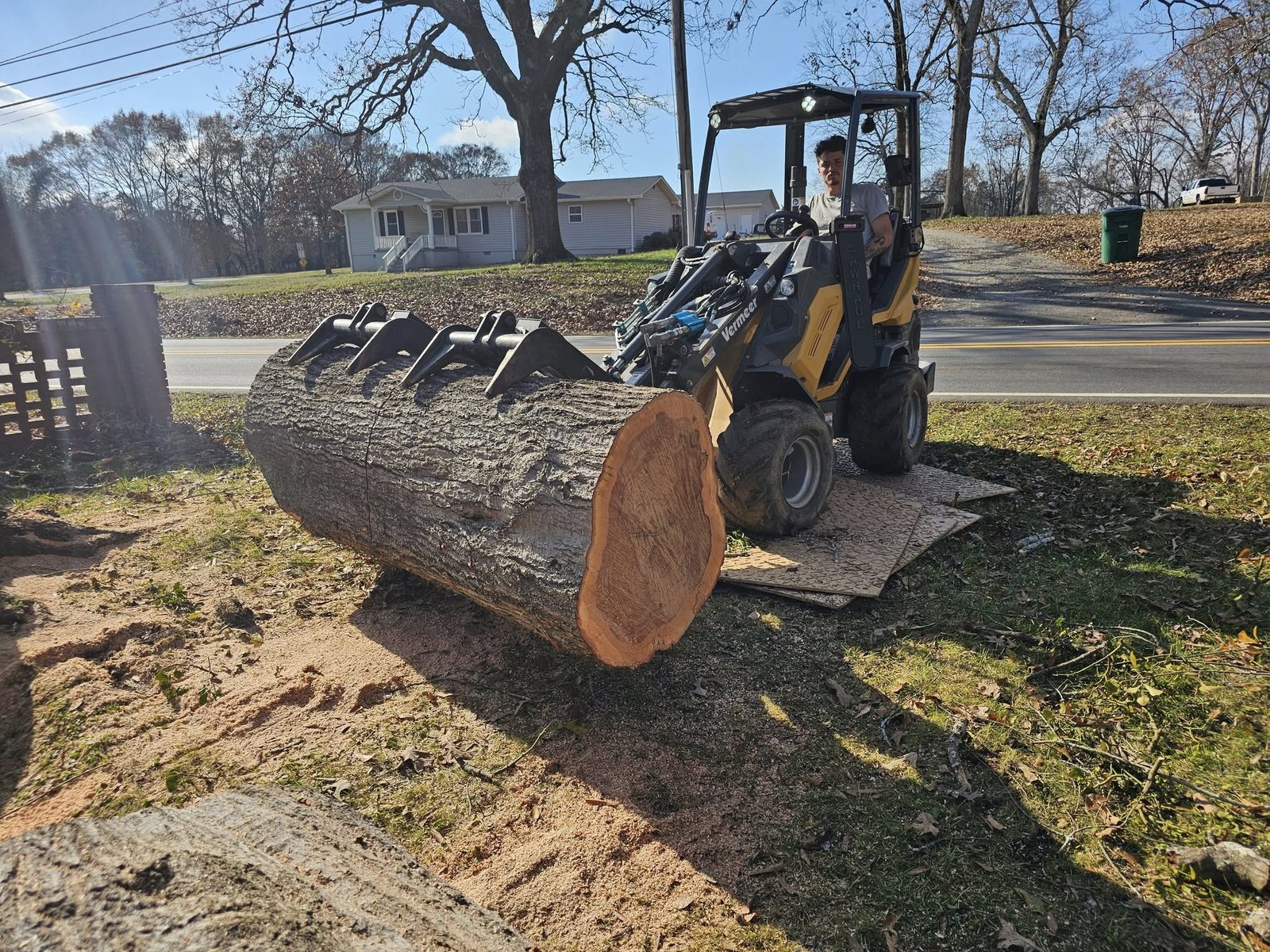
Two Anderson-specific price movers: older in-town lots often have narrow driveways and mature landscaping, which can slow staging, while lakeside lots on a slope can make hauling brush uphill the longest part of the day. Tree Wisemen's crews work with grapple-saw crane trucks, chippers, and a compact loader on ground mats, which is the kind of equipment that protects a lawn when a crane truck is the right tool. Whether that applies to your lot is something the estimate settles.
Storms, lines, and the limbs that fall after
The federal record shows how often weather reaches this county: 18 declared disasters touch Anderson County (2005-2026). Hurricane Helene reached the Upstate in September 2024, and many trees that survived it still carry cracked unions, torn bark, or hanging limbs that nobody noticed from the ground. Trimming those before the next front is cheaper than a call after one. The National Weather Service Greenville-Spartanburg office is the place to watch for wind and severe-storm alerts.
Lines change everything. OSHA's 10-foot rule binds workers, not homeowners, but it is the right distance for anyone to keep from an energized wire. Only workers trained as line-clearance tree trimmers under 29 CFR 1910.269 may work inside that 10 feet, and OSHA's tree care safety page explains why this is the most dangerous part of the trade. If your lake-side trees are tangled with a service line, do not climb, do not prune near it, and call your utility first. Heavy trimming that lands on a roof or a car afterward is a repair job for a trade with its own rules, not for the tree crew.
If you want debris burned instead of hauled, South Carolina does not issue burn permits, and outside city or town limits you must notify the SC Forestry Commission first. The details are at scfc.gov fire and burning. Most residential trimming debris is simpler to chip or haul.
Checking a crew when the state has no tree license
South Carolina does not license tree trimming, so there is no state card to look up, and anyone with a saw can advertise. What protects you is paperwork you ask for: a current certificate of insurance showing general liability and workers' compensation, references from jobs like yours, and photos of finished work on similar trees. Ask any crew, including us, for a current certificate of insurance before work starts. The SC Department of Insurance is a good place to read what those coverages mean.
Tree Wisemen is family owned, has worked the Upstate since 2020, and holds a 4.9-star rating across 71 Google reviews and a BBB A+ accreditation since 2023. The fastest way to get a number is to text photos of the tree and the roof, lake line, or yard to (415) 850-7584, with a note about what you want opened or protected. Estimates are free within 50 miles of Easley, and 24-hour storm response is available if a limb has already come down. For the wider service picture, see tree service in Anderson.
One last practical point: if any part of the job involves digging, such as stump removal or a new planting after a removal, SC811 requires three full working days' notice before excavation. Call before you dig at SC811.