When the crane is the cheaper way to take a tree down
Drive the older streets around Easley and you will see the same setup again and again: a mature oak or pine leaning toward a roofline, with a driveway too narrow to drop anything into. On a tree like that, rigging it down piece by piece means a climber working for most of a day, a ground crew lowering every limb on ropes, and a constant chance that one piece swings wrong. Hours are what you pay for, and the crane replaces most of them.
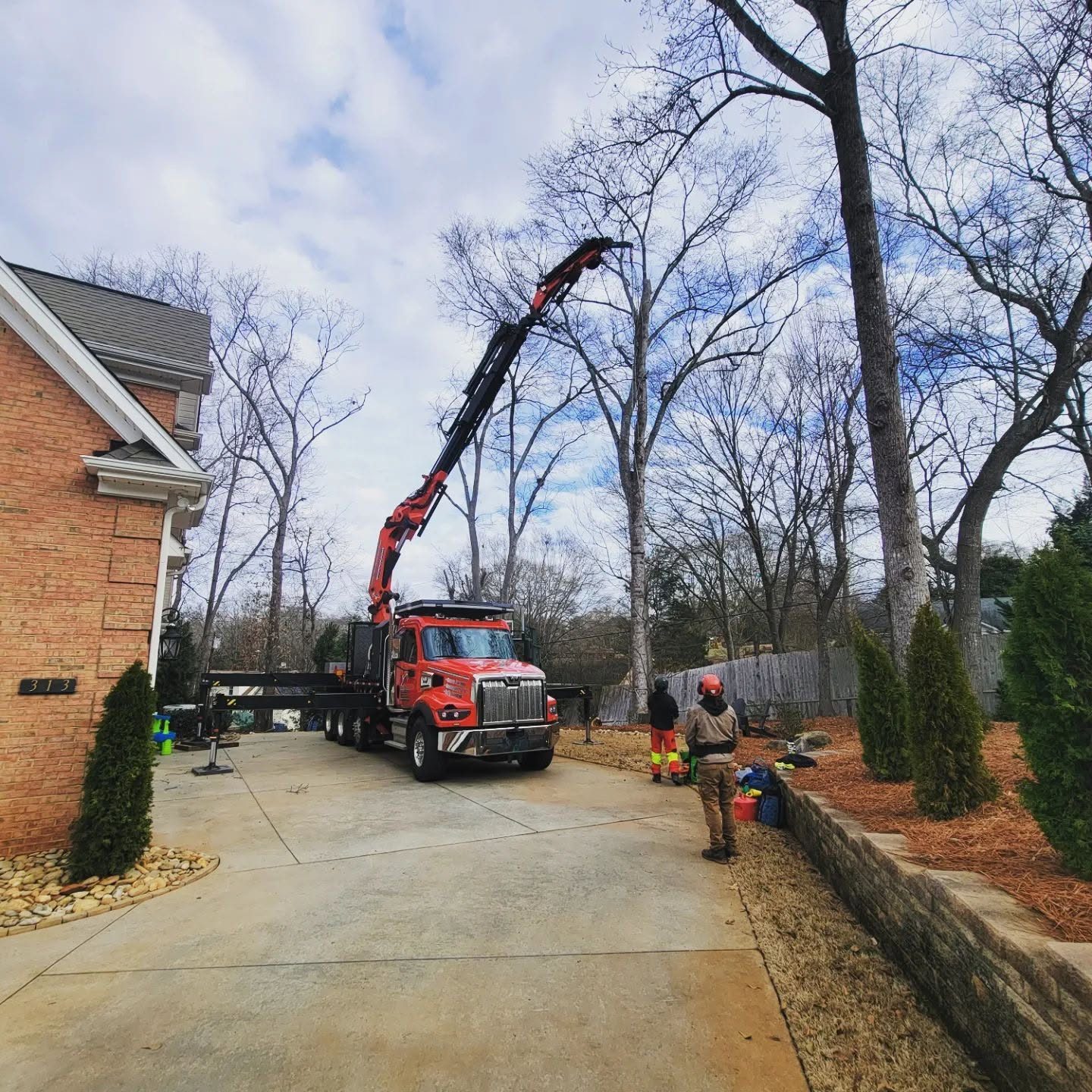
A grapple-saw crane truck grips the section, the saw cuts it, and the boom swings it clear of the house in one controlled motion. The job is shorter, so the labor line on the bid shrinks, and your roof is not asking a rope to behave. The crane adds a day rate and mobilization, but on the right tree that is less than the hours it saves. On a small, open-lot tree it is not, and a good estimator will tell you so. Our overview of crane-assisted tree removal covers how the equipment works.
Across the Upstate, crane-assisted removal typically runs $1,500 to $5,000 per tree. That is a typical range, not a quote. Where a job lands inside it depends on the tree, the crane's reach and what is underneath.
Typical Upstate prices by situation
Foothills lots in Pickens County vary a lot: flat subdivision yards, sloped lots, and rural acreage with long gravel drives. Here is how typical crane jobs break down.
| Situation | Typical Upstate range | What drives it |
|---|---|---|
| Medium tree, clear crane access, open drop zone | $1,500 – $2,500 | height, trunk diameter, short boom reach |
| Tall hardwood or pine beside the house | $2,200 – $3,800 | distance to roof, number of lifts, cleanup |
| Tree over the roof, pool or detached building | $2,800 – $4,500 | exact pick weight, rigging time, protection setup |
| Large tree, long reach over fence or utility corridor | $3,500 – $5,000 | boom extension, ground mats, coordination with line owner |
These ranges are what Upstate crane jobs usually cost, and Tree Wisemen prices each one after a free estimate. For the bigger picture on oversized trees, see our large tree removal cost guide. For the everyday jobs that never need a crane, the general tree removal cost guide is the better comparison.
Reach, ground and what the crane has to sit on
The crane's reach is the most overlooked price driver. A boom can only lift so much at a given distance, and a heavy trunk section picked at full extension is a very different job from the same section picked close in. If the truck can park near the tree, the price drops. If the tree sits behind a house, down a slope or at the end of a soft yard, the crew may need a longer boom setup or smaller, more frequent picks.
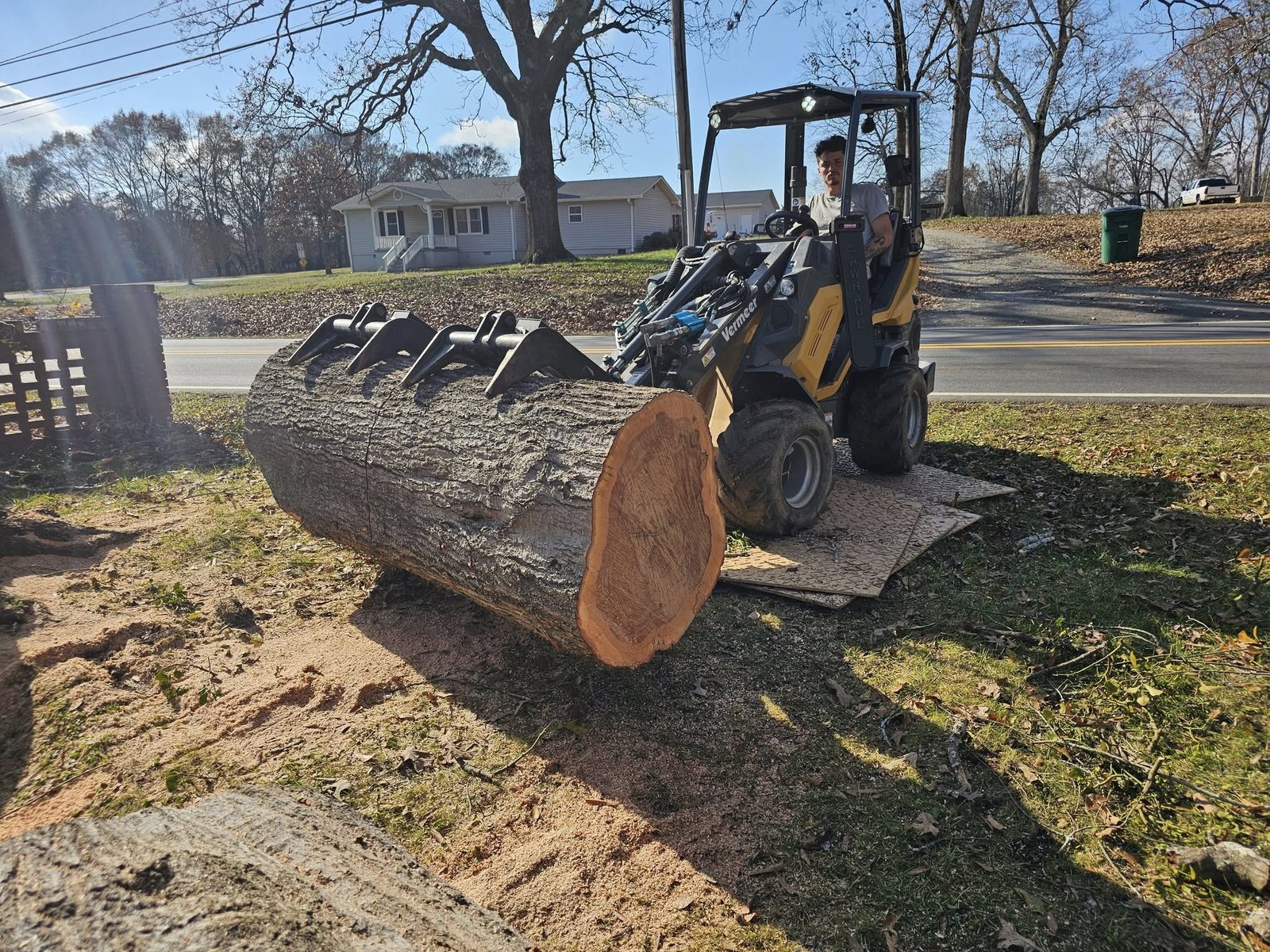
Ground matters too. Crews that run a compact loader and crane trucks lay ground mats to spread the load, protecting lawns, septic fields and buried lines. That prep takes time and shows up in the bid, but it is cheaper than a rutted yard or a cracked drain line. Mention anywhere you know something is buried. If any digging comes into the job, such as a stump pit or regrading, SC811 requires three full working days' notice before excavation.
Photos help the estimate. Tree Wisemen takes texts at (415) 850-7584, so you can send pictures of the tree, the roof and the driveway before anyone drives out. Free estimates cover the area within 50 miles of Easley.
Storms, leaning trees and the cost of waiting
Upstate trees get tested regularly. Pickens County has 23 federally declared disaster events on record (2005-2026), and many of them involve wind, rain or tropical remnants. Hurricane Helene reached the Upstate in September 2024, and plenty of trees that came through it are still standing but weakened: cracked unions, lifted root plates, hanging limbs. The National Weather Service in Greenville-Spartanburg issues the forecasts and warnings worth watching when one of these trees is leaning at your house.
A planned crane removal is almost always cheaper than an emergency one. Pre-storm work is scheduled, the tree is still intact and the lift plan is simple. After a failure, the tree is split or tangled in a roof, the picks are awkward, and night or weekend work adds cost. The crew has to cut the load off the structure in the right order, which is exactly what a crane is built for. Tree Wisemen runs 24-hour storm response, but a tree you can see is a tree you can schedule.
If a tree has already hit the house, remember that the roof and structural repair afterward is separate work. Tree removal does not need a state contractor license in South Carolina, but roofing and structural repair do.
Power lines, insurance and vetting the crew
Lines are the one place a price should never be the deciding factor. OSHA's 10-foot rule binds workers rather than homeowners, but it is the right distance for anyone. Only workers trained as line-clearance tree trimmers under 29 CFR 1910.269 may work inside 10 feet of energized lines. If a tree is touching or near a service drop, call the utility first. The agency's tree care safety page explains why this work is among the most hazardous there is.
South Carolina has no state license for tree removal, trimming or stump grinding, so a license number says nothing about a tree crew. What protects you is paperwork you can see: a current certificate of insurance showing general liability and workers' compensation, references from similar jobs, and photos of crane work they have done. Ask any crew, including us, for a current certificate of insurance before work starts. If you have questions about how coverage works, the SC Department of Insurance is the state resource.
The local record helps too. Tree Wisemen is a family-owned crew based in Easley and working the Upstate since 2020, with 4.9 stars from 71 Google reviews and BBB A+ accreditation since 2023.
Keeping the bid honest
- Ask what the crane saves. A fair bid explains why it uses the crane and what climbing would cost instead.
- Confirm what is included. Chipping, hauling, wood left on site and stump grinding are separate line items on many bids.
- Skip the burn pile. South Carolina does not issue burn permits, and outside town limits you must notify the SC Forestry Commission before outdoor burning. See the Commission's fire and burning page first.
- Compare against the table. A number far outside these ranges deserves a plain explanation.
When you compare two or more bids, line them up on the same basis. One may include cleanup and hauling while the other leaves a pile of logs in your yard, and the cheaper number is not always the cheaper job. Ask each crew how many lifts they expect, where the truck will sit, and how they plan to protect the roof, lawn and any fence. A crew that can answer those questions clearly has usually walked the property and thought through the pick, and that planning is what keeps a crane job both safe and fairly priced.