Old hardwoods and river-bottom ground
Piedmont is an unincorporated mill-era community on the Anderson and Greenville county line, with the Saluda River on one side and SC 20 and SC 86 carrying traffic through. Yards here tend to hold exactly what a tree crew has to plan around: large, mature hardwoods that have had decades to grow, and low ground near the river that stays soft long after a rain.
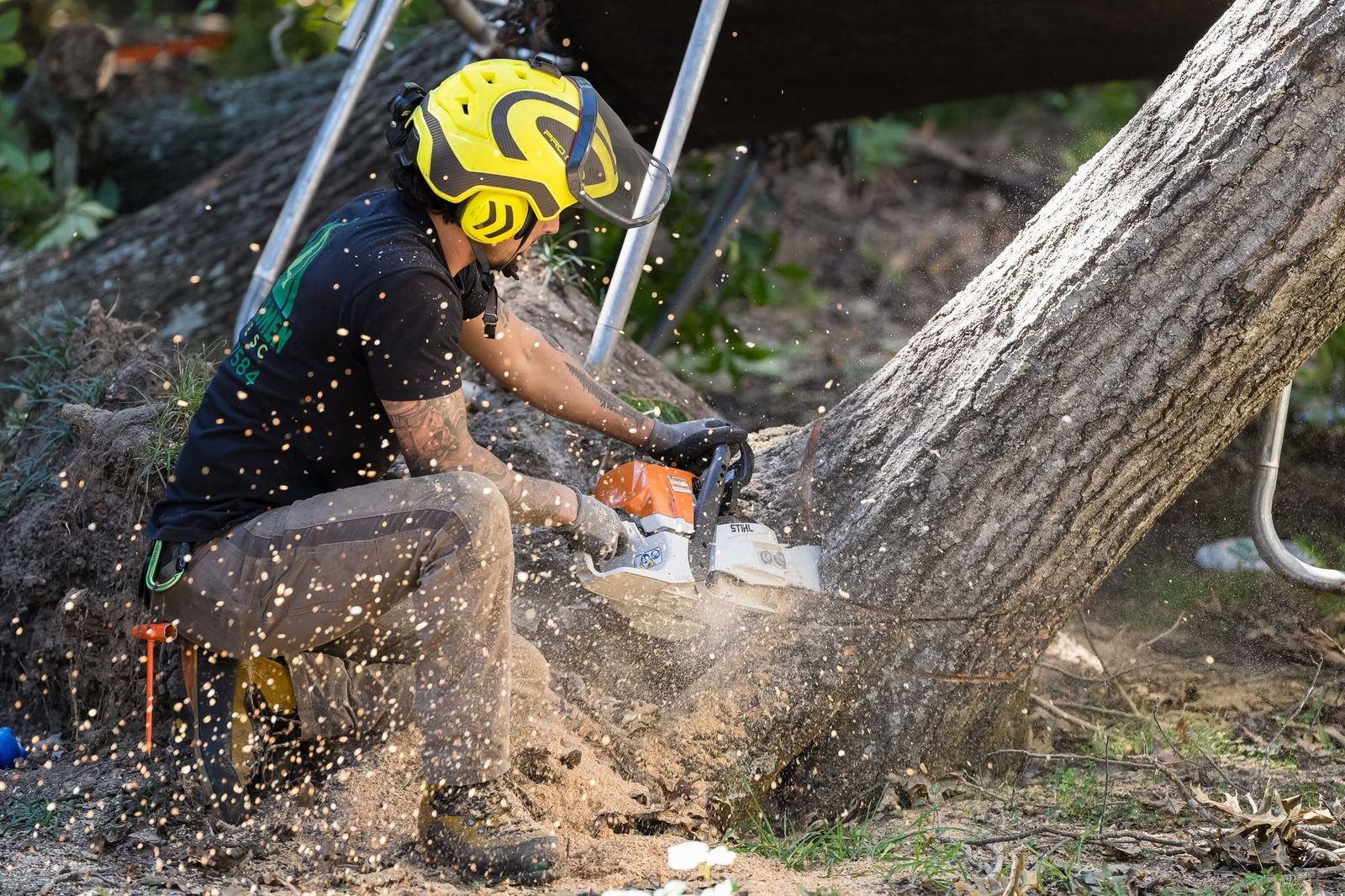
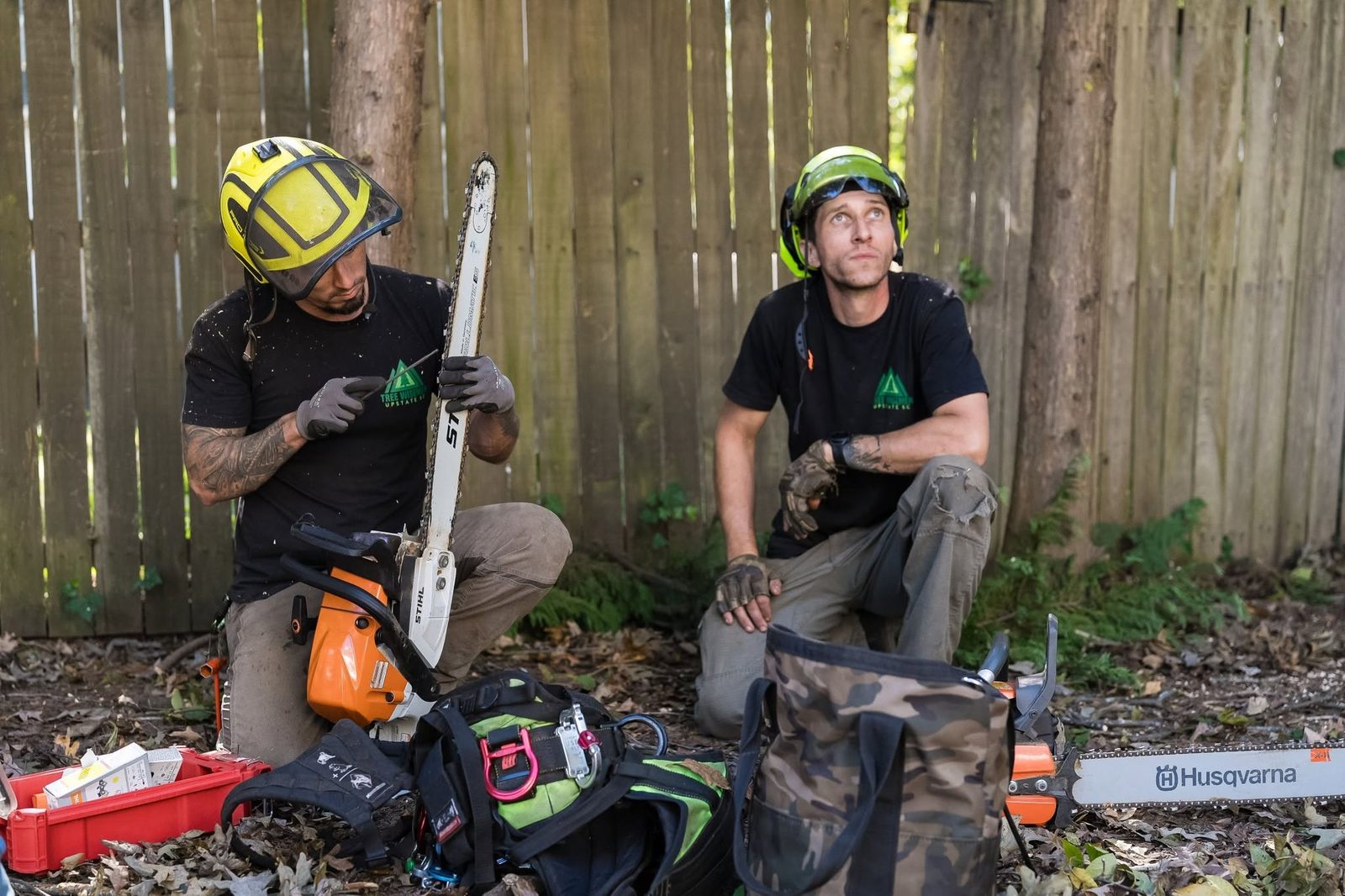
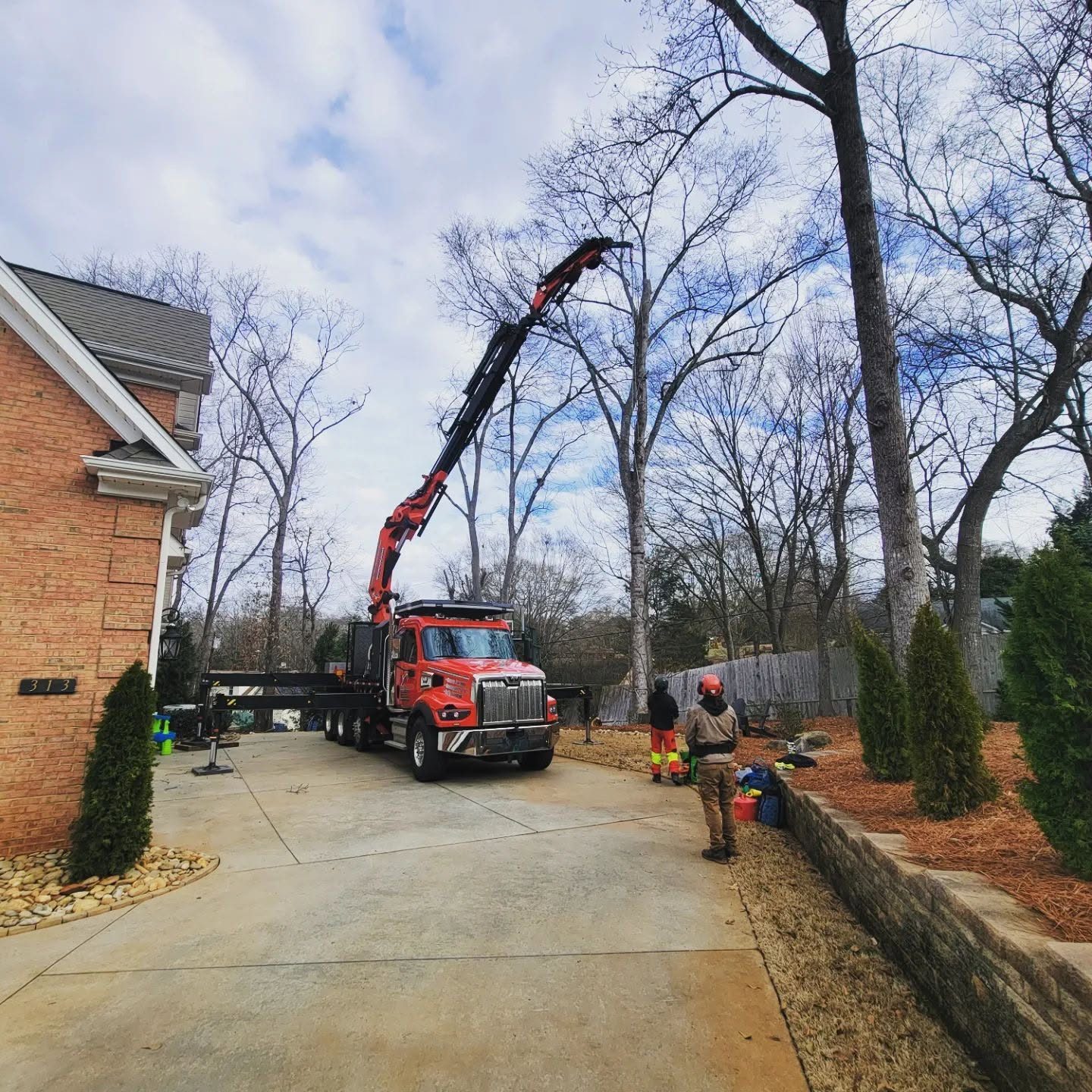
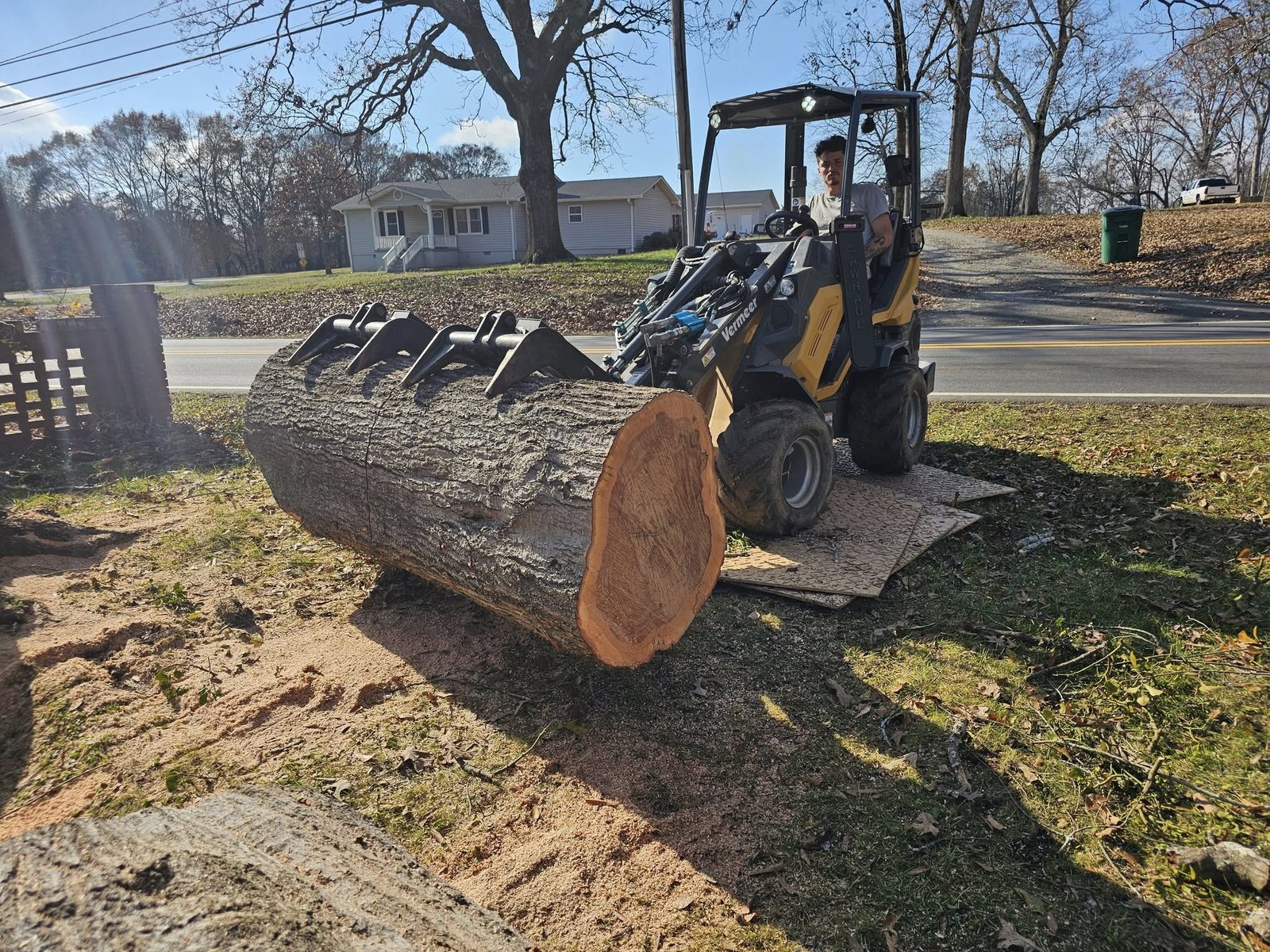
That combination changes how the work gets done. A big oak or poplar over a house is a rigging job, not a chainsaw job, and a heavy truck parked on saturated river-bottom turf can leave ruts that cost more to fix than the trimming did. Crews that work these yards bring grapple-saw crane trucks to lift sections out without dragging them across the lawn, and a compact loader on ground mats to spread the weight when the soil is wet. Ask any crew how they plan to protect your yard, not just how they plan to drop the tree. For the broader picture of what we handle across the Upstate, see our tree service overview.
Older mill-community lots often have a different feel from newer subdivisions. Trees were planted or left standing generations ago, so a single yard can hold a tall hardwood close to the house, another near a fence line, and a third leaning toward a neighbor's property. Each one is its own puzzle. The first question is always where the wood can safely go: straight down is rare, so sections are usually roped, lowered, or lifted away piece by piece. The second question is how the equipment reaches the tree, since narrow drives and tight side yards limit what can be brought in.
Ground conditions near the Saluda matter just as much as the tree itself. A lot that feels firm in a dry week can turn to mud after a few days of rain, and the better time to schedule heavy work is often when the soil has had a chance to drain. A crew that tells you to wait a few days for firmer ground is looking out for your lawn, your septic area, and your driveway edge, not stalling.
What the work costs around Piedmont
Typical Upstate SC ranges apply here. Tree Wisemen does not publish prices; every job is priced after a free estimate within 50 miles of Easley, and the table below shows what homeowners commonly see, not a quote.
| Scope | Typical range | What pushes it up |
|---|---|---|
| Tree removal | $300 to $2,000 per tree | Height, a house or fence underneath, no crane access, soft ground |
| Trimming and pruning | $250 to $900 per tree | Large crowns, deadwood over structures, climbing instead of lifting |
| Stump grinding | $100 to $400 per stump | Stump diameter, big surface roots, fences or tight gates |
Mature hardwoods with spreading limbs sit at the high end of each row, while a modest tree with open access sits near the bottom. The line-by-line reasoning is on our Piedmont tree removal page. Be wary of a bid that is dramatically lower than the rest: the missing line is usually cleanup, hauling, or the insurance that covers your roof if something goes wrong.
When you compare estimates, compare what is included, not only the total. Does the number cover chipping the brush and hauling it away, or are you left with a pile? Does it include grinding the stump, or only cutting the tree to ground level? Is the crew planning to use a crane or climb, and what happens to your lawn if the ground is wet? Two bids that look far apart often describe different jobs.
A few honest rules of thumb help here. A tree close to the house, with limited room to work, costs more than the same tree in an open yard because the crew has to rig and lower rather than fell. Several trees done in one visit are usually more efficient than separate trips, since setup and cleanup happen once. And deadwood or a damaged tree is easier to address before a storm than after, when a tree sitting on a roof or fence turns a routine job into an emergency one.
Storms, saturated soil, and leaning trees
The federal disaster record shows 18 declared events touching Anderson County (2005-2026), mostly storm and flood family. Hurricane Helene reached the Upstate in September 2024, and trees on wet ground are the ones that tend to give way: when a river-bottom lot is saturated, shallow-anchored roots lose their grip and a large hardwood can lean or go over in wind it would normally handle.
Signs worth a call: a new lean, soil heaving at the base, fresh cracks in the ground on one side, or a limb hanging in the crown. The National Weather Service in Greenville-Spartanburg issues the wind and flood alerts that matter before the ground gets saturated. For tree health and species questions, Clemson's Home and Garden Information Center is a reliable reference. Tree Wisemen offers 24-hour storm response, and you can text photos to (415) 850-7584 so a crew can see what is down before anyone drives out.
For homeowners along the river, the practical habit is to walk your yard after any long stretch of rain or high wind. Look up into the crowns as well as at the trunks, and check the ground around the base for gaps, raised soil, or new mushrooms growing at the root flare, which can point to decay underneath. A tree that looked fine last year can change quickly once the roots have been sitting in saturated ground.
If a tree does come down, keep people and vehicles away from it. A fallen tree can hold tension in the trunk and limbs, and a trunk resting on a fence, a roof, or another tree can shift when cut. Photos are the safest first step: they let a crew judge what is pinned, what is leaning, and what equipment will be needed before anyone starts a saw.
Power lines, buried lines, and burn piles
Three safety points come up repeatedly on rural and edge-of-town lots. First, power lines: OSHA's 10-foot rule binds workers, not homeowners, but it is the right distance for anyone. Only workers trained as line-clearance tree trimmers may work inside 10 feet of energized lines, per OSHA's tree care guidance. If a limb is touching a line, stay back and call the utility.
Second, anything involving digging, such as a new tree, a fence, or a stump removal beyond grinding, calls for SC811, which requires three full working days' notice before excavation. Third, burning: South Carolina does not issue burn permits, but outside city or town limits you must notify the SC Forestry Commission before burning outdoors, and land-clearing debris near woods, brush, or grassland has extra requirements. Start at the Forestry Commission's fire and burning page. Most people skip all of it by chipping or hauling the debris.
In older communities like Piedmont, service lines to a house can run through the same canopy as the tree you want removed, and the line from the pole to the house is easy to overlook from the ground. Look up before you decide a tree is clear. Limbs that have grown through or around a service drop should be left to the utility and trained line-clearance workers, not handled from a ladder.
Chipping is the simplest answer to the debris question. Chips can be spread as mulch on beds and paths, and larger wood can be cut to lengths for firewood or hauled off. Either route avoids the notification steps that come with outdoor burning and keeps smoke away from neighbors on the small lots common near the river.
Choosing a crew without a state license to check
South Carolina has no state license for tree removal, trimming, or stump grinding, so there is no board to look a company up with. What protects you instead is paperwork and proof: a current certificate of insurance showing general liability and workers' compensation, references from neighbors, and photos of similar jobs. Ask any crew, including us, for a current certificate of insurance before work starts, and confirm it with the carrier. The SC Department of Insurance explains how coverage works. If a tree strikes your roof, the repair that follows is a licensed trade, separate from the tree work.
Tree Wisemen is family owned, based in Easley, and has worked the Upstate since 2020. The company holds 4.9 stars across 71 Google reviews and BBB A+ accreditation since 2023. When a stump is left behind, our Piedmont stump grinding page explains how the grinder handles big surface roots common in older yards.
Beyond paperwork, pay attention to how a crew talks about your specific yard. A good estimator walks the property, looks at the ground as well as the tree, asks where the septic field, irrigation, and any buried lines run, and explains how the wood will come down. Vague answers, pressure to decide on the spot, or a request for full payment up front are all reasons to keep looking.
Neighbors are often the best reference in a small community. If someone down the road had a large tree removed, ask how the crew treated the lawn and whether the cleanup matched the estimate. That kind of local word of mouth tells you more than any advertisement.