Old hardwoods over low ranch roofs: why limbs get lowered
Drive the side streets off US 29 (Wade Hampton Boulevard) and the pattern is easy to spot: a single-story ranch with a mature water oak or another big hardwood leaning across the shingles. The tree was planted or spared when the house went up, and decades later the canopy hangs over the roof, the gutters and the driveway. That is the usual Taylors removal job, and it is not a drop-it-in-the-yard job.
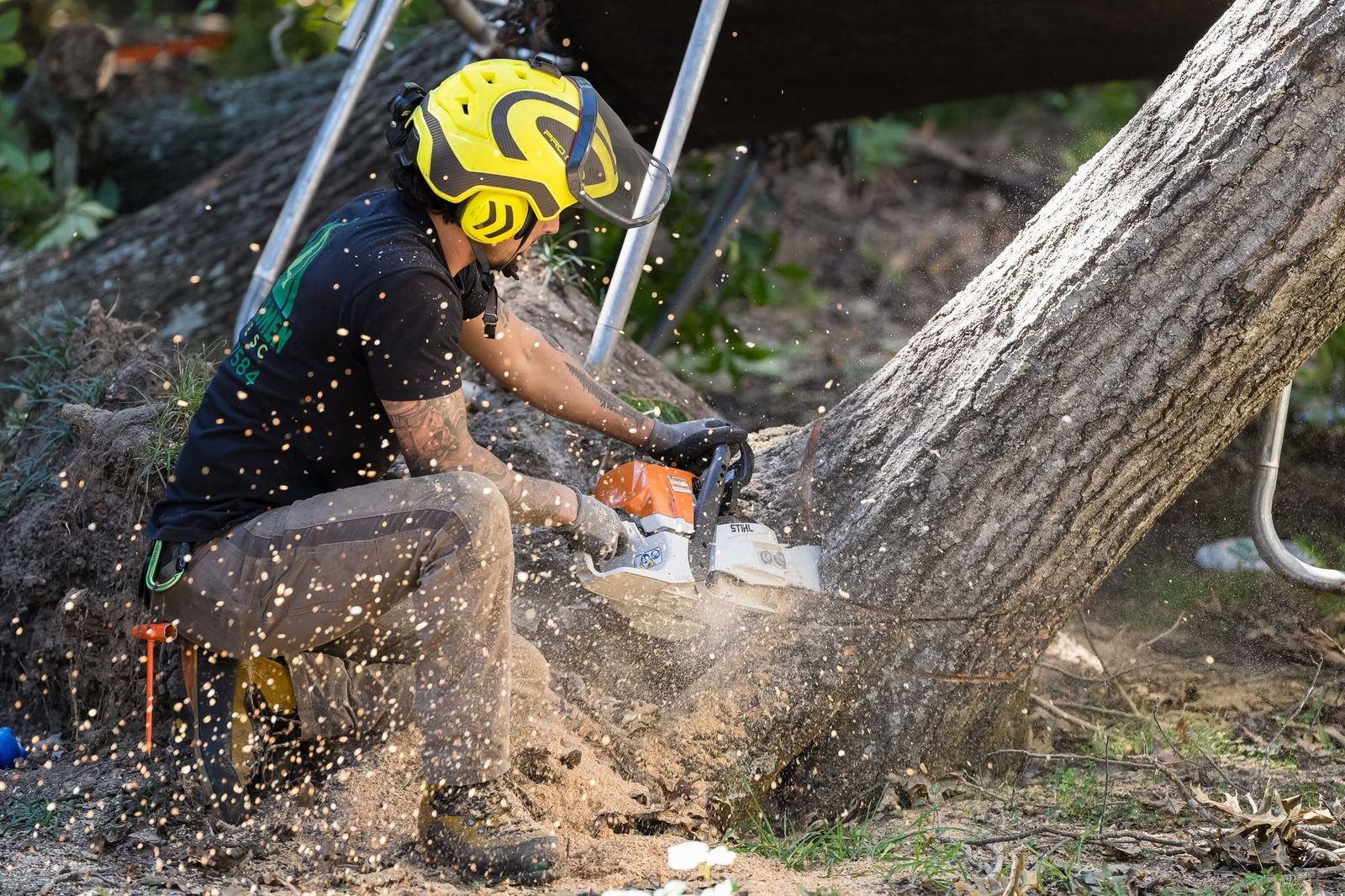
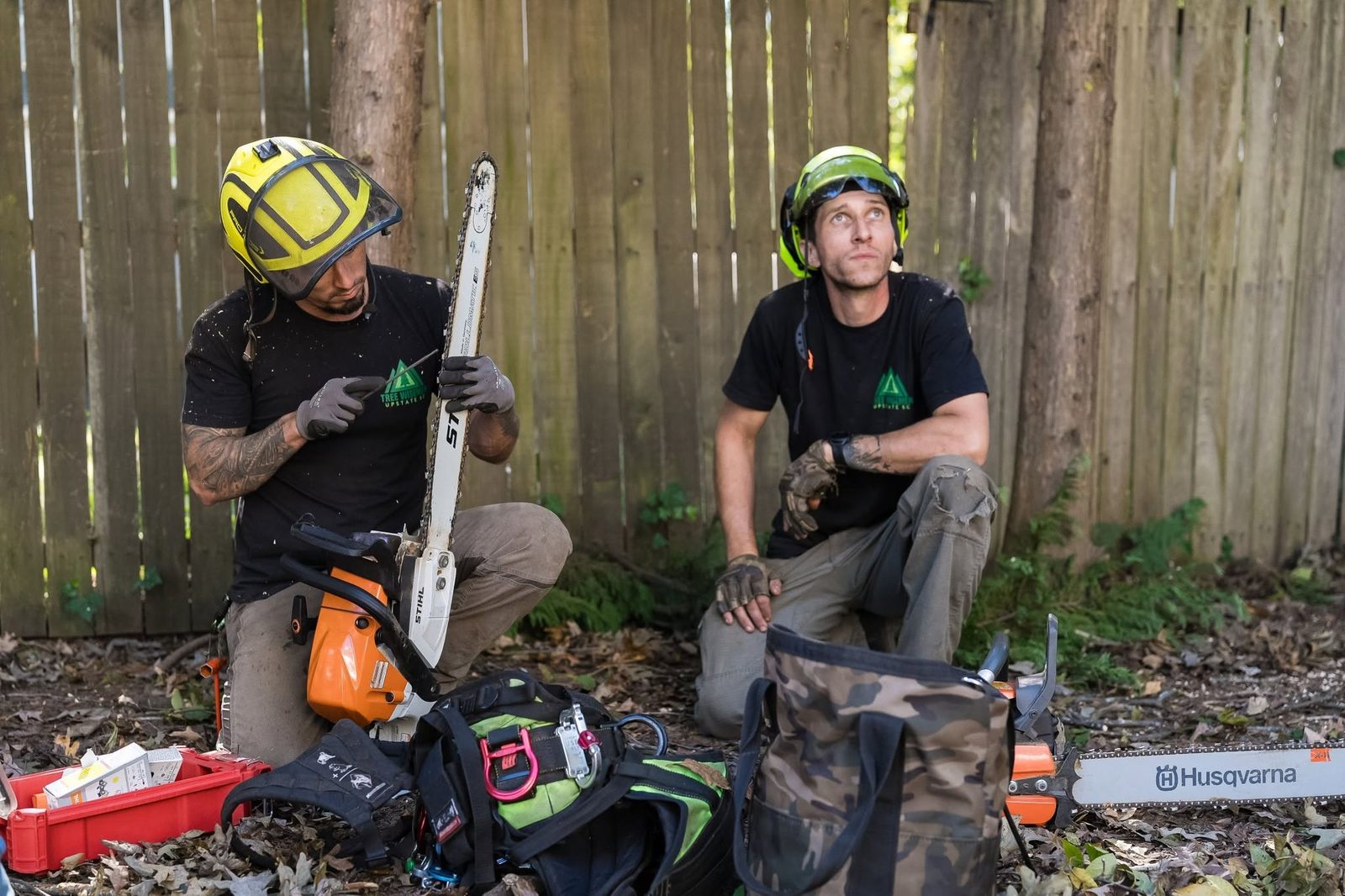
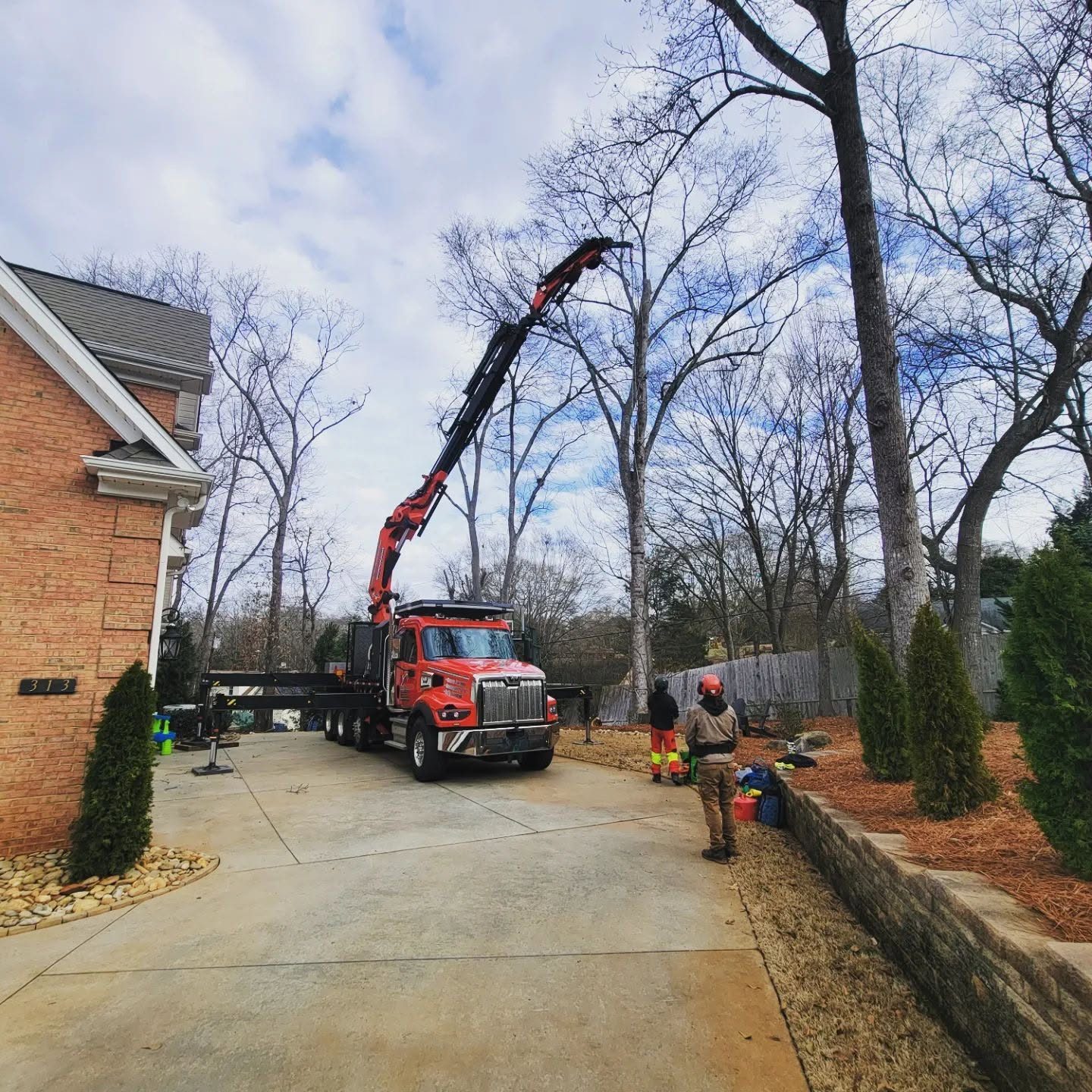
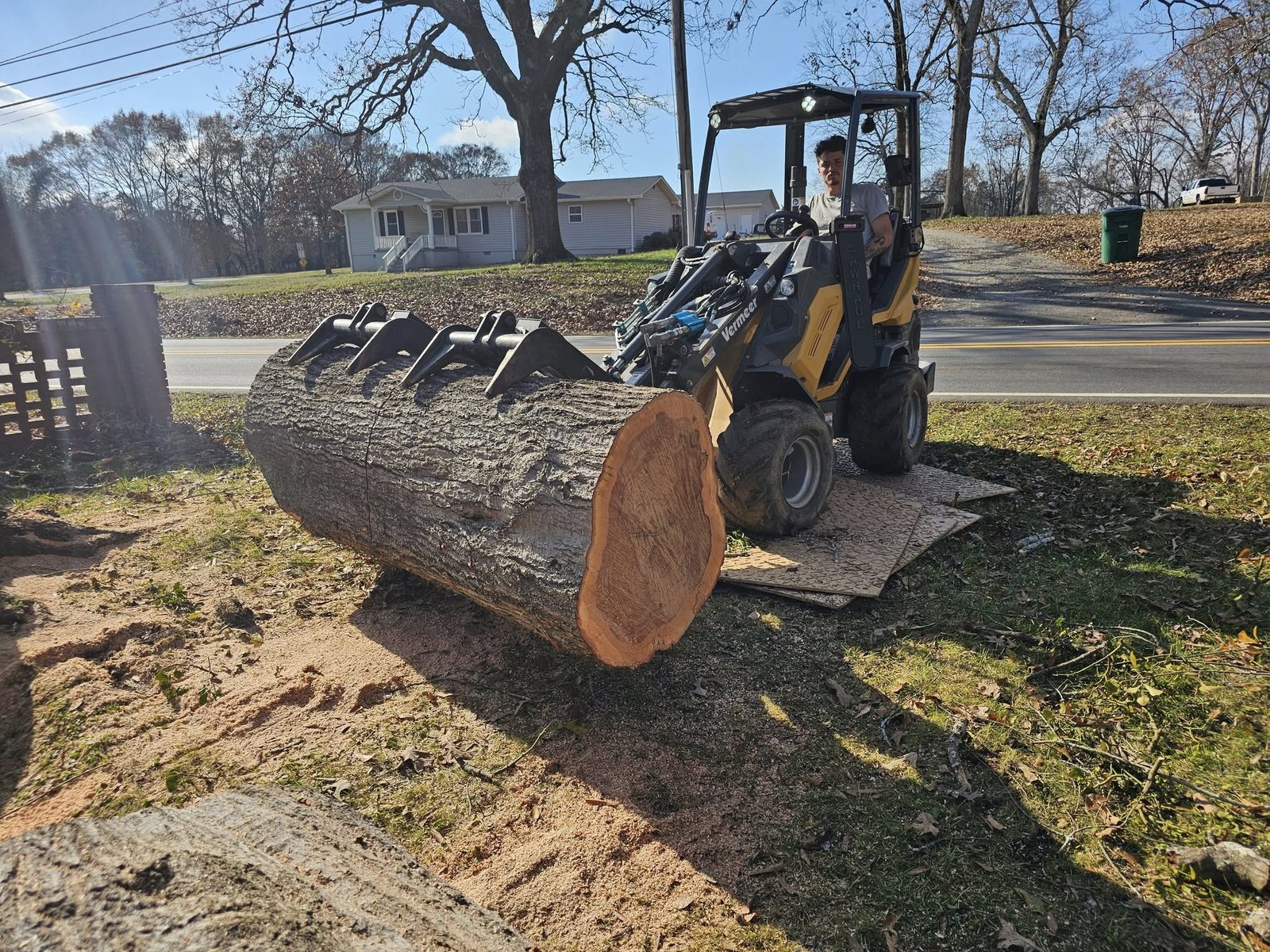
When a trunk can't fall clear, the crew takes it apart in sections. A climber or a grapple-saw crane truck holds each limb while it is cut, then swings it out and sets it on the ground. Nothing free-falls onto the roof, and the compact loader works on ground mats so the lawn and any buried lines take less abuse. Water oaks in particular get brittle and hollow with age, so the crew has to read the wood before trusting a limb to hold its weight.
A low roofline changes the whole plan. On a single-story house there is very little vertical room between the canopy and the shingles, so a limb that would be an easy cut on an open lawn has to be tied off first, supported through the cut, and guided to the ground along a path the crew has worked out in advance. The heavy limbs over the roof usually come off first, while the climber still has a sound trunk to work from. The upper trunk comes down in manageable pieces, and the lower trunk is taken last, once nothing is left to swing toward the house.
Older ranch homes also tend to have things close to the tree that newer lots keep farther away: a carport, a chain-link or wood fence, a shed, a service drop running to the eave, and a driveway that is the only way in for equipment. Each of those is a place a piece of wood can't be allowed to land, and each adds time to the job. It is also why a quick look from the street can't tell you how a particular tree will be handled. Photos from two angles help a great deal.
If you are weighing a tree against a roofline, start with our general tree removal overview, then text photos of the tree from two angles, including one that shows the roof beneath it.
What a Taylors removal costs, and what moves the number
Around Taylors, typical removal runs $300 to $2,000 per tree, and big or hazardous trees can pass $3,000. Those are typical Upstate SC ranges, not a Tree Wisemen quote; every job is priced after a free estimate. The table below shows how the scope usually sorts out. For a wider look at pricing, see the tree removal cost guide.
| Scope | Typical range |
|---|---|
| Small or medium tree, open drop zone | $300 to $700 |
| Mature hardwood, clear of structures, crane or climber access | $700 to $1,400 |
| Large oak over a roof, fence or driveway, limbs lowered in sections | $1,200 to $2,000 |
| Storm-damaged, leaning or tangled in other trees | Priced on site, often toward the top of the band |
| Stump left behind, ground separately | Quoted as its own line item |
Three things push a job up: no room to drop anything, a roof or outbuilding underneath, and trees that need a crane. The cleanup and haul-away also change the total, so ask whether they are included. Stumps are usually separate, and our stump grinding in Taylors page explains how that line is handled.
The reason a roof-side oak costs more than a same-size tree in an open yard is labor and risk, not the wood. Lowering limbs one at a time takes far longer than felling, it often needs a second set of hands on the ground, and a crane truck brings its own setup time. A tree that a crew could drop in an hour on open ground can fill most of a day when every piece has to be roped or held and set down gently.
Access matters too. A narrow driveway, a tight gate or a backyard tree with no route for a truck means more of the wood is carried or chipped by hand. A compact loader on ground mats can help on soft or finished lawns, but it still needs a way in. When you get an estimate, ask what is included: brush chipping, log removal, and raking up the debris. Two quotes can look far apart simply because one leaves the wood on your lawn and the other hauls it all away.
Storm history and the limbs you can't see
Greenville County has 23 federal disaster declarations on record (2003-2026), and storm-driven wind and saturated ground are a large part of why. Hurricane Helene reached the Upstate in September 2024, and many hardwoods that stayed up through it came out with cracked unions, shifted roots or hanging branches that haven't fallen yet. An old oak can look fine from the street and still be hollow inside.
Watch the National Weather Service Greenville-Spartanburg forecasts before storm season. If a tree has already come down on the house or is hung up in another tree, call for emergency work instead of tackling it yourself. Tree Wisemen runs a 24-hour storm response line at (415) 850-7584. A downed tree on a roof is a tree job first, and then a roofer job.
Some warning signs are worth walking the yard for after any big wind or soaking rain: mushrooms or soft, crumbling wood at the base, a trunk that now leans when it didn't before, soil heaved up on one side, dead branches in an otherwise leafy crown, and large limbs that have split away from the trunk. Water oaks that look healthy in summer can still be failing inside, and a tree directly over a bedroom or a carport deserves a closer look than one at the back of the lot.
It is better to have a questionable tree assessed on a calm day than to learn about it during the next storm. A tree that is removed on a schedule, with a clear plan for the roof and fence below it, is a far easier and usually less costly job than one that has already landed on the house.
Hiring a crew when South Carolina doesn't license them
South Carolina has no state license for tree removal, trimming or stump grinding, so there is no license lookup to run on a tree company. What protects you is paper and proof. Ask any crew, including us, for a current certificate of insurance showing general liability and workers' compensation before work starts, and confirm it with the insurer. The SC Department of Insurance is the place to learn how coverage works in the state. Also ask for references and photos of similar jobs near a roof.
The work is dangerous. Anyone cutting near power service should know that only workers trained as line-clearance tree trimmers may work inside 10 feet of energized lines; OSHA's tree care guidance covers the rules for crews. Keep that distance yourself as well. If the job involves a stump or any digging afterward, SC811 needs three full working days' notice.
If you aren't sure the tree needs to come down at all, Clemson's Home and Garden Information Center has solid guidance on tree health and decline.
A good crew will walk the tree with you and explain the plan in plain terms: where the first cuts go, what holds each piece, where it will be set down, and what is being protected. If the answers are vague, or the price is far below everyone else's, that is worth a second look. Be wary of anyone who wants full payment up front or who offers to "top" a large oak instead of removing or properly pruning it.
Getting a straight look at your tree
Tree Wisemen is family owned, based in Easley, and has worked the Upstate since 2020. Taylors is about 16.6 miles from there, well inside the 50-mile free-estimate radius. The fastest start is to text photos to (415) 850-7584, showing the trunk base, the canopy and the roof or fence below it. The crew can usually tell you whether it is a simple fell, a crane job or a lowering job before visiting.
The business holds a 4.9-star rating from 71 Google reviews and has been BBB A+ accredited since 2023. We still recommend reading those reviews and asking for a certificate of insurance before you sign anything.
Along with removal, the crew handles trimming and pruning, stump grinding, storm and emergency work, land clearing and mulching, and debris hauling. For many Taylors yards the best answer is not always removal: thinning or taking back the limbs over the roof can buy time on a sound tree. An honest look at the trunk, the roots and the canopy is the first step either way.