When the oaks have grown over the roof
Drive the older streets off Wade Hampton Boulevard and the pattern is easy to spot: single-story ranch houses from decades ago, with trees that were planted as saplings and are now holding limbs directly over the shingles. A branch that rubbed a gutter ten years ago is now resting on the roof edge. Those lots are the hardest kind of tree work, because there is rarely a clear drop zone and the house is under the cut.
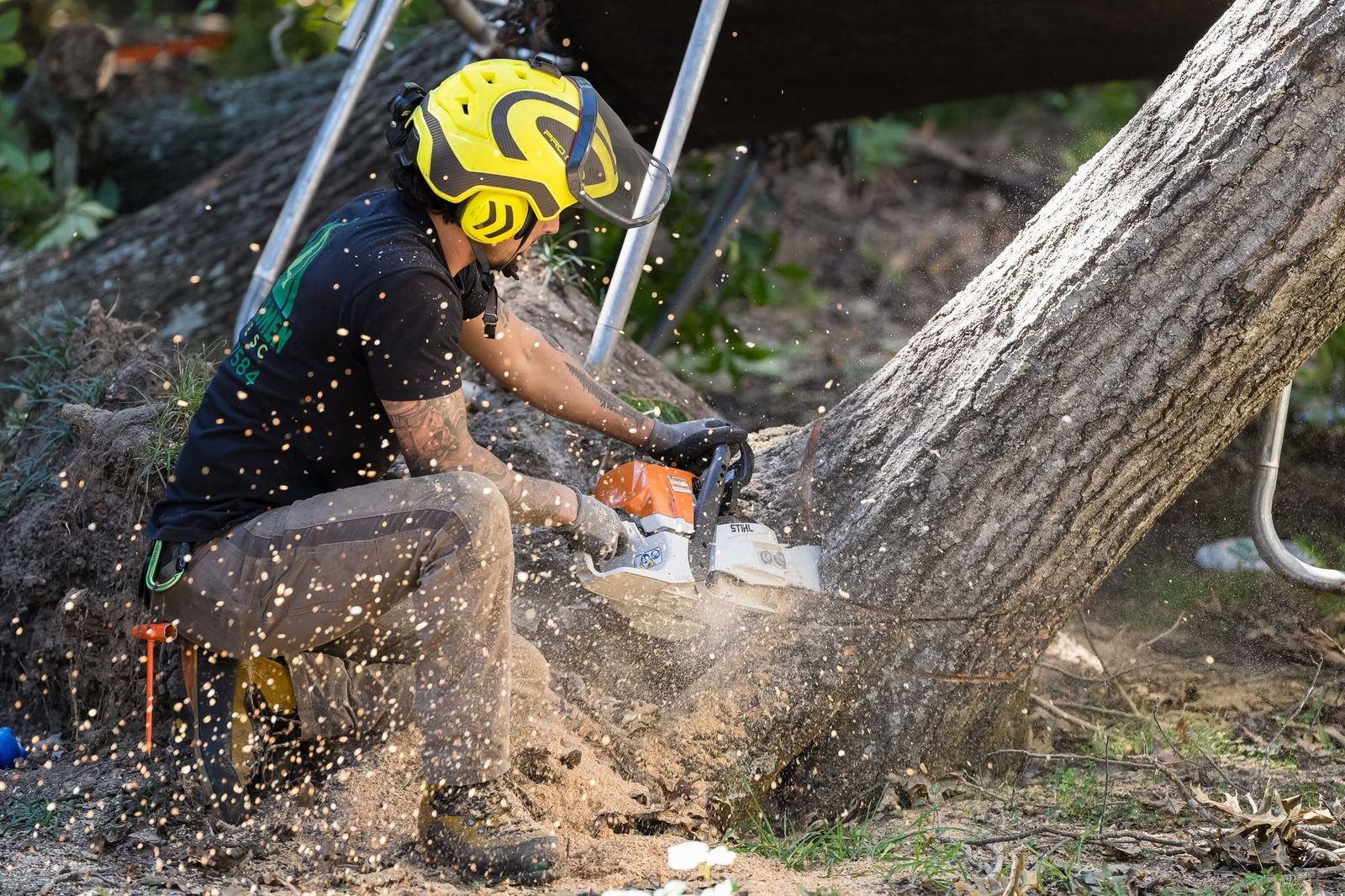
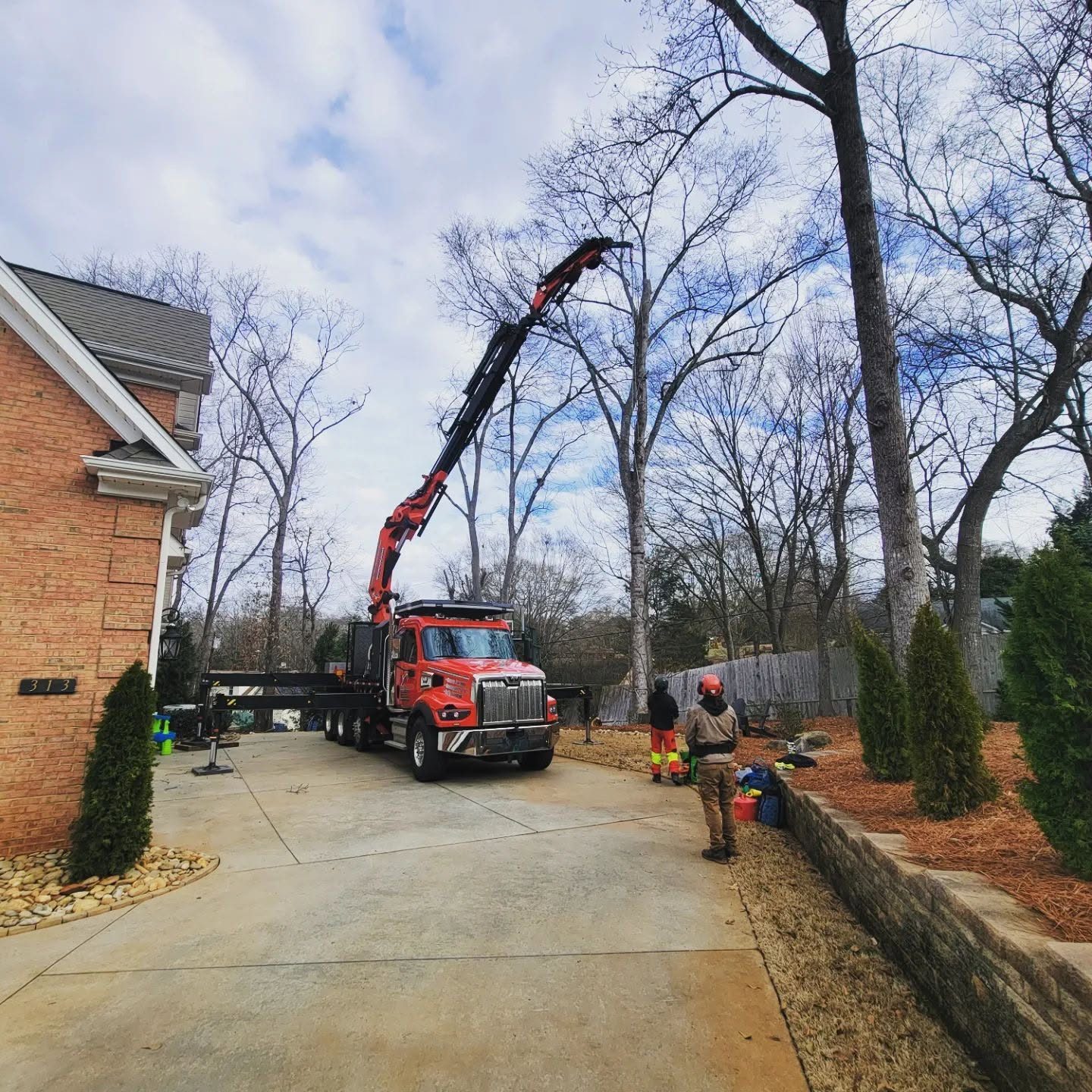
The signs worth acting on: limbs touching or overhanging the roof, dead wood in the upper canopy that drops after every storm, leaves and sticks packing the gutters year-round, and a trunk that leans toward the house. On a roofline job, a crew will usually rig and lower limbs in sections, or reach over the house with a grapple-saw crane truck, instead of dropping anything free. That slower, controlled method is what you are paying for. See our overview of tree service across the Upstate for how the work is scoped.
It helps to walk the property with the estimator and point at what bothers you. On a typical single-story ranch, the question is rarely just the one big limb. It is also the secondary branches behind it, the ones that will take its place in a few years once the light changes. Pruning back to a proper cut, or taking the whole tree when the structure is poor, is a judgment call best made while someone is standing under the canopy with you.
Photos taken from the corner of the yard, from the roof edge if you can safely see it, and of the base of the trunk tell a crew a great deal before anyone visits. Mention anything else that shares the space: a carport, a shed, a back deck, a pool fence. Those are the things that decide whether a job is a simple ground-based cut or a rigged, piece-by-piece lowering.
What tree work costs around Taylors
Taylors is an unincorporated community in Greenville County, about 16.6 miles east of Easley, and pricing here follows typical Upstate SC ranges. The figures below are typical ranges, not a quote. Tree Wisemen prices every job after a free estimate, and the same tree can land anywhere in a band depending on access and what sits underneath it.
| Scope | Typical range | What pushes it up |
|---|---|---|
| Small or medium tree removal, open yard | $300 to $900 | Easy access, clear drop zone |
| Large tree removal over a roof or fence | $900 to $2,000 | Rigging, crane work, limited access |
| Trimming and pruning, one tree | $250 to $900 | Height, deadwood, roof clearance |
| Stump grinding, one stump | $100 to $400 | Diameter, roots, tight access |
A removal in a back corner of a lot with a wide gate is a different job from one pinned between a carport and a neighbor's fence. Expect the estimate to say which one you have. The detail on full takedowns is on our Taylors tree removal page.
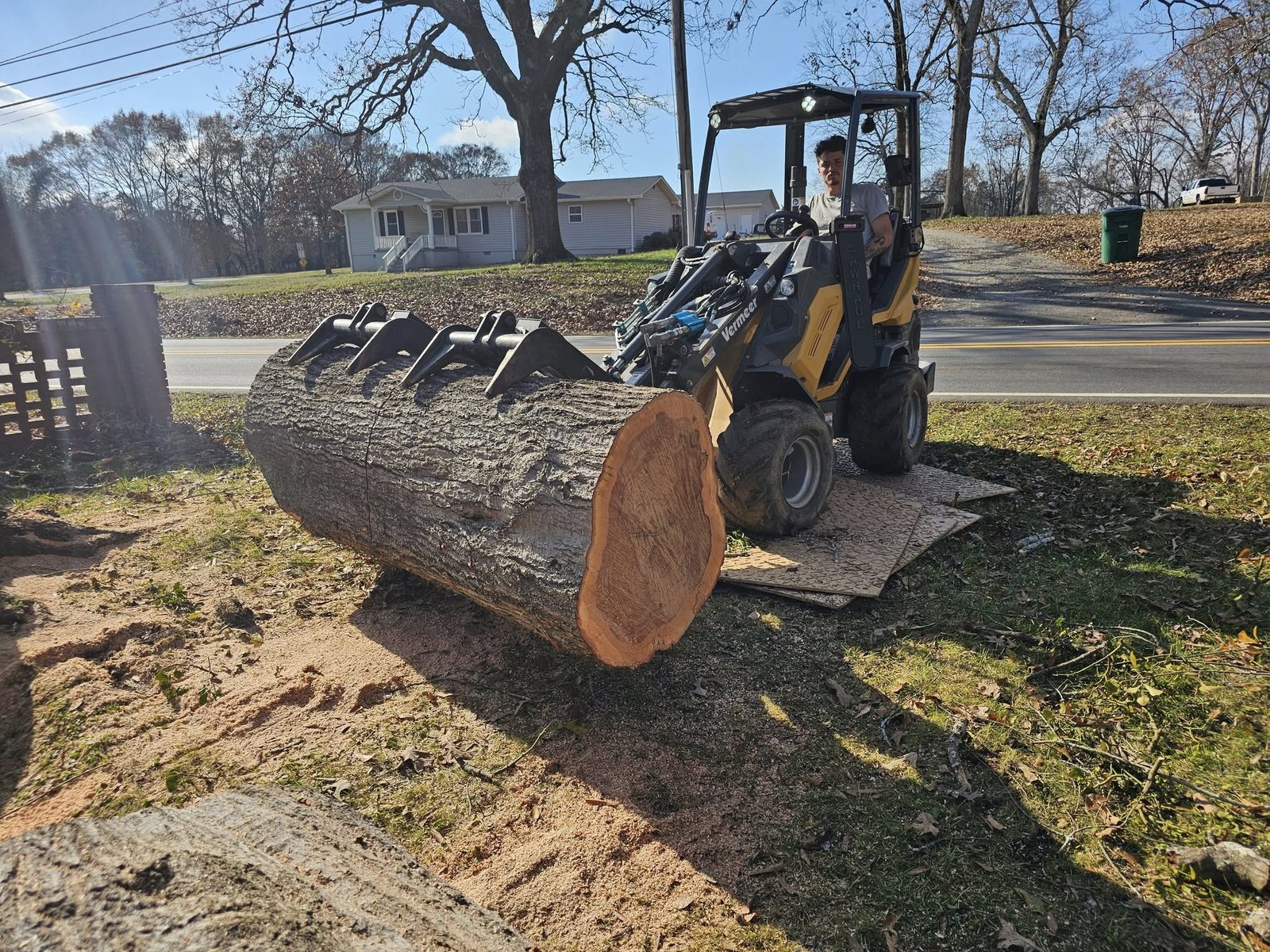
Several things move a price within these bands. Height and spread matter, but so does what happens to the wood afterward: whether it is chipped and hauled, cut into rounds and left, or stacked for you. A tree with dead or hollow sections takes more care to climb and rig, and a crew working from the bucket of a crane truck needs room to set up on the street or driveway. Where a compact loader on ground mats can protect the lawn, that can also change how the day is planned.
If you are comparing estimates, compare scope and not just the total. Ask whether cleanup, debris hauling, and stump work are included, and whether the number assumes the tree is dropped in one piece or lowered in sections. Two quotes that look far apart are often describing different jobs. Bundling a trim and a removal on the same lot can also make sense, since the crew is already on site with the equipment.
Storm limbs and the Upstate record
Older canopy takes the brunt of every storm that crosses the Upstate. Greenville County has 23 federal disaster declarations on record (2003-2026), and Hurricane Helene's September 2024 passage showed how many large, mature trees stand over homes in neighborhoods like these. Wet ground plus wind is what drops whole trees, and a limb that looked sound in summer can fail in the first gusty front of the season.
Watch forecasts from the National Weather Service in Greenville-Spartanburg, and do the trimming before the wind arrives, not after. For emergencies, Tree Wisemen runs 24-hour storm response. If a tree is already on the house, call or text (415) 850-7584 with photos. Keep clear of anything touching a service line, and call a roofer or structural contractor for the damage itself, since roof and structural repair is a licensed trade.
Planning ahead is cheaper than reacting. A tree you already know is questionable, with a split fork, a cracked limb, or lifting soil at the base, is worth having looked at in calm weather, when a crew can schedule the job and set up carefully instead of working in the dark with wet footing. After a storm, the same tree may be tangled with others and with lines, which complicates everything.
If a limb has landed on the roof, avoid climbing up to look at it yourself. Take photos from the ground, note where it is resting, and keep people out from underneath. A crew with a grapple-saw crane truck can often lift the weight off in controlled pieces, which is safer for the roof than dragging it off by hand.
Power lines, utilities, and the stump left behind
Ranch-house streets often have service drops running right through the canopy. OSHA's 10-foot rule binds workers rather than homeowners, but it is the right distance for anyone, and only workers trained as line-clearance tree trimmers under 29 CFR 1910.269 should work inside it. The agency's tree care safety guidance explains why this is the one place to never improvise. If a limb is on or near a line, stay back and call your utility.
Once a tree is down, the stump is the next decision. Grinding below grade lets you replant or lay sod, and the cost is usually a small share of the removal. If you plan to dig for a new fence, drain, or landscape bed afterward, SC811 requires three full working days' notice before excavation. Details on pricing and process are on our Taylors stump grinding page.
Roots are the other half of the picture. Large trees near a ranch house can have roots reaching toward the foundation, a driveway, or a buried line, and a stump grinder works best when the crew knows what is underground before the teeth start turning. Tell the estimator about any irrigation, drains, or utilities you know of. After grinding, the chips can be used as mulch in a bed or hauled off, whichever you prefer.
Checking a crew before they touch your roofline
South Carolina has no state license for tree removal, trimming, or stump grinding, so the usual contractor-license lookup does not apply to tree companies. What protects you instead is paperwork and proof: a current certificate of insurance showing general liability and workers' compensation, references from similar jobs, and photos of work over structures. Ask any crew, including us, for that certificate before work starts, and confirm coverage with the issuing agent. The SC Department of Insurance is the state's resource for insurance questions.
Tree Wisemen is family owned, based in Easley, and has worked the Upstate since 2020, with a 4.9-star rating across 71 Google reviews and BBB A+ accreditation since 2023. Not sure whether a tree needs to come out? The Clemson Home and Garden Information Center has solid guidance on tree health, and many oaks and pines can be pruned instead of removed. Send photos, and we will say which one we think it is.
Beyond paperwork, pay attention to how a crew talks about the job. A good estimator explains how limbs will be lowered, where equipment will sit, how the lawn and roof will be protected, and what happens to the debris. Vague answers about a roofline job are a warning sign. You are entitled to a clear description in writing before anyone starts a saw, and a crew that welcomes questions is usually the one that works carefully.
Beyond that, a straightforward free estimate, photos of comparable work over houses, and a plain explanation of the plan go a long way. Taylors homeowners have plenty of reasons to be careful with the trees closest to the house, and a thoughtful conversation before the work begins is the best protection against surprises afterward.