A tree at the water's edge is a different job
Drive north out of Seneca toward Lake Keowee and the work changes. A tree in a flat backyard can drop where the crew chooses. A tree leaning over a dock, a seawall, a boathouse or a steep bank has far fewer safe options. The trunk can't land in the water, the rigging has to protect whatever sits below, and equipment often can't reach the base at all.
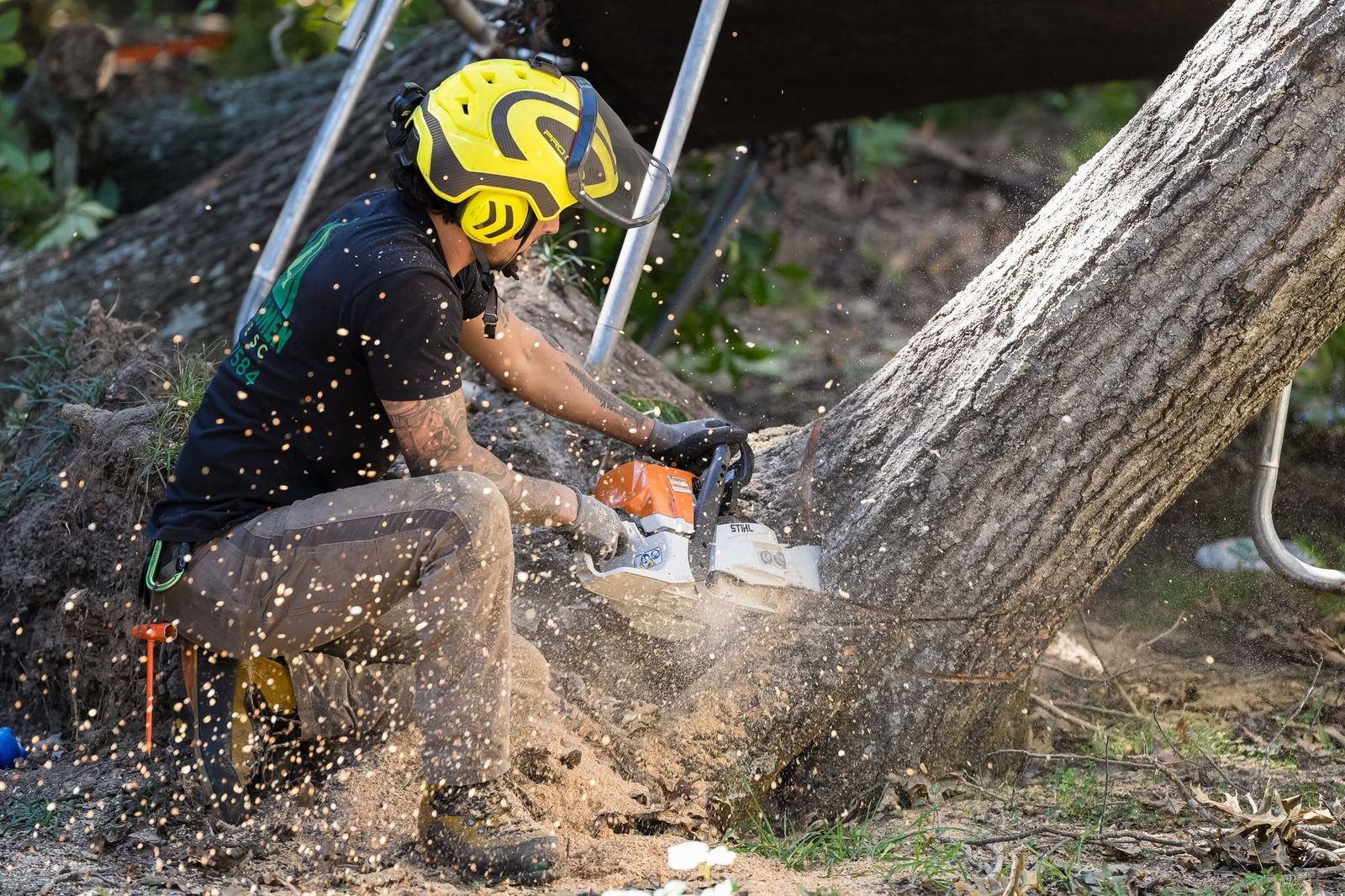
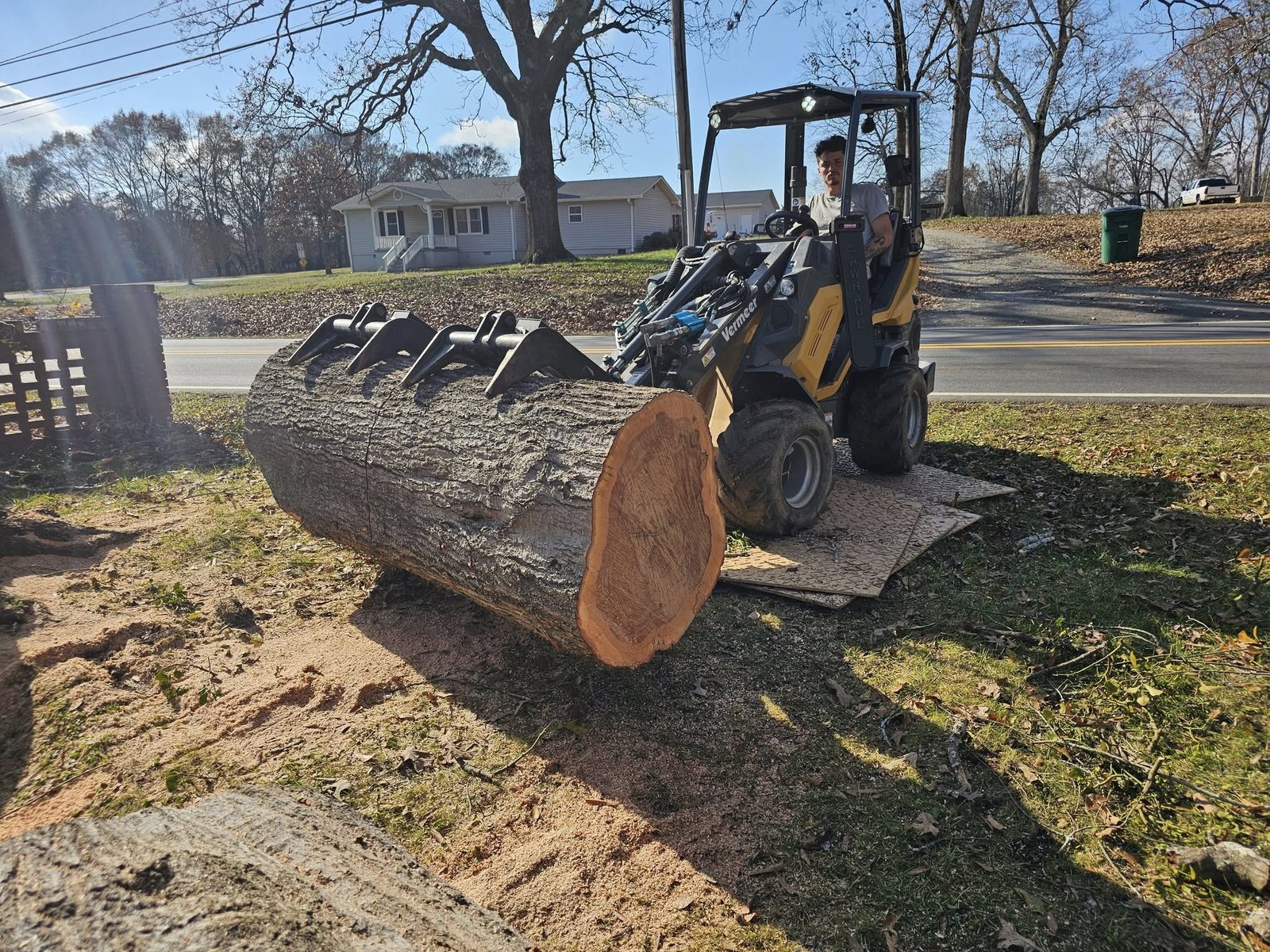
That is why lake-lot jobs usually get quoted differently from yard jobs. Crews may need to section the tree down piece by piece, lower each piece on ropes, and haul debris up a slope by hand or with a compact loader on ground mats to protect lawns and shorelines. Each extra step adds time, which is why a lakeside removal tends to sit near the upper end of the typical Upstate range rather than the bottom.
Two practical notes. If the tree is on a shoreline strip you don't own outright, confirm who controls that land before anyone cuts. And any roof, dock or structural repair after a tree strike is a licensed trade, separate from the tree work itself.
Consider what the crew actually has to think about before the first cut. Where will the weight go when a limb lets go? Is there a boat lift, a floating dock or a pontoon tied up underneath? Is the ground between the road and the tree firm enough for a truck, or will it rut a lawn that took years to establish? On a lake lot, the answers are rarely simple, and the order of the cuts matters as much as the cuts themselves.
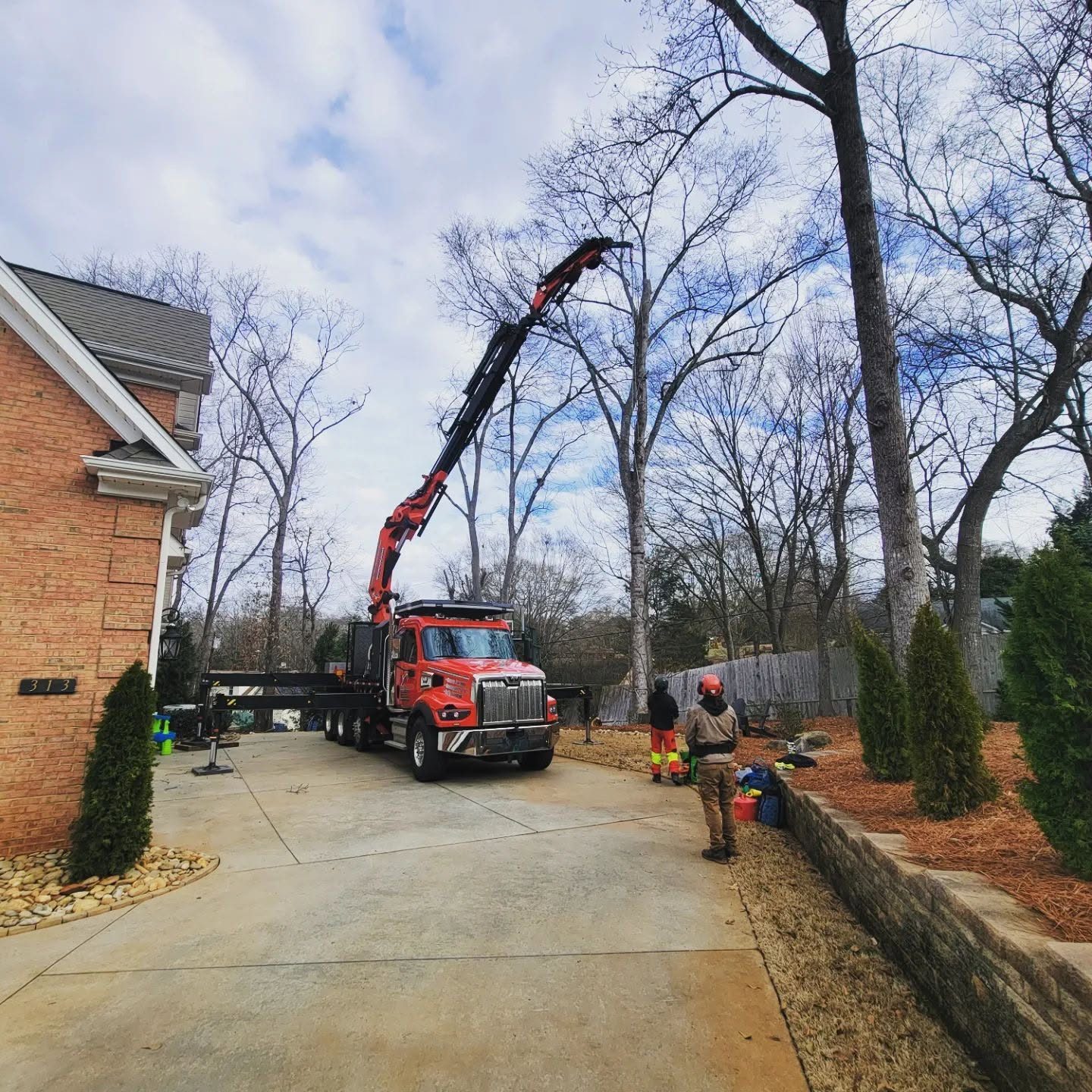
Steep driveways and narrow access roads are common on lots that sit above the water. A grapple-saw crane truck can reach over a roofline and lift sections out cleanly, but only if it can get close enough and set up on stable ground. Where it can't, the work falls back on climbing, rope rigging and carrying wood out by hand. Neither approach is wrong. They simply cost different amounts of time, and that is what you are paying for.
Sending photos ahead of the visit helps. Show the whole tree, the base, and especially whatever is underneath or beside it, such as the dock, the seawall, a deck or the service line to the house. A crew that has seen the setup before arriving can talk about the real plan instead of guessing.
What tree work costs around Seneca
These are typical Upstate South Carolina ranges, not a quote. Tree Wisemen prices each job after a free estimate, and the table shows where local conditions move a job up or down.
| Scope | Typical range | What pushes it higher |
|---|---|---|
| Tree removal | $300 to $2,000 per tree | Lean over a dock or roof, slope, no truck access, crane or rigging needs |
| Trimming and pruning | $250 to $900 per tree | Height, dead wood over structures, work near utility lines |
| Stump grinding | $100 to $400 per stump | Diameter, roots near seawalls or drain lines, tight access |
A small, open-yard pine sits near the bottom of each row. A large hardwood hanging over a boat slip belongs near the top. You can read more about what a full job involves on the Seneca tree removal page, and the stump grinding page covers what happens after the tree is down.
Around a town of roughly 9,000 people, with lake lots to the north and ordinary neighborhood lots closer in, the spread between the low and high end is real. A homeowner with a dead tree in an open side yard and a clear spot for the truck is in a very different position from one whose only access runs past a dock and a retaining wall. Both are normal Seneca calls.
When you compare estimates, compare what is included. Does the number cover hauling the wood and brush away, or only cutting it down? Is stump grinding listed separately? Is cleanup of sawdust and small debris part of the job? Two quotes that look far apart are often covering different amounts of work. Ask each crew to say plainly what they will leave behind.
Trimming is worth a mention because it is often the cheaper way to solve a problem. A tree with one heavy limb over the roof or the boathouse may not need to come down at all. Removing the dead or overextended wood can reduce the risk, keep the shade, and cost a fraction of a full removal. If you are unsure which you need, ask for both options at the estimate.
Storms, wind and the Oconee County record
Oconee County has 21 federal disaster declarations on record (2004-2026), and storm and wind damage account for much of that history. Hurricane Helene reached the Upstate in September 2024, and saturated ground plus gusts is the combination that brings trees down on roofs, driveways and lake docks. When a tree is already leaning or the soil at its base is heaving, waiting for the next front is the expensive choice.
Watch the National Weather Service Greenville-Spartanburg forecast before scheduling anything on a tall tree, because wind makes rigging work unsafe. For active storm damage, Tree Wisemen runs 24-hour storm response; call or text (415) 850-7584 and send photos so the crew can see what is on the ground before arriving.
Warning signs are worth learning. A new lean that wasn't there last month, soil lifting on one side of the trunk, fresh cracks in a large limb, mushrooms or soft rot at the base, and dead branches in an otherwise green crown all deserve a look. Near the water, shoreline erosion can undercut roots over time, so a tree that seemed stable can slowly lose its footing without any dramatic event.
If a tree has already fallen, keep people and pets away from it. A trunk resting on a roof, a fence or another tree can be under tension, and cutting the wrong piece can make it shift suddenly. Take photos from a safe distance, call your insurance company about coverage if a structure is damaged, and let the crew handle the removal. Wood that has landed on a dock or in shallow water adds another layer of care, since the weight can move unpredictably.
Power lines, buried lines and burning
Seneca's mix of lake lots, rural stretches off SC 130 and SC 28, and in-town streets means service lines are everywhere. OSHA's 10-foot rule binds workers rather than homeowners, but it is the right distance for anyone. Only workers trained as line-clearance tree trimmers under 29 CFR 1910.269 may work inside 10 feet of energized lines; see OSHA's tree care safety guidance. If a limb is touching a line, stay back and call the utility.
If the job involves a new stump hole, fence or replanting, call SC811 first. South Carolina requires three full working days' notice before excavation.
As for burning brush, South Carolina does not issue burn permits. Outside city or town limits, state law requires notifying the SC Forestry Commission before you burn outdoors, and land-clearing debris near woods or grass must follow SCDES Regulation 61-62.2. The rules are on the SC Forestry Commission fire and burning page. Hauling debris away is often the simpler route near the lake.
Lake properties often have lines running down to docks for lighting and lifts, and those are easy to forget when a tree is leaning toward the water. Point out every line you know about, above or below ground, when the crew walks the site. Roads like US 123 and US 76 carry heavier utility corridors, so a tree near the road edge deserves a closer look before anyone climbs it.
Dry brush and wood piles near a wooded lot are a real fire concern, especially in late winter and during dry spells. Even where burning is allowed after notification, wind can carry embers further than expected. Chipping, mulching or hauling is often the calmer choice on a lot with woods on one side and a house on the other.
Hiring a crew for Seneca work
South Carolina has no state license for tree removal, trimming or stump grinding, so the protection is paperwork you collect yourself. Ask any crew, including us, for a current certificate of insurance covering general liability and workers' compensation before work starts, and check it with the carrier or through the SC Department of Insurance if anything looks off. Then ask for references and photos of similar jobs, especially near water.
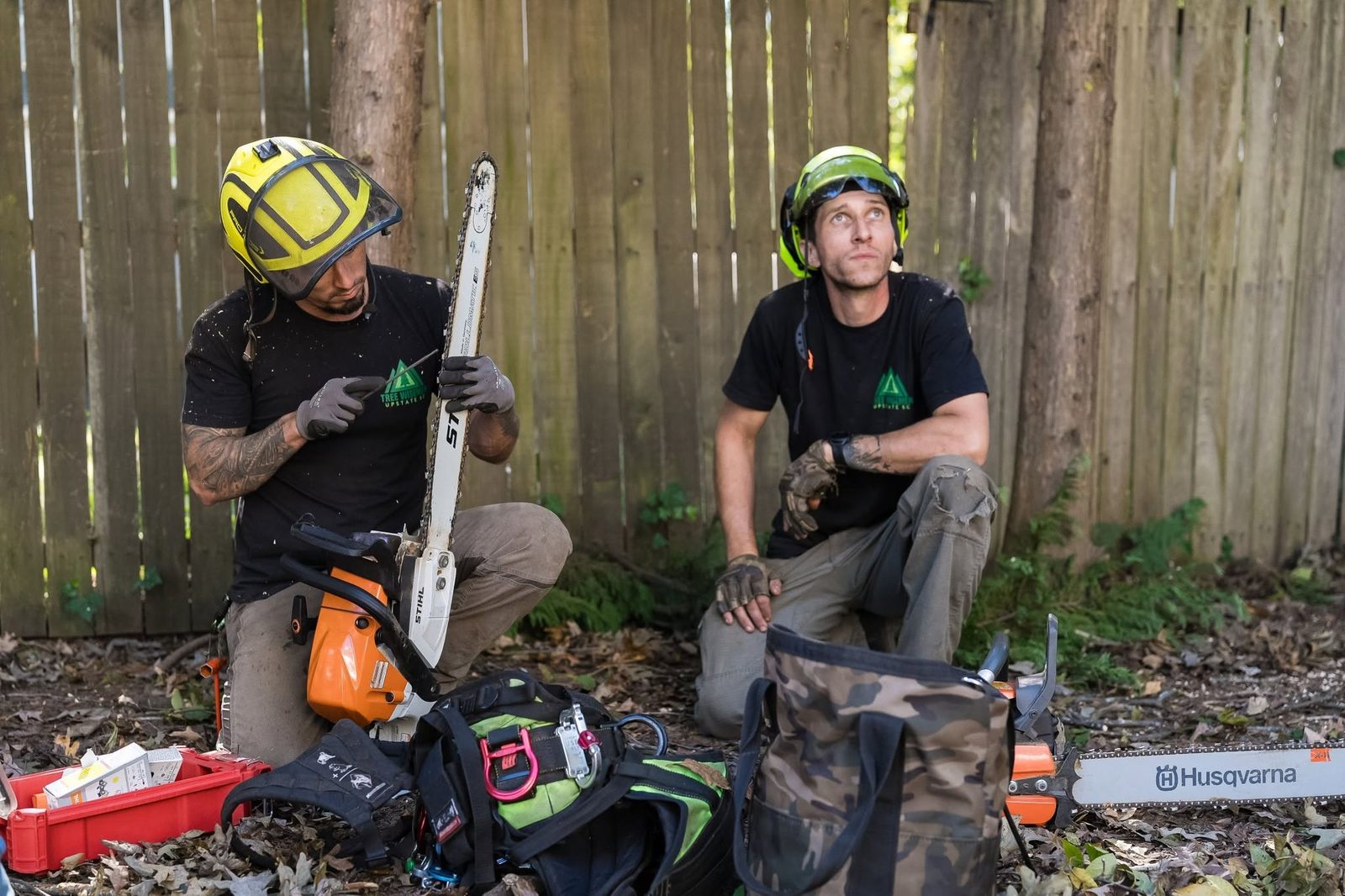
Tree Wisemen is family owned, has worked the Upstate since 2020, and is based in Easley, about 23.8 miles east of Seneca. It holds a 4.9-star rating from 71 Google reviews and BBB A+ accreditation since 2023. Crews work with grapple-saw crane trucks, chippers, a stump grinder and a compact loader. For species questions or deciding whether a tree is worth saving, Clemson's Home and Garden Information Center is a good neutral reference.
Be wary of anyone who knocks on the door after a storm asking for payment up front, offers a price without looking at the tree, or can't show you any recent work. A good estimate walks the property, looks at the access, and explains what will happen to the wood, the brush and the stump.
Because Seneca sits about 23.8 miles from Easley, the drive is manageable, and free estimates are offered within 50 miles of that base. If your property is closer to the lake or farther toward the Georgia line, a few photos by text can often get the conversation started before anyone makes the trip.