Mulched in place: what a sloped Pickens County lot looks like a month later
Drive out of Easley toward the foothills and you see the same thing on lot after lot: a back acre or two of privet, sweetgum saplings, vines and cedar growing up a slope too steep to push into piles. The old way was to shove it all into a heap and burn it. Mulching skips that step. The machine grinds the growth where it stands and leaves a layer of chips across the ground.
A month later, the lot does not look like a bare-dirt clearing. The stumps are cut low, the roots are still in the soil holding the slope, and the chip layer covers the surface. Rain hits mulch instead of bare clay, which matters a great deal on Upstate red clay. Grass and ground cover usually begin to come through the chips within weeks. Expect some thin spots where the growth was sparse, and expect the first heavy rain to show you where water wants to run. That is the honest picture: covered and stable, not manicured. It's also the first thing to ask a crew about, because a lot cleared to bare soil on a slope behaves very differently.
Why skipping the burn pile matters in South Carolina
South Carolina does not issue burn permits, but outside city or town limits state law requires you to notify the SC Forestry Commission before burning outdoors, and land-clearing debris near woods, brush or grassland must follow SCDES Regulation 61-62.2. The Forestry Commission's fire and burning page explains the notification process. A large pile of green brush also smolders for days, throws smoke across neighbors' yards, and can get away from you in a dry spell.
Mulching sidesteps most of that. There is no pile to tend, no hauling of limbs to a dump, and no ash scar on the ground. If you do have material that can't be mulched, such as large trunks you want removed, that is a separate conversation with a crew about full land clearing.
What mulching can and can't handle
Mulching is the right tool for dense understory, overgrown fence lines, trails, and thickets of small trees. It is not the right tool for everything. Large mature hardwoods are usually felled and removed rather than ground, and rock, old wire and buried debris are hazards to any cutter. Steep banks may be too steep for a machine to work safely, and a good crew will tell you which sections need hand work instead.
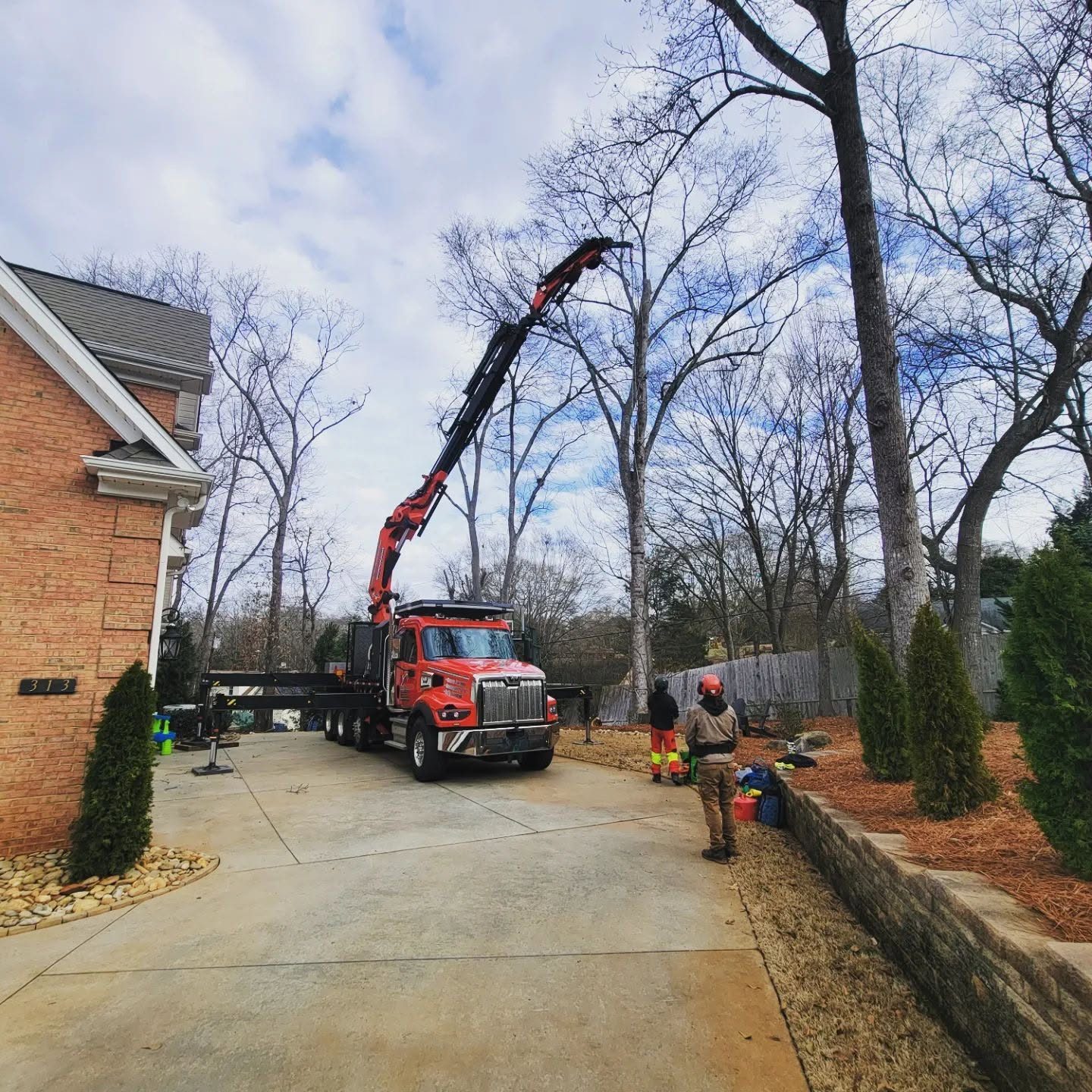
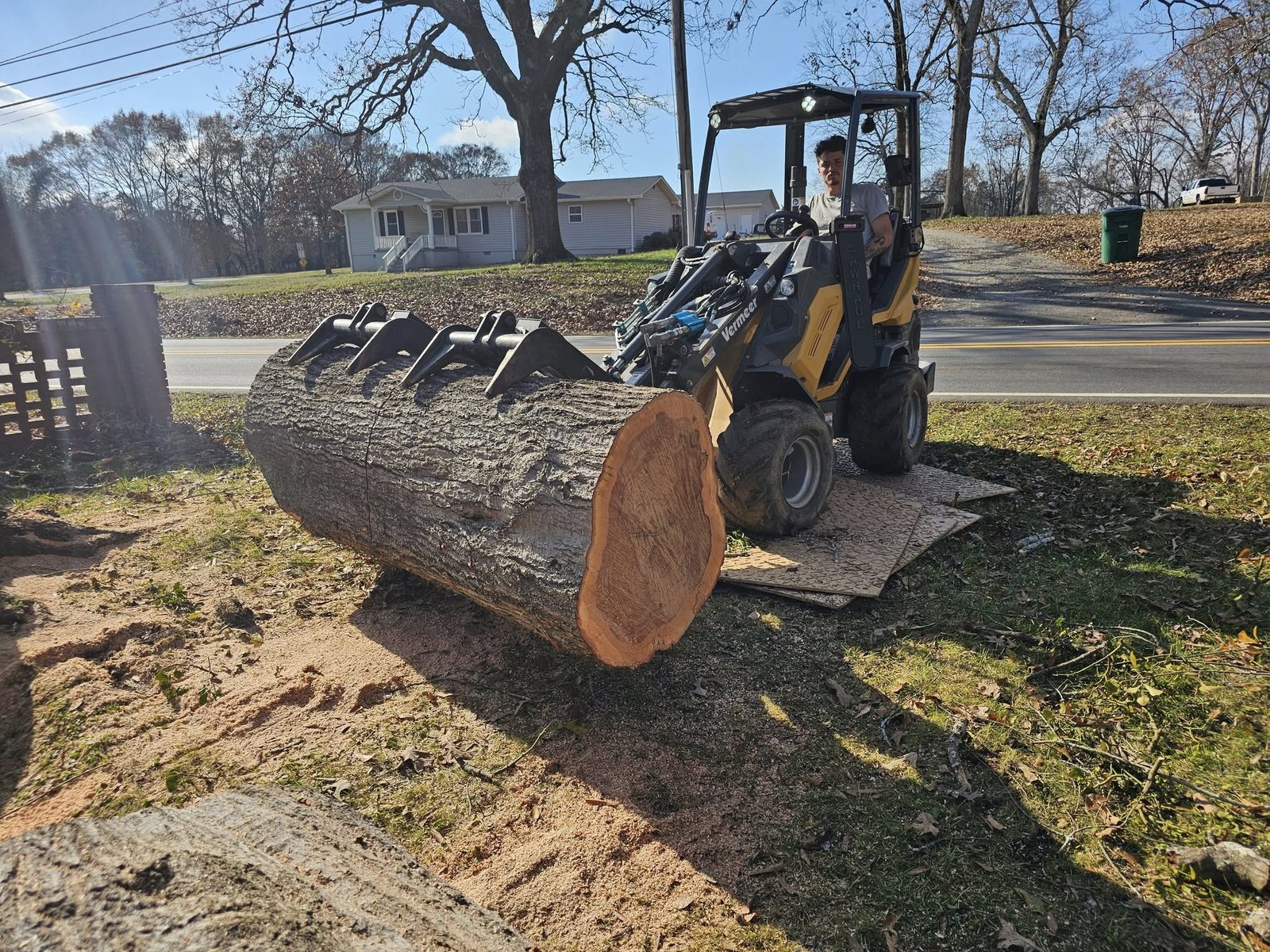
If your property is mostly thick undergrowth rather than trees, brush clearing may be the more accurate description of the job. Tree Wisemen is a family owned crew based in Easley and works with grapple-saw crane trucks, chippers, a stump grinder and a compact loader on ground mats, so larger trees and tight spots can be handled alongside the mulching. Ask any crew what machine they would use on your slope and how it will be kept from rutting wet ground.
What drives the per-acre number
Typical Upstate pricing is $1,500 to $5,000 per acre. The spread comes from a few things you can see for yourself before anyone arrives:
| Scope | Typical range per acre |
|---|---|
| Light brush, vines and saplings on gentle ground | $1,500 to $2,500 |
| Mixed thicket with small hardwoods and cedar | $2,500 to $3,800 |
| Dense stands on a slope, or with difficult access | $3,800 to $5,000 |
Stem size and density are the biggest factors, then slope, then how far the machine has to travel to reach the work. Wet ground can add delay because a heavy machine on saturated clay does damage. These are typical ranges, not Tree Wisemen's quote. They price each job after a free estimate within 50 miles of Easley, and you can text photos of the area to (415) 850-7584 to start. For a fuller breakdown, see the forestry mulching cost per acre page.
Timing, weather and the ground underneath
Pickens County has a long record of federal disaster declarations (23 declared events, 2005-2026), and Hurricane Helene in September 2024 reminded the Upstate how fast a saturated slope can move. That history is a reason to plan mulching for a dry stretch rather than the middle of a wet spell. Check the National Weather Service Greenville-Spartanburg forecast before you schedule, and avoid starting work right before a multi-day rain on a fresh slope.
If you plan to seed or plant afterward, the Clemson Home and Garden Information Center has guidance on ground covers and erosion control suited to Upstate soils. If any part of the work involves digging, such as fence posts, a drive or a pond, SC811 requires three full working days' notice before excavation (sc811.com). Mulching itself usually stays at the surface, but ask your crew where their cutting depth ends.
Vetting a crew before the machine arrives
South Carolina has no state license for tree removal, trimming or stump work, so the protection is in what you ask to see. Request a current certificate of insurance for general liability and workers' compensation from any crew, including us, before work starts. Ask for references and photos of similar jobs on similar slopes. The SC Department of Insurance is the right place for questions about coverage.
Also ask what the finished ground will look like, how wide a buffer will be left along creeks and property lines, and who is responsible for any overhead lines. Only workers trained as line-clearance tree trimmers may work inside 10 feet of energized lines, per OSHA's tree care safety guidance, and that is a good distance for anyone to respect.