Four photos that turn a guess into a number
A Spartanburg yard can hide a lot from a phone call. A tree on a wide lot off US 29 and a tree of the same height squeezed behind a fence near the I-85 corridor can be priced hundreds of dollars apart, and nothing in the sentence "I have a big oak" tells a crew which one you have. The fix is cheap: send pictures. Tree Wisemen takes calls and texts at (415) 850-7584, and customers can text photos straight to that number, which is how most honest phone numbers get made.
Here is what to send, in order of how much each one moves the price:
- The whole tree, top to bottom, from far enough back to see the crown. Height and spread decide how much wood comes down and how it has to be handled.
- What is underneath and beside it. Roof, fence, pool, shed, septic lid, power drop. Anything the tree could land on turns a drop-fell into a piece-by-piece job.
- The path in. Gate width, driveway slope, and whether a truck can get within reach of the trunk. A crew that can drive a chipper close is cheaper than one hand-dragging brush across the yard.
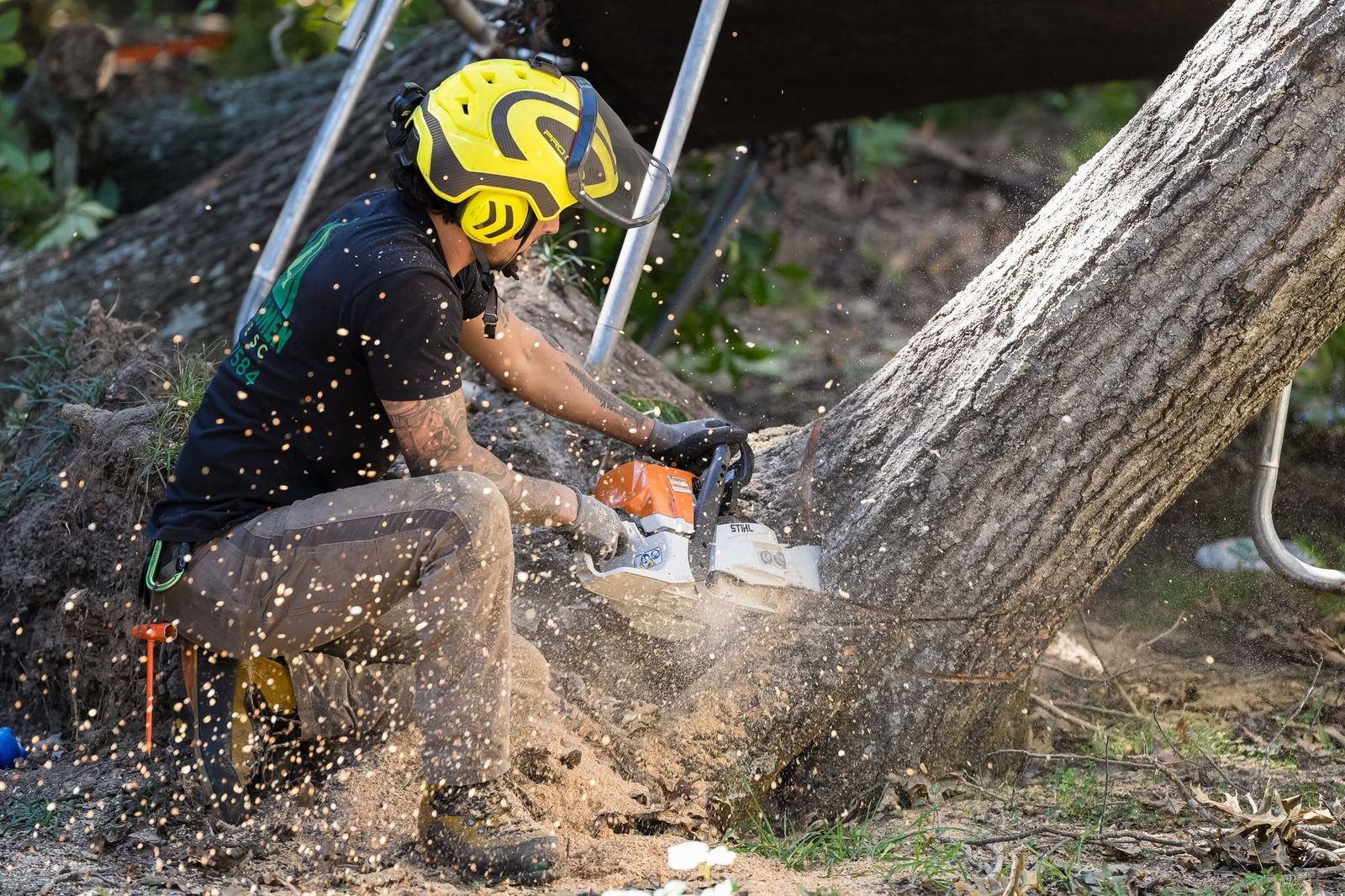
- The base of the trunk. Fungus, cracks, a lean, or roots lifting the soil tell the crew whether the tree is sound or already failing.
Add three facts in words: roughly how tall you think it is, whether you want the stump ground, and whether the wood stays or goes. With those, a phone range is useful. Without them, any number you hear is a placeholder until someone walks the property. Free estimates cover a 50-mile radius from Easley, and Spartanburg sits about 38 miles east, so an on-site look is normally part of the process rather than a special trip.
What Spartanburg homeowners actually pay
Across the Hub City and the rest of the county, per-tree pricing follows the same few drivers: size, access, hazard, and cleanup. These are typical Upstate ranges, not a quote from any one company, and they assume the tree is a single trunk with normal access.
| Scope of work | Typical Spartanburg range | What drives it |
|---|---|---|
| Small tree, open yard (under ~30 ft) | $300 – $700 | trunk diameter, brush volume, haul-off |
| Medium tree, clear drop zone | $600 – $1,200 | height, whether it can be felled in sections |
| Large hardwood, near structures | $1,000 – $2,000 | rigging time, protecting roof and fence |
| Big or hazardous tree, crane or loader work | $1,800 – $2,000, and can pass $3,000 | equipment, leaning or storm-damaged wood, tight access |
A job priced at the top of that band is not a red flag by itself. It usually means more hours aloft, more equipment, or less room to work. If you want to see how the numbers shift by tree species, equipment, and cleanup choices outside Spartanburg, our full tree removal cost guide covers the broader Upstate picture.
Why the same tree costs more on a tight lot
Spartanburg is a mix: older in-town streets with mature trees close to the house, and newer subdivisions and rural stretches along US 176, US 221 and the I-26 and I-585 corridors where the yard is bigger but the driveway is long and soft after rain. Each setting pushes the price in a different direction.
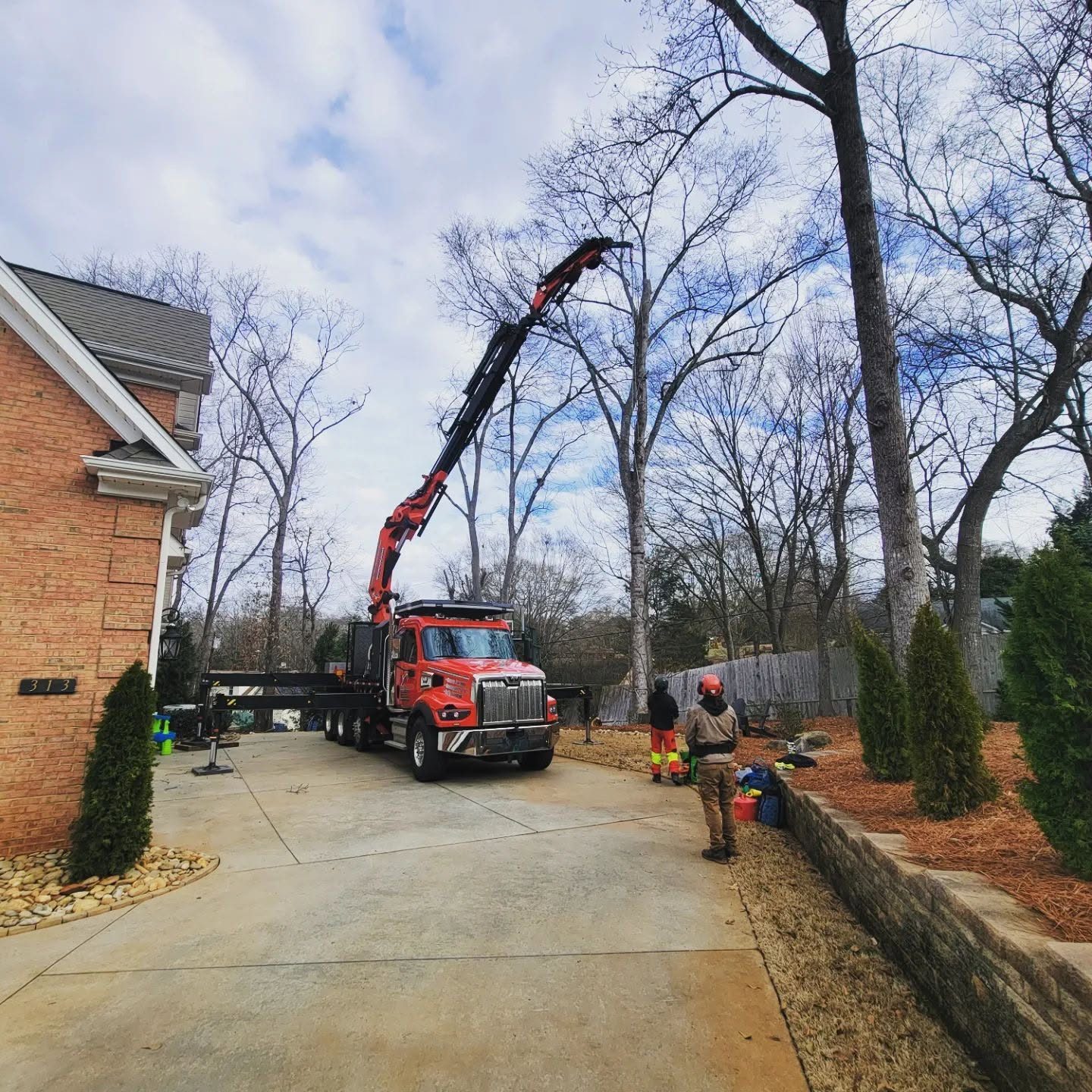
On a tight lot, the crew cannot just cut and drop. They climb or use a grapple-saw crane truck to lift sections out and swing them clear. That slows the work and adds equipment, which is why a tree beside a roofline sits in the upper rows of the table even when it is not especially large. When the trunk is too heavy or too close to a structure for rigging by hand, the job can move into crane territory, and our crane tree removal cost page explains what that adds and why it is sometimes the cheaper path overall.
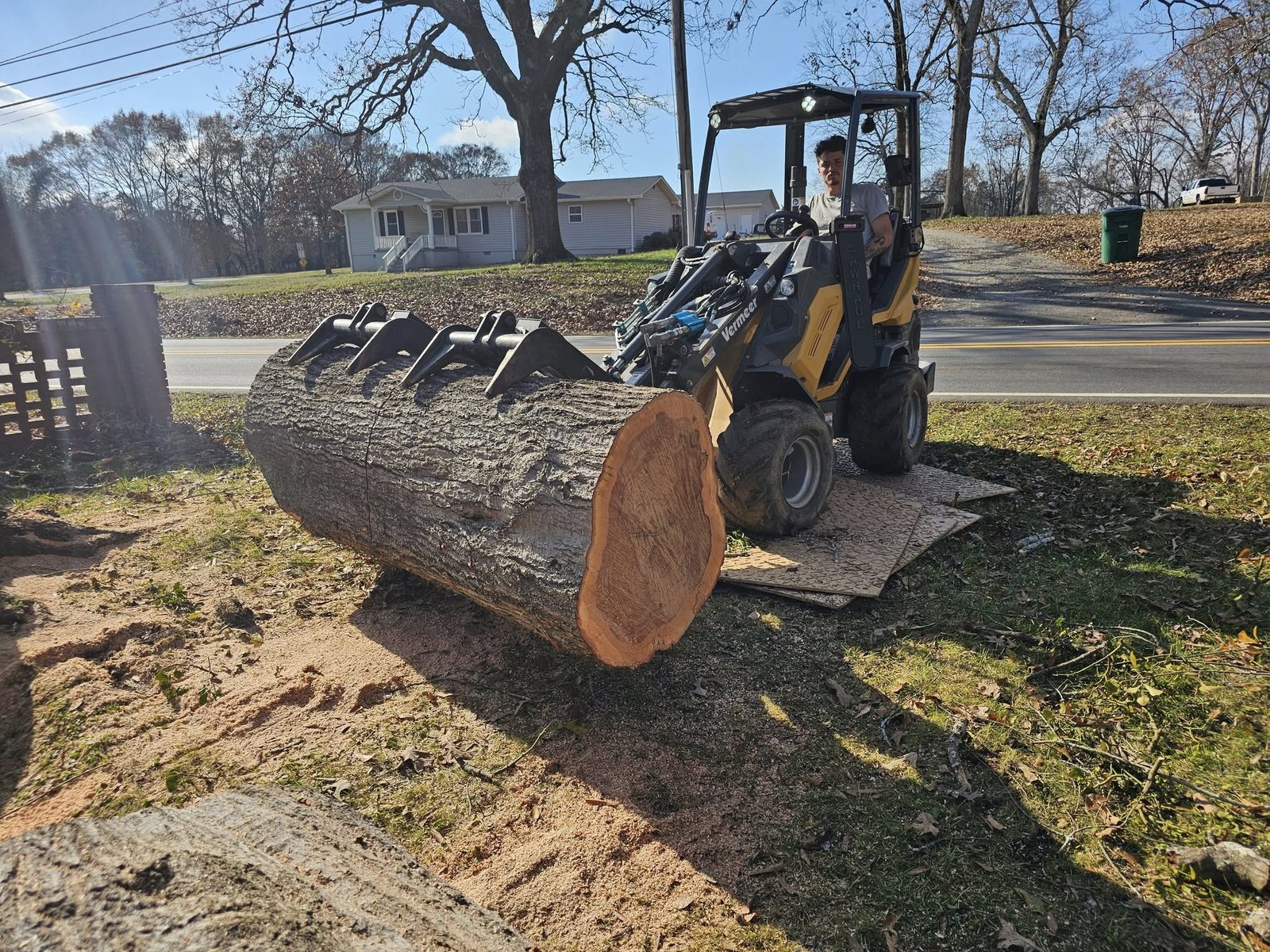
On a big rural lot, the opposite can happen: plenty of drop room, but a heavy chipper and loader need a way in. A compact loader on ground mats protects the lawn and moves logs quickly, but only if the gate and ground allow it. Say so in your photos. A dry-day estimate and a soggy-week job can differ if the ground cannot carry the machines.
Storms add their own pressure. 22 federally declared disasters touch Spartanburg County (1991-2026), and Hurricane Helene in September 2024 reminded the whole Upstate how quickly a sound-looking tree can become a hazard. Wet soil and wind loading are what bring trees down on houses and cars. Storm-damaged wood that is under tension, tangled, or resting on a structure is priced as hazardous work, and for good reason. For forecasts and warnings before a storm season, the National Weather Service office in Greenville-Spartanburg is the local source.
Power lines, utilities and the quote you should not accept
If any branch or the trunk sits within 10 feet of an energized line, stop and say so when you call. OSHA's 10-foot rule technically binds workers rather than homeowners, but it is the right distance for anyone, and only workers trained as line-clearance tree trimmers under 29 CFR 1910.269 may work inside it. Details are in OSHA's tree care safety guidance. A crew that says it can "just be careful" near a live service drop is telling you something about how it works.
If stump grinding or any digging is part of the plan, remember that SC811 requires three full working days' notice before excavation, so build that wait into your schedule. Ask whether the quote includes it or leaves it to you.
On the business side, South Carolina does not license tree removal, trimming or stump grinding, so there is no state license to look up. What protects you is a current certificate of insurance showing general liability and workers' compensation, references you can actually call, and photos of similar jobs. Ask any crew, including us, for a current certificate of insurance before work starts. The SC Department of Insurance is the right place to understand what those coverages mean. If the roof or structure is damaged by a falling tree, that repair is a separate licensed trade, so keep it out of the tree quote.
Cleanup, wood and burning: the line items that change the final bill
Most gaps between a phone number and an invoice come from cleanup, not cutting. Settle these before anyone starts:
- Haul-off versus leave-behind. Hauling logs and brush away costs more than cutting them to length and leaving them. Chipped brush can often be left as mulch.
- Stump. Ask whether grinding is included or a separate line, and how deep. A stump left standing is a decision, not an oversight.
- Burning your own debris. South Carolina does not issue burn permits. Outside city or town limits, state law requires notifying the SC Forestry Commission before you burn outdoors, through their fire and burning page or the county phone line. If the brush sits next to woods or grassland, notification is required and the burn must follow SCDES Regulation 61-62.2. Inside town limits, check local rules first.
When you compare bids, make sure each one covers the same scope. A low number that skips haul-off and stump work is not lower. If you are still deciding who should do the work, our Spartanburg tree service page lays out how the process works from first call to cleanup. For general guidance on whether a tree needs to come out at all, Clemson's Home and Garden Information Center is a trustworthy neutral source.