Old shade trees, sidewalks, and what sits underneath
Drive the older streets of a county seat like Laurens and the pattern is obvious: big shade trees planted generations ago, sidewalks heaved into little ramps, and roots that have found every crack in a driveway. Those trees are often beautiful and often a real liability at the same time. The roots that lifted the walk may also be wrapped around a sewer line, a water service, or the footing of a porch.
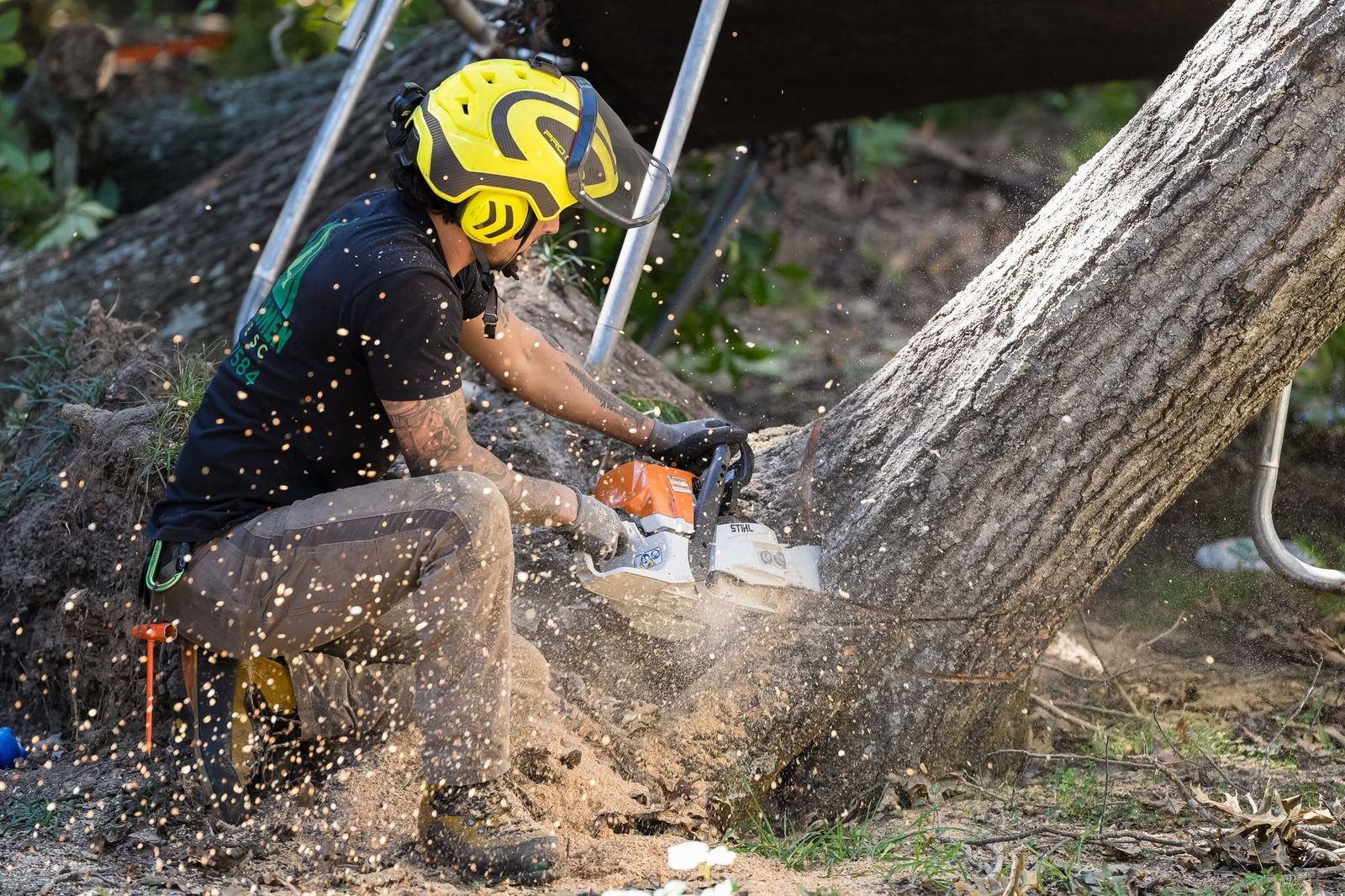
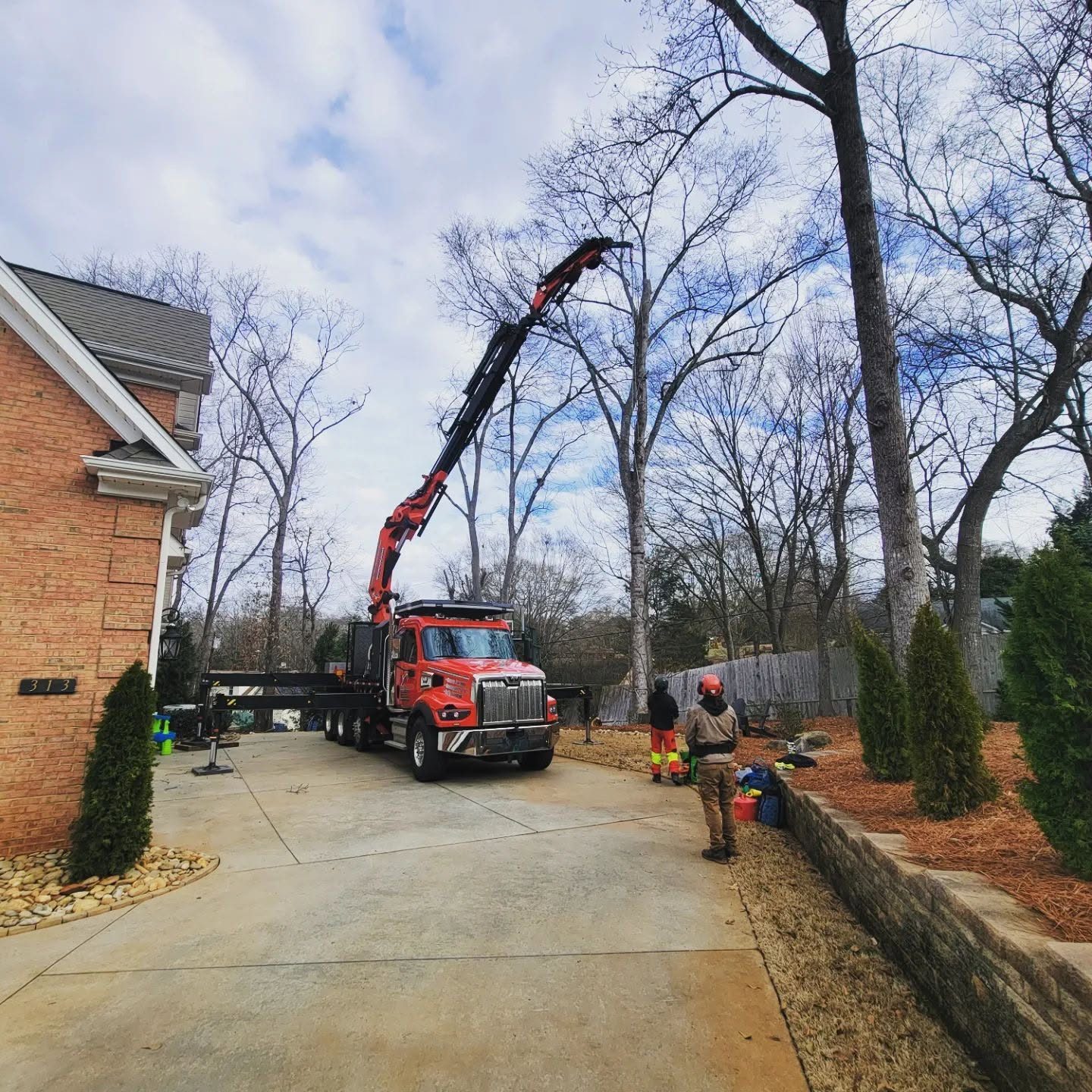
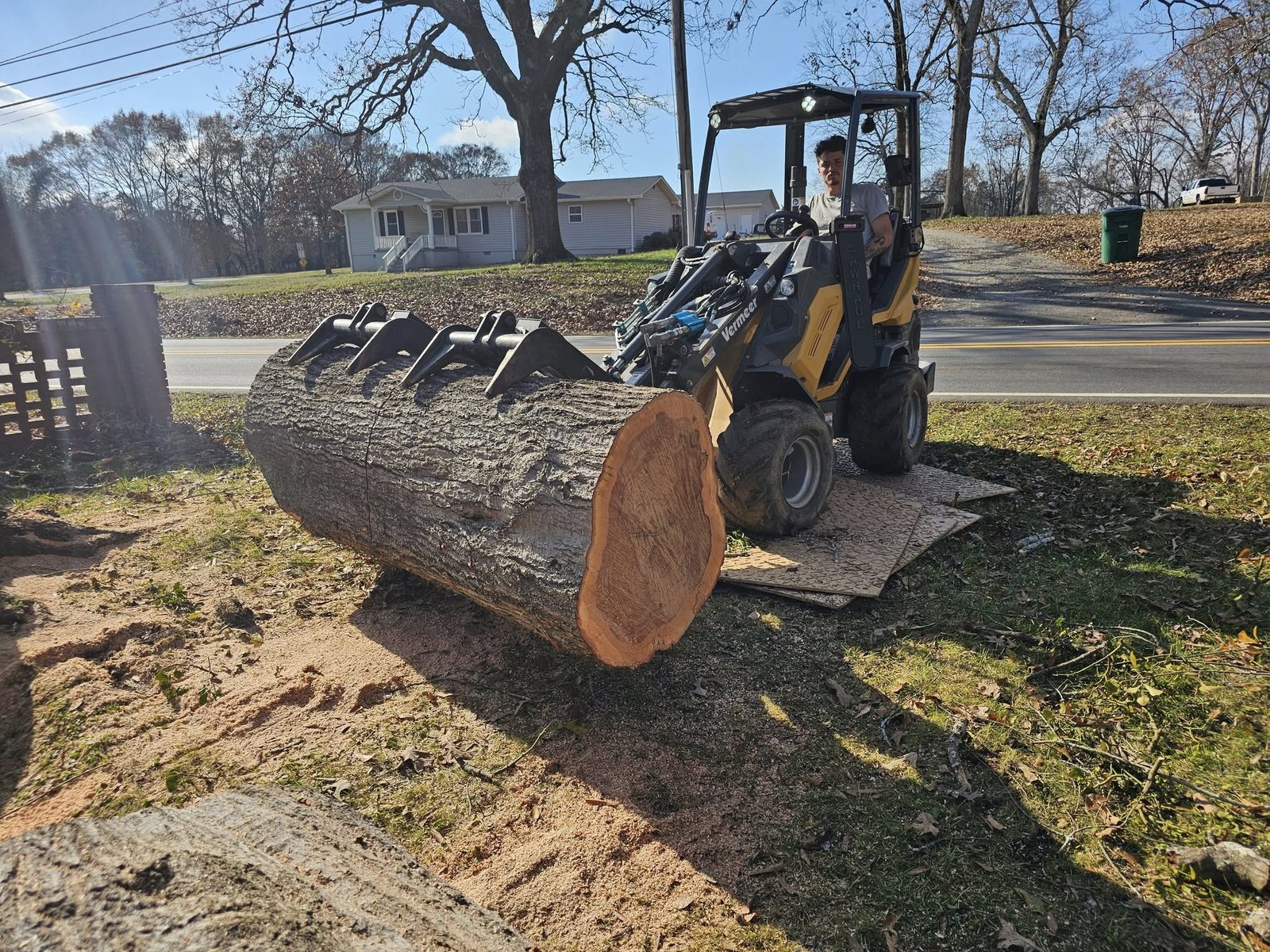
That is why removing a mature tree beside an older home is a different job from dropping a pine in an open field. The crew has to think about the ground as much as the canopy. A grapple-saw crane truck lets a crew lift sections off in controlled pieces instead of dropping them, and a compact loader running on ground mats keeps weight off lawns, pavers, and septic fields. Ask any crew how they plan to protect the surface and what is below it. A good answer is specific. A vague one means your yard is the cushion.
Older lots add their own small complications. Narrow side yards leave no room to drop anything, a chain-link fence may sit tight against the trunk, and a mature canopy can hang over a neighbor's roof as well as yours. In those cases the work goes from the top down: limbs are roped and lowered, the trunk is taken in short sections, and each piece is set on mats or lifted straight to the truck. It is slower than a clean felling, and that extra care is exactly what you are paying for when a tree stands a few feet from brick, siding, or a front walk.
Roots deserve a second thought before anything is cut. A large tree that has stood for decades has often grown around its surroundings, and a root running under a slab or a sidewalk panel can shift when the tree is gone. Good crews cut the trunk, leave the root system alone until the stump is dealt with, and talk through what happens next with the owner, instead of pulling on anything attached to a foundation or a pipe.
What drives the price on a big old tree
Around Laurens, typical removal runs $300 to $2,000 per tree, and a large or hazardous tree can pass $3,000. Those are typical Upstate SC ranges, not a quote; Tree Wisemen prices each job after a free estimate within 50 miles of Easley, and Laurens is about 39 miles southeast of the shop. The full tree removal cost guide explains the variables. Here is how they usually stack up for older-lot work:
| Scope | Typical range | Why it lands there |
|---|---|---|
| Small or dead tree, open access | $300 to $600 | Short climb, easy drop zone |
| Medium tree, yard with obstacles | $600 to $1,200 | Sectional rigging around fences and beds |
| Large shade tree near house or walk | $1,200 to $2,000 | Crane or careful rigging, mats, cleanup |
| Very large or hazardous tree | Toward the top, sometimes beyond | Decay, lean, or tight targets add time and risk |
Stump work is usually separate. If the roots are the reason you are calling, see stump grinding in Laurens so the whole problem gets solved in one visit.
A few things move a price within those bands. Access matters: a tree behind a house with no gate wide enough for equipment takes more hand work than one beside a driveway. Condition matters too, since a rotted or split trunk cannot be climbed or loaded the way a sound one can. And cleanup matters, because hauling every log and chip load away costs more than leaving wood on site. Telling the estimator up front what you want done with the debris keeps the number honest. Because Laurens sits along US 76, US 221, and I-385, getting a truck and crane to most addresses in town is straightforward, which keeps the travel side of the job simple.
Storms, soaked ground, and trees that were already tired
Laurens County carries 20 federal disaster declarations across 1984-2026, and Hurricane Helene reached the Upstate in September 2024. Old trees that survive one hard storm are not always sound afterward. Soaked soil loosens the root plate, and a tree can lean a little more each season. Watch for new soil cracks on one side of the trunk, mushrooms at the base, or dead limbs over the roof.
The National Weather Service office in Greenville-Spartanburg issues the wind and storm warnings for this area, and it is smart to look at big trees before the next system rather than after. If one has already come down, our tree removal service page covers storm and emergency work, and Tree Wisemen runs 24-hour storm response. For ID or health questions, the Clemson Home and Garden Information Center is a solid free reference.
A simple habit helps with older shade trees: walk around yours after any big rain or wind event and look up. A canopy that is thinner than last year, bark that is peeling away in sheets, or a hollow that has widened are all reasons to get a second opinion. Text photos from a few angles, one of the whole tree, one of the base, and one of any wound, and a crew can usually tell you whether it needs removal, careful trimming, or just watching.
Power lines, utilities, and the call before digging
Older neighborhoods often have service drops running right through the canopy. OSHA's 10-foot rule binds workers rather than homeowners, but it is the right distance for anyone: stay well away, and only workers trained as line-clearance tree trimmers under 29 CFR 1910.269 may work inside 10 feet of energized lines. The OSHA tree care page lays out the hazards plainly.
If the plan involves digging out roots or replanting, SC811 requires three full working days' notice before excavation. Buried gas, water, and communications lines run under many older yards, and tree roots do not respect where they are.
Service lines are also the reason to be careful about do-it-yourself work on a tree that has grown up through wires. A limb that looks harmless can be resting on a drop, and a branch that falls can pull a line off the house. If a tree is touching or tangled in wires, keep everyone back and call the utility before anyone climbs.
Vetting a crew without a state license to check
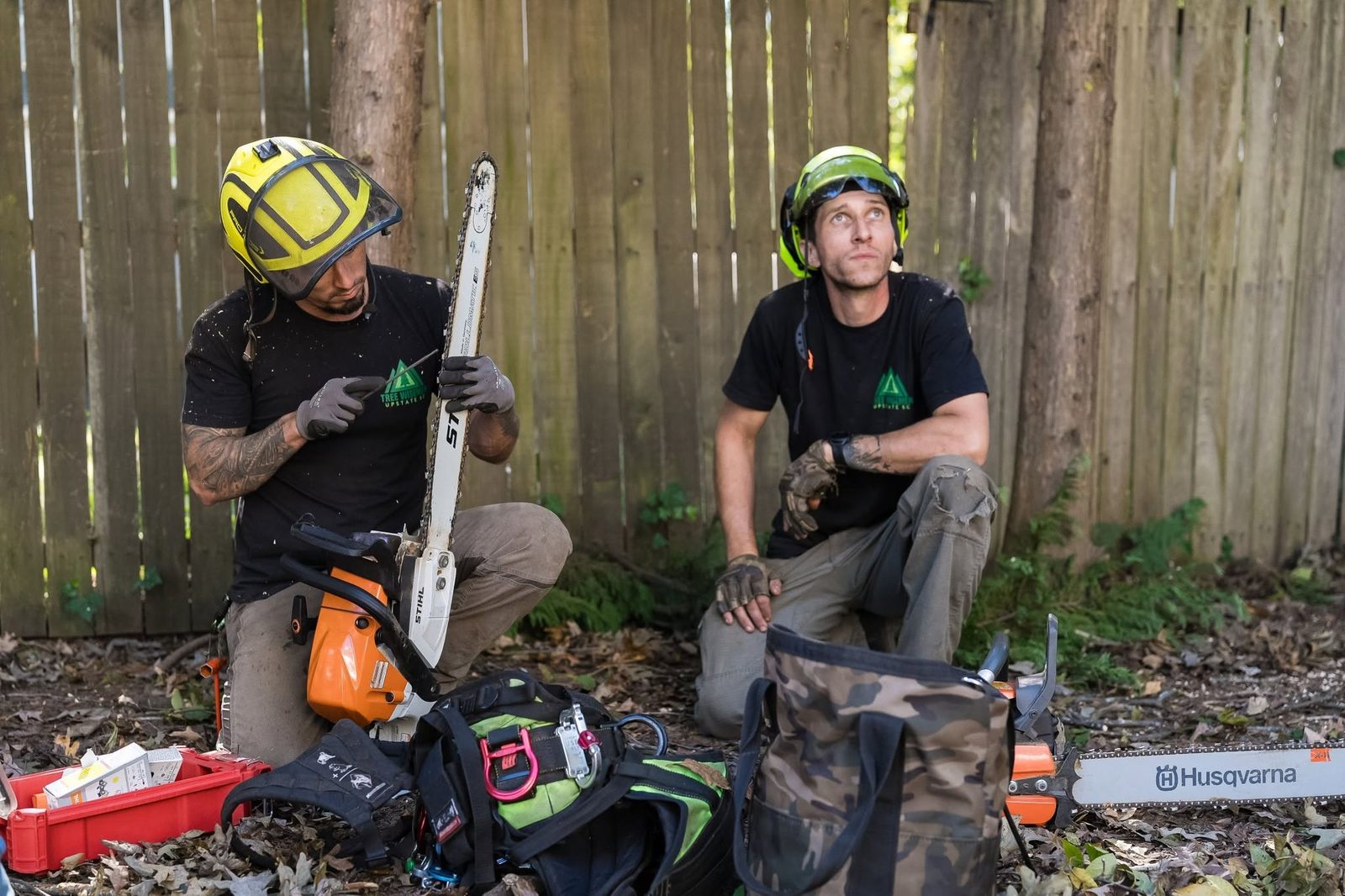
South Carolina has no state license for tree removal, trimming, or stump grinding, so there is no registry to look anyone up in. What protects you is paperwork and proof: a current certificate of insurance showing general liability and workers' compensation, references you can call, and photos of similar jobs. Ask any crew, including us, for that certificate before work starts, and confirm it with the insurer if you want to be sure. The SC Department of Insurance explains what to look for on coverage.
If a limb has already hit the roof, the structural repair afterward is a licensed trade, and that is separate from the tree work. Tree Wisemen is family owned, based in Easley, working the Upstate since 2020, with a 4.9-star rating from 71 Google reviews and BBB A+ accreditation since 2023. You can text photos of your tree to (415) 850-7584 and get a straight read before anyone climbs.
When you compare estimates for a tree beside a house, look past the bottom line. See whether each one says how the tree will come down, whether mats or a crane are part of the plan, and whether stump work and hauling are included or separate. Two numbers that look far apart are often describing different jobs.
Brush, burning, and what happens to the wood
Most removals end with chips and logs hauled away or left for you. Outside town limits, South Carolina does not issue burn permits, but state law requires notifying the SC Forestry Commission before burning outdoors; the details are on the fire and burning page. Debris near woods, brush, or grassland needs that notice and must follow SCDES Regulation 61-62.2. For a big shade tree beside a house, hauling is almost always the safer call.
Wood from an old oak or maple is worth thinking about before the crew arrives. Some owners keep the logs for firewood once they have seasoned, others want chips for beds, and some prefer everything gone in one trip. Say which you want during the estimate so the plan and the price match, and so nothing is stacked against a fence or the house where it will sit for months.