When the builder's pines outgrow the lot
Drive through almost any Simpsonville subdivision and you will see the same picture: a row of pines that were planted, or simply left standing, when the houses went up, and that now tower over roofs, fences and driveways on lots that were never sized for them. A loblolly that looked tidy in a new yard can reach well past the ridge line of a two-story home, and the lot lines around it have not changed. Crews working near I-385, US 276 and SC 14 see this constantly, and it shapes almost every estimate in town.
The question is rarely whether a pine is sick. It is whether the tree's height, lean and distance from the house still make sense. Pines drop heavy limbs, shed needles into gutters and, when the ground is saturated, can go over whole. Dead tops, a lean that has changed, and branches hanging above a roof are the signs that justify a visit. A full overview of what we do sits on our tree service page.
Part of the problem is timing. A builder who leaves a stand of pines in place is thinking about shade and curb appeal on closing day, not about what a fast-growing softwood looks like twenty or thirty years later. Meanwhile the yard around it fills in: a fence goes up, a deck or pool follows, a neighbor builds a shed, and the room a crew would have used to lower sections of trunk disappears. A tree that would have been an easy removal in an open lot becomes a careful, piece-by-piece job once everything has been built around it.
Homeowners also inherit pines they did not choose. If you bought a house with mature trees already in the back yard, it is worth walking the lot once a year and looking up: check for brown or bare tops, bark that is peeling away in sheets, mushrooms at the base, and any limb that now reaches over the roof or a neighbor's property line. Catching one of those early usually gives you more choices, and a calmer schedule, than waiting for a storm to make the decision.
What tall pines in tight yards cost
Size and access set the price more than species. A pine boxed in by a house, a fence and a neighbor's pool takes more rigging and more hand work than the same tree in an open field. Typical Upstate SC ranges, not a quote, look like this:
| Scope | Typical range | What pushes it up |
|---|---|---|
| Remove a pine over a roof or fence | $300 to $2,000 per tree | Height, lean, no room to drop sections |
| Trim or thin limbs off a roofline | $250 to $900 per tree | Climbing required, dead wood, line proximity |
| Grind the stump after removal | $100 to $400 per stump | Diameter, root flare, buried obstacles |
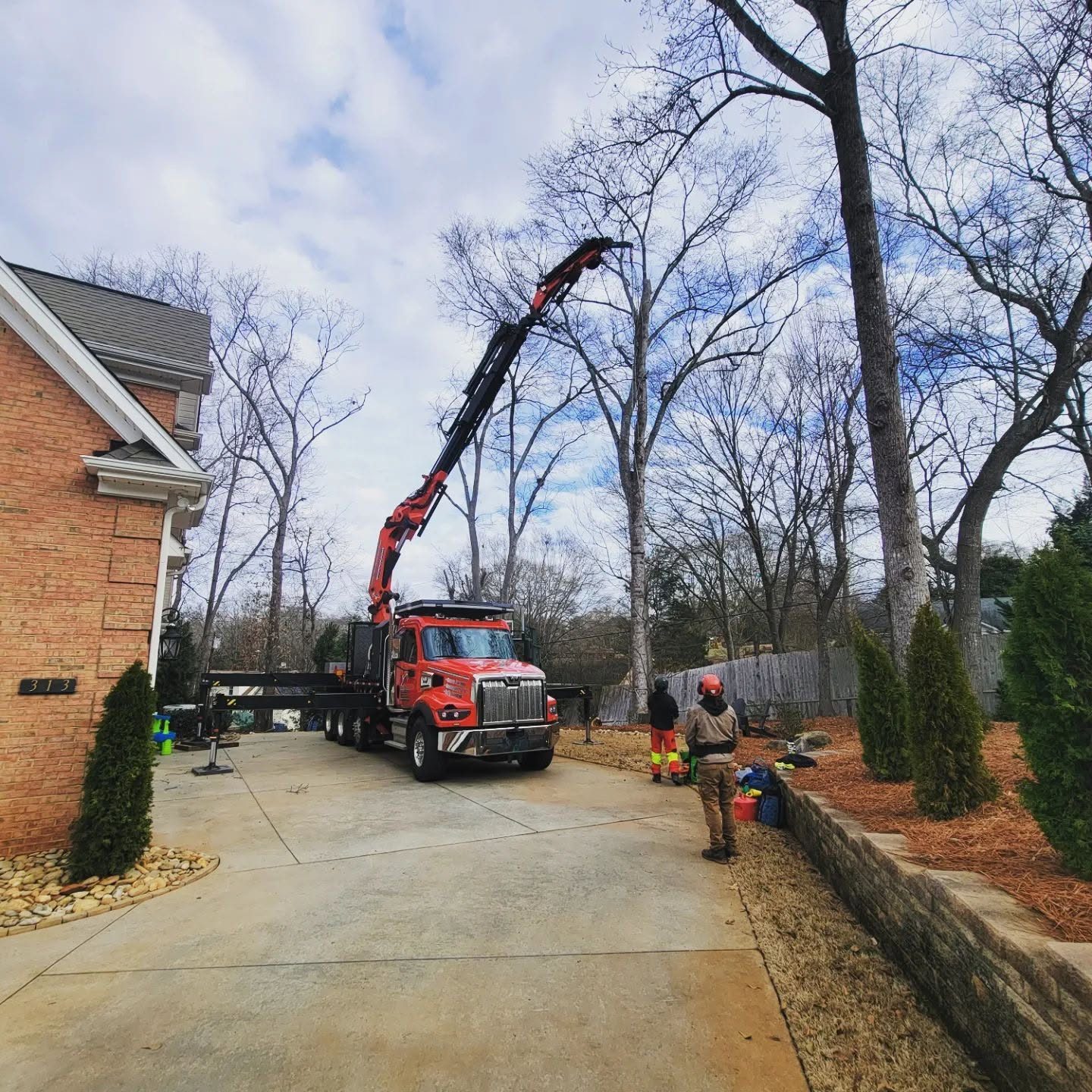
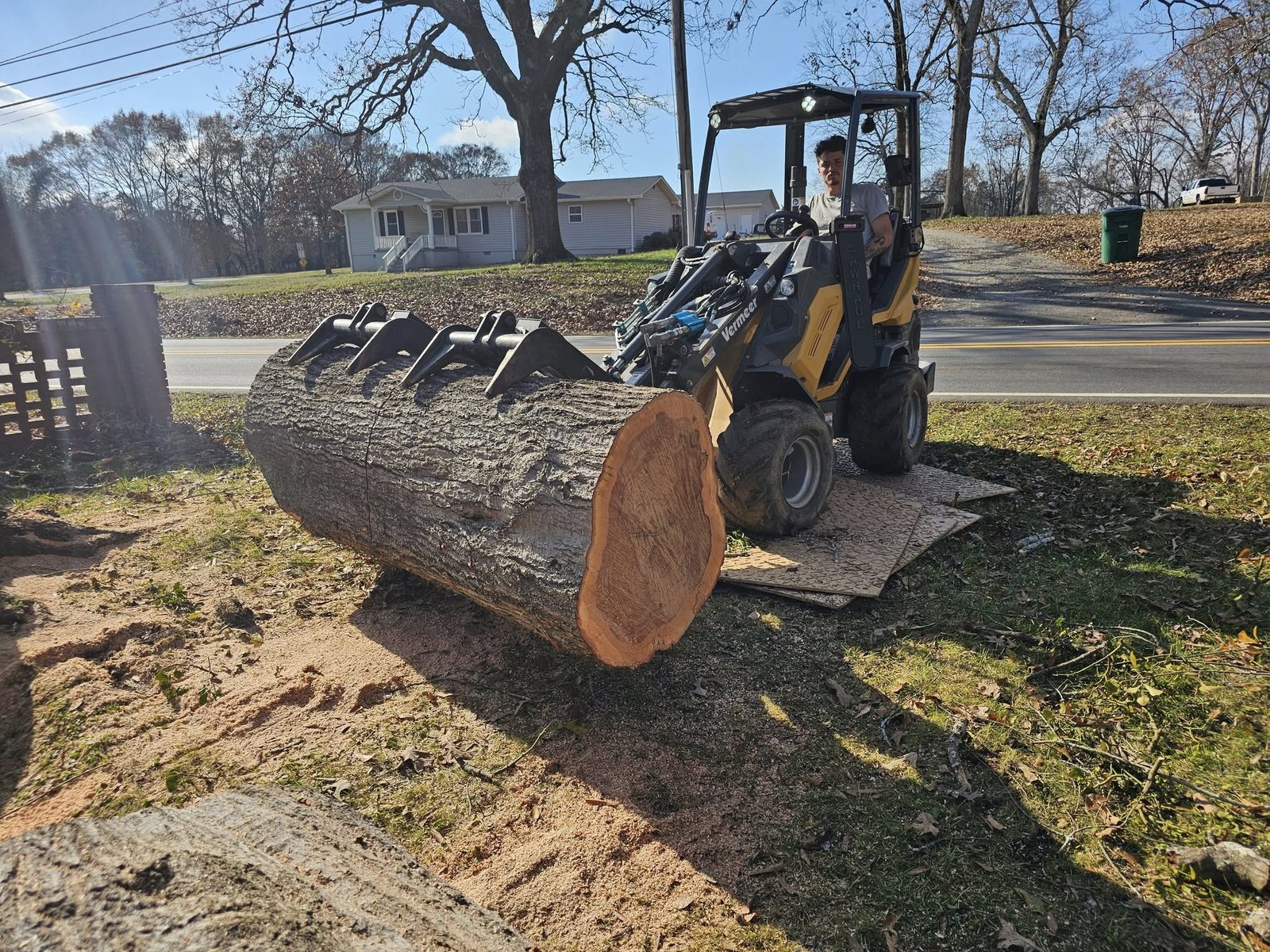
Crews here work with grapple-saw crane trucks, chippers, a stump grinder and a compact loader on ground mats, which matters in a subdivision where lawns, irrigation and septic-free but tight side yards need protecting. Full details on that service are on the Simpsonville tree removal page, and stump work is covered at stump grinding in Simpsonville.
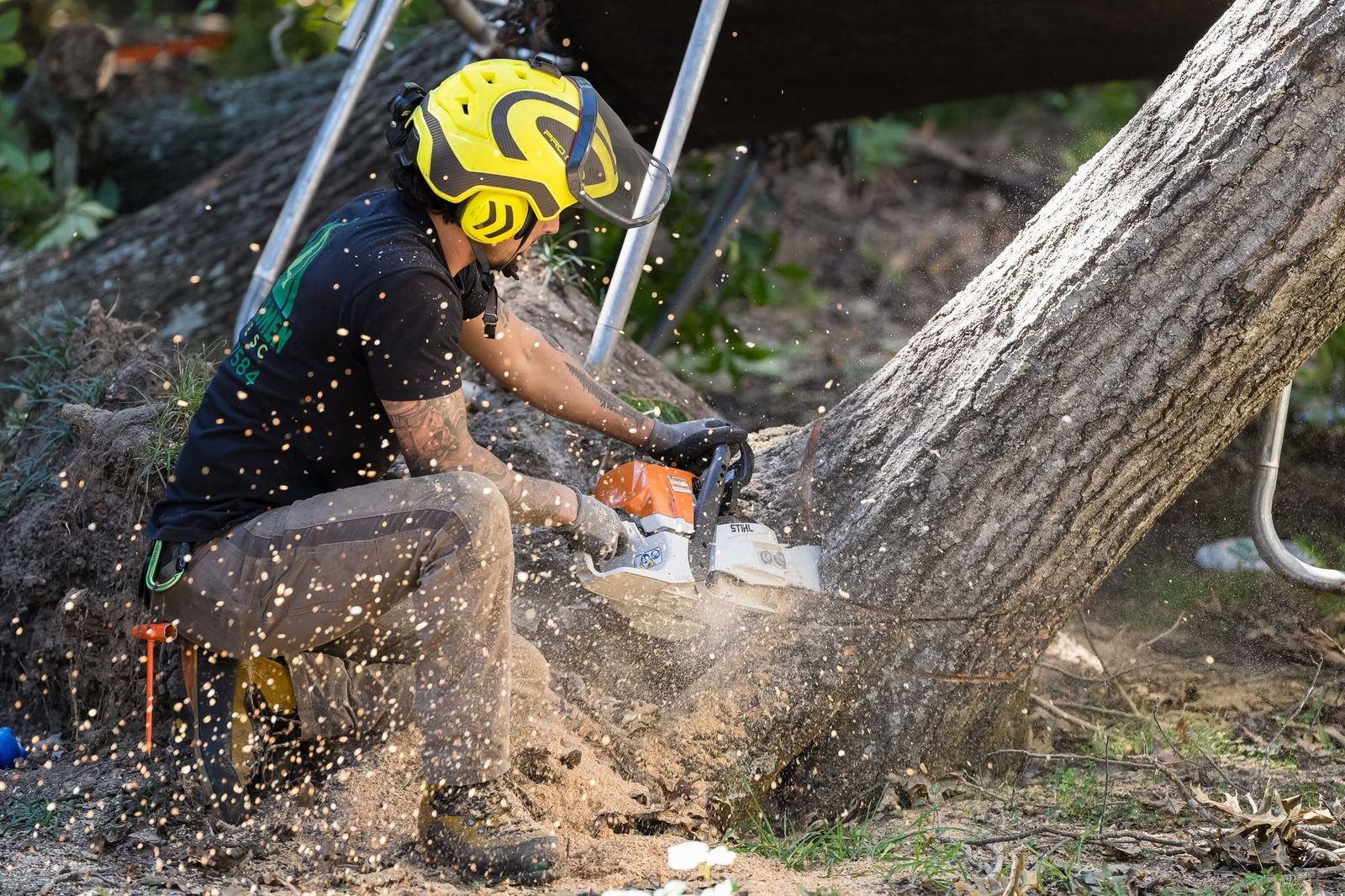
A few practical points explain why two pines of similar size can land at opposite ends of a range. A tree standing alone with a clear drop zone can often be cut and handled with little rigging. A tree leaning toward a house, or one whose only open side faces a fence, usually needs a crane or careful climbing so that each section is controlled on the way down. Dead or decayed wood adds risk, because it can break unpredictably under a saw. Cleanup is part of the picture too: chipping limbs, hauling logs and raking up needles take real time on a pine of any size.
When you ask for an estimate, photos help. Send a shot of the whole tree from the base to the top, one showing the house or fence it sits near, and one of any wires overhead. That lets the estimator tell you whether your job looks like the low, middle or high end of the typical range before anyone drives out. The final number comes from the free estimate, and the ranges above are general Upstate figures only.
Storm history and why pines fail
Greenville County has 23 federal disaster declarations on record (2003-2026), and Hurricane Helene reached the Upstate in September 2024. Pines that stood fine for decades can fail after saturated soil and high wind, especially when the roots have been squeezed by driveways, patios and grade changes from the original build. Watch forecasts from the National Weather Service in Greenville-Spartanburg, and treat a tree that leans after a storm as urgent rather than waiting for the next one.
If a limb or trunk is already on the house, keep people out from under it, call or text (415) 850-7584 with photos, and know that roof or structural repair afterward is a licensed trade separate from the tree work.
Pines are shallow-rooted compared with many hardwoods, and in a subdivision those roots often have even less room than usual. Grading for the house pad, trenching for utilities and pavement poured close to the trunk can all cut or compress the roots that hold a tree upright. The tree may look healthy above ground while its footing has been weakened for years. After a long wet spell, a pine in that situation can tilt or fall in winds that older, deeper-rooted trees ride out. If you notice soil heaving on one side of the trunk or new cracks in the ground near the base, take that seriously and get it looked at.
For general guidance on tree health, planting and care, the Clemson Home and Garden Information Center is a useful reference for Upstate homeowners.
Power lines, utilities and digging
Pines in older subdivision rows often reach service drops and street lines. OSHA's 10-foot rule binds workers, not homeowners, but it is the right distance for anyone; only crews trained as line-clearance tree trimmers under 29 CFR 1910.269 may work inside it. The OSHA tree care page explains the hazards in plain terms. If a job involves digging, such as a replacement planting or a buried-root issue, SC811 requires three full working days' notice before excavation.
In practice, this means you should never climb, prune or pull on a branch that is touching or close to a wire, and you should not assume a line is dead because it looks like a thin cable. If a pine is tangled in a service line, stay back, keep children and pets away, and call the utility. A tree crew can then plan the removal around the hazard once the line has been dealt with safely.
Hiring a crew without a state license to check
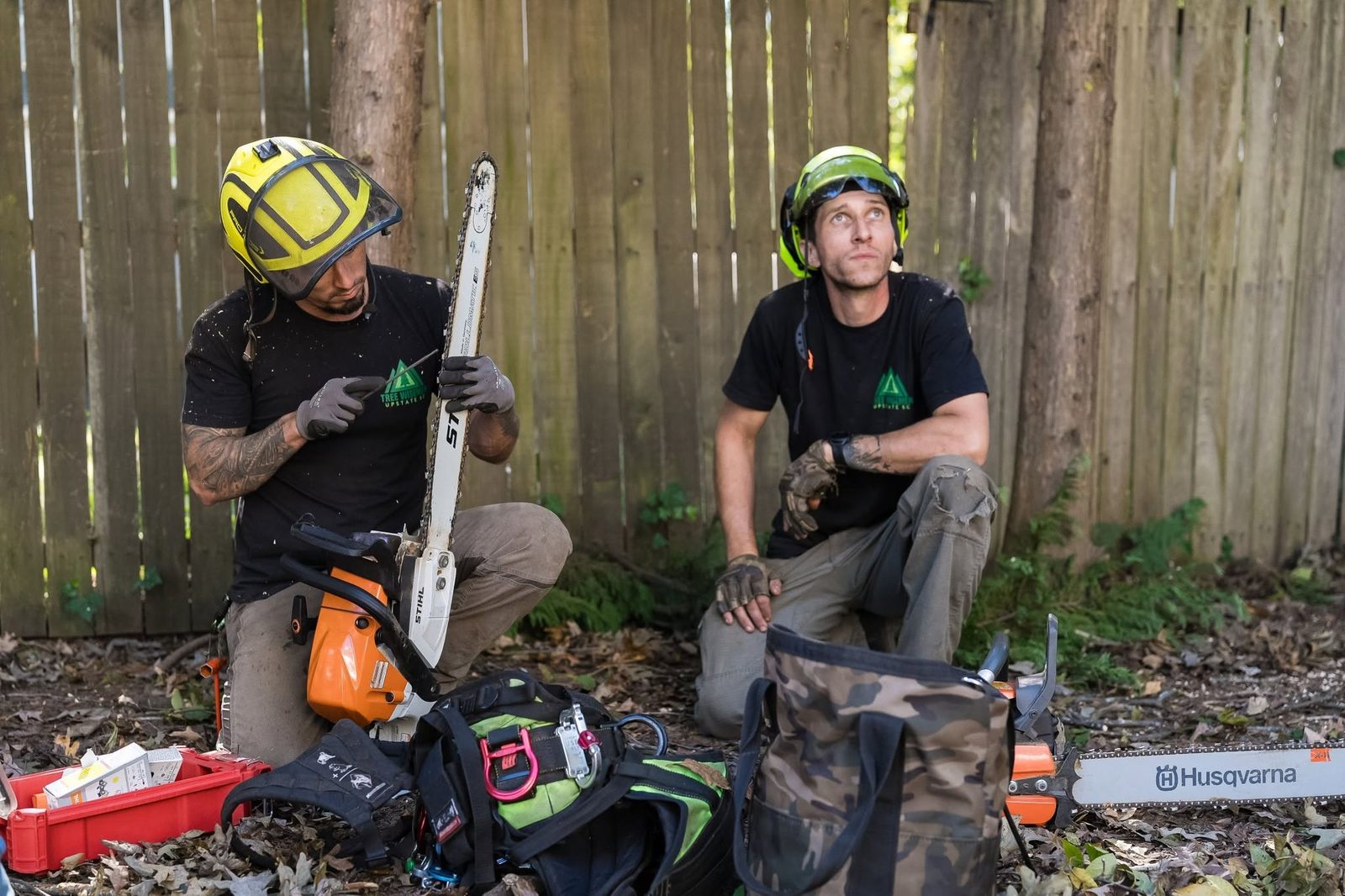
South Carolina has no state license for tree removal, trimming or stump grinding, so there is no board lookup to lean on. What protects you is paperwork and proof: a current certificate of insurance for general liability and workers' compensation, references, and photos of similar jobs. Ask any crew, including us, for that certificate before work starts, and you can confirm coverage questions with the SC Department of Insurance. Tree Wisemen is family owned, based in Easley, working the Upstate since 2020, with 4.9 stars from 71 Google reviews and BBB A+ accreditation since 2023. Estimates are free within 50 miles of Easley, and Simpsonville sits about 19.5 miles southeast.
When you compare estimates, look beyond the bottom line. Check that each one names the same trees, says whether cleanup and hauling are included, and states whether stump grinding is part of the job or separate. A quote that is far below the others on a tall pine beside a house may be leaving out rigging, disposal or protection for your lawn. Writing down what you were told, and asking for the scope in text or email, keeps everyone on the same page.