The stump a builder left in your new yard
Greer straddles the Greenville and Spartanburg county line, and a lot of its yards share one story: the house went up fast, the crew cleared what was in the way, and a few stumps got left behind at the edges, along the back fence, or right where you wanted the lawn. Grading and sod then go over the top of whatever is left. That is how a yard ends up with a soft, sunken patch two years later, when a buried stump finally rots out from under the grass.
Grinding is the cleanest fix for a yard you want to turn into lawn. The grinder takes the stump down below grade, you get a pocket of wood chips where the stump was, and the area can be reworked into turf or a planting bed. For the general process, see our stump grinding overview. If the stump is still standing in the middle of the yard and you are weighing your options, what to do with a stump in the yard walks through them.
Depth matters more than most people expect. A stump ground only an inch or two below the surface will sprout, sink, or break a mower blade. If grass is the goal, ask the crew how far below grade they plan to go and whether the main surface roots will be ground too.
Where the chips go, and what to do with them
A ground stump leaves a surprising amount of material. The chips fill the hole and mound above it, and a large stump can produce more than the hole can hold. You have three honest choices, and the right one depends on what is growing there next.
- Haul them off. Best when you are laying sod or seeding right away. Fresh chips pulled out of the hole and replaced with clean topsoil give grass the best start.
- Keep them as mulch. Good for beds, tree rings, and paths. Fresh wood chips are not a lawn amendment, because as they break down they tie up nitrogen near the surface.
- Spread them thin. A light layer worked into the surrounding area is fine, but a thick pile left under new seed will smother it.
Before you reseed, a soil test is cheap insurance. Clemson's Home and Garden Information Center publishes guidance on lawn establishment and soil testing for South Carolina yards, and it is the right place to check seeding windows for your grass type. Do not burn leftover wood. South Carolina does not issue burn permits, and outside city or town limits you must notify the SC Forestry Commission about outdoor burning first. Chips are far easier to reuse or haul.
What new-lawn grinding costs around Greer
Around Greer, typical stump grinding runs $100 to $400 per stump. Tree Wisemen prices every job after a free estimate, and the figures below are typical Upstate SC ranges, not their quote. For a fuller breakdown of what moves the number, read our stump grinding cost guide.
| Yard situation | Typical range per stump |
|---|---|
| Small stump, open lawn, easy access | $100 to $175 |
| Mid-size stump with surface roots | $150 to $275 |
| Large stump or wide root flare | $250 to $400 |
| Tight gate or fenced backyard needing hand work | $200 to $350 |
| Several stumps on one visit | Often priced toward the lower end of the band each |
Three things push a Greer job toward the top of the band: how much root you want removed, whether a machine can reach the stump without crossing fresh sod, and whether chips must be hauled away rather than left in place. Hauling is a separate line on some quotes, so ask whether it is included. Photos help. You can text pictures to (415) 850-7584 and get a more grounded conversation before anyone drives out.
Before the grinder touches new ground
Fresh subdivisions come with buried things. Irrigation lines, low-voltage lighting runs, and pet-fence wire are often shallow, and none of it is guaranteed to be marked. Public utilities are a different matter. SC811 requires three full working days of notice before excavation, and a grinder cutting well below grade is close enough to that line that it is worth the call, especially near the street side of a lot. Private lines are your job to flag: walk the yard with the crew and point out every sprinkler head and wire you know about.
It is also worth knowing the ground you are working in. Builder fill can hide old roots, scrap lumber, and rock, and a grinder will find them. Tell the crew if the house is new, so they can plan the cut and watch for debris that could throw material or damage teeth.
Stumps near overhead service drops need extra care. OSHA's tree care safety guidance points to the 10-foot distance from energized lines as the right margin for anyone, and only workers trained as line-clearance tree trimmers should work inside it. If a tree came down near a line, that is a utility call before it is a stump job.
Timing a grind around storms and seasons
Storm history is part of why Greer yards have stumps in the first place. Greenville County has 23 federal disaster declarations on record (2003-2026), and Hurricane Helene reached the Upstate in September 2024. Trees that failed in those events left stumps behind, and so did trees removed afterward as a precaution. The National Weather Service Greenville-Spartanburg office is the best source for what is coming before you schedule yard work.
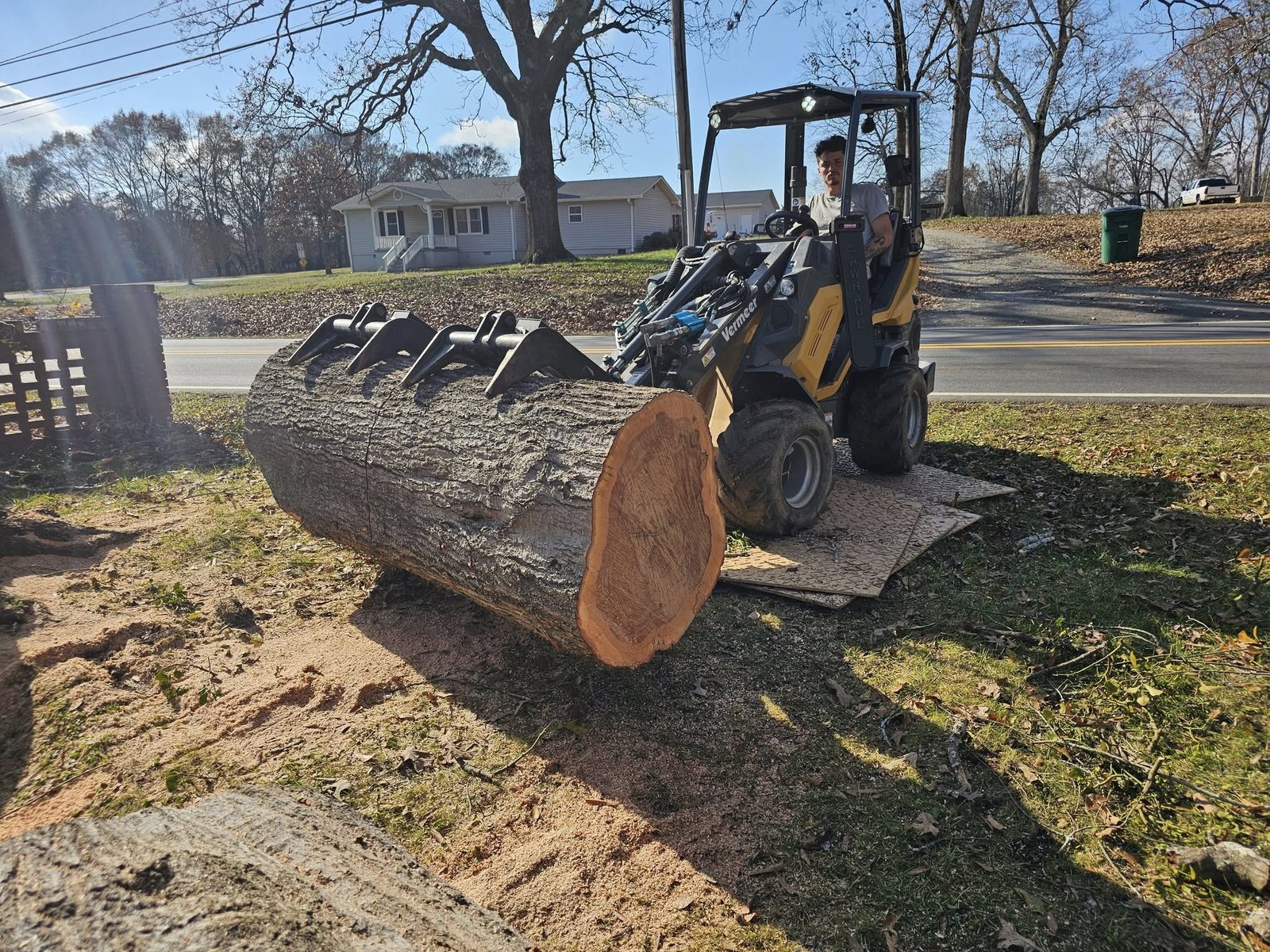
For a lawn project, the useful rule is simple: grind first, then grade, then seed or sod. Dry ground is easier on a grinder and on your yard, because a machine on saturated soil leaves ruts that you then have to repair. Tree Wisemen crews bring a stump grinder and a compact loader that can work on ground mats, which helps protect turf on soft ground. Greer is easy to reach from I-85, US 29, SC 14, SC 101, and SC 290, and free estimates cover everything within 50 miles of their Easley base, about 21 miles west of town.
Hiring is straightforward in South Carolina. The state has no license for stump grinding, so the protections are practical ones: ask any crew, including us, for a current certificate of insurance before work starts, check references, and look at photos of similar jobs. The SC Department of Insurance is the place to turn with questions about coverage.