Infill lot or county tract: the first fork in the road
Greenville is the Greenville County seat, home to about 72,824 people, and the ground inside the city is a different clearing problem from the ground outside it. A narrow lot near Cleveland Park or a tight parcel a short ride from the Swamp Rabbit Trail has neighbors on three sides, overhead wires, and no room to stage a truck. A tract out along US 25, US 276 or off I-385 may be open acreage with a tree line and a pond edge. Same word, "clearing," very different scope.
The biggest legal difference is where the property sits. The city has its own tree ordinance, with fees per inch of trunk on covered properties, and it only applies inside the city limits. Read our Greenville tree ordinance guide before anything comes down on a city lot. A parcel just outside the limits, still in Greenville County, is not under that city rule, though a subdivision's own covenants can still limit what you remove. Confirm which side of the line your address falls on before you schedule.
For the general process, start with our land clearing overview. This page is about how the Greenville market shapes the job.
What clearing costs on both kinds of ground
Around Greenville, typical lot clearing and forestry mulching runs $1,500 to $5,000 per acre. Where a job lands in that band depends on tree size and density, how much debris has to leave the site, and whether equipment can reach the work. These are typical Upstate SC ranges, not a quote from any one company. Tree Wisemen prices each job after a free estimate within 50 miles of Easley, and Greenville is about 12.5 miles east of Easley.
| Scope | Typical Upstate range (per acre) | What moves the price |
|---|---|---|
| Light brush and small saplings, open access | $1,500 to $2,500 | Thorny undergrowth, slope, how clean the finish must be |
| Mixed pine and hardwood, mulched in place | $2,500 to $4,000 | Trunk diameter, density, stump height left behind |
| Dense wooded lot with debris hauled off | $3,500 to $5,000 | Hauling distance, tight access, piles of old fence, trash, or downed timber |
A small infill lot is rarely a full acre, so these figures are a yardstick for comparing bids, not a price list. The land clearing cost guide walks through how per-acre numbers translate to smaller and larger parcels.
Mulch in place or haul it out
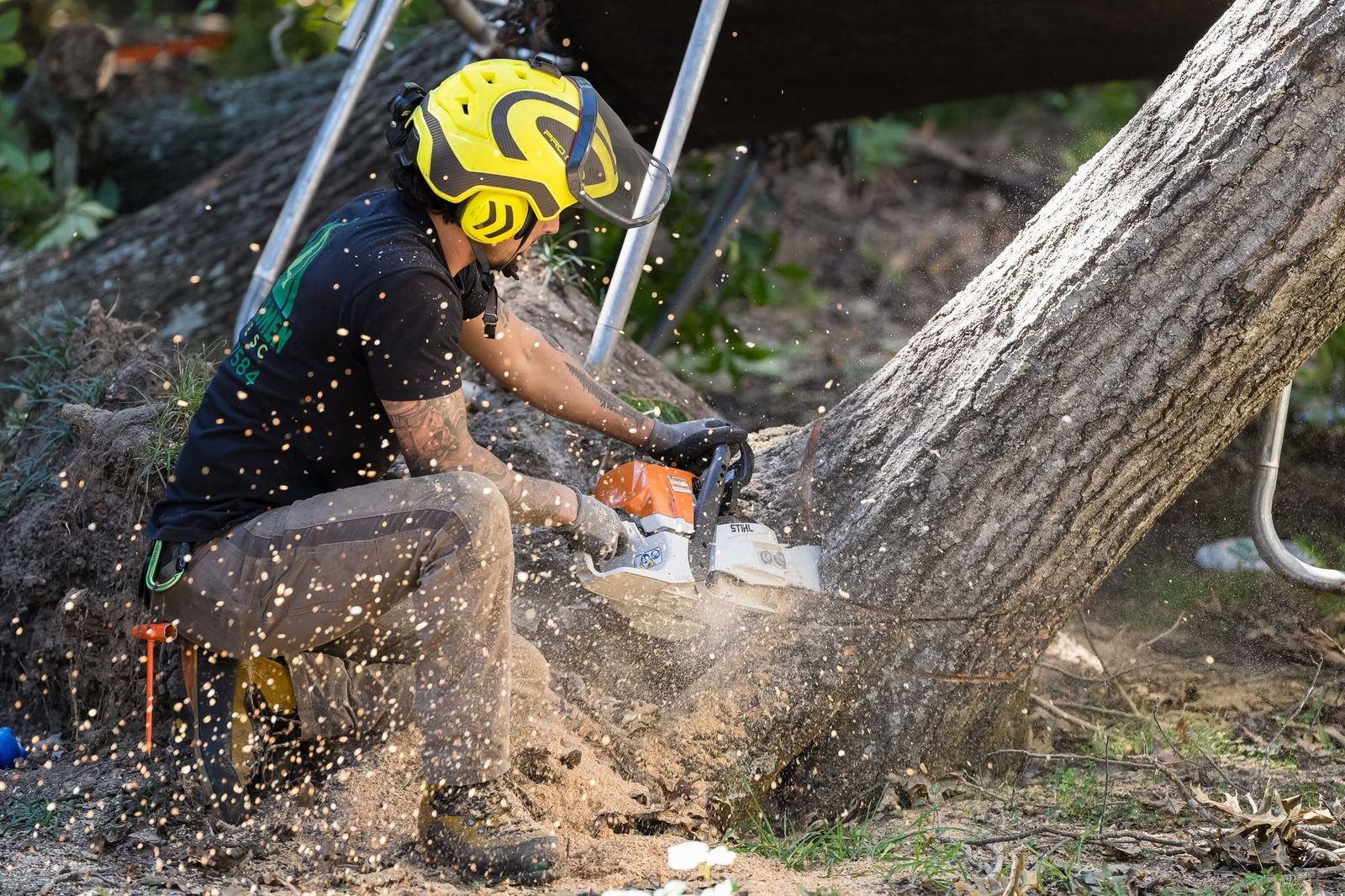
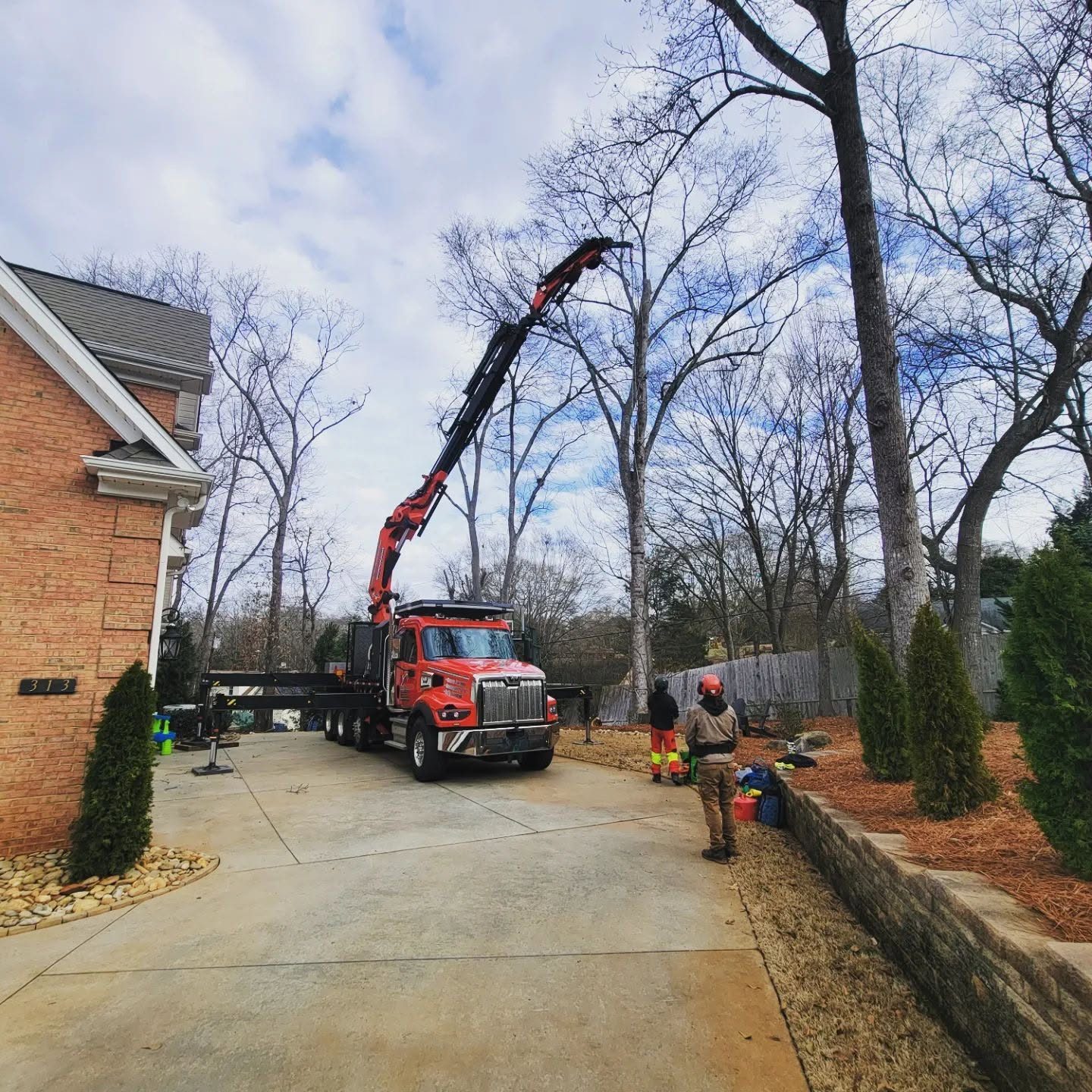
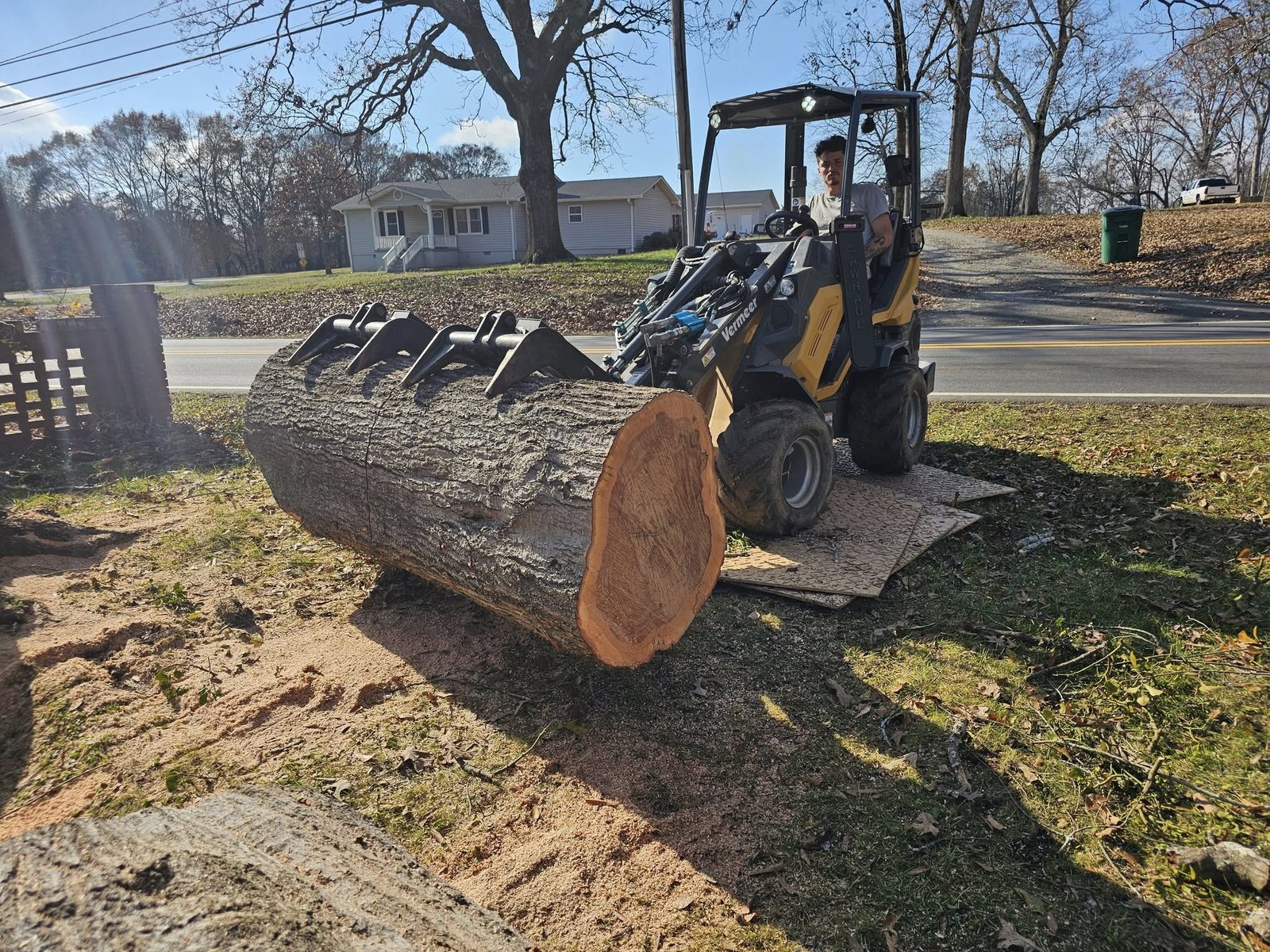
On a county tract, the usual efficient choice is forestry mulching: a machine grinds brush and small trees into a mulch layer that stays on the ground. It leaves no burn piles and no trucks of debris, and the mulch helps hold soil on a slope. Crews here work with grapple-saw crane trucks, chippers, a stump grinder, and a compact loader that runs on ground mats to protect turf, which matters on a finished lawn.
On a tight infill lot, mulching in place is often not enough. Neighbors, fences, and a driveway only a few feet wide push the work toward selective removal with a crane truck, chipping on site, and hauling the rest. That is slower per square foot, which is why a quarter-acre city lot can cost more per acre than open ground. If you also plan to remove existing structures or old debris, ask whether demo and hauling is bundled or separate.
Burning, utilities, and the rules before the first cut
Burning is the temptation on rural acreage, and the rules are specific. South Carolina does not issue burn permits. Outside city or town limits, state law requires you to notify the SC Forestry Commission before you burn outdoors, and clearing debris next to woods, brush, or grassland falls under that notice and SCDES Regulation 61-62.2. Start at the Commission's fire and burning page or use the county phone line. Inside city limits, burning rules are different and often stricter, so mulching or hauling is the safer plan on a city lot.
Before any grading or stump removal that digs, call SC811. South Carolina requires three full working days' notice before excavation, and a city lot is crowded with buried lines. Overhead, treat power lines seriously. OSHA's 10-foot rule binds workers, not homeowners, but it is the right distance for anyone, and only crews trained as line-clearance tree trimmers may work inside 10 feet of energized lines. See OSHA's tree care safety guidance for the details.
Water, grading, and what Greenville storms leave behind
Cleared ground sheds water faster than wooded ground, and the Upstate has plenty of practice with that lesson. Greenville County has 23 federal disaster declarations on record (2003-2026), and Hurricane Helene reached the Upstate in September 2024. Roots hold slopes together, so take out only what the project needs, and keep mulch or ground cover on exposed soil. The National Weather Service office for Greenville-Spartanburg is a good source for forecasts before you schedule heavy equipment on soft ground.
Storm-downed timber is its own category. Tree Wisemen answers storm calls around the clock, and a post-storm cleanup often turns into the first phase of a clearing job once the hazards are removed.
Hiring a clearing crew in Greenville County
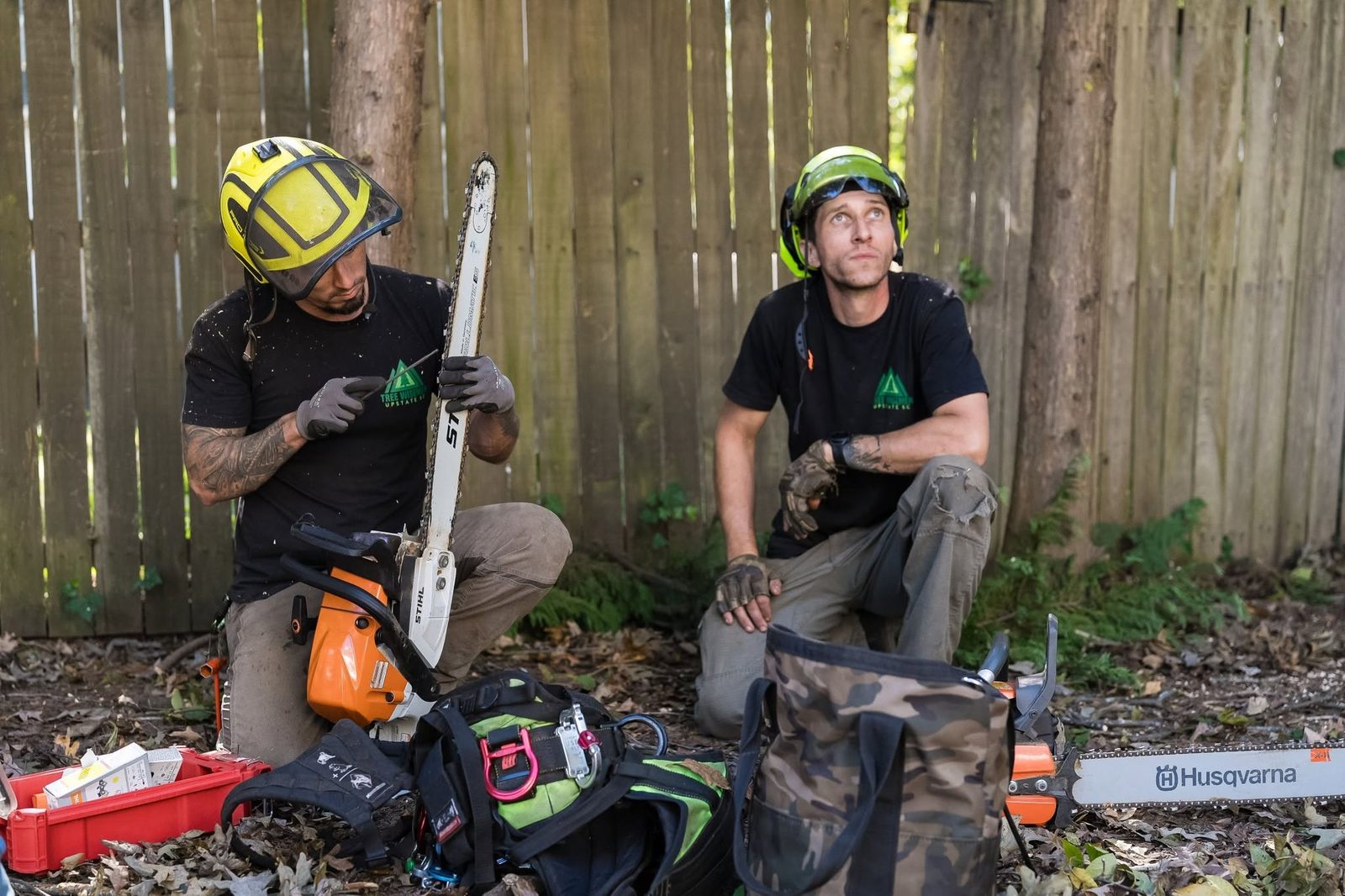
South Carolina has no state license for tree removal, trimming, or stump grinding, so what protects you is paperwork and proof. Ask any crew, including us, for a current certificate of insurance covering general liability and workers' compensation before work starts, then confirm it with the insurer. The SC Department of Insurance is the place to start with questions about coverage. Ask for references and photos of similar jobs, ideally on a lot like yours.
Tree Wisemen is family owned, based in Easley, and has worked the Upstate since 2020, with 4.9 stars from 71 Google reviews. You can call or text (415) 850-7584 and send photos of the site for a first read before the free estimate.