Pines packed close: how a tree comes down with nowhere to fall
Drive the side streets off SC 14 or US 276 and you will see the pattern: a tall pine stand a few feet from a roofline, a fence on one side, a neighbor's shed on the other. In a yard like that, the textbook move of notching a trunk and letting it fall is off the table. The tree has to come down in pieces, top first, and every piece has to go somewhere controlled.
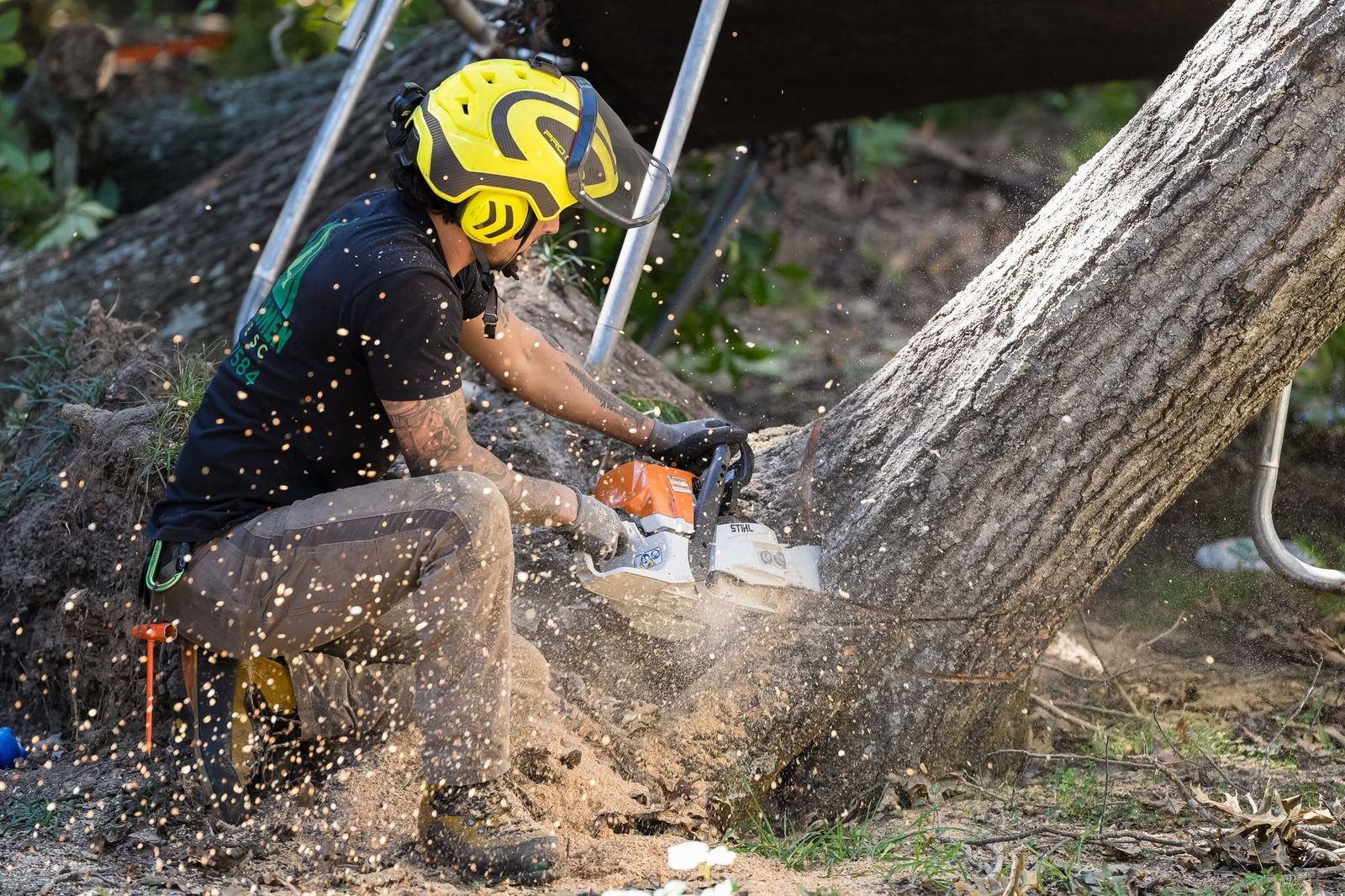
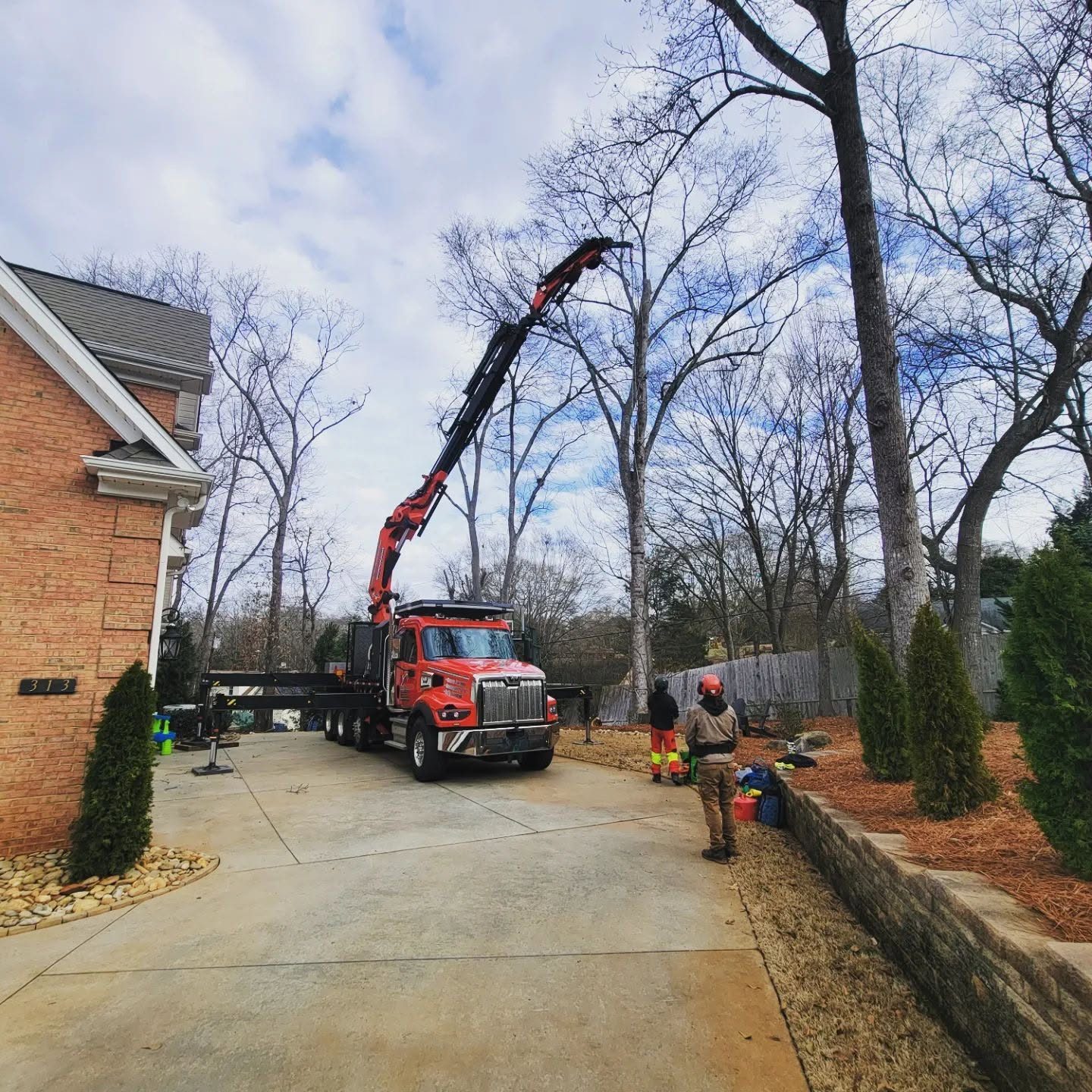
That is sectional removal. A climber or a crane-lifted saw takes the crown and limbs in small, rigged pieces, then works down the trunk in short lengths. Each section is held by rope or by the crane's grapple until it is cut free, then lowered to open ground instead of dropped. A pine has a straight trunk with limbs that spread wide near the top, so the upper third is where most of the careful work happens. The lower trunk is simpler, but only once the weight above it is gone.
For a deeper look at how crews approach different jobs, the main tree removal page covers the full process from estimate to cleanup.
Cranes, grapples, and keeping a loader off your lawn
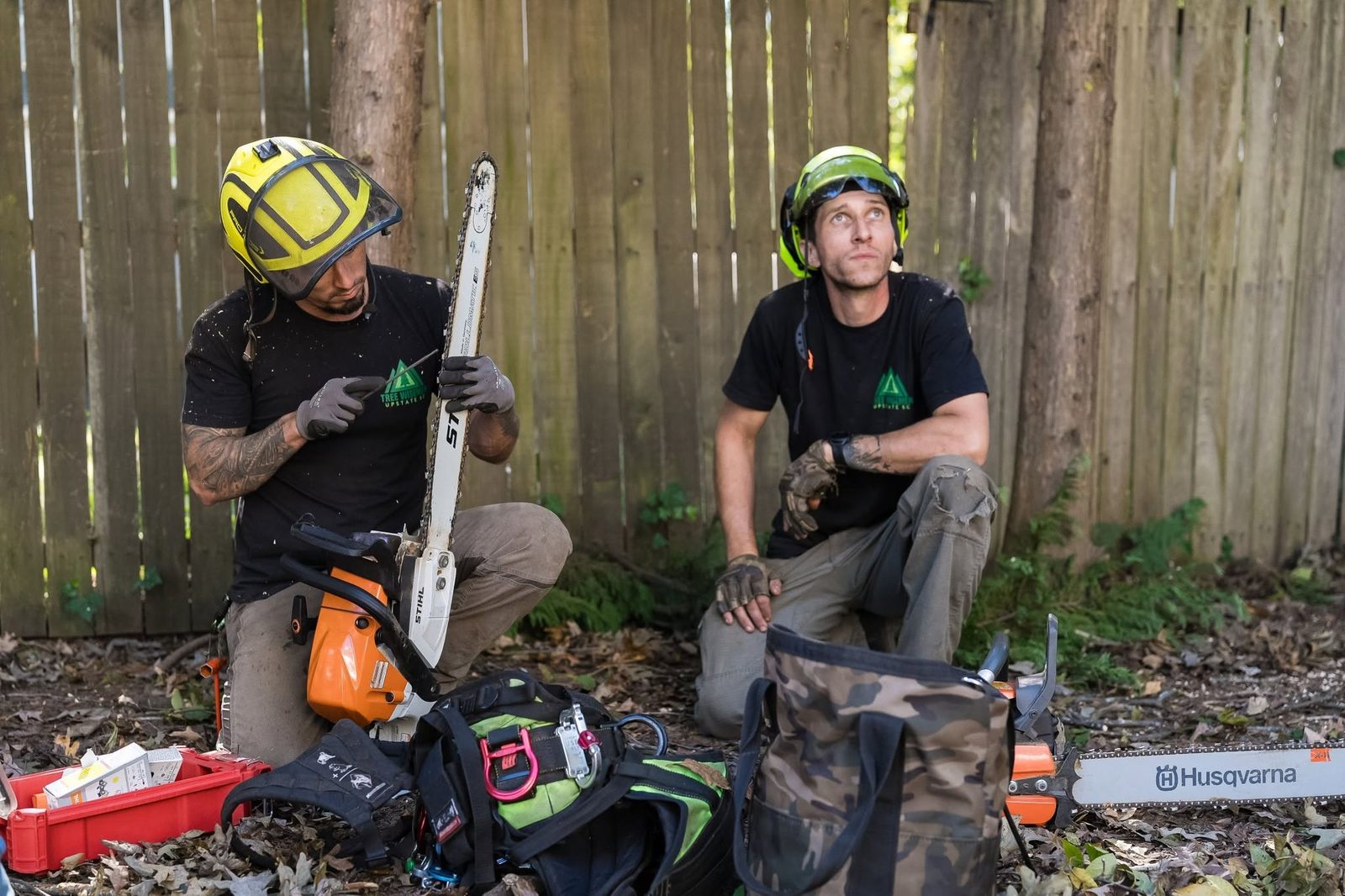
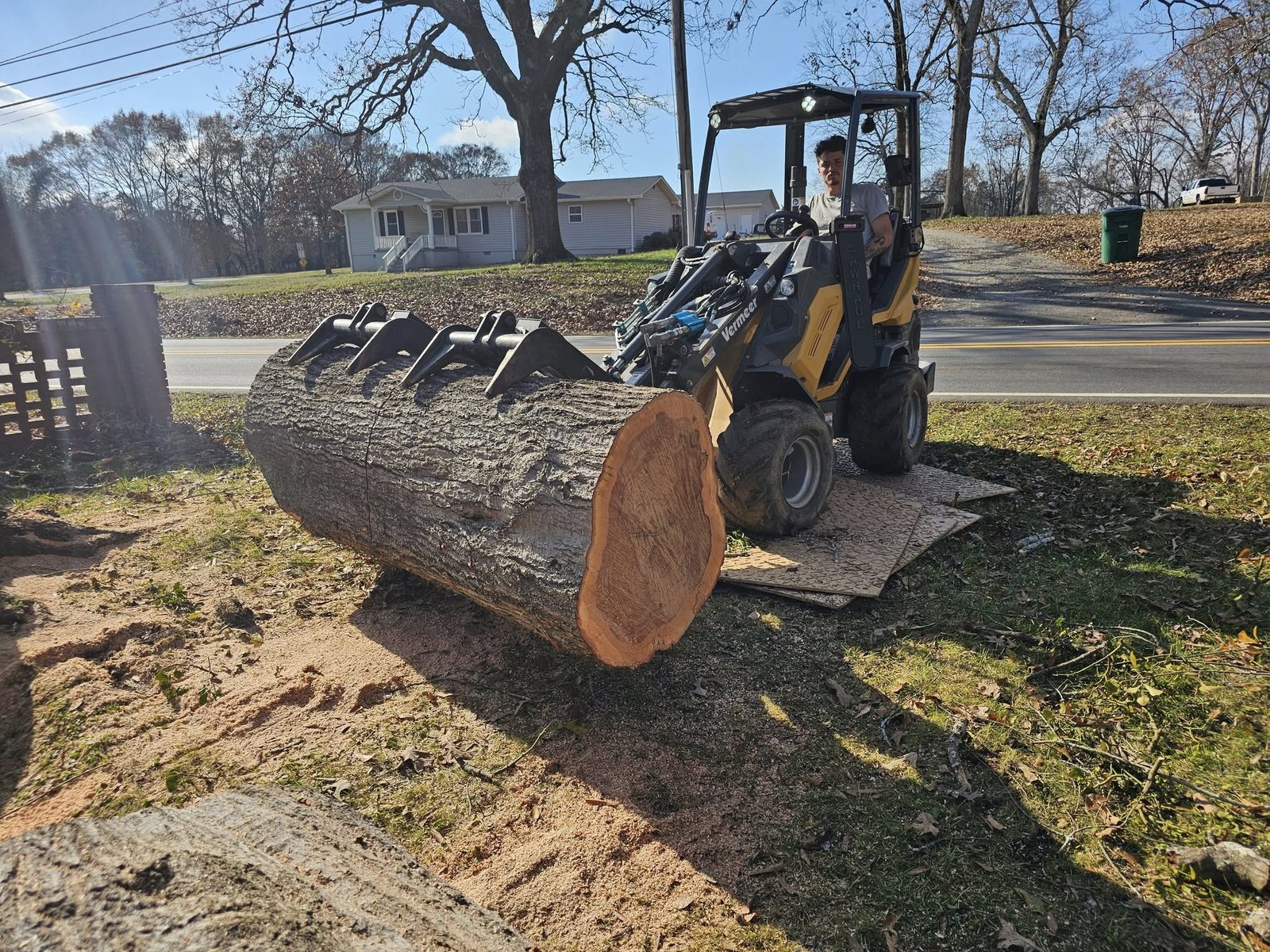
When there is no drop zone, equipment makes the difference. Tree Wisemen runs grapple-saw crane trucks, which let an operator grip a section, cut it, and swing it clear without anyone hauling heavy wood through a narrow side yard. A chipper handles the limbs on the spot, and a compact loader moves the rounds. On soft ground the loader works on mats, which spread the weight so a wet Upstate lawn is not turned into ruts.
Access is the first thing to check at your own property. A crane truck needs a drivable approach and some overhead clearance. A gate that is too narrow, a steep side yard, or a septic field that cannot take weight can change the plan. Say so when you call. Photos help a great deal here: you can text pictures of the tree, the approach, and the structures nearby to (415) 850-7584 so the estimate reflects the real layout.
What tight-lot pine removal usually costs
Price follows the work, not just the height of the tree. The figures below are typical Upstate SC ranges for the Simpsonville area, not a quote from Tree Wisemen, who price every job after a free estimate. For the broader picture, see the tree removal cost guide.
| Scope | Typical range |
|---|---|
| Small or medium pine, open drop zone | $300 to $800 |
| Tall pine, clear access, some rigging | $600 to $1,200 |
| Close-set pine, sectional with crane or climber | $900 to $1,800 |
| Pine over a roof, fence, or wires, full rigging | $1,200 to $2,000 |
Very large or hazardous trees can run past these ranges, and that is why a photo or a site visit matters. Stump work is usually priced separately; see stump grinding in Simpsonville to plan for it up front.
Wires, utility lines, and the 10-foot rule
Close-set yards often mean service drops and distribution lines running right through the canopy. OSHA's 10-foot rule binds workers rather than homeowners, but it is the right distance for anyone to keep from an energized line. Only workers trained as line-clearance tree trimmers under 29 CFR 1910.269 may work inside that distance. If a pine is touching or leaning into a line, do not climb it, do not rake it, and call the utility first. OSHA's tree care safety page lays out the hazards in plain terms.
If the job includes grinding or any digging near the stump, call SC811. South Carolina requires three full working days' notice before excavation, and buried lines in older yards are not always where you expect.
After Helene, and why leaning pines matter
Hurricane Helene hit the Upstate in September 2024, and many homeowners have been looking harder at the pines over their roofs since. Greenville County's federal record shows 23 disaster declarations across 2003-2026, which is a good reminder that wind and saturated ground are a regular part of life here. Pines have shallow-spreading roots and tall, top-heavy crowns, so a stand that has already lost neighbors or shows a new lean after a storm deserves a close look.
Warning signs include soil heaving at the base, a trunk that has shifted since last season, dead tops, and resin-streaked bark with small pitch tubes, which can point to beetle pressure. Clemson's Home and Garden Information Center has solid guidance on identifying tree health problems. The National Weather Service in Greenville-Spartanburg is the place to watch for wind and storm warnings. Tree Wisemen offers 24-hour storm response if a pine is already down or hanging.
Vetting a crew before the first cut
South Carolina has no state license for tree removal, trimming, or stump grinding, so the usual protections are different. Ask any crew, including us, for a current certificate of insurance showing general liability and workers' compensation before work starts, and confirm it with the carrier if you like. The SC Department of Insurance is a good starting point for questions about coverage. Then ask for references and photos of similar close-in jobs. A crew that has worked pines near structures can show you exactly that.
Tree Wisemen is family owned, based in Easley, and has worked the Upstate since 2020. They hold 4.9 stars from 71 Google reviews and a BBB A+ accreditation since 2023, and they give free estimates within 50 miles of Easley, which covers Simpsonville. If a pine has damaged your roof or structure, the repair itself belongs to a licensed trade, separate from the tree work.