Two kinds of yards, two kinds of work
Anderson is split by more than a map line. The county seat, home to 29,980 people, has older in-town streets where big shade trees stand a few feet from roofs, fences, and service wires. Head west toward Lake Hartwell and the picture changes: larger lots, sloped ground running down to the water, longer driveways, and trees leaning over decks and docks. A crew that does well in one setting does not automatically do well in the other.
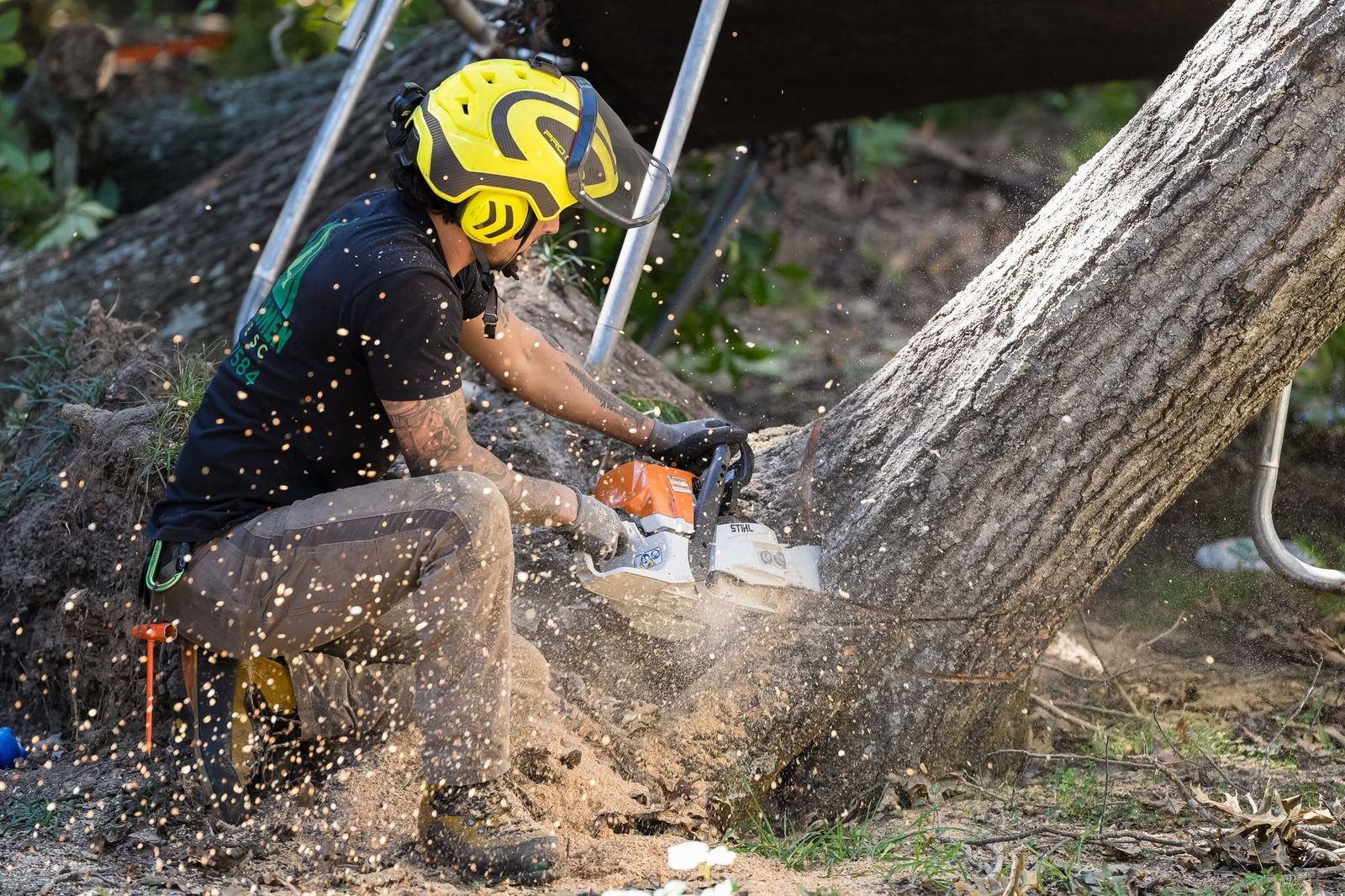
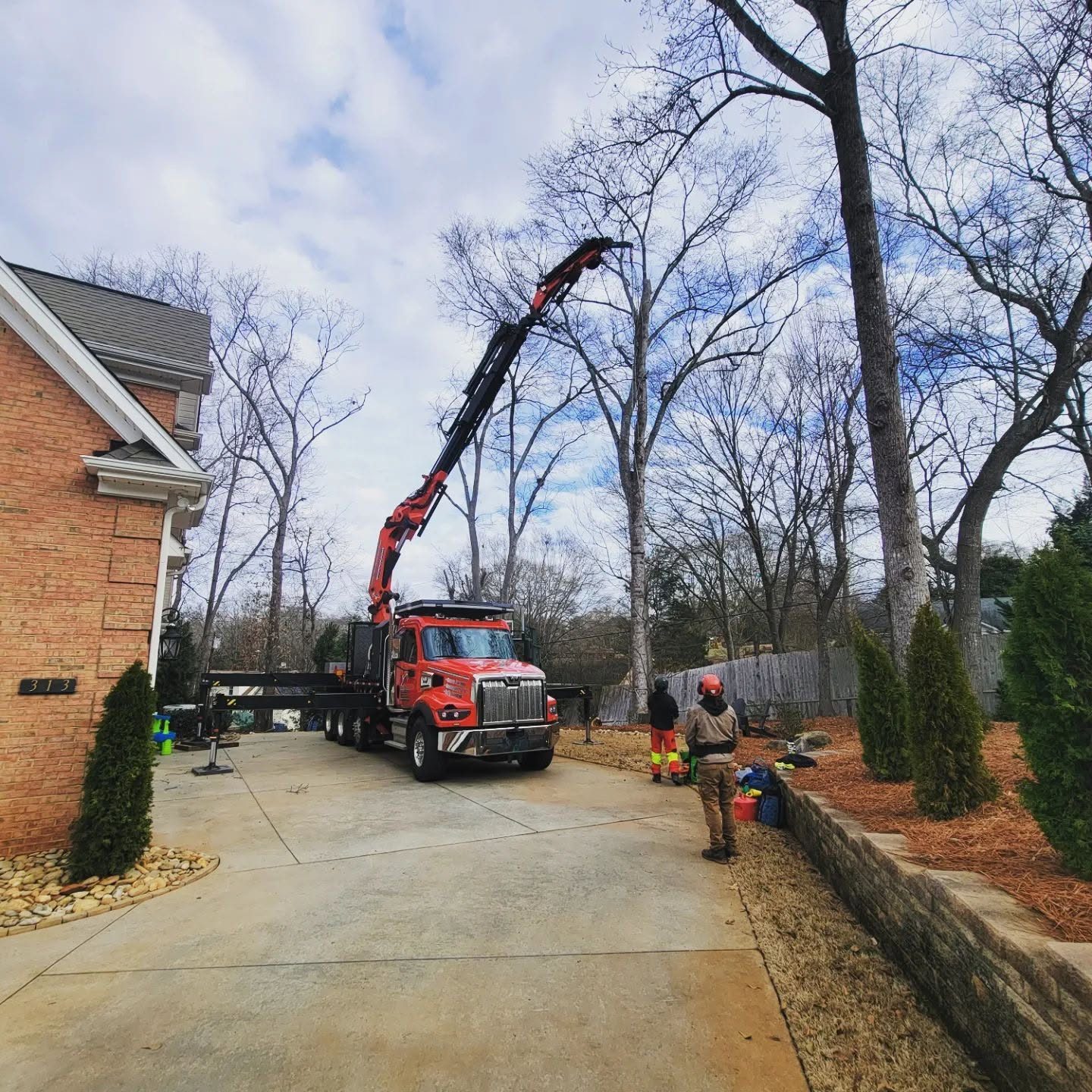
In town, the job is mostly about control. Limbs get roped and lowered in sections, the grapple-saw crane truck picks pieces over the house instead of dropping them, and the chipper stays in the street or driveway. On lake-side ground the job is mostly about access and footing: slope, soft soil, and tight gates decide whether a truck can get close or the wood has to be carried out. Our main tree service page covers the full list of what we do; this page is about how those two settings change the plan.
What town lots ask of a crew
Shade trees close to a house are rarely a simple cut-it-down job. The questions are where the load can safely go, whether a bucket or crane is needed, and whether any wire sits near the canopy. If a tree has to come out in pieces, the job leans toward the high side of the tree removal range. If it only needs a clearance cut off a roofline, trimming is usually the better spend.
Power lines deserve their own sentence. OSHA's tree care guidance sets a 10-foot rule that binds workers, not homeowners, but it is the right distance for anyone. Only workers trained as line-clearance tree trimmers under 29 CFR 1910.269 may work inside 10 feet of energized lines. If a limb is touching a wire, stay clear and call the utility before you call a tree crew.
What lake-side ground asks of a crew
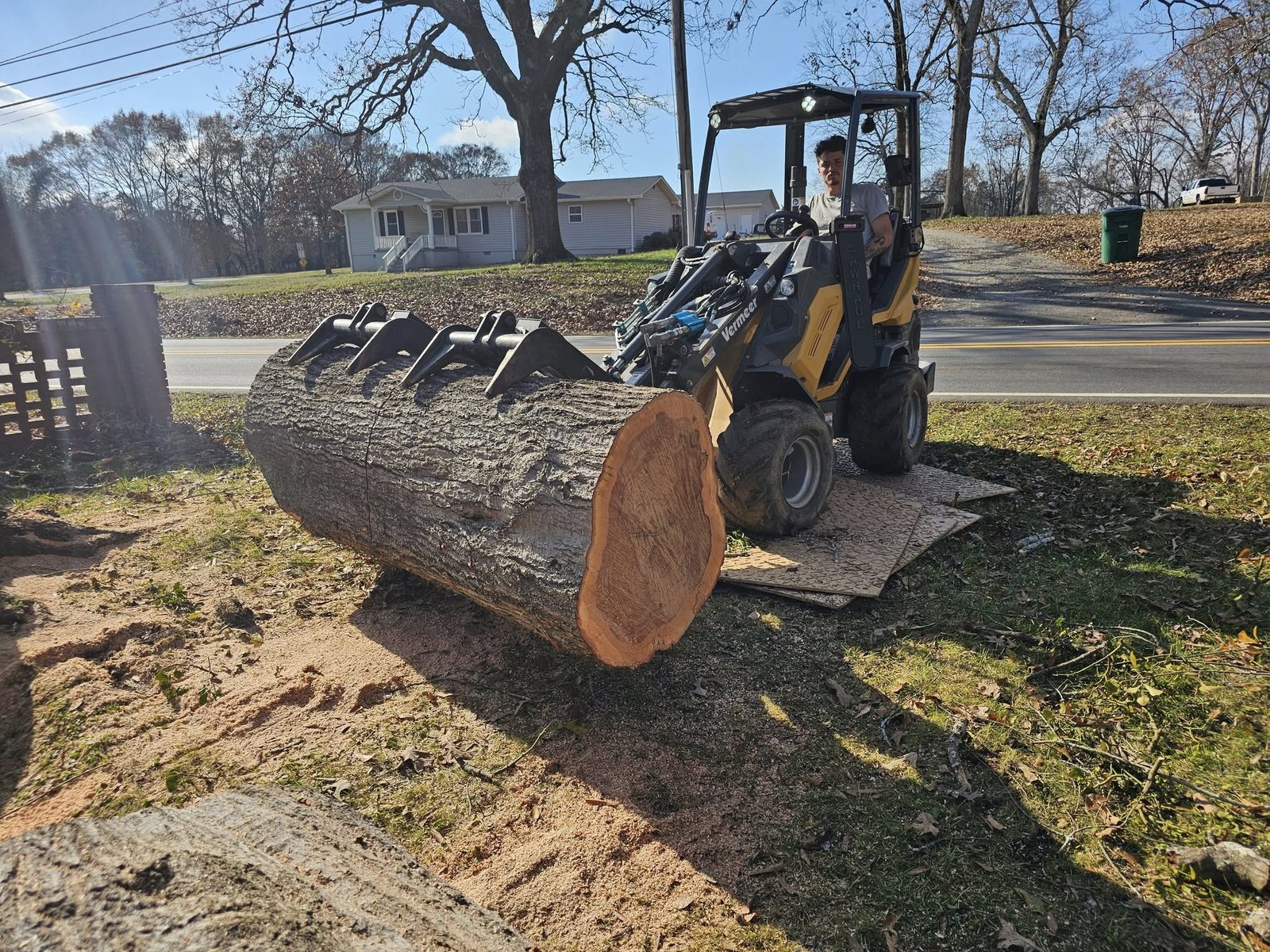
Toward Lake Hartwell the cost drivers shift from tight spaces to hard access. Sloped yards and soft ground make heavy equipment a risk to your lawn, so our compact loader works on ground mats to spread weight. Trees leaning over water or a dock call for rigging that keeps debris out of the lake and off the structure, and that planning time shows up in the quote.
Bigger lots also mean bigger clearing jobs. If you are opening up a wooded lot, ask about land clearing and mulching rather than pricing tree by tree. Mulching on site can cut hauling, though debris you plan to burn is a separate matter: South Carolina does not issue burn permits, but outside city or town limits state law requires notifying the SC Forestry Commission first. Check the fire and burning guidance before you light anything.
Typical Anderson-area price ranges
These are typical Upstate SC ranges, not a Tree Wisemen quote. Tree Wisemen prices every job after a free estimate within 50 miles of Easley, and Anderson is about 20.9 miles southwest of there.
| Scope | Typical range | What pushes it up |
|---|---|---|
| Tree removal | $300 to $2,000 per tree | Height, nearby structures or wires, crane need |
| Trimming and pruning | $250 to $900 per tree | Canopy size, climbing versus lift access, deadwood volume |
| Stump grinding | $100 to $400 per stump | Diameter, roots, tight access, number of stumps |
Stumps are usually cheapest when ground in the same visit as the removal, and our stump grinding page explains how depth and root spread change the number. If you plan to dig anywhere near a stump or new planting, SC811 requires three full working days' notice before excavation, and you can start at SC811.
Storms, the lake, and when to call fast
The federal record shows 18 declared disasters touching Anderson County (2005-2026), and storm and wind events account for a large share of tree damage calls. Hurricane Helene hit the Upstate in September 2024, a reminder that wet ground and wind together bring down trees that looked sound the week before. You can watch short-term forecasts through the National Weather Service in Greenville-Spartanburg.
We offer 24-hour storm response, and you can call or text (415) 850-7584 with photos of the tree and what it is resting on. If a trunk has hit the roof, the tree work is ours but the roof or structural repair is a licensed trade, so expect to bring in a separate contractor for that part.
Choosing a crew without a state license to check
South Carolina has no state license for tree removal, trimming, or stump grinding, so there is nothing to look up for a tree company. What protects you is paperwork and proof: a current certificate of insurance covering general liability and workers' compensation, references, and photos of similar jobs. Ask any crew, including us, for that certificate before work starts, and confirm it with the insurer. The SC Department of Insurance is a good place to learn how coverage works.
For a question about whether a tree is worth saving, Clemson's Home and Garden Information Center is a solid, unbiased reference. We are family owned, based in Easley, working the Upstate since 2020, with 4.9 stars from 71 Google reviews and BBB A+ accreditation since 2023.