When the owner lives somewhere else
A lot of the houses around Clemson are not lived in by the people who own them. A rental a few minutes from campus, a lake-lot cottage that fills up on football weekends, a parent's investment property: the owner often learns about a leaning oak from a tenant's text or a neighbor's call, from a different city. For that owner, a tree job lives or dies on communication. You need photos of the tree before work, a clear note on what is coming down or coming off, and photos of the finished yard so you do not have to drive out and check.
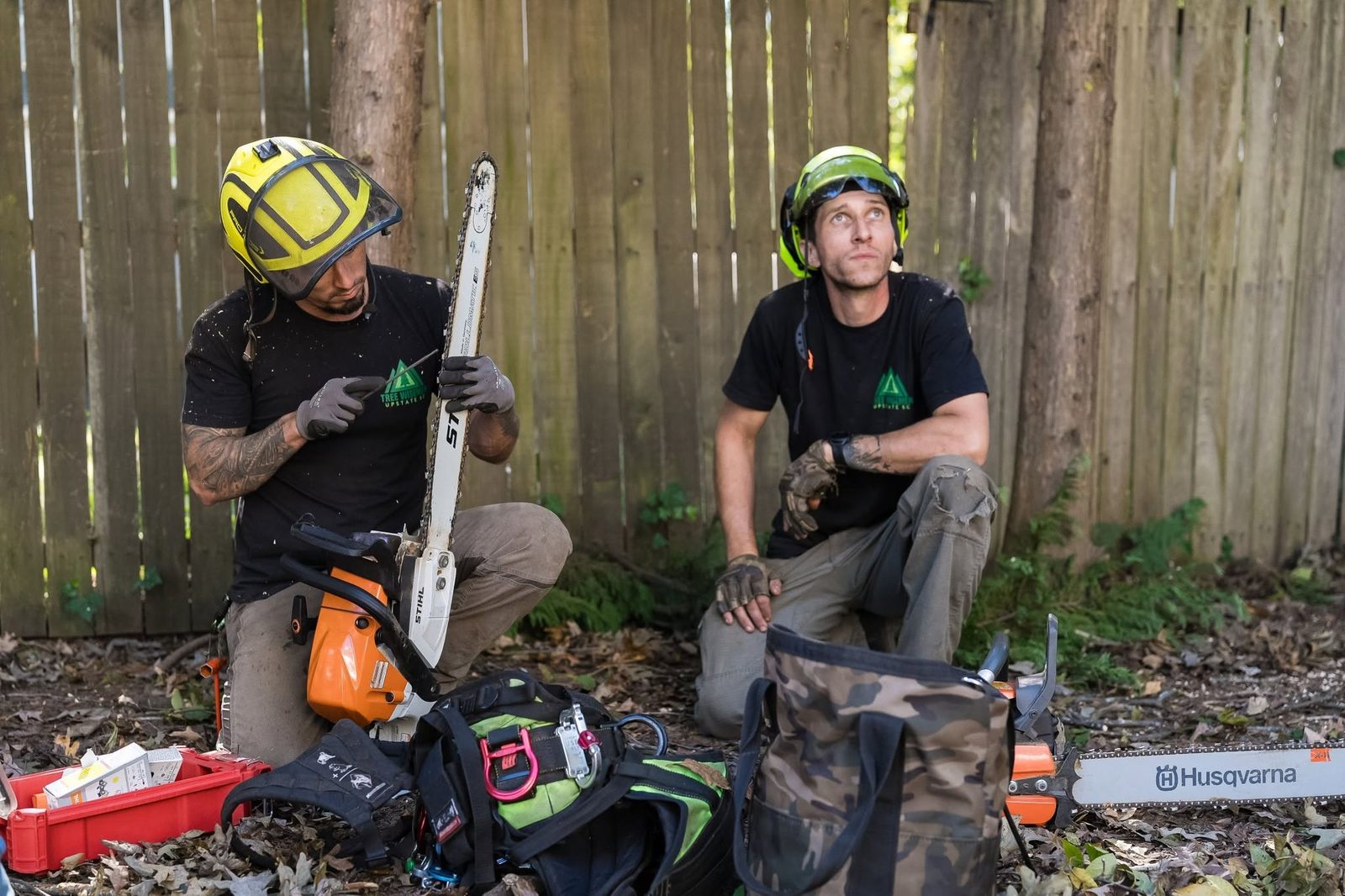
Tree Wisemen is a family-owned crew working the Upstate since 2020 and based in Easley, about 16 miles northeast of Clemson. You can call or text (415) 850-7584 and send photos straight from a tenant's phone or your own. That gets a first read on the job before anyone is on site, and the free estimate (offered within 50 miles of Easley) covers the rest. For the full service list, see our Upstate tree service overview.
In a college town the calendar matters as much as the tree. Leases turn over, tenants move in and out, and a house can be full one week and empty the next. If a limb is rubbing a roof or a dead tree is leaning toward a driveway, it helps to tell the crew who the on-site contact is, whether that is a tenant, a neighbor or a property manager, and when someone can point out the right tree. Mistaken trees are the classic remote-owner problem, so a quick photo with an arrow or a circle drawn on it, sent by text, is worth more than a long phone description.
It also helps to keep the whole job in one text thread. The estimate, the scope, the photos before and the photos after all sit in one place, which is easy to forward to a property manager, a co-owner or an insurance adjuster if the tree has caused damage.
What a clean finish means on a rental lot
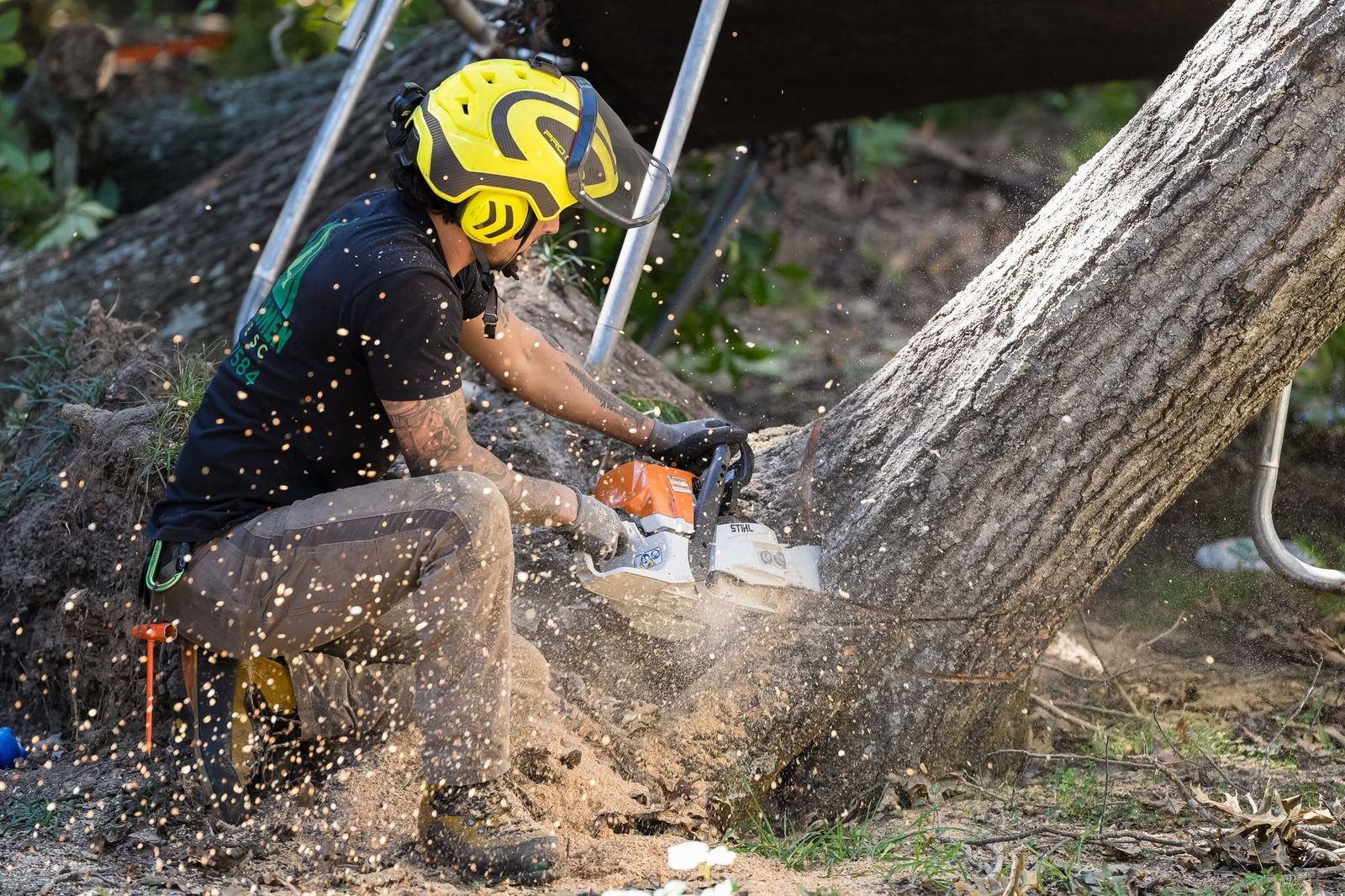
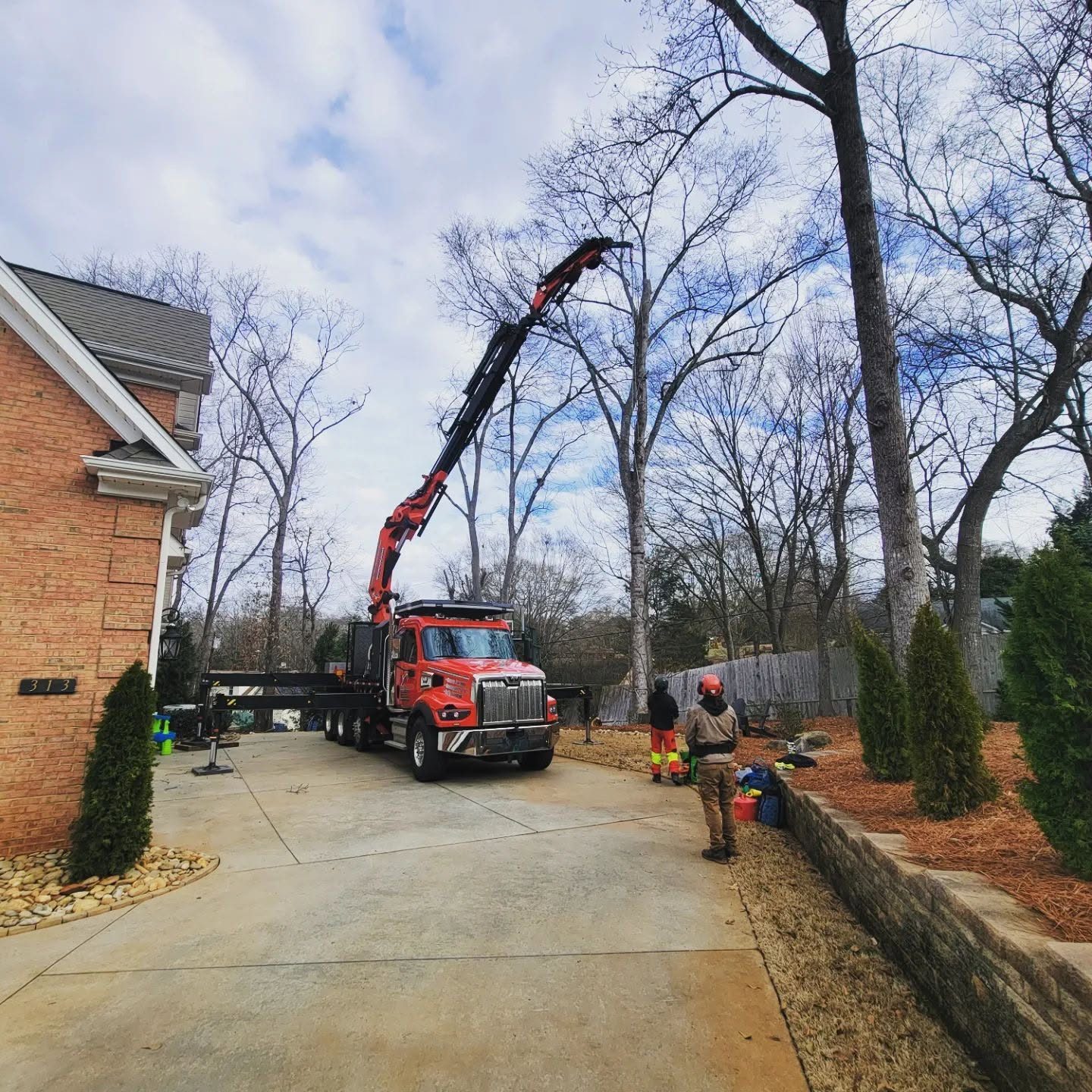
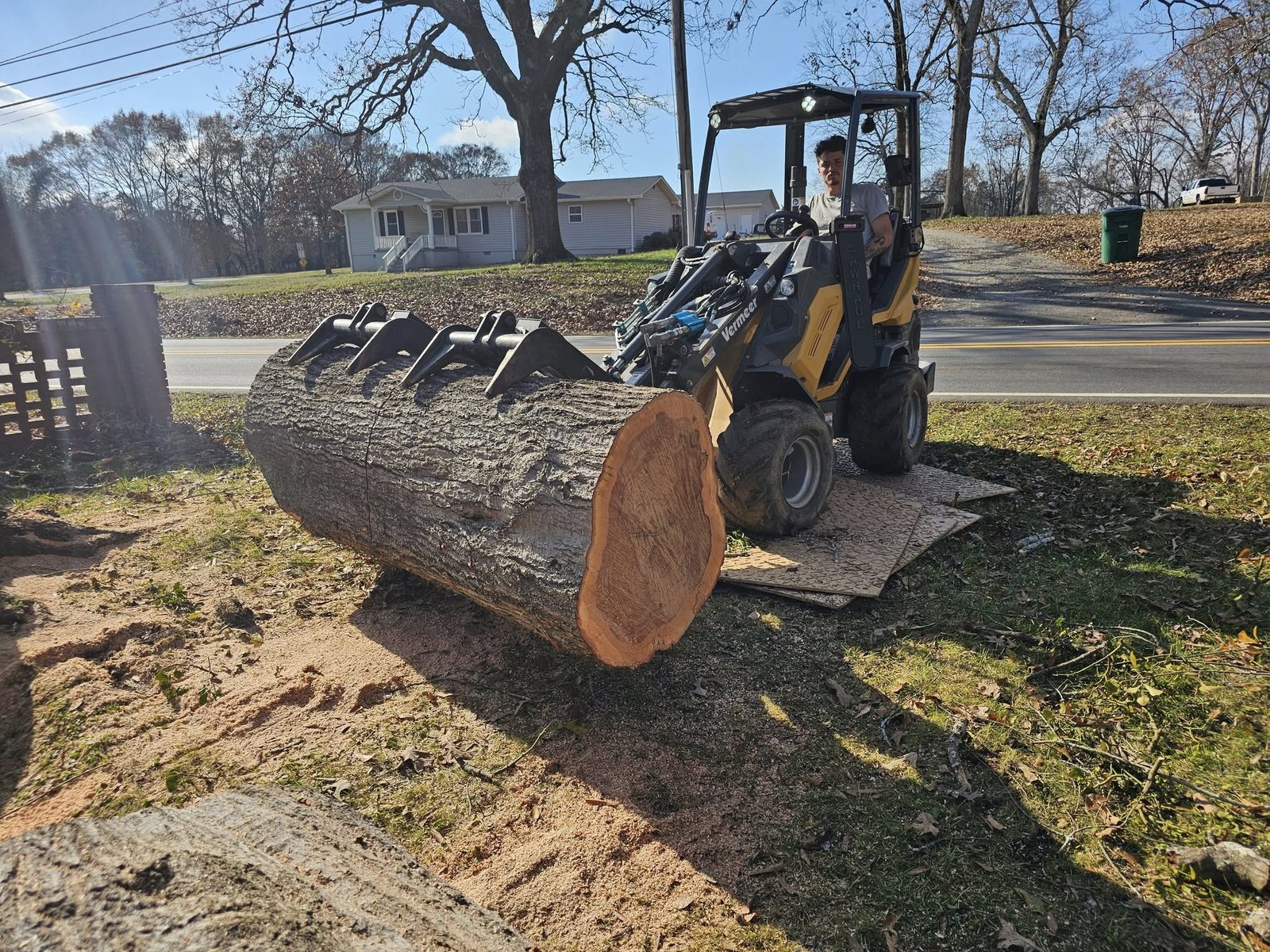
Student housing and rental streets tend to have tight driveways, parked cars, fences and little room to swing a trunk. Crews here work with grapple-saw crane trucks that lift sections out rather than dropping them, chippers for brush, and a compact loader running on ground mats to protect turf and septic areas. Ask any crew what will be hauled away, what stays as firewood, and whether the stump is included. Get those answers in writing or in a text thread, because a tenant will not be home to negotiate on the day.
Before the crew leaves, you should be able to see the lot in photos: no stray limbs on the roof, no ruts left in the yard, no chip piles blocking a parking space. If a tree has already hit a roof, gutter or porch, the tree removal is one job and the structural repair is another, and the repair belongs to a licensed building trade.
Around Clemson, the main routes into town are US 123, US 76 and SC 93, and on busy weekends those roads and the side streets off them fill up quickly. A crew that needs a truck at the curb or a driveway kept clear should say so ahead of time, so a tenant can move a car. Parking is often the single biggest practical obstacle at a rental, and a short text the day before can prevent a wasted trip.
Think about what you want left behind. Chips can be spread as mulch on a bed or hauled off, logs can be cut to firewood length or taken away, and a larger cleanup can fold into debris hauling or land clearing and mulching if the lot needs more than a single tree removed. Tell the crew your preference up front. A landlord who wants a plain, tidy lot usually prefers everything hauled, while a lake-lot owner with a fire pit may want the wood left stacked.
Typical Clemson-area price ranges
These are typical Upstate SC ranges, not a quote. Tree Wisemen prices each job after a free estimate, and the numbers below only show where common Clemson-area work usually lands.
| Scope | Typical range | What pushes it up |
|---|---|---|
| Tree removal | $300 to $2,000 per tree | Height, lean, nearby structures, crane access |
| Trimming and pruning | $250 to $900 per tree | Canopy size, deadwood, work over roofs or water |
| Stump grinding | $100 to $400 per stump | Diameter, root flare, tight access |
A small dead tree in an open backyard sits near the low end. A large hardwood hanging over a rental roof, with a fence and a parked car in the way, sits near the top. If you own several rentals, ask for each address to be priced separately so you can compare them. Details on removal are on our Clemson tree removal page, and stumps are covered under stump grinding in Clemson.
Price depends on how hard the tree is to reach as much as on its size. A tree beside a house with a fence, a pool or a tenant's car in the way takes more time and more rigging than the same tree in an open yard, even when the trunks look alike. Owners who send a wide photo that shows the surroundings, along with a close one of the trunk, tend to get a more useful first read than owners who send only a close-up.
Not every tree needs to come down. If a tenant reports yellowing leaves, dead branches or fungus at the base, the Clemson Cooperative Extension Home and Garden Information Center has plain-language guidance on tree health. A trimming job in the $250 to $900 range may solve a problem that a removal would solve at a higher cost, but a tree with a failing trunk or heavy lean is a different matter, and an honest crew will tell you which one you have.
Lake lots, storms and fast-moving weather
Near Lake Hartwell, trees often grow right at the edge of the lot with soft ground underneath and a lot of wind exposure off open water. Pickens County has 23 federal disaster declarations on record (2005-2026), and Hurricane Helene reached the Upstate in September 2024. After storms like that, leaning or cracked trees over a cottage deserve a prompt look. Tree Wisemen offers 24-hour storm response, and you can text photos if you are not on site. The National Weather Service Greenville-Spartanburg is the place to watch incoming wind and rain, so an absent owner can ask a tenant or caretaker to check the trees before and after a bad forecast.
If shoreline trees are involved, find out who manages that edge of the lot before cutting, since some lake frontage has its own rules. If you plan to burn cleared brush instead of hauling it, South Carolina issues no burn permits, but outside town limits you must notify the SC Forestry Commission first. Their fire and burning page explains how.
A cottage that sits empty between visits is especially exposed, because nobody is there to notice a cracked limb or a tree that shifted overnight. If you own a seasonal place, a simple habit helps: ask a neighbor or caretaker to walk the lot after any strong storm and text you photos, then forward them to the crew. Soft, saturated ground is the usual reason a tree that looked fine last month is suddenly leaning, and early photos let a crew judge how urgent the situation is.
Planting and landscape work follow the same rule. If a new bed, a fence post or a replacement tree means digging, South Carolina requires three full working days' notice through SC811 before excavation, and an owner arranging this from afar should build that wait into the schedule. Stump grinding digs into the soil too, so it is worth mentioning when you book.
Vetting a crew you cannot meet in person
South Carolina has no state license for tree removal, trimming or stump grinding, so a license number tells you nothing here. What protects you as an owner is a current certificate of insurance for general liability and workers' compensation, references, and photos of similar jobs. Ask any crew, including us, for that certificate before work starts, and the SC Department of Insurance is the right place to learn how coverage works. Tree work is dangerous, and the OSHA tree care guidance describes why: only workers trained as line-clearance tree trimmers should work within 10 feet of energized lines, and everyone else should keep that distance as well.
Tree Wisemen carries a 4.9-star rating from 71 Google reviews and is BBB A+ accredited since 2023. Read reviews for photo updates and tidy yards, since that is what a remote owner actually depends on.
Because you cannot stand in the yard and watch, put the details in writing. A good text-thread estimate names the tree or trees, says whether stump grinding is included, says what is hauled and what is left, and gives the cleanup expectation. Ask for photos of similar past work, especially jobs near a roof or a fence. If a tree is close to a power line, tell the crew early and do not let a tenant or a handyman try to trim near it, since that is work for trained line-clearance trimmers only.
Finally, remember that a landlord's liability does not disappear because the owner is out of town. Getting the certificate of insurance, keeping the photo record and confirming the final cleanup all protect you if a question comes up later.