No South Carolina statute says you may, so the goal is not to make it worse
Drive the older streets and rural lots around Easley and you will see the same thing along fence lines: a mature oak, pine or sweetgum on one lot with its limbs reaching well over the next. It is easy to assume the neighbor can simply cut whatever crosses the line. In South Carolina that assumption is not backed by a statute. According to a Charleston law firm that has written on the subject, South Carolina has no law expressly authorizing a neighbor to cut encroaching limbs, and the firm knows of no published South Carolina appellate decision that settles it.
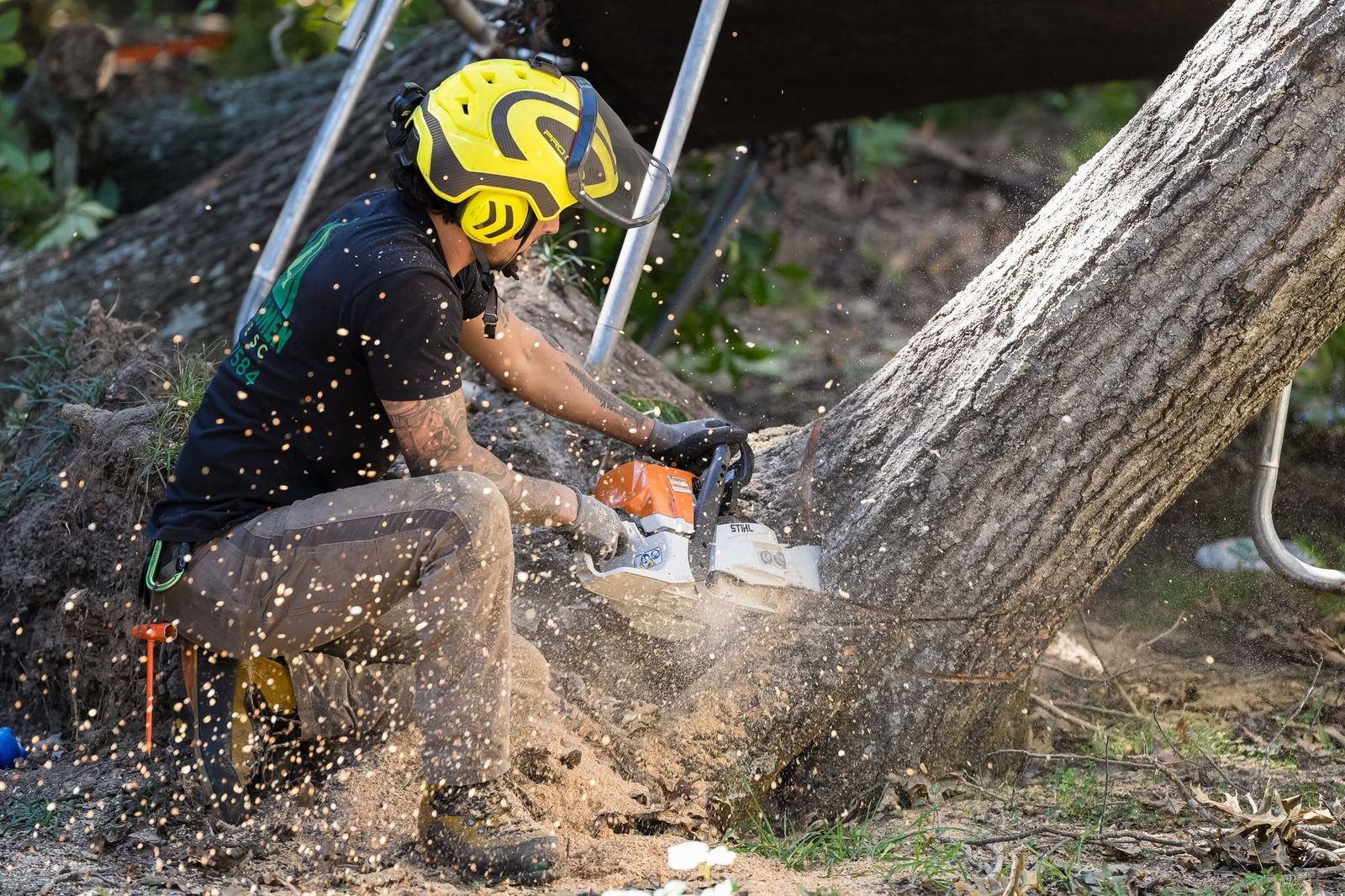
That gap is why the approach matters more than the right. The generally described method is narrow: cut only the part of the limb that actually crosses the line, do it at your own expense, do it from your own side, never step onto the neighbor's land to do it, and do not kill or destabilize the tree. If the tree dies or starts leaning because of how you cut it, you have swapped a nuisance complaint for a damage claim.
A bill introduced in the 2025-2026 session, H.3624, proposed an explicit exception for trimming limbs over your own property line. It has not been enacted, so do not treat it as law. Think of the line-only trim as a widely described practice, not a guaranteed legal right, and talk to a lawyer before anything contested.
What is settled, what is not, and where the real risk sits
Most of the confusion comes from mixing up three different questions: the right to trim, the risk of cutting too much, and the duty of the tree's owner. This matrix separates them for a typical Pickens County residential lot.
| Question | Where South Carolina stands |
|---|---|
| Is there a statute letting you cut limbs over your line? | No. H.3624 proposed one but has not been enacted. |
| Is there a published appellate decision on it? | None known to the law firm that wrote on the subject. |
| Commonly described approach | Trim back to the line only, at your expense, from your side, without harming the tree. |
| Cutting roots | Riskier. Root loss can destabilize a tree, which raises the damage exposure. |
| Cutting or injuring someone else's tree maliciously | Unlawful under S.C. Code 16-11-520: a misdemeanor at $2,000 or less in damage, a felony above that. |
| Duty of the tree owner | A reasonable-care duty for trees that may fall, drawn from Israel v. Carolina Bar-B-Que, Inc. (S.C. Ct. App. 1987). |
The statute worth knowing is the malicious-injury one. It requires a wilful and malicious act, so a careful line trim is a very different thing from topping a neighbor's tree in anger. But a cut that looks like retaliation, or that visibly ruins the tree, is exactly what gets described that way in a dispute.
Doing the cut without starting a second fight
The cheapest dispute is the one that never starts. A few steps keep a routine trim routine:
- Talk first. A short conversation, or a text with a photo, often ends with the neighbor offering to split the cost or handle it themselves.
- Locate the line before anyone cuts. If a fence is not on the true boundary, work from your survey, not the fence. Guessing wrong puts you on their land.
- Photograph before and after. Show the limbs, the line, and the finished cut so there is a record of what you removed and that the tree was left sound.
- Keep the cuts clean. Proper pruning cuts at a branch collar heal better than flush cuts or stubs. The ISA's Trees Are Good pages and Clemson's Home and Garden Information Center both explain how to cut without hurting the tree.
- Do not remove more than a tree can tolerate. Heavy cuts on one side of a crown can leave it lopsided. If the limb you need gone is most of the tree's canopy on that side, that is a conversation, not a trim.
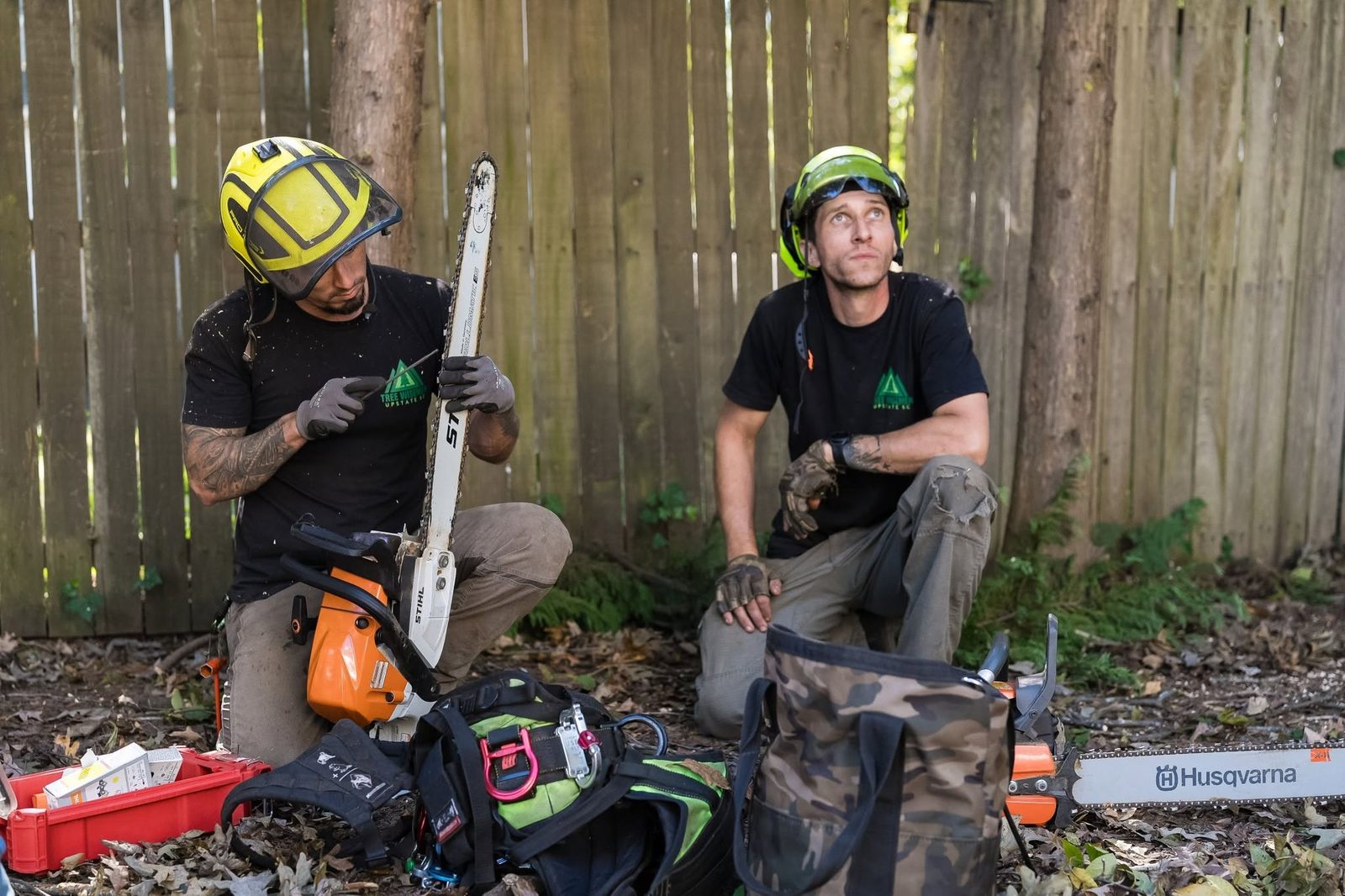
South Carolina does not license tree trimming, so the protection when you hire help is paperwork, not a card. Ask any crew, including us, for a current certificate of insurance covering general liability and workers' compensation before work starts, and check it with the issuing agent. The SC Department of Insurance is the place to start if you have questions about coverage. Also ask for references and photos of similar jobs. For what a line trim involves, see our tree trimming page.
Ask the crew to work from your side and to say so up front. A crew that plans to climb into the neighbor's yard or set equipment there is creating the trespass problem you are trying to avoid.
When a limb is a hazard, not just an annoyance
Overhanging limbs are a cosmetic argument until one is dead, cracked or sitting over a roof. Then the question changes from "may I cut it" to "who is responsible if it drops." The duty of care described in Israel v. Carolina Bar-B-Que, Inc. is why a documented warning matters: if you tell a neighbor in writing, with photos, that a limb looks dead or split over your house, you have a record, and they have notice.
Limbs hanging over a roof are a special case with their own practical issues, from gutter damage to what happens in the next wind event. Our guide on limbs over the roof covers that situation. If a tree or limb has already come down, read what to do when a neighbor's tree falls on your property, since who pays turns on facts like whether the tree was visibly dying.
Upstate weather adds pressure. Pickens County has had 23 federal disaster declarations in the record covering 2005-2026, and Hurricane Helene reached the Upstate in September 2024. Limbs that were stressed or half-cracked before a big wind are the ones that come down. The National Weather Service Greenville-Spartanburg office is a good source for incoming wind alerts. A limb that looks wrong before a storm is worth a look from a crew, with the owner's permission, rather than waiting for it to fall.
Power lines change everything. If branches are touching or near energized lines, stop. OSHA's 10-foot rule binds workers rather than homeowners, but it is the right distance for anyone, and only workers trained as line-clearance tree trimmers under 29 CFR 1910.269 may work inside 10 feet of energized lines. See OSHA's tree care safety guidance. Call the utility, not a ladder.
What a line trim typically costs, and who pays
Under the commonly described approach, the person doing the trimming pays. These are typical Upstate SC ranges, not a quote from any company, and they swing with access, height and debris.
| Scope | Typical range |
|---|---|
| A few smaller limbs reachable from the ground or a short climb | $150-$500 |
| Several limbs over a fence line on a mid-size hardwood | $400-$1,200 |
| Large overhanging limbs on a mature oak or pine, rope and rigging | $800-$2,000 |
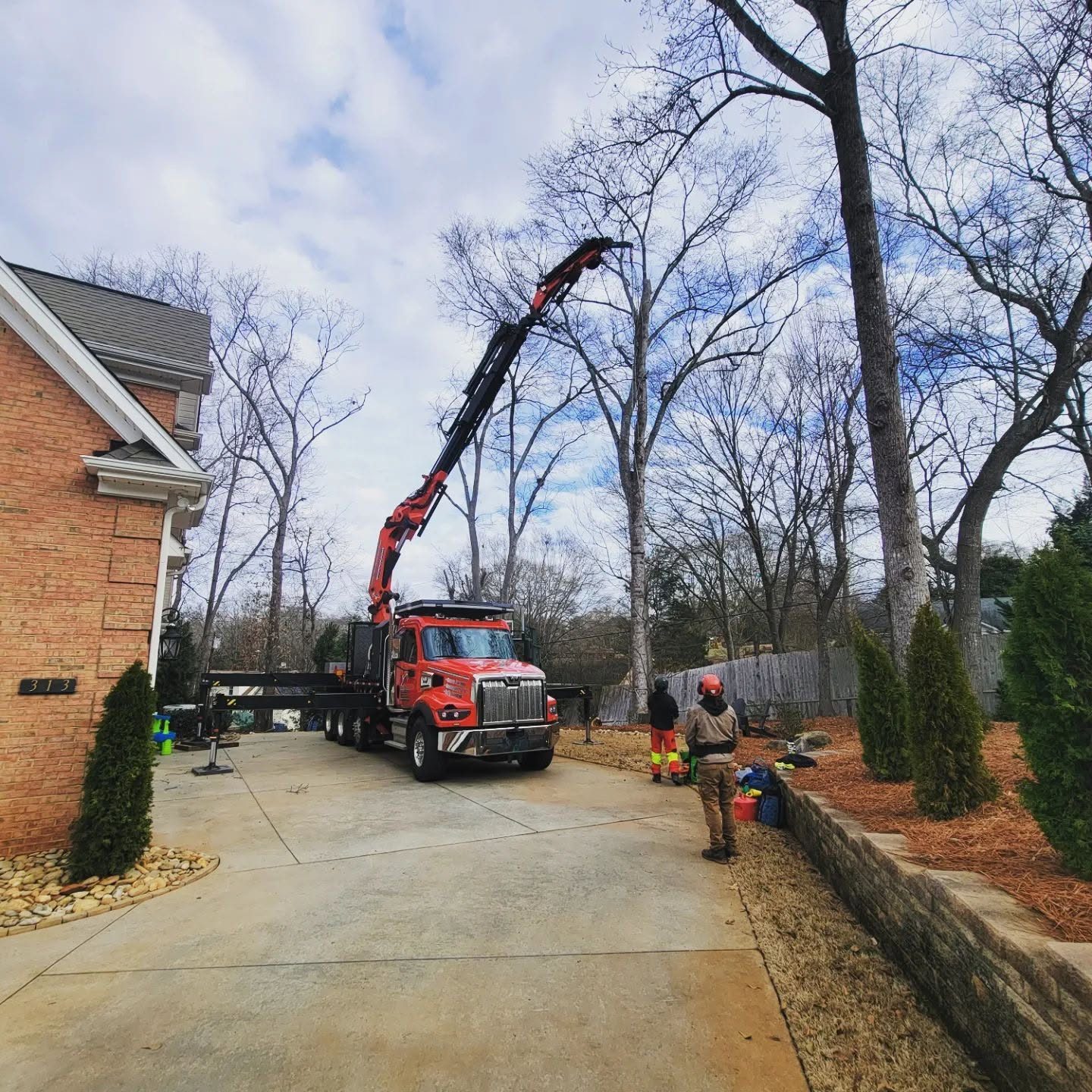
| Limbs over a structure or tight access needing crane or grapple-saw work | $1,200-$3,000+ |
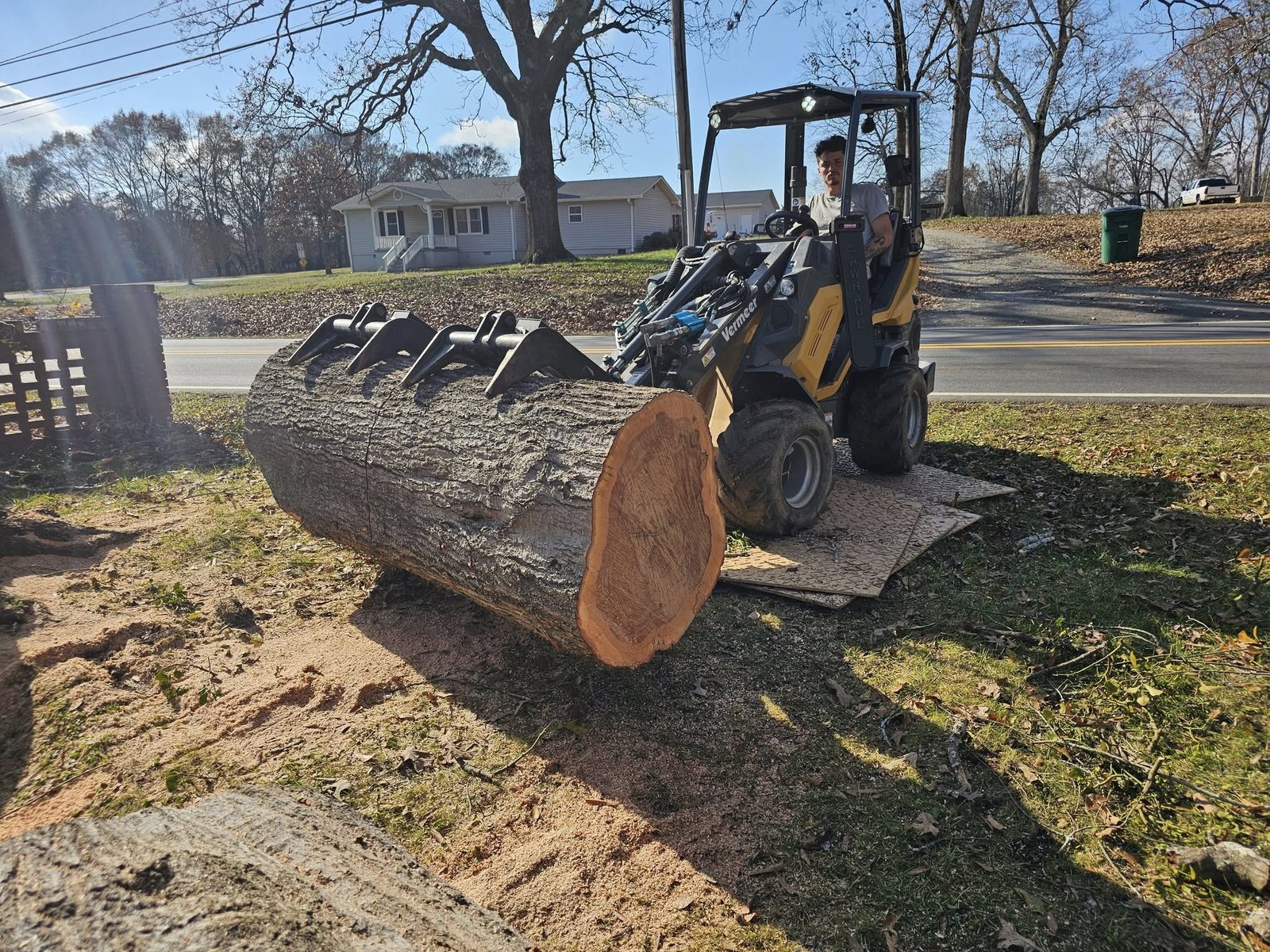
| Haul-away and chipping, when not included | Often $100-$400 extra |
Cost is also where a quiet agreement beats a legal argument. If the tree owner is willing to pay for the work, the job gets done properly and nobody trespasses. If they refuse, get the estimate in writing anyway, since it documents what the trim should cost.
Tree Wisemen is family owned, based in Easley and working the Upstate since 2020, and offers free estimates within 50 miles. You can text photos of the limbs and the line to (415) 850-7584 for a first look. Whichever crew you choose, ask for the certificate of insurance first, and consult an attorney if the neighbor is objecting.