Right at the edge of the map: what makes sense in Greenwood
Greenwood sits 49.6 miles south of our Easley base, which puts the county seat right at the outer edge of the 50-mile free-estimate radius. We would rather say that plainly than pretend it is next door. Family-owned Tree Wisemen has worked the Upstate since 2020, and Greenwood County is a real part of that reach, but a crane truck, chipper and loader do not make the drive for a single small limb.
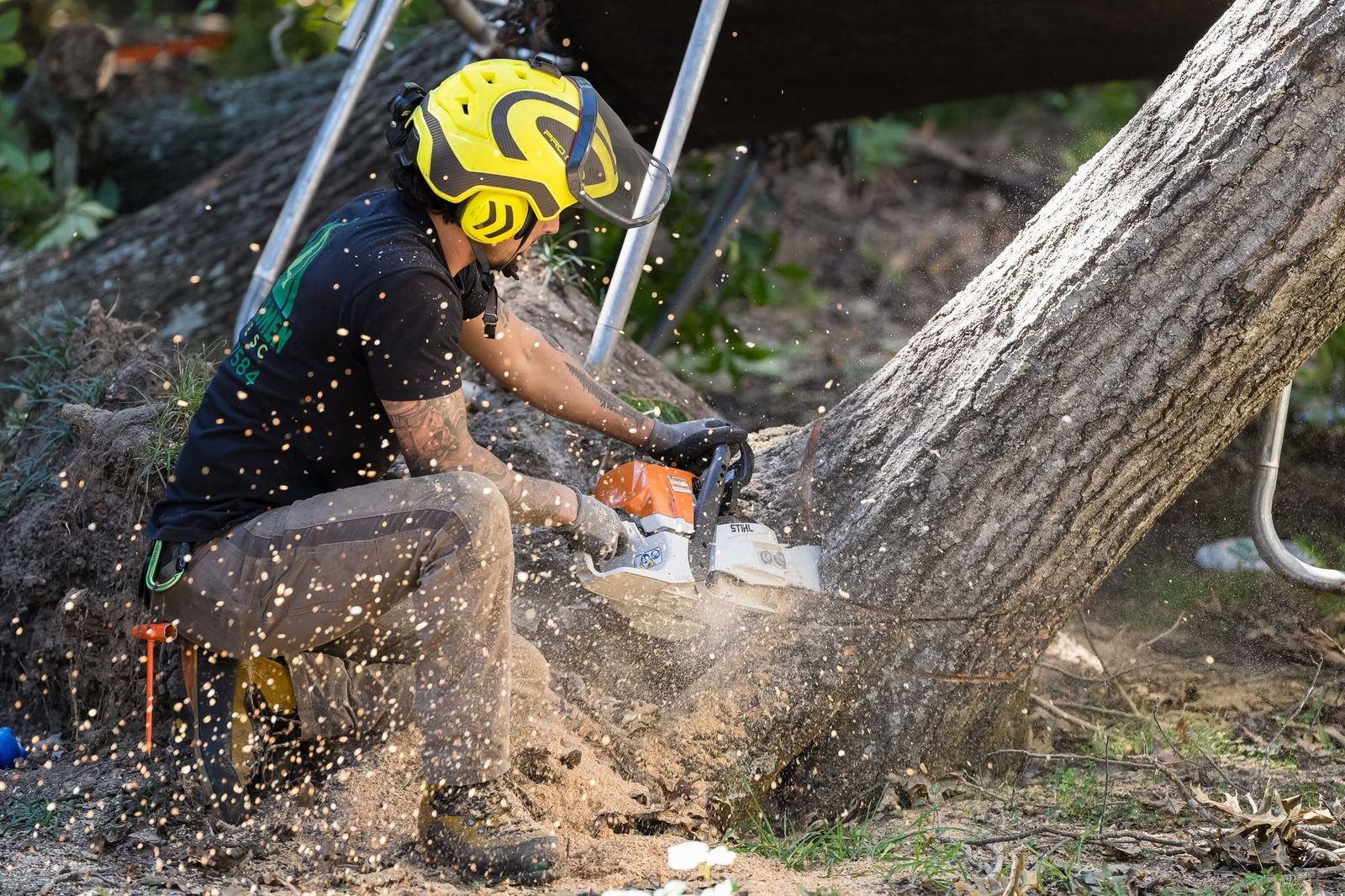
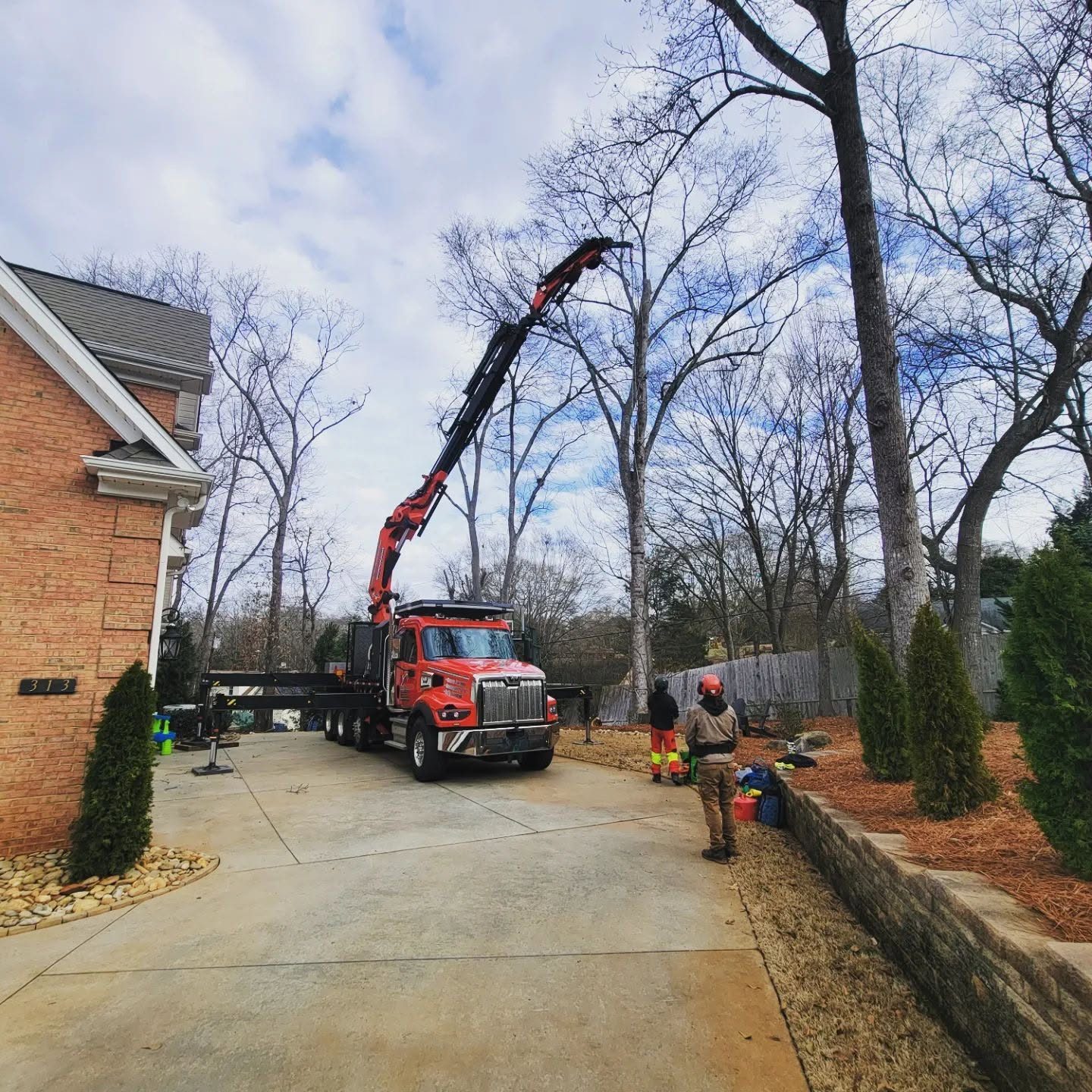
The jobs that make sense at this distance are the ones where the equipment earns the trip: a large removal over a roof or fence, a storm-damaged tree that needs a grapple-saw crane, several trees in one visit, or a removal paired with stump grinding the same day. Text photos to (415) 850-7584 and we can tell you quickly whether the address falls inside the radius and whether the job is a good fit. For the full service list, see our tree service overview.
Good photos save everyone a trip. Send one wide shot that shows the tree beside the house, fence or wires, one close shot of the base and any cracks or fungus, and a quick look at the path a truck would take to reach it. Tell us how wide the gate is and whether the ground slopes. A small ornamental you could handle with a pole saw is probably better served by someone closer to town, and we will say so rather than book a long drive for it. A tall hardwood leaning toward a roof is exactly the kind of job worth the miles.
Lake Greenwood lots versus in-town yards
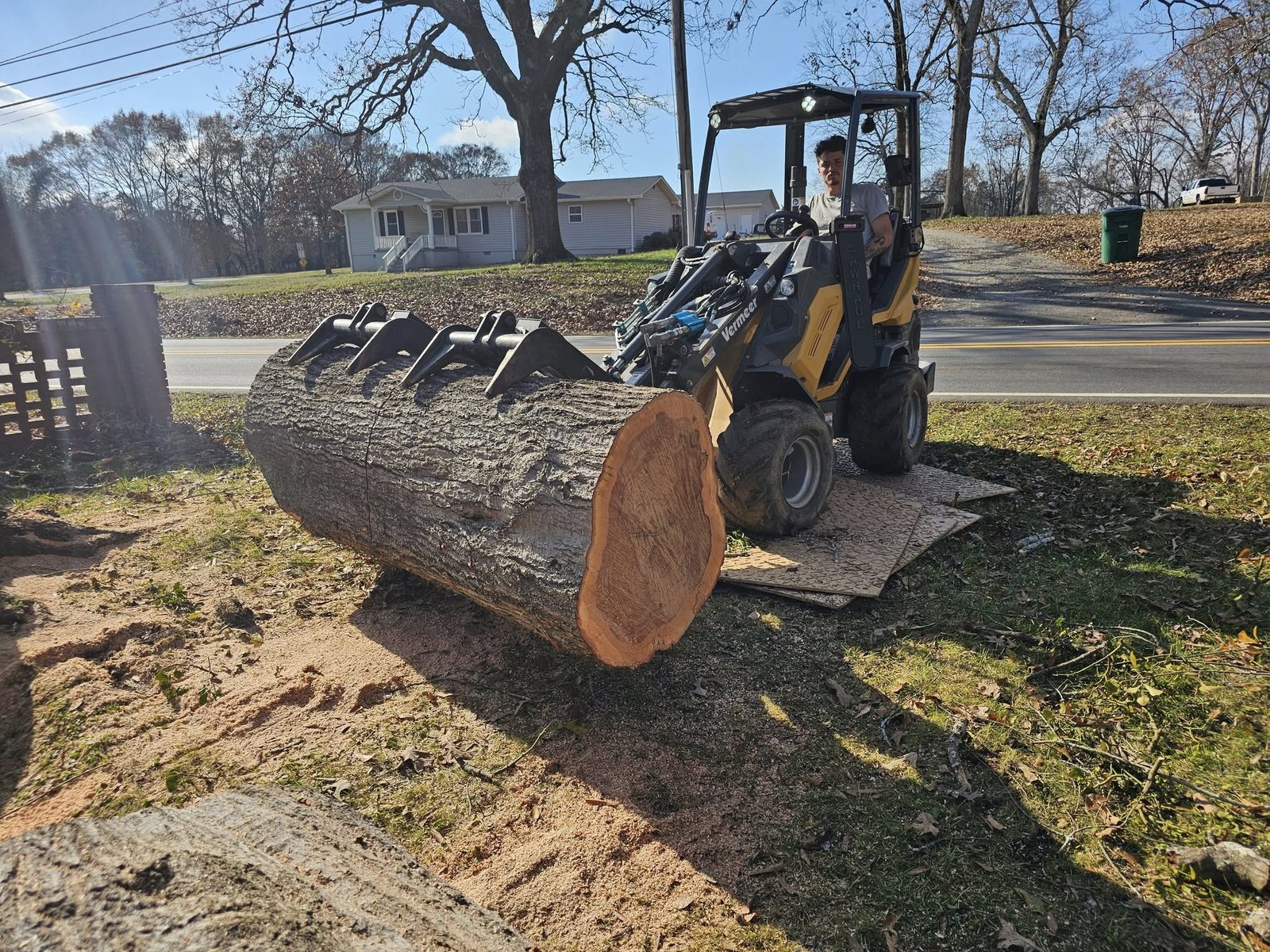
Lake Greenwood lies to the east of town, and lakefront work is a different job from a yard off US 25 or SC 72. Lake lots tend to mean tight water-side access, trees leaning toward docks and rooflines, and soft ground near the shoreline. A compact loader on ground mats lets a crew move wood without tearing up a lawn, but we judge each setup on site before promising a method.
In-town work around Greenwood and the Lander University area is more often about mature shade trees crowding older roofs, limbs over driveways, and lots where the only way in is through a side gate. Out toward US 178 and US 221, larger parcels bring land clearing and mulching into play. Different property, different equipment, different number. That is why we price after looking rather than from a chart.
On the lake side, the questions we ask are practical ones. Is the tree on the slope above the water or right at the bank? Can a truck reach the driveway, or does everything have to be carried or lowered in pieces? Are there docks, boat lifts or fences in the fall zone? Wood that cannot be dropped freely has to be rigged down in sections, and that takes more time than a straight fell in an open field. In town the puzzle is usually different: overhead service lines along the street, a neighbor's fence a few feet from the trunk, or a backyard with no truck access at all. Tell us which of those sounds like your place and the estimate gets much closer to the real number.
Typical Greenwood prices by job
These are typical Upstate SC ranges, not a Tree Wisemen quote. Every job is priced after a free estimate.
| Job | Typical range | What pushes it up |
|---|---|---|
| Tree removal | $300 to $2,000 per tree | Height, lean over a structure, crane need, poor access |
| Trimming and pruning | $250 to $900 per tree | Canopy size, deadwood, work near roofs |
| Stump grinding | $100 to $400 per stump | Diameter, surface roots, grinder access |
| Storm or emergency work | Quoted on site | Trees on structures, tangled limbs, hazards |
Small ornamentals land near the bottom. A big hardwood hanging over a house lands near the top. For a deeper look at the removal side, read about tree removal in Greenwood. If the quote is much higher than the top of these bands, ask what is driving it.
A few things move a price that homeowners do not always expect. Cleanup matters: hauling limbs and logs away costs more labor than leaving wood on site for firewood. Several trees in one visit usually make better use of the crew's day than one tree alone, which is worth remembering when you are this far from Easley. And a stump you decide on later means a second visit, so mention every stump up front. Ask for the estimate to spell out whether chipping, hauling and grinding are included so you can compare any two quotes fairly.
Storms, wind and the reason to act early
Federal records list 17 disaster declarations touching this county across 2000-2026, and storms are a big share of that history. Hurricane Helene reached the Upstate in September 2024, and many trees that survived it are still carrying damage. Cracked unions, hanging limbs and new leans often show up months later. Check the National Weather Service Greenville-Spartanburg forecasts before a front rolls through, and call about a suspect tree before the storm, not after.
We run 24-hour storm response, and you can text photos of a fallen or leaning tree. Roof or structural repair after a strike belongs to a licensed building trade. The tree work is a separate job.
Warning signs worth a photo: soil heaved up on one side of the trunk, a new tilt that was not there last season, dead branches high in the crown, or mushrooms growing at the base. Saturated ground after long rain lets roots loosen, so a tree that looked fine in summer can go over in the first strong gust. If a tree is already down and pinning a fence, car or roofline, stay clear of it, keep others away, and send photos instead of trying to cut it yourself. Wood under tension can spring in unexpected directions when it is cut.
Power lines, utilities and burning: the rules that matter
Keep yourself and any helper at least 10 feet from energized lines. OSHA's 10-foot rule binds workers, not homeowners, but it is the right distance for anyone. Only crews trained as line-clearance tree trimmers under 29 CFR 1910.269 should work inside it. See OSHA's tree care safety page for the details. If limbs touch a service line, call the utility before anyone climbs.
Planning to dig for a new tree or after a stump comes out? SC811 requires three full working days' notice before excavation. As for burning brush, South Carolina does not issue burn permits. Outside city or town limits you must notify the SC Forestry Commission first, and the rules are laid out on its fire and burning page.
On larger parcels out along the highways, that burning rule comes up often after clearing work. Debris piled next to woods, brush or grassland needs the same notification, so plan for it before the crew arrives, or have the wood chipped or hauled instead. Chips left on site make useful mulch for beds and paths.
Checking any crew before they start
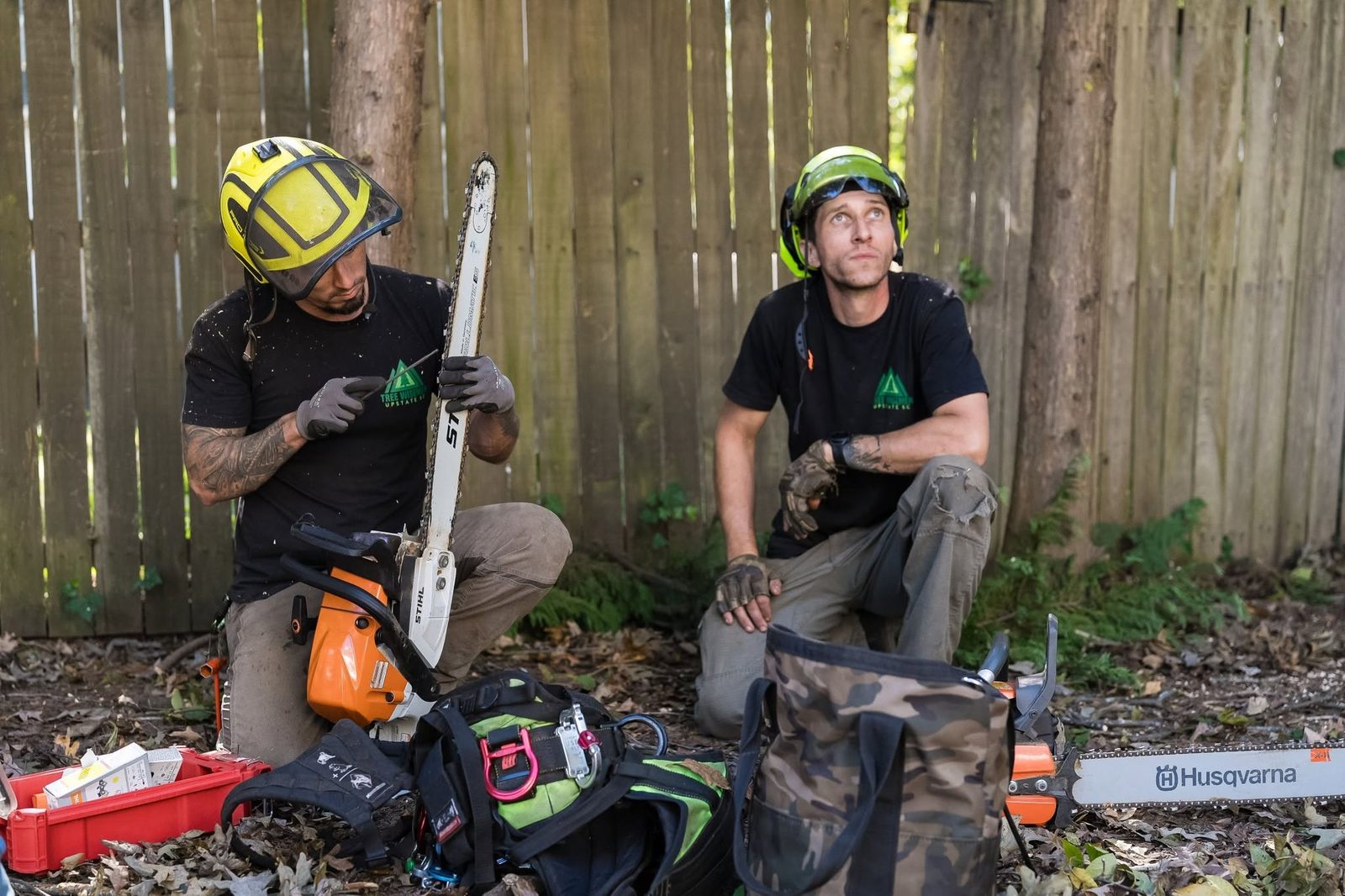
South Carolina has no state license for tree removal, trimming or stump grinding, so the protection is in the paperwork you ask for. Request a current certificate of insurance showing general liability and workers' compensation, and ask any crew, including us, for it before work starts. You can verify questions about coverage with the SC Department of Insurance. Then ask for references and photos of similar jobs.
Tree Wisemen holds 4.9 stars from 71 Google reviews, BBB A+ accreditation since 2023, and Nextdoor Neighborhood Fave honors in 2024 and 2025. For pruning guidance on your own trees, Clemson Cooperative Extension is a solid free reference.
Be wary of anyone who knocks on the door after a storm asking for cash up front, cannot show insurance, or wants to top a tree by cutting every limb back to stubs. Honest crews explain what they plan to cut, where the wood will go and who is responsible for cleanup. Get that in writing, and take your time comparing estimates when the situation is not an emergency.