Edge-of-subdivision trees and the fall zone behind your fence
Drive the back lots around Greer and the pattern repeats: a new subdivision was cut out of farmland or woods, the builder kept a ragged strip of loblolly pines and mixed hardwoods along the property line, and now a privacy fence, a playset, or a fresh roof sits inside the height of those trees. Greer is a town of 44,387 people spread across both Greenville and Spartanburg counties, and a lot of its growth along I-85, SC 14 and SC 101 happened in exactly this way. Trees that grew up together in a stand lose their neighbors to grading and suddenly stand alone, with roots cut on one side and crowns that were never shaped for open wind.
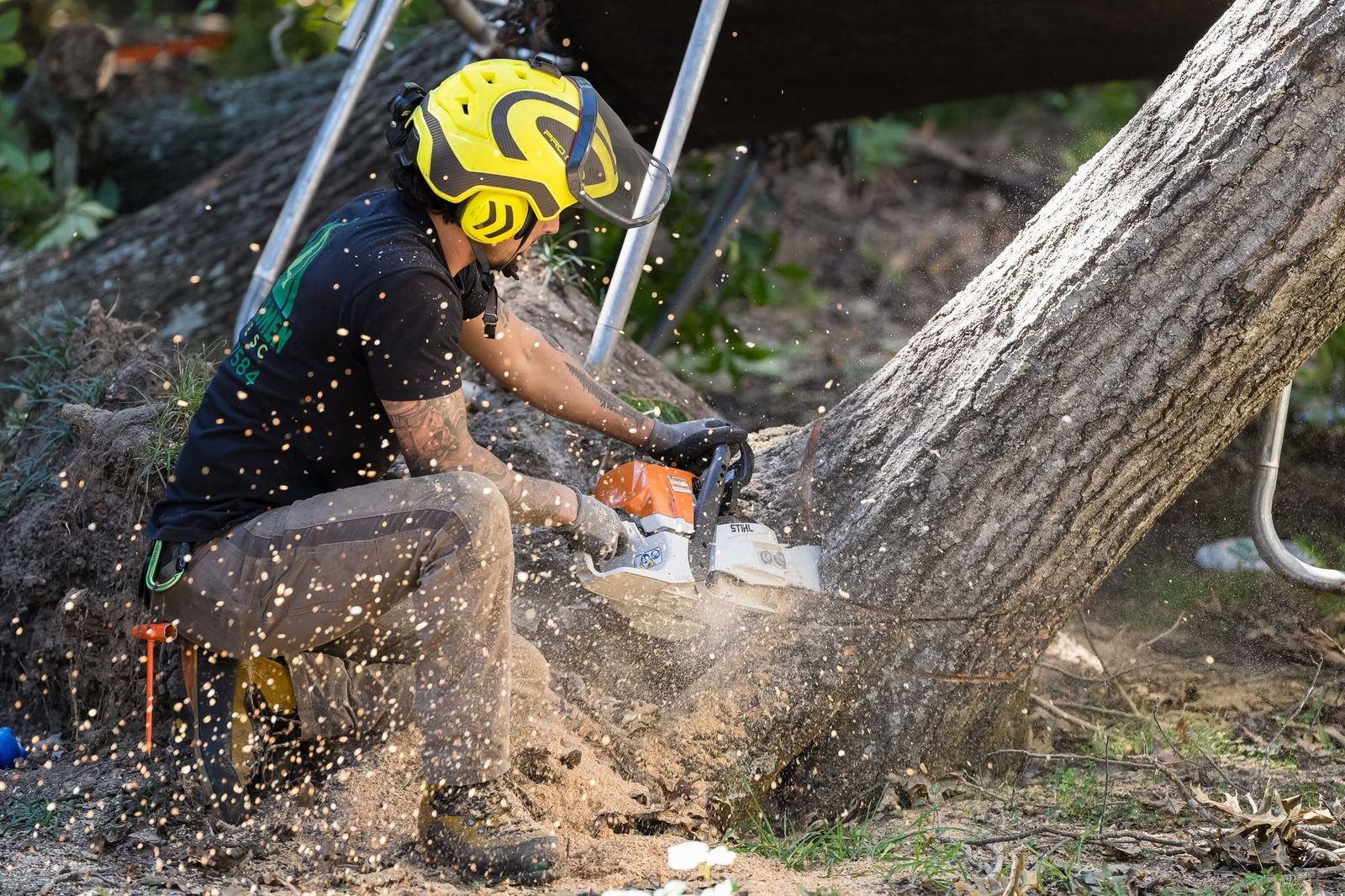
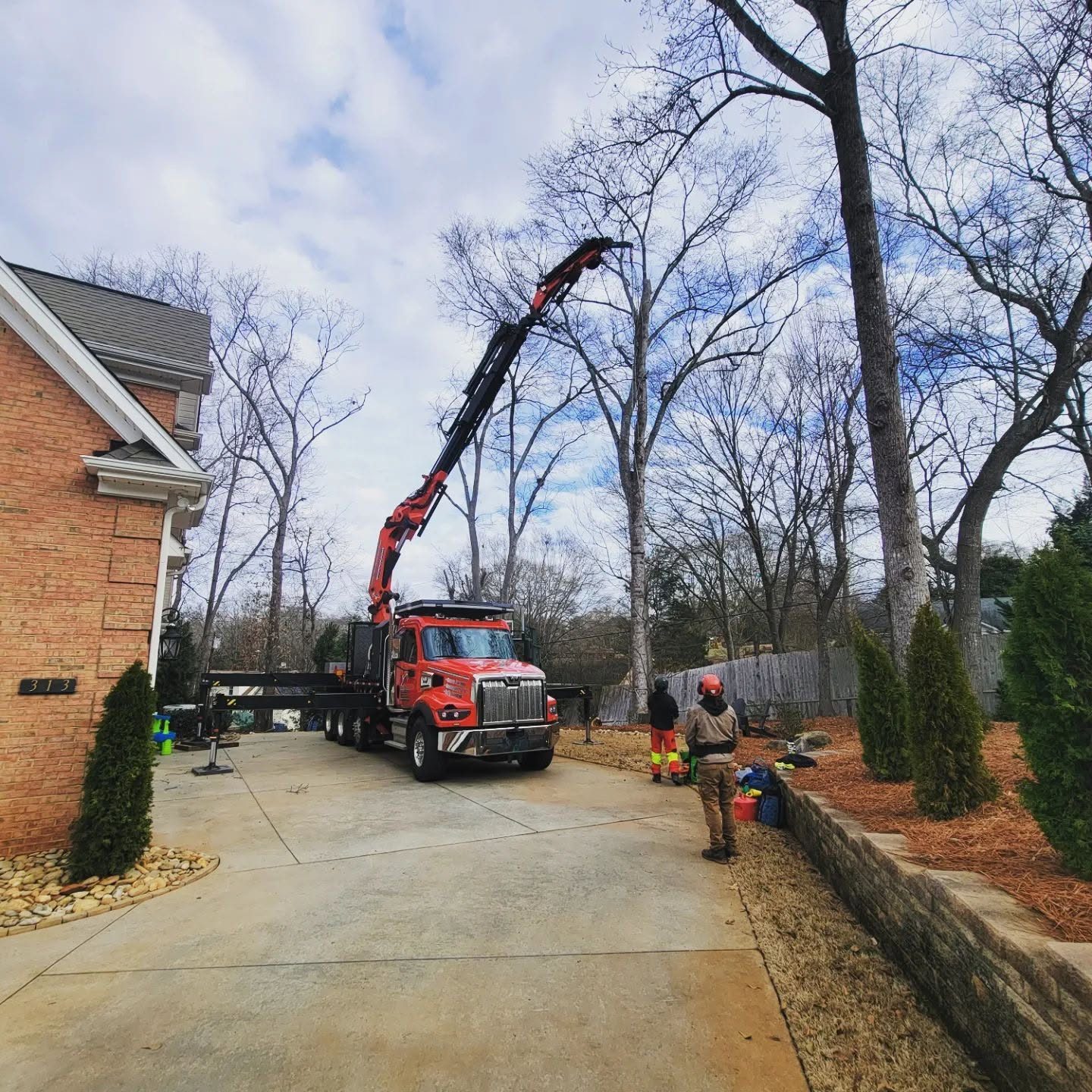
Fall-zone planning is the first thing a good crew does on these jobs. A tree is only as tall as its reach, so measure from the trunk to the fence, the roof edge, and the neighbor's line. If any of them falls inside the tree's height, the tree usually has to come down in pieces, not in one drop. That means rigging, a grapple-saw crane truck or a climber, and ground protection for the lawn, and it is the reason the same species can quote at $300 in open ground and near the top of the range against a fence.
The strip of trees left behind a builder's grading is often shared ground in practice, even when the survey says otherwise. One trunk may sit on your side of the line while its crown hangs over the neighbor's yard, and the fall zone does not care about the boundary. It helps to talk with the neighbor before work starts, so the crew knows where they can stage equipment and where branches and chipped material can safely land.
Look up before you call. Dead limbs high in a pine, a lean that has grown since last season, mushrooms at the base, or bark peeling away in sheets are all worth photographing. A tree that was healthy inside a dense stand can decline fast once its neighbors are cleared, and an honest estimate starts with what the crew can actually see in your pictures.
What drives the number on a Greer lot
Around Greer, typical removal runs $300 to $2,000 per tree, and large or hazardous trees can pass $3,000. Those are typical Upstate SC ranges, not a quote from any one company. The honest drivers are height, trunk diameter, lean, rot, and what sits underneath. The full method is in our tree removal cost guide, and the service overview lives on the tree removal page.
| Scope | Typical range |
|---|---|
| Small or medium pine, open drop space | $300 to $800 |
| Mid-size hardwood with clear access | $600 to $1,400 |
| Tree over a fence, shed or roof, rigged down in sections | $900 to $2,000 |
| Large, leaning or decayed tree near structures | $1,500 to $3,000+ |
| Stump grinding added after removal | Priced separately |
Stumps are their own line. If you want the stump gone too, see stump grinding in Greer so you can have both quoted together.
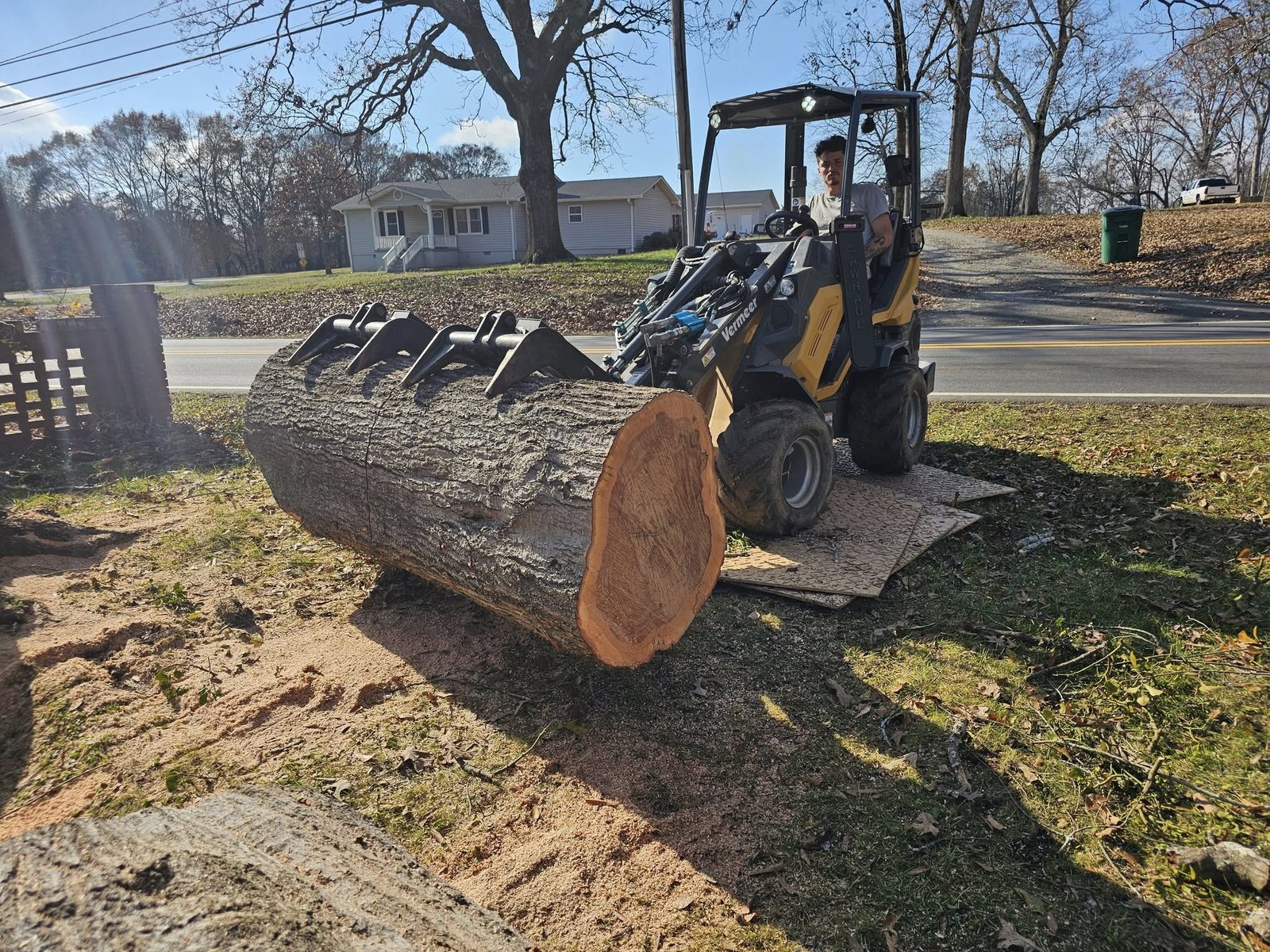
Access matters as much as size on newer lots. A tree behind a fenced backyard with a narrow side gate cannot be reached by a truck, so the wood has to be carried or lowered in pieces to where equipment can pick it up. Crews that bring a compact loader on ground mats can move cut sections without tearing up turf, but that setup is part of the time on the job. Tell the estimator about gates, irrigation heads, septic or utility covers, and anything else that limits where weight can go.
Hardwoods usually take longer than pines of the same height because the limbs are heavier and spread wider, so each piece needs more careful rigging. A pine is often tall and thin and can look cheap on paper, yet a pine leaning toward a roof can cost more than a sound hardwood in the open. Ask the estimator to explain which factor is moving your number, and whether haul-away and cleanup are included in what you were quoted.
Wind, wet ground and a county that keeps getting hit
Greenville County carries 23 federal disaster declarations across 2003-2026, and the Upstate felt Hurricane Helene in September 2024. Saturated clay soil plus gusts is what lays pines over, because their roots spread wide but shallow. Trees along a cleared subdivision edge are the most exposed, since the wind that used to hit a whole stand now hits them first. The National Weather Service office for Greenville-Spartanburg posts the watches that tell you when to stay out from under a questionable tree.
If a tree has already come down or is hung up on a roof, keep people clear and call. Tree Wisemen runs 24-hour storm response, and you can text photos to (415) 850-7584 so the crew sees the rigging problem before arriving. Roof or structural repair after a strike is a licensed trade handled separately.
After a wet spell, walk the back of your lot in daylight. Soil heaving on one side of a trunk, fresh cracks in the ground, or a tree that looks tilted compared with last month are signs the root plate is moving. Do not wait for the next front to find out. Removing a compromised tree on a dry, calm day is cheaper and safer than dealing with it once it has landed on a fence or against the house.
Power lines, utility locates and burning
Many edge trees lean toward service drops or the lines along the road. OSHA's tree care guidance sets the 10-foot rule for workers, and only crews trained in line clearance under 29 CFR 1910.269 may work inside that distance of energized lines. It binds workers, not homeowners, but it is the right distance for you to keep too. If a limb is near a line, do not touch it.
Planning to replace a removed tree, or set a fence post where the stump was? Call SC811 with three full working days' notice before any digging. And do not plan on burning the debris casually: South Carolina issues no burn permits, but outside city or town limits you must notify the SC Forestry Commission first. Hauling or chipping avoids the question entirely.
On a subdivision lot, the cleaner route is nearly always the chipper. Brush gets chipped on site and the larger rounds can be hauled off or left for firewood if you ask. Mulch from a removed tree can go back under beds on the same property, which saves a trip and keeps the material local.
Vetting a crew when the tree is close to everything
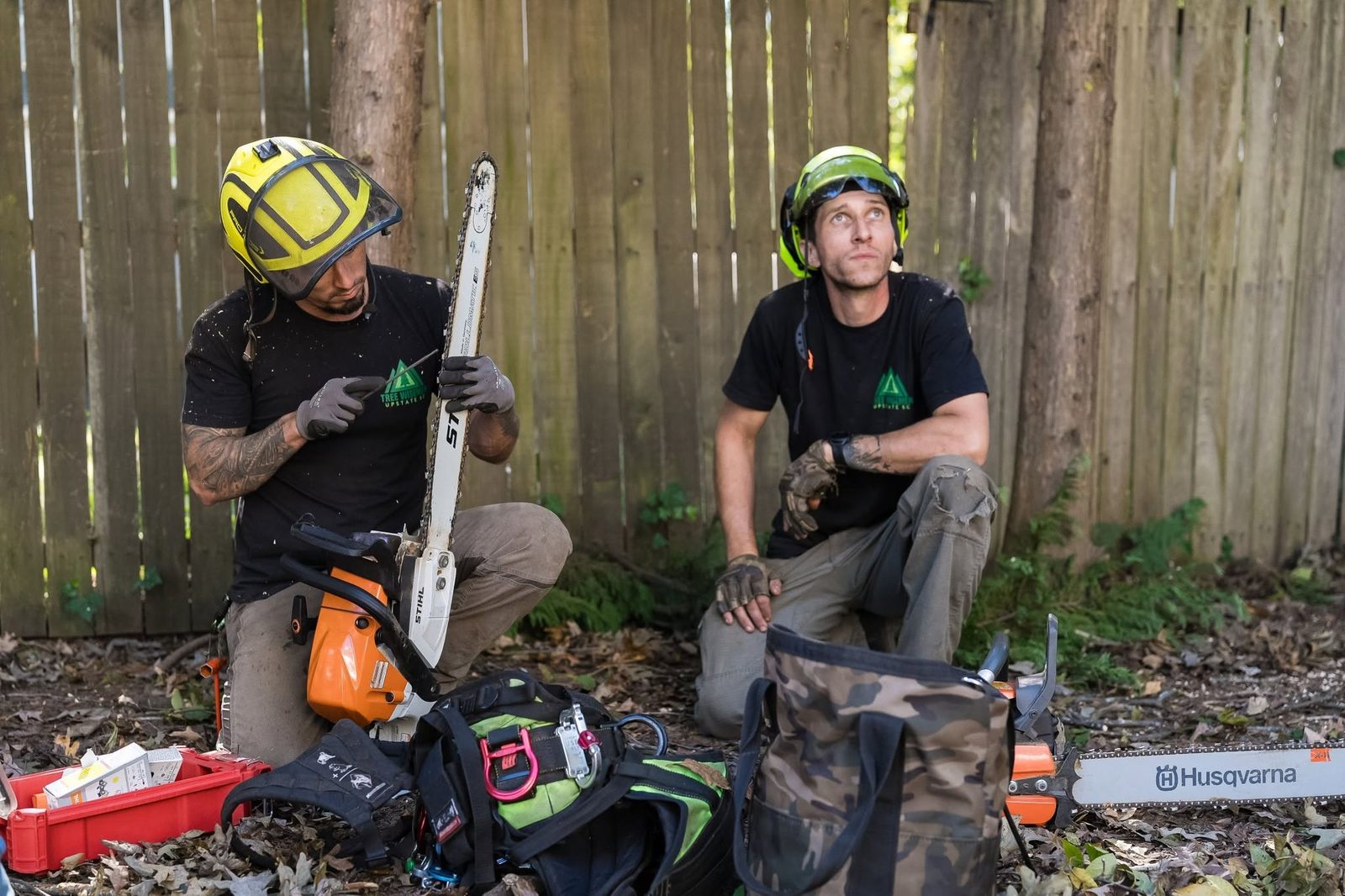
South Carolina has no state license for tree removal, so the protection is on paper you can ask for. Request a current certificate of insurance showing general liability and workers' compensation, and ask any crew, including us, for it before work starts. The SC Department of Insurance is the place to learn what those coverages mean. Then ask for references and photos of similar jobs, specifically trees dropped beside fences and roofs.
Tree Wisemen is family owned, based in Easley and working the Upstate since 2020, with 4.9 stars from 71 Google reviews and a BBB A+ accreditation since 2023. Estimates are free within 50 miles of Easley, and Greer sits about 21 miles east, well inside that.
When you compare written estimates, make sure they describe the same job. One may include cleanup, chipping and hauling while another leaves the wood in your yard. One may plan to rig the tree down in sections while another assumes it can simply be felled. A much lower number for a tree beside a fence should make you ask how it is going to come down, and what happens if something gets damaged on the way.