Crew work and diagnosis work are different jobs
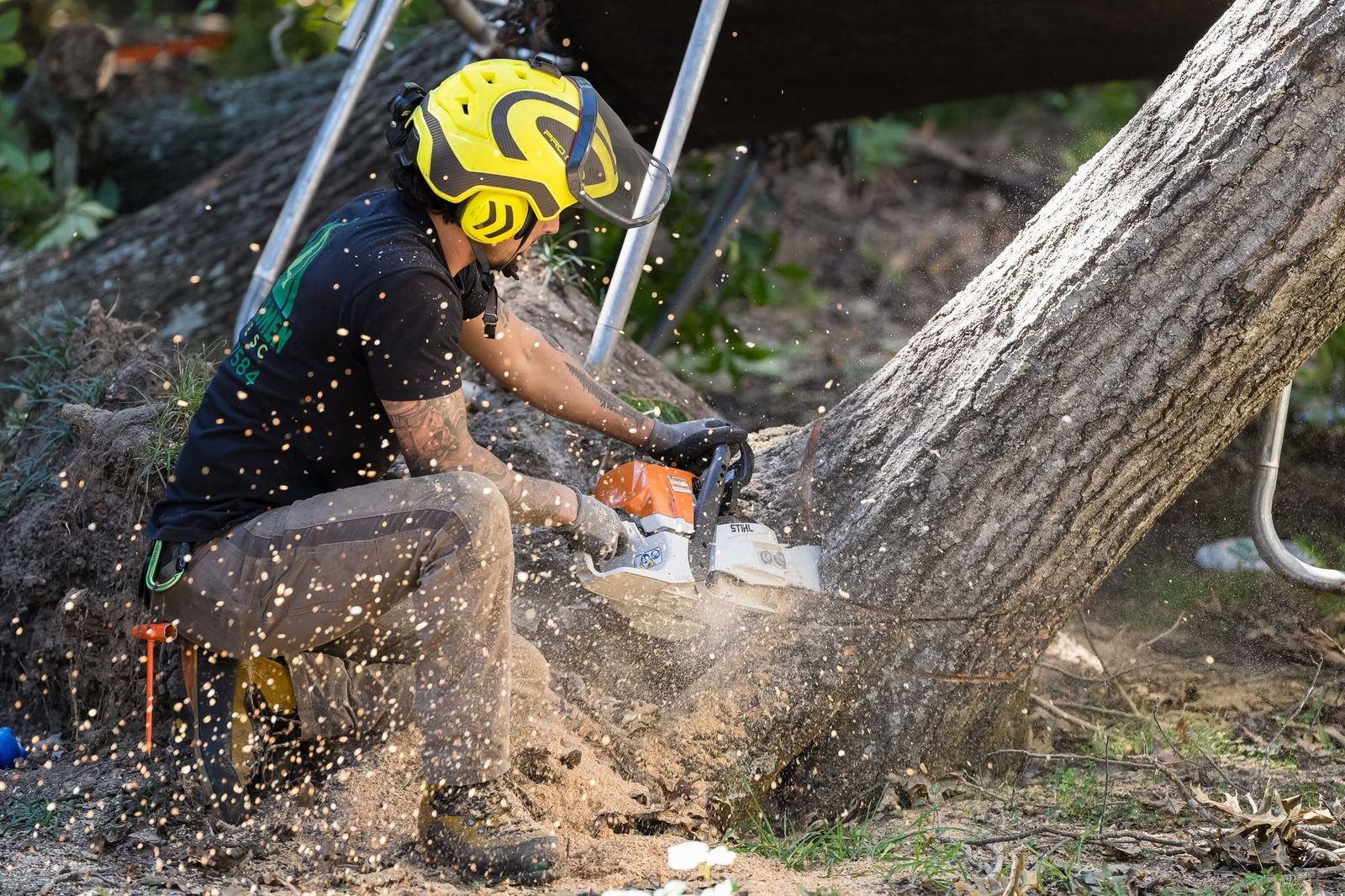
Drive around Easley after a windy week and you will see both kinds of problem: a pine that is plainly dead and needs to come down, and a mature oak with a thinning crown that nobody can read from the street. The first is a job for a crew with the right machinery. The second is a question, and questions are what a credentialed arborist is paid to answer.
Here is the working rule. If the decision is already made (the tree is dead, leaning toward the house, or half down after a storm), you need a capable, insured tree service. If the decision is still open (should this tree go, can it be saved, why is it declining), pay for a diagnosis first. The ISA-certified credential is voluntary, and the ISA's Trees Are Good site explains what it covers and lets you look for credentialed arborists near you.
Most homeowners in the Easley area end up needing the crew far more often than the consultant. A dead pine, a limb hanging over the roof, or a trunk split in a storm does not need a report to confirm what your eyes already tell you. Where people waste money is on the other side: paying for a removal on a tree that might have recovered, or paying for a formal assessment on a tree that is obviously finished. A quick, honest look at which situation you are in will usually settle which phone call to make.
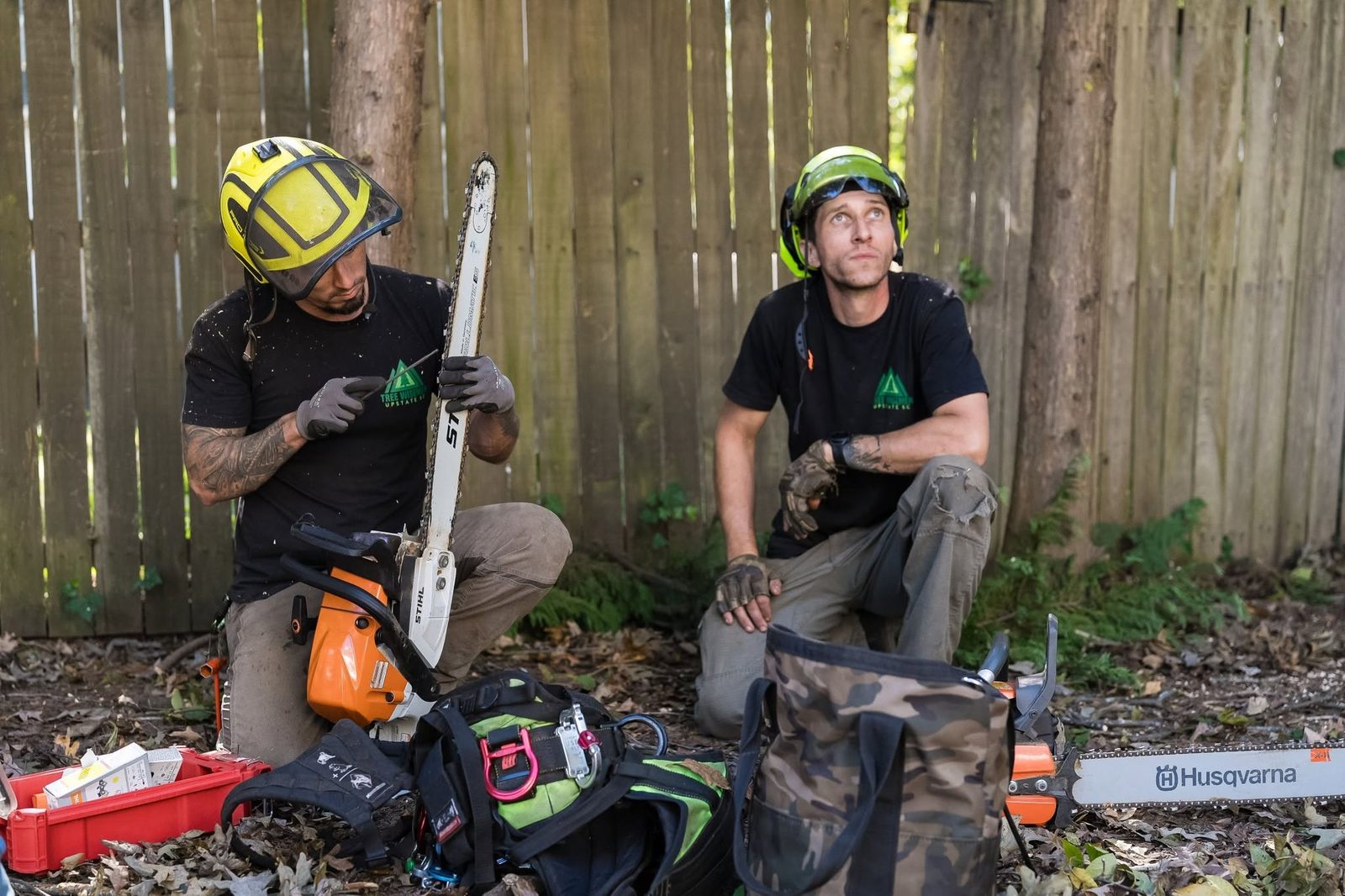
It also helps to know that the two roles overlap. Many crews have people who know tree biology well, and a credentialed arborist may run a crew or work alongside one. The credential is not a guarantee of better chainsaw work, and a crew without it is not automatically less knowledgeable. What matters is matching the job to the strength: heavy rigging and cleanup to the crew, a hard question about a living tree to someone trained to answer it.
What the money buys in the Upstate
Prices vary with access, tree size and how much of the work happens near a structure. These are typical Upstate SC ranges, not a quote from any company:
| Scope | Who it fits | Typical range |
|---|---|---|
| Written tree health or risk assessment | Credentialed arborist | Ask for the fee up front |
| Routine pruning of a mature tree | Crew, sometimes arborist-directed | $250-$900 |
| Removal of a small to medium tree, clear access | Insured crew | $300-$1,100 |
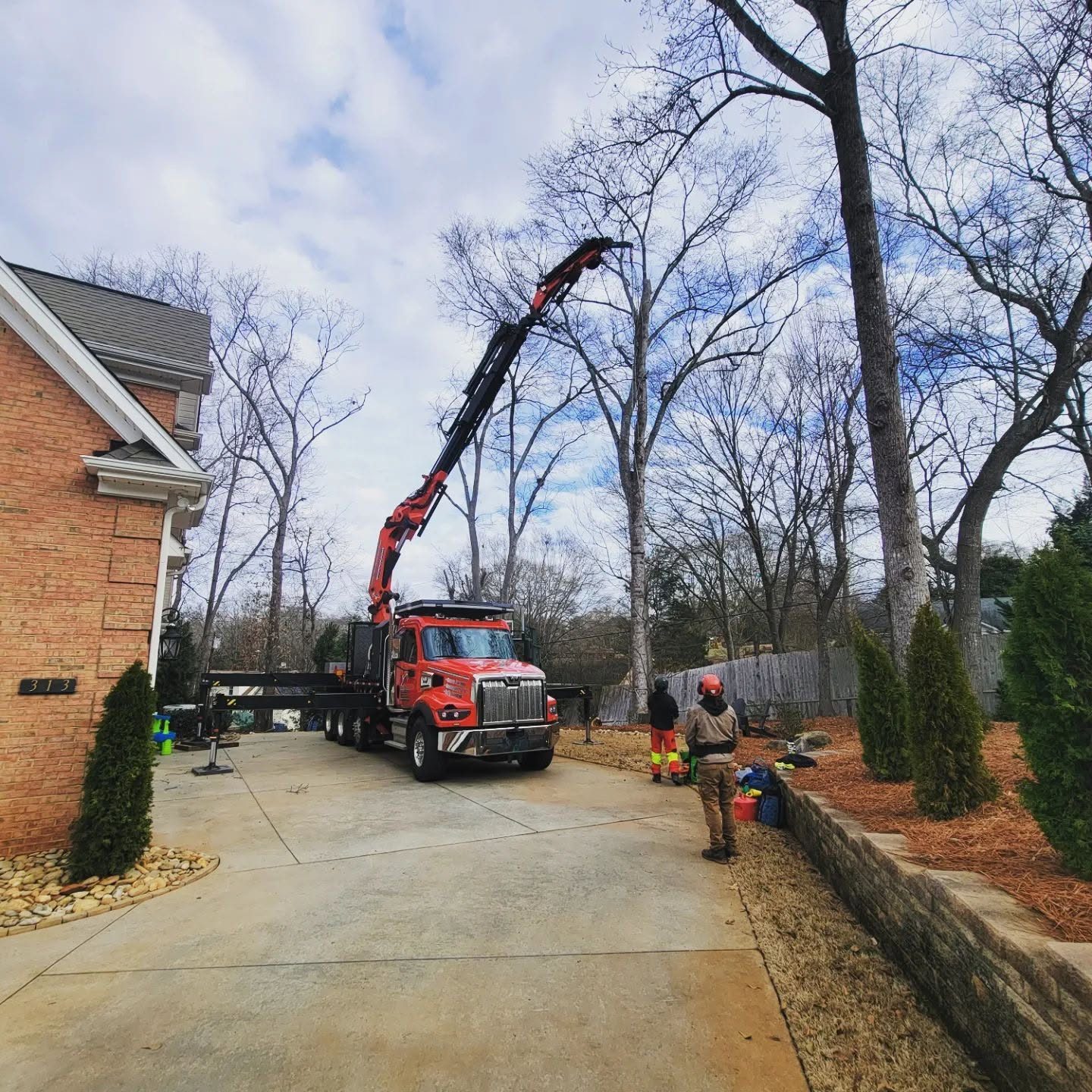
| Large removal near a house or lines | Crew with crane or grapple-saw truck | $1,500-$3,000+ |
| Stump grinding, per stump | Crew with a grinder | $100-$400 |
The assessment line is the only one where you are buying information rather than labor. Often that information saves money: a tree that is structurally fine needs no removal at all.
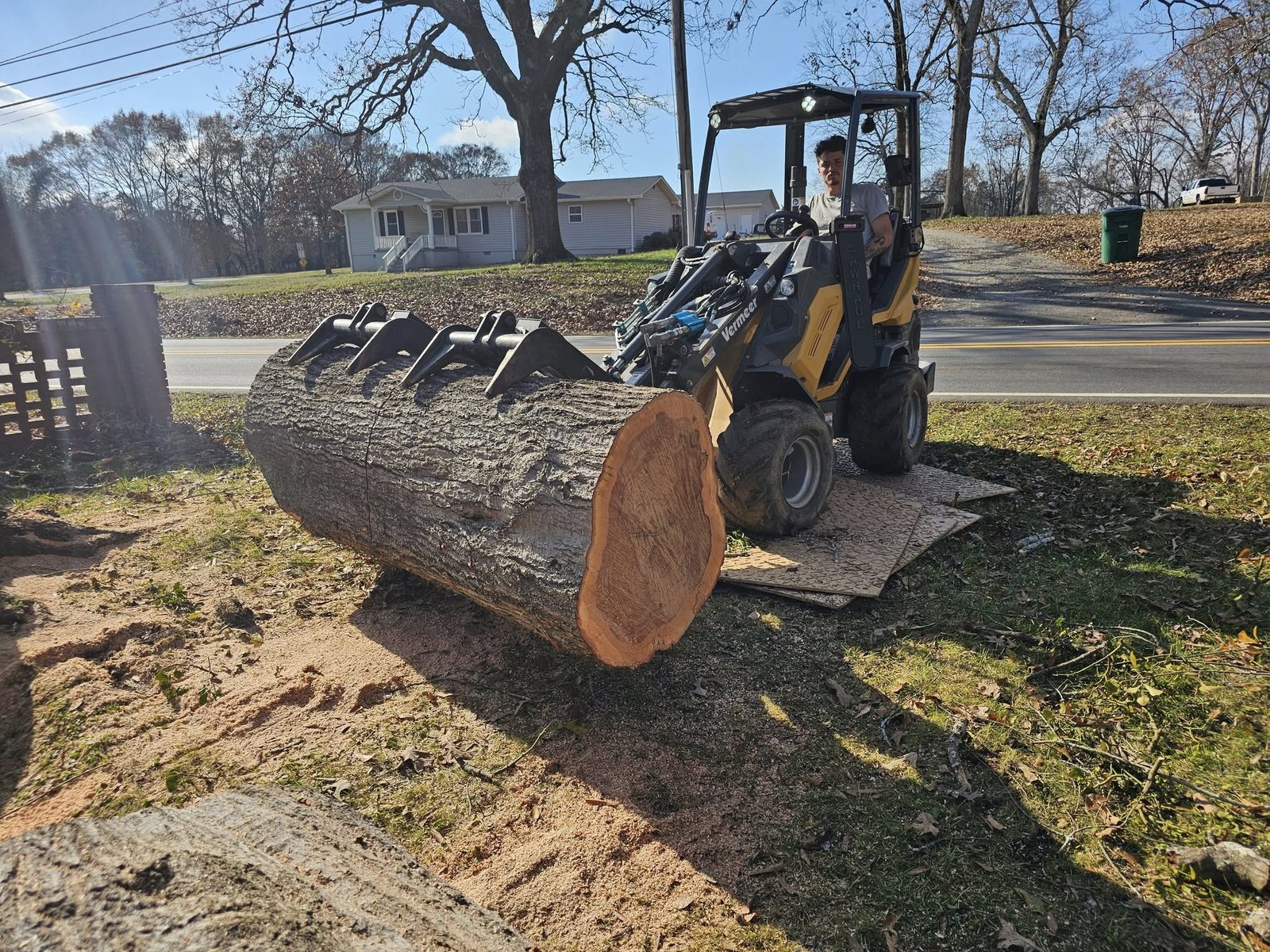
What pushes a removal toward the top of a range is rarely the tree alone. A backyard on a slope where equipment cannot get close, a fence or outbuilding in the drop zone, branches that overhang a roof, or a tree that must be taken down in sections instead of felled whole all add hours. Haul-away and stump grinding are sometimes separate line items, so ask whether the quote includes cleanup and what happens to the wood and chips.
When you compare bids, compare the scope in writing, not just the bottom number. Two quotes that differ by several hundred dollars may differ because one includes grinding the stump and hauling debris and the other leaves both for you. Ask each company to describe how the tree will come down, what protects your lawn and driveway, and who is on site. A clear answer to those questions tells you more than a low price does.
When a tree you want to keep deserves a second opinion
Pickens County sits at the edge of the Blue Ridge foothills, so lots here are often sloped and shaded, with hardwoods and pines mixed close to houses. Roots on a grade, compacted fill around a newer build and years of drought followed by heavy rain all stress trees in ways that look the same from the driveway: sparse leaves, dieback, mushrooms at the base, or a new lean.
That is diagnosis territory. A crew will usually tell you honestly if a tree is beyond saving, but telling a salvageable tree from a doomed one is where training in tree biology matters. Clemson's Home and Garden Information Center publishes South Carolina-specific guidance on tree disease and decline, and it is a good place to read up before you spend anything. For a tree that is already hazardous, our hazardous tree removal page covers what a safe takedown involves.
A few signs are worth noting before anyone visits, because they help whoever you call. Take photos of the crown in leaf and out of leaf, note when the thinning started, and look at the base for fungus, cracked bark or soil that has heaved up on one side. If you have recently built, regraded or trenched near the tree, say so. Construction damage to roots can take years to show above ground, and that history changes the diagnosis.
Value matters too. A shade tree that cools the house in an Upstate summer, or one that anchors a hillside, may be worth real money to keep, and a few hundred dollars for an expert opinion is small next to the cost of removal and replacement. A fast-growing pine near the house that has already shown trouble is a different story, and spending on a report may not make sense when the answer is plain.
Storms, power lines, and where the crew matters most
Pickens County has 23 federal disaster declarations on record (2005-2026), and Hurricane Helene in September 2024 reminded the whole Upstate what a saturated hillside does to tall trees. After a storm, nobody needs a consultant. You need a crew with grapple-saw crane trucks, chippers and ground protection that can work safely around a loaded, tangled tree.
Power lines change the equation. OSHA's 10-foot rule binds workers rather than homeowners, but it is the right distance for anyone, and only workers trained as line-clearance tree trimmers under 29 CFR 1910.269 may work inside it. Read OSHA's tree care safety guidance to see why. Never prune or cut anything touching a line yourself. The National Weather Service in Greenville-Spartanburg issues the wind and storm alerts worth watching before you decide a limb can wait.
Trees that fail in storms on foothill ground often show warning signs first: a trunk that leans more each season, roots lifting on the downhill side, or large dead limbs in the crown. Saturated soil makes all of these worse, because roots lose their grip when the ground is soft. If you notice them, do not wait for the next front to settle the question.
Once a tree is down, the danger is not over. Trunks and limbs can be under tension, pinned against other trees, or resting on a roof or fence. Stay back, keep people and pets away, and let an experienced crew decide the cut sequence. If damage reaches the roof or structure, repairing it is a separate licensed trade, so expect to bring in someone else after the tree is cleared.
Vetting either one when South Carolina requires no license
South Carolina has no state license for tree removal, trimming or stump grinding, so no license number tells you who is good. What protects you is paperwork you can ask for: a current certificate of insurance showing general liability and workers' compensation, references, and photos of jobs like yours. Ask any crew, including us, for that certificate before work starts, and confirm coverage with the insurer. The SC Department of Insurance is the state resource for questions about coverage.
If a crew wants to dig, say for a drainage fix after removal, call 811 first. SC811 requires three full working days' notice. For ongoing care, tree trimming done on schedule is the cheapest way to avoid both a crew call and an arborist call later.
Be cautious of anyone who knocks on doors after a storm, asks for full payment up front, or cannot show proof of coverage. Look for a company with a track record you can check: reviews, references from neighbors, and photos of the equipment actually used. Whether you hire a crew or an arborist, get the scope, the price and the cleanup terms in writing before anyone starts a saw.