One visit for the whole property, not one tree at a time
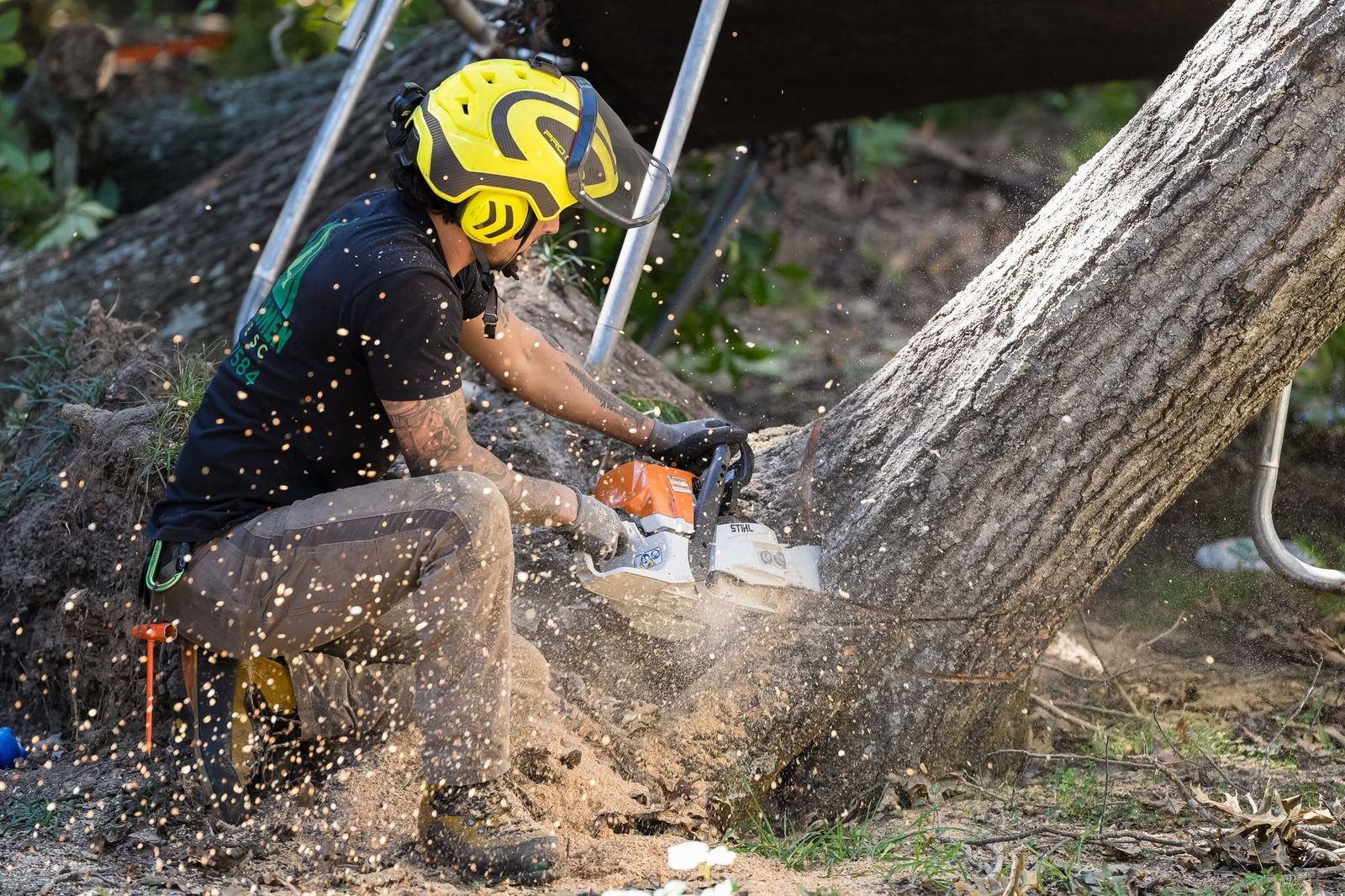
Belton is a town of 4,511 people with open country on every side, and the work out here rarely stops at a single tree. A typical call involves a dead oak behind a house on a town lot, a row of volunteer pines along a fence line on the acreage next door, a few stumps from the last storm, and a brush pile that has been growing since spring. Crews that can handle all of it in one trip are the ones worth calling, because every separate mobilization adds cost.
Tree Wisemen is family owned, based in Easley, and has worked the Upstate since 2020. Belton sits about 21 miles south of Easley, well inside the free-estimate radius of 50 miles. A sensible visit here runs in sequence: tree removal first, then stump grinding on the same spots, then chipping, mulching or hauling whatever is left. The full menu of work is on the main tree service page.
Text a few photos to (415) 850-7584 before anyone drives out. A shot of each tree, one of the access gate or driveway, and one wide view of the yard lets an estimator spot what the job will need before the visit.
What Belton jobs typically cost
Prices vary with access, size and how much needs to leave the property. The ranges below are typical for the Upstate, not a quote from any one company. A tight town lot with a house and wires nearby sits toward the top of a range; an open pasture tree with a clear drop zone sits toward the bottom.
| Scope | Typical range | What pushes it higher |
|---|---|---|
| Tree removal | $300 to $2,000 per tree | Height, lean over a roof, limited crane-truck access |
| Trimming and pruning | $250 to $900 per tree | Large canopies, climbing instead of lift access |
| Stump grinding | $100 to $400 per stump | Big flare roots, rocks, multiple stumps in a cluster |
| Brush and debris hauling | Priced into the job | Volume, distance to the dump, whether chips can stay on site |
Stacking several trees and stumps on one acreage visit is where the per-item numbers tend to ease, since the crew sets up once. Ask the estimator to itemize each tree so you can compare line by line.
Equipment that fits both a town yard and a back field
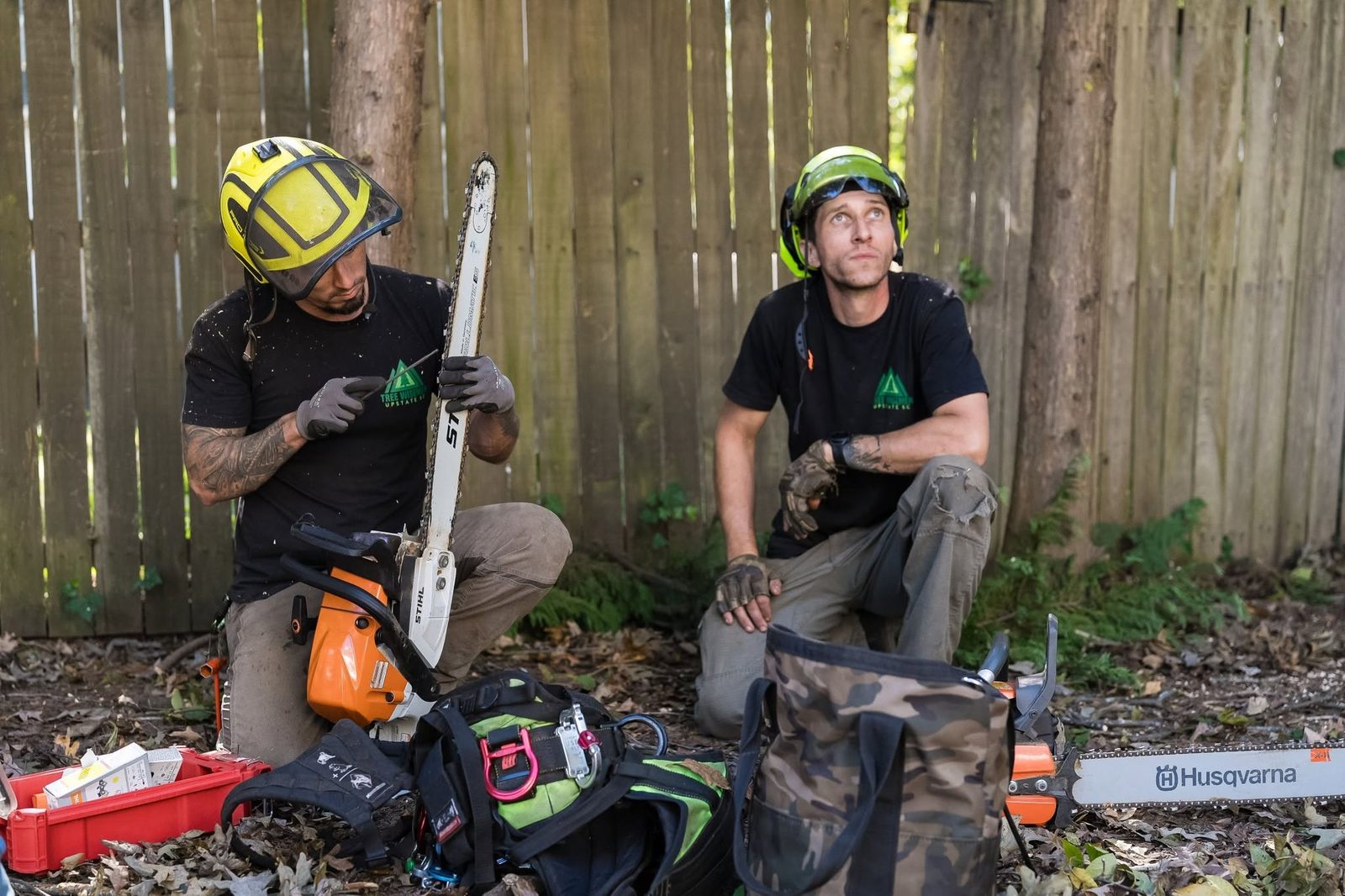
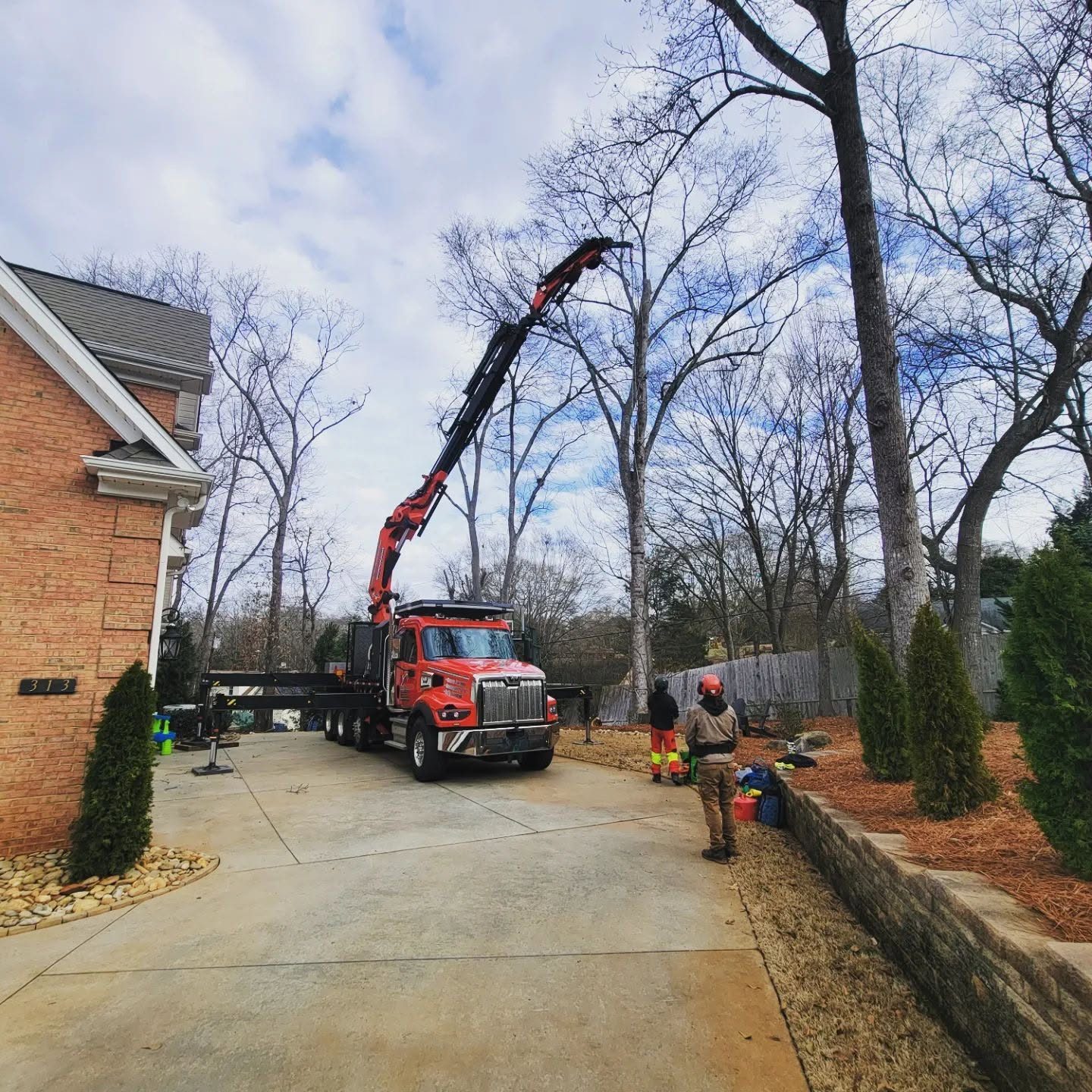
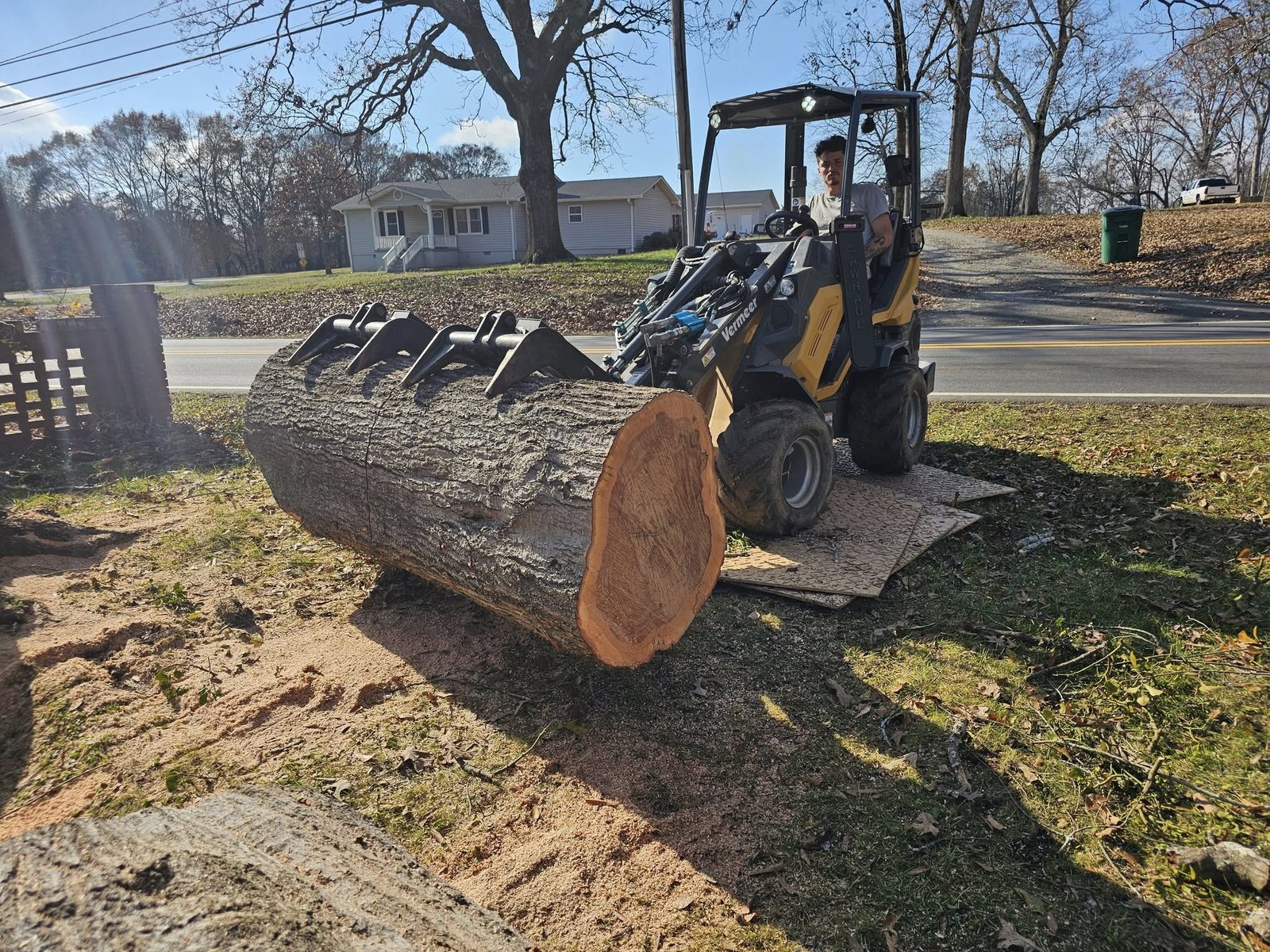
Belton's lots range from fenced backyards off the older streets to wide parcels reached by gravel along SC 20 and SC 247. The gear matters for both. Tree Wisemen runs grapple-saw crane trucks, chippers, a stump grinder and a compact loader that works on ground mats, which protect lawns and septic fields while moving logs. That combination lets one crew drop a tree in sections over a roof, load the wood, grind the stump and clear the mess without leaving ruts.
On acreage, ask where logs and chips will end up. Chips can go back to a garden bed or a trail, and clean logs can be stacked for firewood. If you have a lot of material, hauling it away is a separate line on the estimate, so decide before the visit.
Brush piles, burning and the rules that apply
Country property tempts people to burn what comes off a job. South Carolina does not issue burn permits, but outside town limits state law requires notifying the SC Forestry Commission before you burn outdoors. Debris next to woods, brush or grassland needs that notification too, and it must follow SCDES Regulation 61-62.2. The Forestry Commission fire and burning page explains how to notify by web or by the county phone line. Inside Belton's town limits, check local rules first, because those are different. When in doubt, chip it or haul it.
Digging comes up on these jobs more than people expect, for example when a stump is pulled out whole or a post gets set after clearing. SC law requires three full working days' notice to SC811 before excavation, and grinding is not the same as digging, but ask your crew to confirm before anything goes deep.
Storms, wires and how to vet a crew
The federal record shows 18 disaster declarations touching Anderson County (2005-2026), and Hurricane Helene reached the Upstate in September 2024. Saturated clay and shallow-rooted pines come down together, often onto fences, outbuildings and service lines. Tree Wisemen offers 24-hour storm response, and you can track coming weather through the National Weather Service Greenville-Spartanburg office.
If a limb or trunk is touching or near a power line, stay back. OSHA's 10-foot rule binds workers, not homeowners, but it is the right distance for anyone, and only workers trained as line-clearance tree trimmers may work inside it. Details are on the OSHA tree care page.
South Carolina has no state license for tree removal, trimming or stump grinding, so a license number is not the test. Ask any crew, including us, for a current certificate of insurance covering general liability and workers' compensation before work starts, and confirm it with the insurer. The SC Department of Insurance is a good place for questions about coverage. Also ask for references and photos of similar jobs. Roof or structural repair after a tree strike is a licensed trade and a separate call.
Trimming before trouble starts
Not every tree needs to come down. Pruning dead limbs over a roof, lifting a canopy off a driveway or thinning a crowded hardwood is cheaper than removal and often prevents a storm call. Clemson's Home and Garden Information Center has species-specific guidance on timing and disease. Whatever the plan, get the scope and each tree in writing before the crew arrives.