The driveway decides the job before the tree does
North of Easley, the ground starts to tilt toward the Blue Ridge foothills, and Table Rock sits on the skyline. Lots around Pickens, the county seat, tend to sit back from US 178, SC 8 and SC 183 at the end of long gravel or paved drives, often with a grade between the road and the house. A 60-foot oak at the curb and a 60-foot oak behind a steep, narrow driveway are very different jobs, even though the tree is identical.
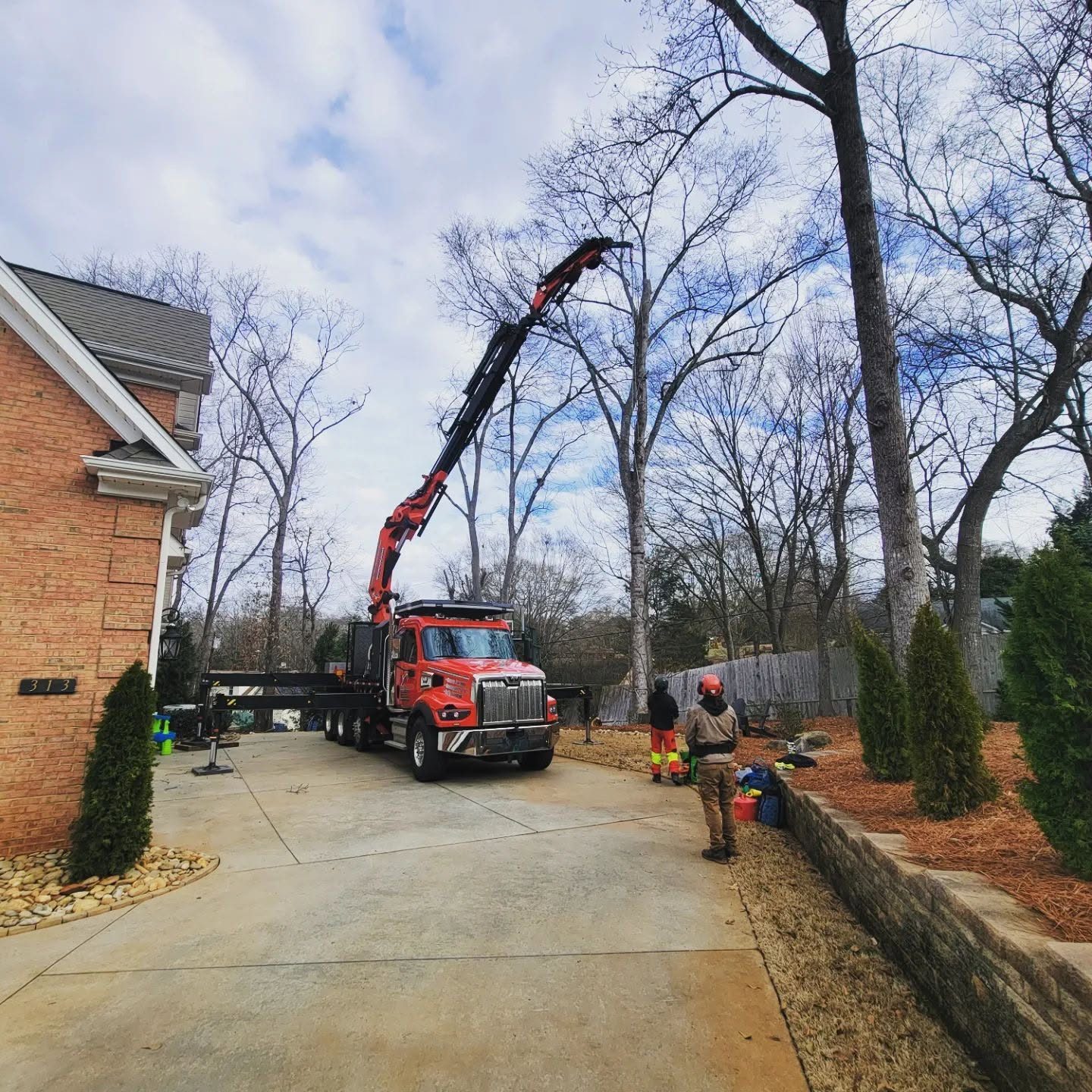
What matters first is whether a crane truck or chipper can get close, whether a turn or a low branch blocks the way, and whether the ground can carry a heavy machine. When equipment can't reach, crews climb, rig pieces down, and carry or drag the wood. That means more labor hours, and it is why two trees of the same size can quote far apart. Our broader tree service overview explains how the pieces of a job fit together.
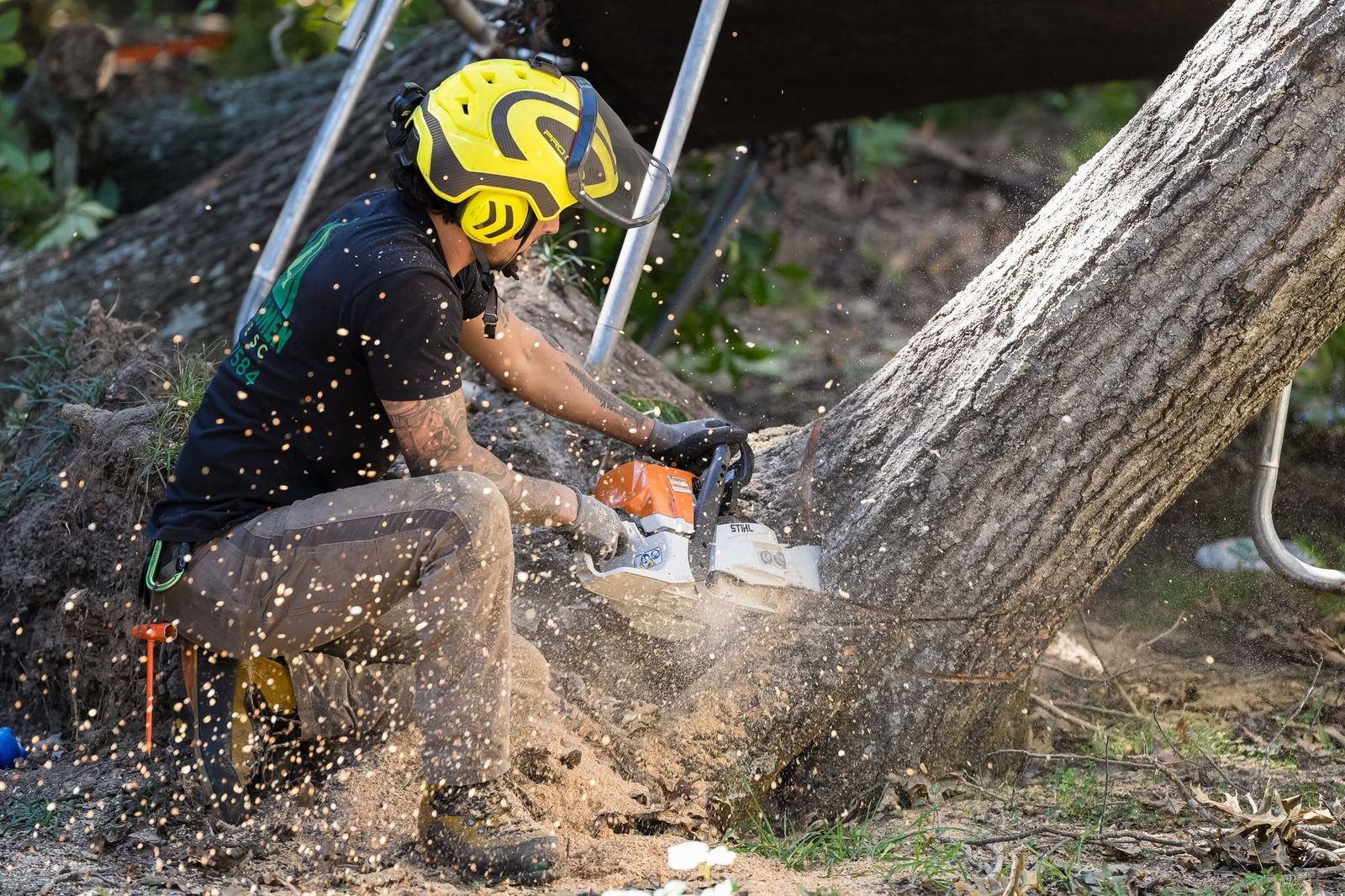
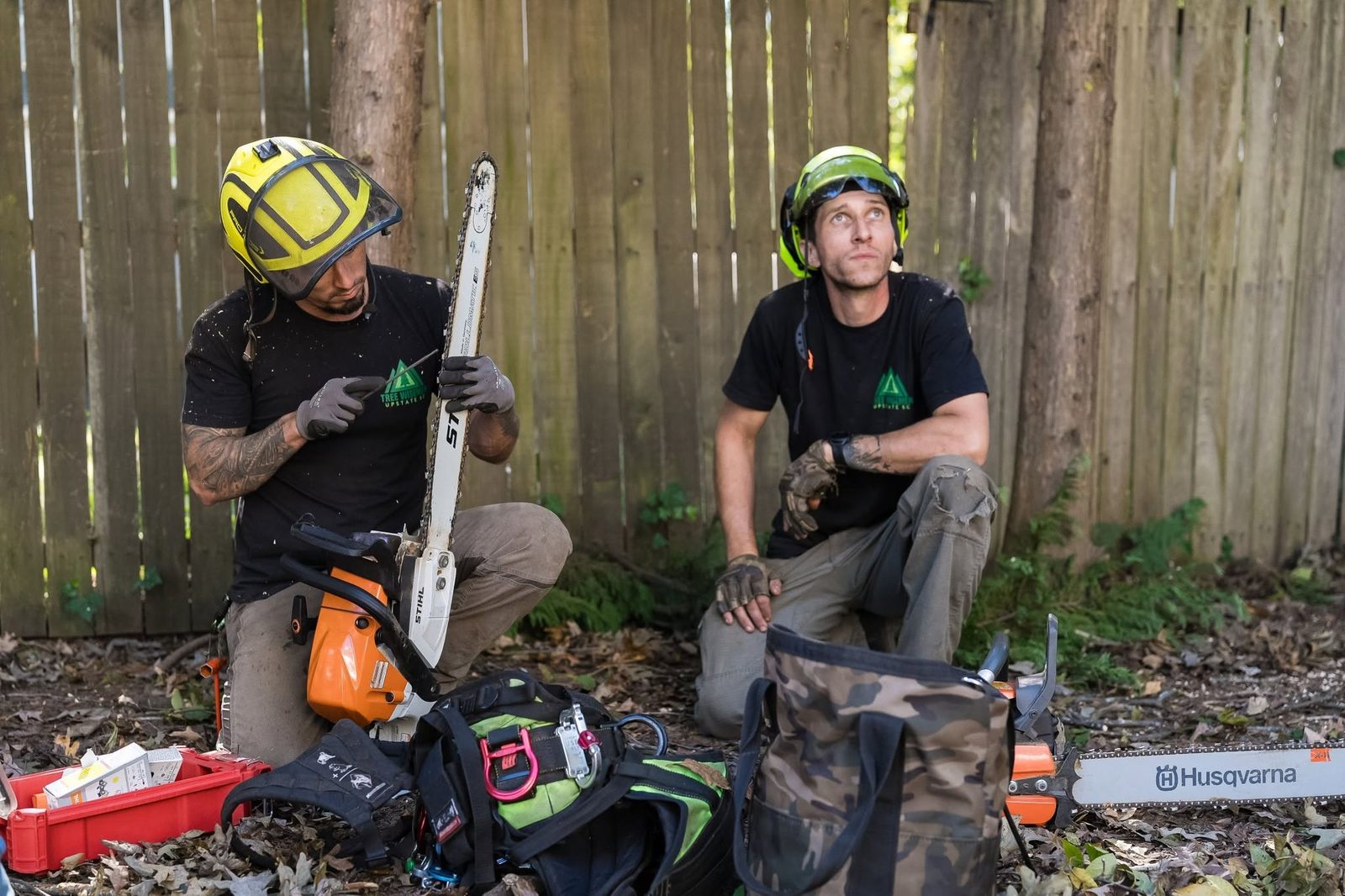
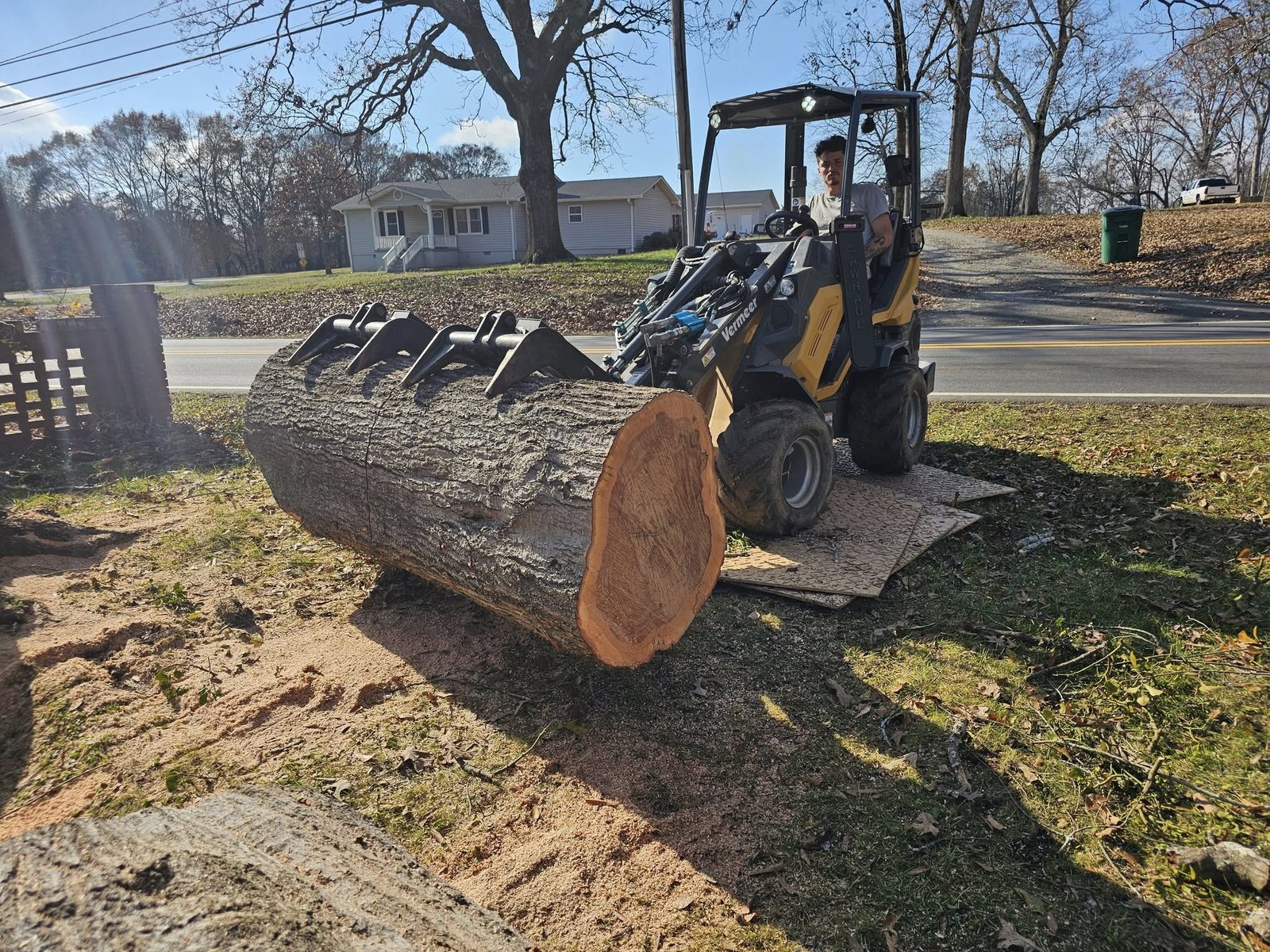
Tree Wisemen is family owned, based in Easley, and has worked the Upstate since 2020. Crews run grapple-saw crane trucks, chippers, a stump grinder and a compact loader that works on ground mats, which protects wet lawns and drive edges. Those tools shrink the access problem, but they do not erase it. Text photos of the drive and the tree to (415) 850-7584 and a good estimator can usually spot the constraint right away.
Pickens is a small county seat of about 3,391 people, and a short drive out of town the character changes quickly. Houses give way to wooded acreage, pasture edges and hillside homesites where the driveway may be the only real way in. On those properties, the first question we would ask is not how tall the tree is, but what the route looks like from the road to the trunk: how wide the drive is, whether there is a gate or a culvert crossing, whether overhanging limbs would snag a boom, and whether there is a flat, firm place to stage a chipper.
It also helps to think about where the wood goes. On a level suburban lot, a crew drops a tree and feeds the brush straight into a chipper at the curb. On a slope, that same brush may have to be dragged uphill or carried down a long drive before it can be chipped. Logs that would be loaded in minutes elsewhere may need to be cut shorter so they can be handled safely on uneven ground. None of that shows up in a photo of the canopy alone, which is why a picture that includes the approach is so useful.
A few simple things from the owner make an estimate faster and fairer. Move vehicles off the drive, mention any locked gates, soft spots, septic fields or buried lines you know about, and point out the trees you actually want gone versus the ones you only worry about. A walk-through, or a handful of photos from the road to the tree, tells an estimator far more than a description over the phone.
What drives the price on a sloped, long-drive lot
Typical Upstate ranges are below. They are general figures for this area, not a Tree Wisemen quote, and every job is priced after a free estimate (offered within 50 miles of Easley).
| Scope | Typical range | What pushes it up |
|---|---|---|
| Trimming or pruning, one tree | $250 to $900 | Height, deadwood, climbing instead of lifting |
| Removal, tree with easy truck access | $300 to $1,200 | Size, lean, nearby structures |
| Removal, tree reached only by rigging down a slope | $900 to $2,000 | Hand-carrying, long haul to the chipper, no crane reach |
| Stump grinding, per stump | $100 to $400 | Diameter, roots, a grade the grinder must be positioned on |
A narrower range usually applies when the work sits near the drive, and the top of the range applies when everything must be lowered in pieces and moved by hand. Details on that kind of scope are on our Pickens tree removal page.
Several things stack on top of access. A tree leaning over a roof, a fence or a line costs more to take down than the same tree in an open field, because every piece has to be controlled instead of dropped. Dead or storm-damaged wood is less predictable than sound wood, so crews slow down and rig more. Hardwoods such as oak are heavy, and a big limb lowered on a rope on a hillside takes real care and real labor.
Cleanup is the other swing factor. Some owners want brush chipped and hauled, some want logs left for firewood, and some want everything gone and the ground raked. Those choices change the hours on site. If you are comparing quotes, make sure each one covers the same scope, including cleanup, wood removal and whether stump grinding is in or out, so you are comparing like with like.
Bundling usually helps. If you have two or three trees to remove, a few limbs to trim and a stump or two, having one crew do it in a single visit saves repeated setup, which is a real cost on a long drive. Ask for the work to be itemized so you can see what each piece contributes and decide what to do now versus later.
Storms, slopes and soft ground in Pickens County
The federal record shows 23 disaster declarations touching this region (2005-2026), mostly storm and flood events. Hurricane Helene's September 2024 passage over the Upstate reminded many foothills owners how a wet slope behaves under big trees: saturated soil, shallow roots and leaning trunks. Watch the National Weather Service Greenville-Spartanburg forecast before wind or heavy rain, and have leaning or cracked trees looked at before the storm instead of after.
Tree Wisemen offers 24-hour storm response. If a tree is down on a driveway, text photos so the crew can see whether the drive is blocked, whether a line is involved, and what equipment fits. Roof or structural repair after a tree strike is a licensed trade handled separately from tree work.
Slopes add their own warning signs. Look for fresh soil cracks or a lifted edge on the uphill or downhill side of a trunk, roots showing where they were not before, a trunk that seems to lean more than it used to, and water pooling or running along the base after rain. Any of these on a tall tree near a house, a drive or a place where people park is worth a call before the next storm, not after it.
Soft ground is also an equipment issue. After days of rain, a heavy truck or loader can rut a lawn or slide on a grade, which is part of why ground mats matter on wet jobs. Sometimes the sensible choice is to wait for firmer conditions on a tree that is not an immediate hazard, and to move quickly only on the ones that are. An honest estimator will tell you which is which.
For general guidance on choosing and caring for trees on a residential lot, Clemson Cooperative Extension's Home and Garden Information Center is a good reference, and it can help you decide which trees are worth keeping and pruning rather than removing.
Power lines, utilities and digging
Rural drives often run under service lines. OSHA's 10-foot rule binds workers rather than homeowners, but it is the right distance for anyone to keep. Only workers trained as line-clearance tree trimmers under 29 CFR 1910.269 may work inside 10 feet of energized lines; see OSHA's tree care safety guidance. If branches touch a line, call the utility and stay back.
Stump removal and any digging near the drive call for a utility locate. SC811 requires three full working days' notice before excavation. If you want the stump gone after a removal, the stump grinding page covers what grinding does and doesn't leave behind.
On long driveways, lines can be easy to miss. A service drop may cross the drive well before you reach the house, and a limb that looks clear from the porch may be touching a wire farther down the lot. When you send photos, include any wires you can see near the tree. That lets the crew plan around them, or tell you early that the job needs the utility involved first.
Burning brush on acreage
Many Pickens-area properties have room for a brush pile, which makes burning tempting. South Carolina does not issue burn permits. Outside city or town limits, state law requires notifying the SC Forestry Commission before burning outdoors, and land-clearing debris next to woods, brush or grassland also needs that notice and must follow SCDES Regulation 61-62.2. Start with the Commission's fire and burning page. Chipping and hauling is often simpler on a steep lot where a fire is hard to control.
On a hillside, a fire can behave differently than on flat ground, since heat and embers move uphill and dry leaves or pine straw carry flame. If your lot backs up to woods, the safer path is usually to chip the brush and spread the mulch, or have it hauled, and to keep fire for situations where you have clear ground, water close by and the required notice made.
Hiring a crew without a license to check
South Carolina has no state license for tree removal, trimming or stump grinding, so there is no board lookup to lean on. What protects you is a current certificate of insurance for general liability and workers' compensation, references, and photos of similar jobs. Ask any crew, including us, for a certificate of insurance before work starts, and confirm coverage with the carrier or the SC Department of Insurance if you want to be sure. Tree Wisemen holds 4.9 stars from 71 Google reviews, is BBB A+ accredited since 2023, and was a Nextdoor Neighborhood Fave in 2024 and 2025.
Beyond paperwork, look at how a crew talks about your site. A good one asks about the drive, the slope, the lines and where the wood should go, and explains what it will and will not do. Be wary of anyone who quotes a flat number sight unseen on a hillside lot, or who pushes you to decide on the spot. Written, itemized estimates, clear cleanup terms and photos of similar jobs on sloped or tight-access properties are the best signs you have found people who understand this kind of work.