Why an oak outweighs and outprices a pine of the same height
Drive through Easley and Pickens County and you will see the difference without a tape measure. A loblolly pine grows tall and narrow, with a light crown at the top. A mature oak grows out as much as up, with heavy limbs that split off low and reach over roofs, driveways and fences. Two trees can be 70 feet tall, and the oak can still be several times the job.
Three things add up. First, crown spread: more limbs means more pieces to rig and lower one at a time, and a wide crown leaves less open ground to drop anything. Second, wood density: oak is hardwood, and green oak is heavy, so each cut section weighs far more than a pine section of the same size. That affects rigging loads, chipper time, and the number of truck trips. Third, cutting time: dense wood is slower to cut and rougher on chains and chipper knives.
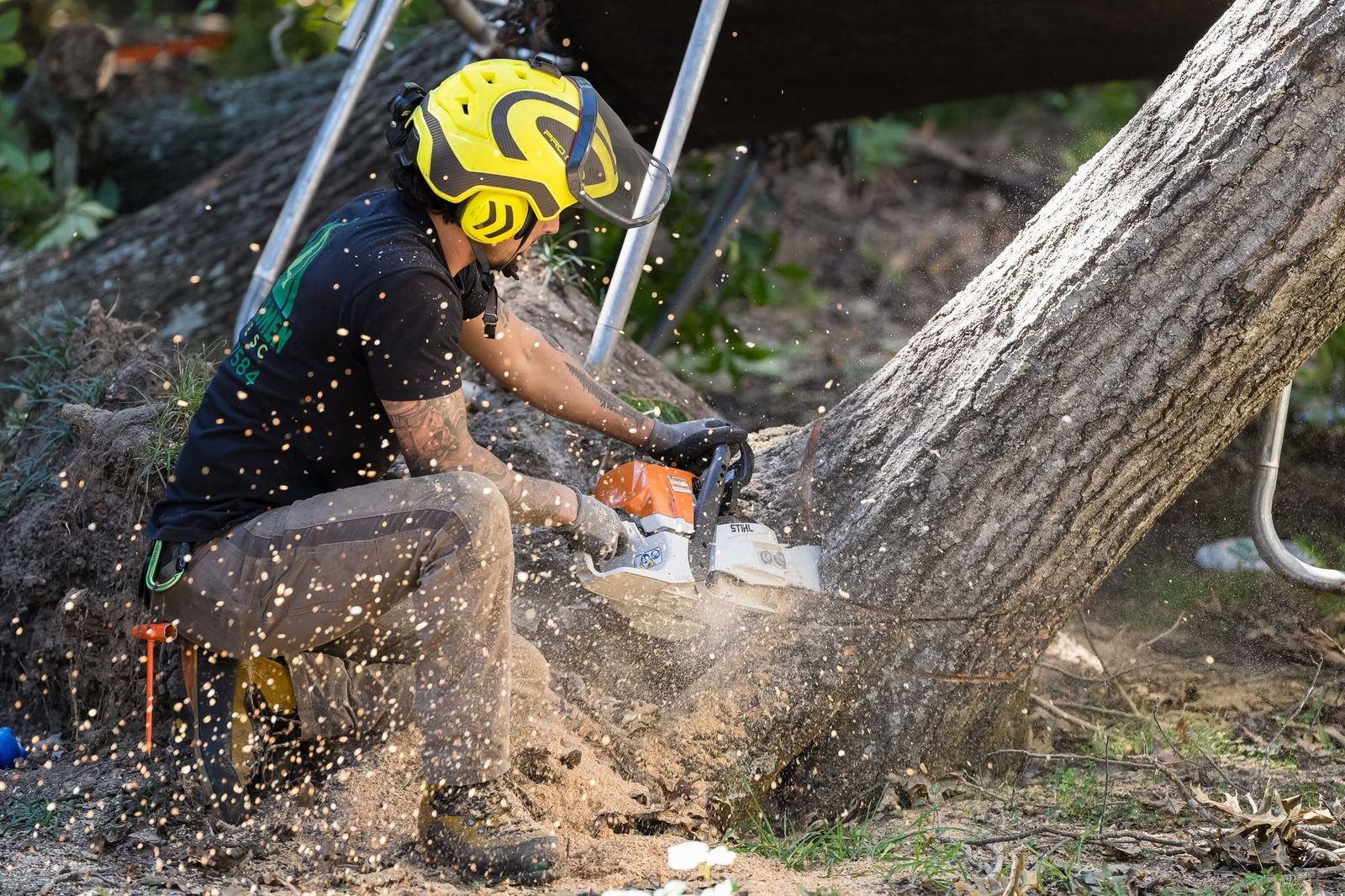
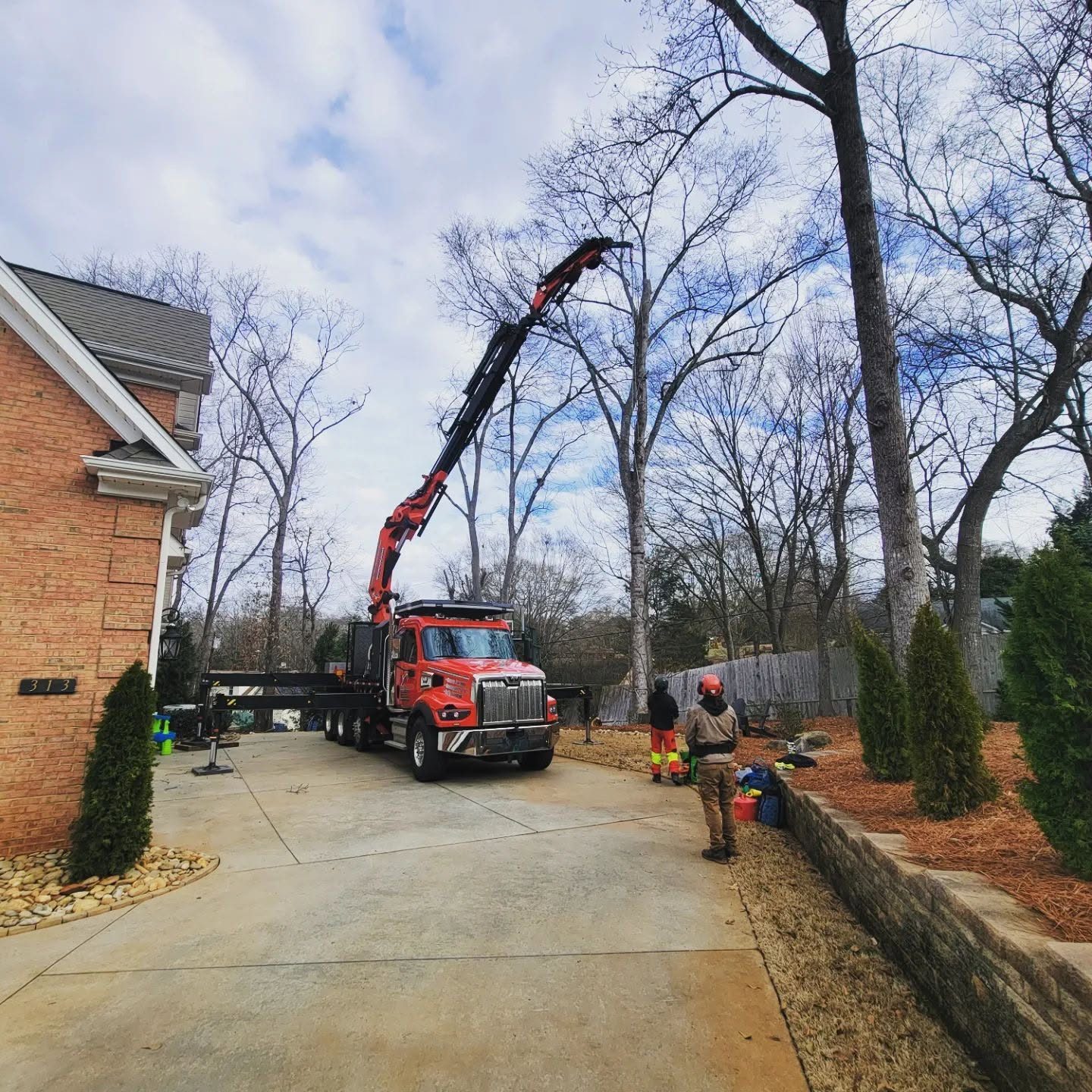
A pine can often be taken down in a few big, predictable pieces from the top. An oak usually can't. Its limbs fork and angle in different directions, so a climber or a grapple-saw crane truck has to decide piece by piece which limb comes off next, where it will swing, and how much it weighs. Each limb on a mature oak can weigh as much as a whole small tree, and every one has to be controlled on its way down. That deliberate pace is what you are paying for, and it is the main reason height alone is a poor way to price an oak.
That is why a crew that quotes a pine by height alone will often be wrong on an oak. If you want the wider picture before narrowing to oak, our general tree removal cost guide covers the full range of species and sizes.
Typical prices for oaks around Easley
These are typical Upstate South Carolina working ranges, not a quote from Tree Wisemen or anyone else. Tree Wisemen prices each job after a free estimate within 50 miles of Easley, and you can text photos of the tree to (415) 850-7584 to get that started.
| Oak situation | Typical Upstate range | What drives it |
|---|---|---|
| Small or young oak, open yard | $400 – $800 | trunk diameter, easy access, room to drop sections |
| Medium oak, some obstacles | $800 – $1,500 | limb spread, fences, nearby structures |
| Large oak, tight lot or slope | $1,500 – $2,500 | rigging, crown weight, hauling distance |
| Large oak over a house or needing a crane | $2,500 and up; can pass $3,500 | crane time, ground protection, deadwood, access |
Stump grinding is often priced as its own line item, so ask whether the number includes it. For very big trees, see large tree removal cost, and for jobs where a crane is the only safe route, crane tree removal cost explains what that equipment adds.
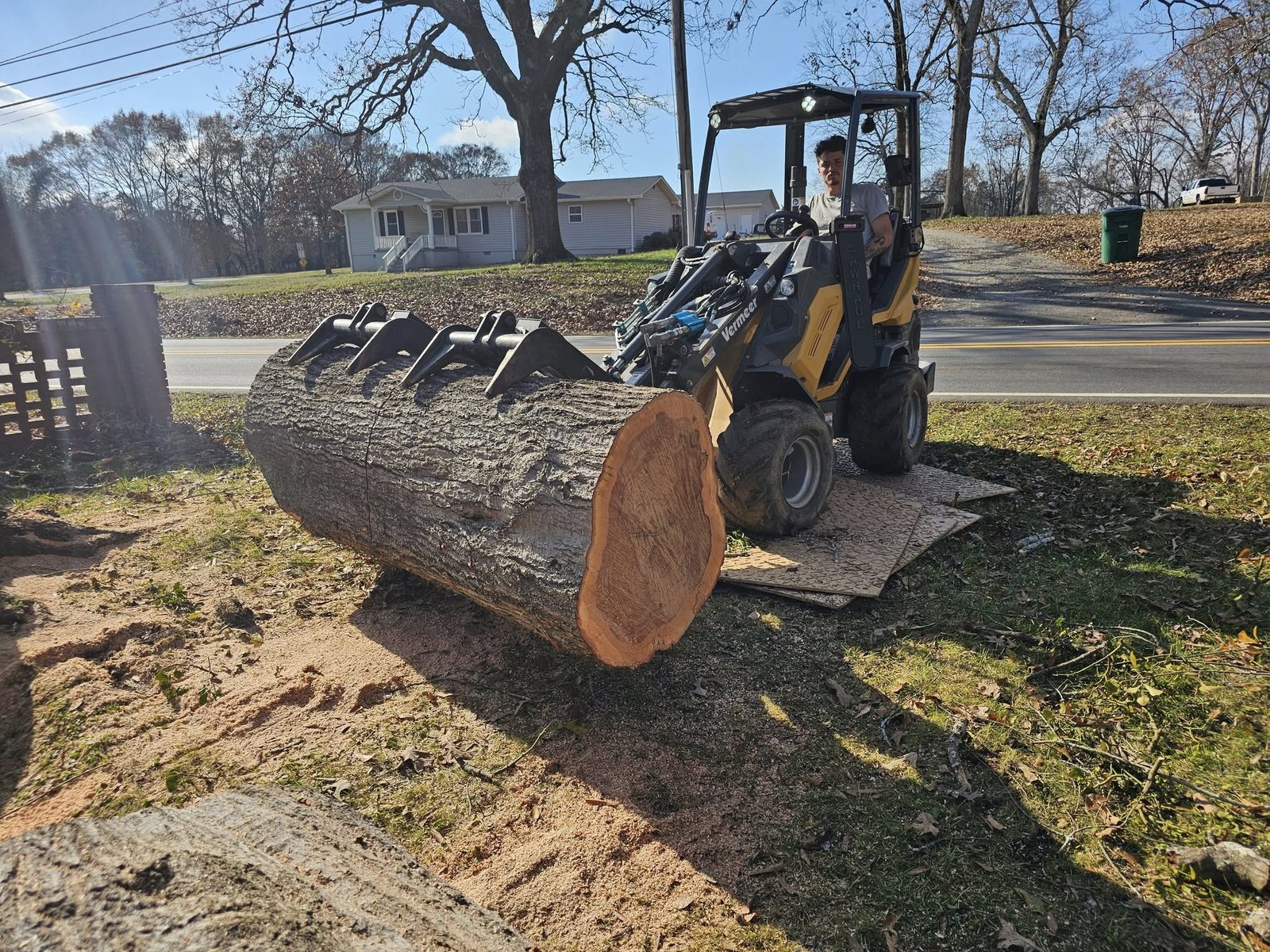
Where an oak lands in the table usually comes down to what is underneath it, not how tall it is. An oak in the middle of an open back yard, with room to lay sections on the grass, sits near the bottom of its size class. The same oak leaning over a carport or a shed moves up a band, because every limb now has to be roped and lowered instead of dropped. Dead or hollow wood adds time too, since a crew has to treat weak limbs as unpredictable. Crews also use ground mats on soft or finished surfaces, and that protection is part of the work on a heavy job.
Foothills lots, storms and the oaks that fail
Pickens County sits in the Blue Ridge foothills, so plenty of yards slope, and a sloped lot changes how an oak can be taken down. Crews can't always drive a truck to the base, and sections of dense wood have to be lowered under control instead of dropped. Tight access like that usually moves a quote up the range.
On a steep lot, gravity works against the crew twice. Heavy logs want to roll once they land, and equipment that would sit level on flat ground has to be placed carefully. A compact loader on ground mats can move wood and brush off a slope without tearing up the yard, but it still takes setup time. Hauling distance matters as well: if every log has to be carried or dragged uphill to the truck, labor goes up and so does the price.
Storms are the other pressure. The federal record lists 23 disaster declarations that touch Pickens County (2005-2026), and Hurricane Helene reached the Upstate in September 2024. Oaks with wide crowns catch wind like a sail, and after saturated ground they can lose limbs or lean at the root plate. The National Weather Service in Greenville-Spartanburg issues the wind and rain alerts worth watching before you decide a questionable oak can wait.
Warning signs are worth knowing. Soil heaving on one side of the trunk, new cracks in the ground, a lean that wasn't there last season, or large dead limbs in the crown are all reasons to get a second set of eyes on the tree before the next storm, not after it.
An oak that has already come down on a house is a different job, with emergency pricing and often a crane. Tree Wisemen does 24-hour storm response, and photos by text help sort out urgency fast.
Power lines, utilities and what to check before work starts
Oaks planted decades ago often grew up under or beside service lines. OSHA's 10-foot rule binds workers rather than homeowners, but it is the right distance for anyone to keep. Only workers trained as line-clearance tree trimmers under 29 CFR 1910.269 may work inside 10 feet of energized lines, and OSHA's tree care safety guidance explains why. If a limb touches a line, don't climb or pull on it; call the utility.
If your job includes stump removal or digging nearby, SC811 requires three full working days' notice before excavation. Stump grinding can go deeper than people expect, and a big oak's roots spread well past the trunk, so buried lines near an old tree are worth marking before the grinder arrives.
South Carolina has no state license for tree removal, trimming or stump grinding, so there is no license number to verify for a tree crew. What protects you is paperwork you can ask for: a current certificate of insurance covering general liability and workers' compensation, references, and photos of similar oak jobs. Ask any crew, including us, for that certificate before work starts. The SC Department of Insurance is a useful place to understand what those coverages mean.
This matters more with an oak than with a small tree. When a heavy limb is being lowered over a roof, fence or driveway, the margin for error is thin, and you want the crew's insurance, not your homeowner's policy, to stand behind the work.
Keeping the number honest on a heavy hardwood
- Get the oak assessed in person or by photo. Height alone doesn't price an oak. Crown spread, what it hangs over, and access do.
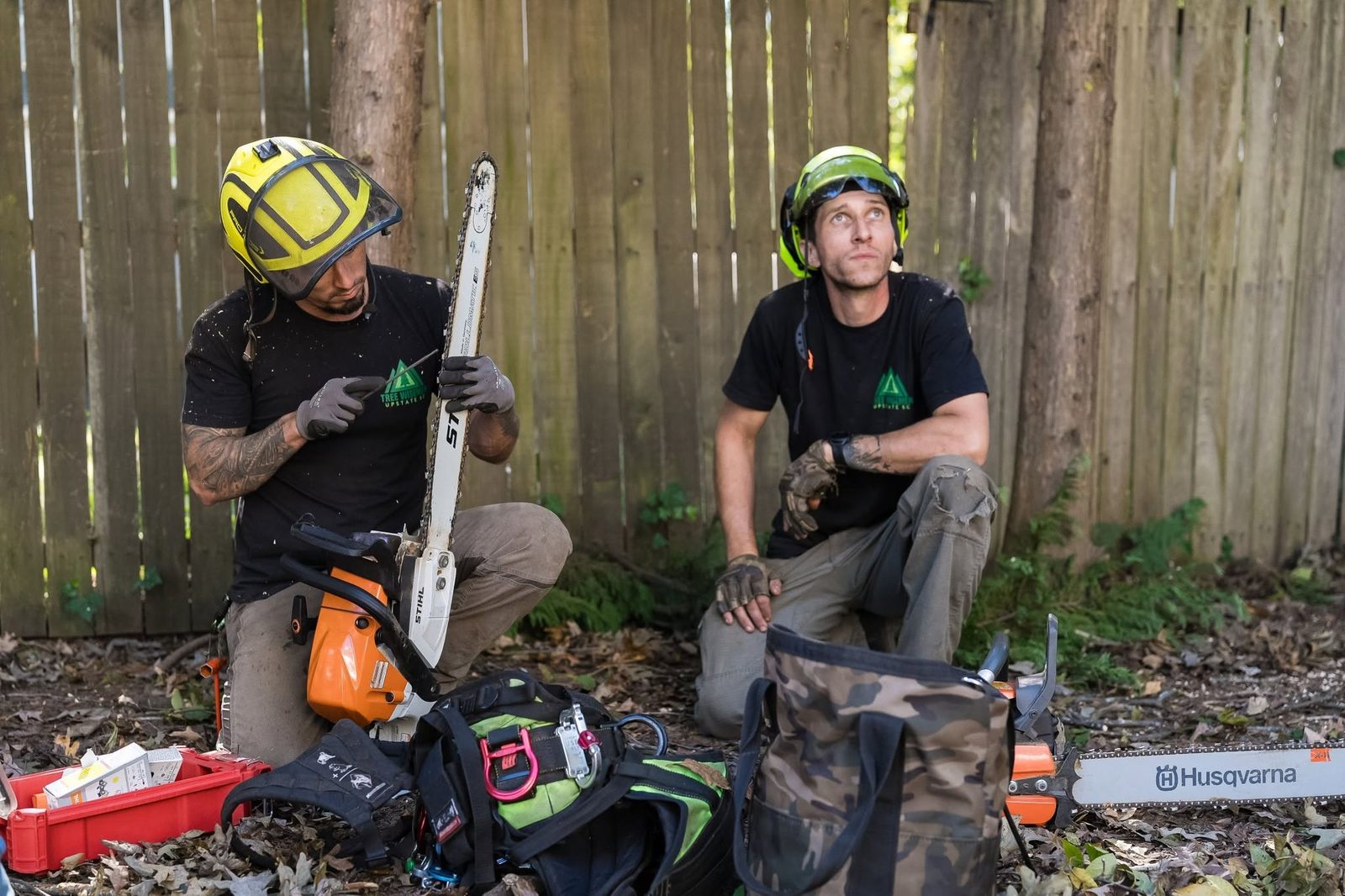
- Ask how the wood is handled. Cutting into pieces, hauling and chipping dense logs takes time. Find out whether cleanup and haul-off are in the price, and whether you want to keep firewood.
- Check whether it needs to come down at all. A sound oak with a dead limb may only need pruning. Clemson's Home and Garden Information Center and ISA's Trees Are Good both help you judge tree health. ISA certification is voluntary, so ask any arborist what training backs their opinion.
- Skip burning the debris. South Carolina doesn't issue burn permits, but outside city or town limits state law requires notifying the SC Forestry Commission before you burn outdoors. Brush piles next to woods or grass also have to follow SCDES Regulation 61-62.2. Chipping and hauling is simpler.
Compare the bid against the table above. A quote far below it on a big oak often leaves out insurance or cleanup, and one far above it should come with a clear explanation, such as crane time or a roof in the drop zone.
One practical habit helps: get the scope in writing. It should name the tree, say whether the stump is ground or left, say what happens to the logs and brush, and note any fence, roof or lawn protection. Two bids that look far apart are often just two different jobs. Oak firewood is also worth a thought, since seasoned oak is a good fuel, but a large tree yields far more than most households can stack and dry, so decide up front how much you actually want left behind. If the tree does need to come down, our tree removal page explains how a job runs, and the estimate is free.