How a crew decides a tree can't take a climber
After a wet winter in Pickens County, the trees that worry a crew are rarely the ones that look dramatic from the road. They are the oak with a bare, silver top above a green skirt, the double-stemmed hardwood with a seam running down the crotch, and the pine whose base has a crescent of heaved clay on one side. Each one raises the same question before anyone straps on spurs: will this tree hold a person's weight, and will it hold when the saw changes the load?
Dead tops are judged by sound and bark. Brittle limbs that snap clean, bark sloughing off in sheets, and fungal brackets on the trunk all suggest the wood is no longer carrying load the way it looks like it is. A climber's weight, plus a swinging cut section, can bring down a top that seemed fine from the ground. Split trunks are judged by whether the crack moves: a seam that opens in wind, or weeps sap or water, means the two stems are working against each other.
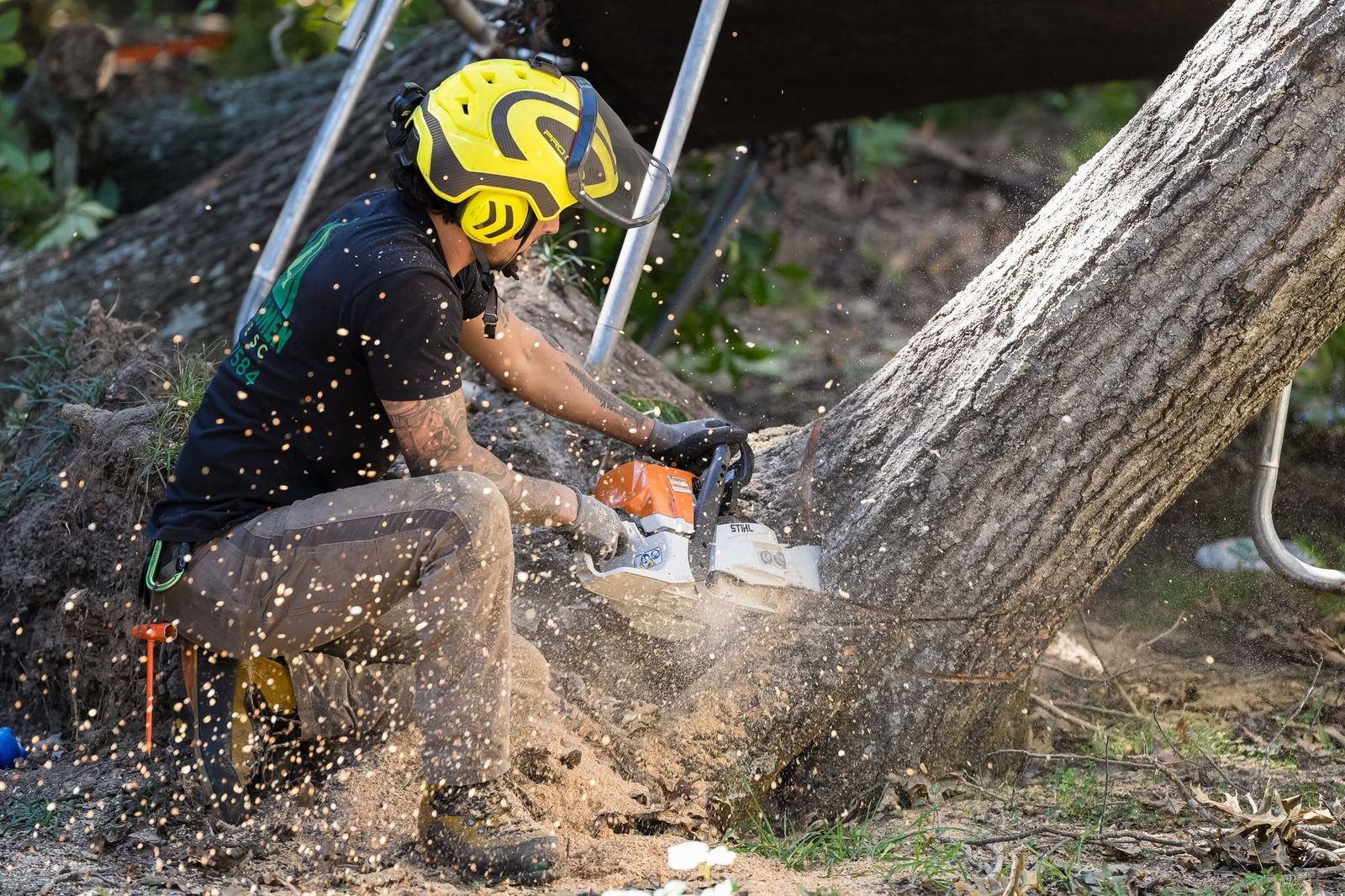
Root plates tell the most. When soil stays saturated through winter, anchor roots lose grip, and a tree can start lifting on its windward side without leaning much at all. Look for cracked soil on one side, a mounded edge, or exposed roots that were buried last year. If the base shows any of this, the tree is treated as unclimbable, and the plan moves to crane, grapple saw, or rigging from a stable neighbor. For more on that signal, see our page on a leaning tree.
Dead, declining or truly dangerous: sorting the three
Not every sick tree is an emergency. A tree can be declining for years and still be sound at the base, and a healthy-looking tree can fail because of hidden decay. The useful sorting is by consequence: what does it hit if it falls, and how likely is that in the next storm? A dead tree in the back corner of an acre lot is a scheduling question. A dead tree over a bedroom or a driveway is a priority. Our guide to a dead or dying tree walks through the early signs.
Clemson's Home and Garden Information Center is a good neutral reference for telling stress from disease, and Trees Are Good from the ISA explains what hazard assessment involves. ISA certification is voluntary in South Carolina, as is any tree license, so it is a tool for judging a crew's knowledge, not a legal requirement. Neither source replaces someone standing under the tree.
Easley and the surrounding Pickens County area mix older lots with mature hardwoods near houses and newer subdivisions where a few retained trees stand close to rooflines. In both settings, the distance to a target decides how much of the job is rigging rather than cutting.
What this work costs and why it sits above standard removal
Hazardous removal is priced above a routine takedown, typically $800 to $3,500 per tree in the Upstate. These are typical regional ranges, not a Tree Wisemen quote; Tree Wisemen prices each job after a free estimate within 50 miles of Easley. The premium is rarely the cutting itself. It is the equipment, the added crew, and the time spent lowering wood in controlled pieces instead of dropping it.
| Situation | Typical Upstate range | What drives it |
|---|---|---|
| Dead top, open drop zone | $800 to $1,400 | Climbable base, little to protect |
| Split trunk or heavy lean, structure nearby | $1,200 to $2,500 | Rigging, extra ground crew |
| Lifting root plate, crane or grapple saw | $2,000 to $3,500 | Crane truck time, ground mats |
| Tree against a house or over a fence line | $2,500 to $3,500 | Piece-by-piece lowering, protection |
Stump grinding and haul-off are often separate line items, so ask what is included. Roof or structural repair after a strike is a licensed trade handled separately from the tree work.
When the answer is a crane
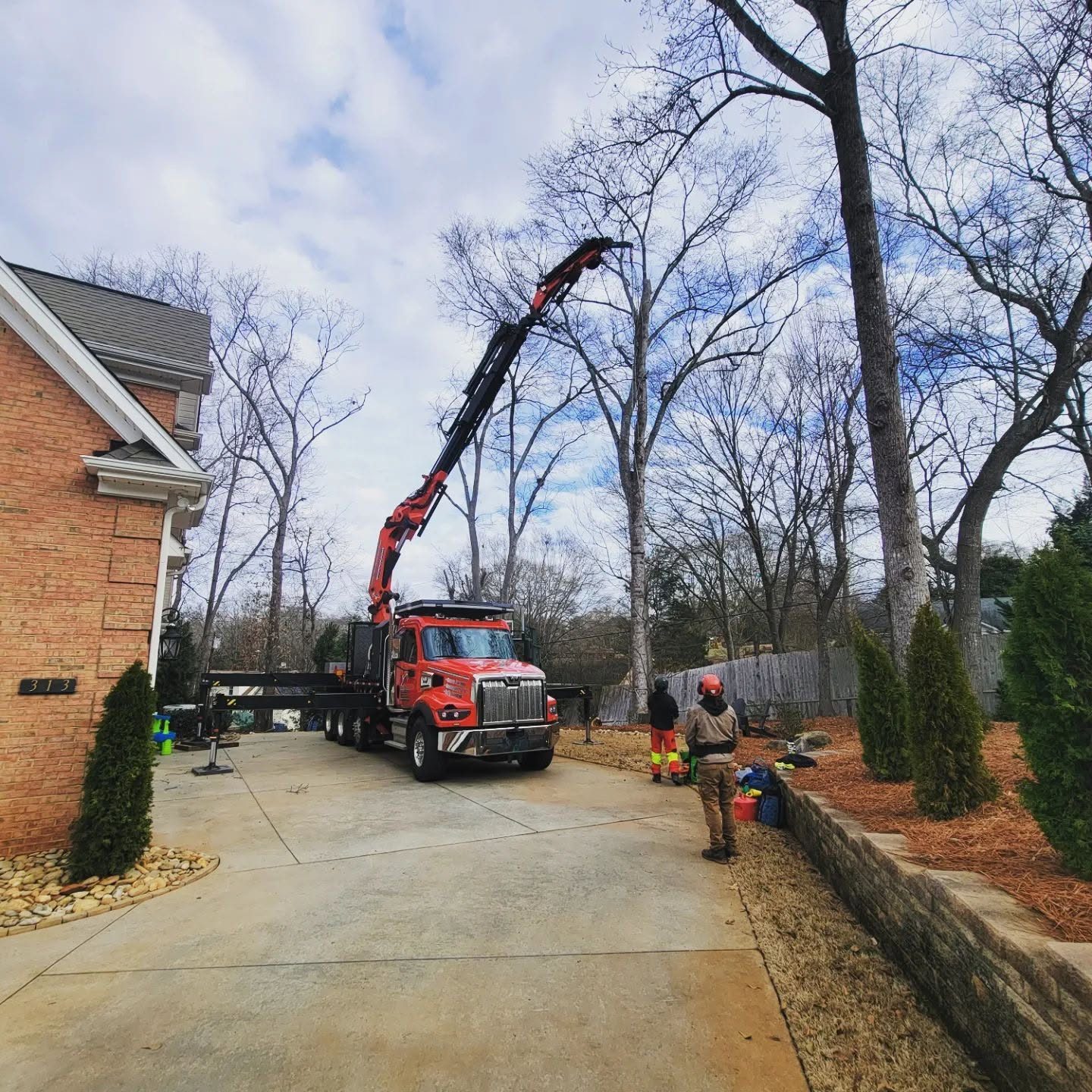
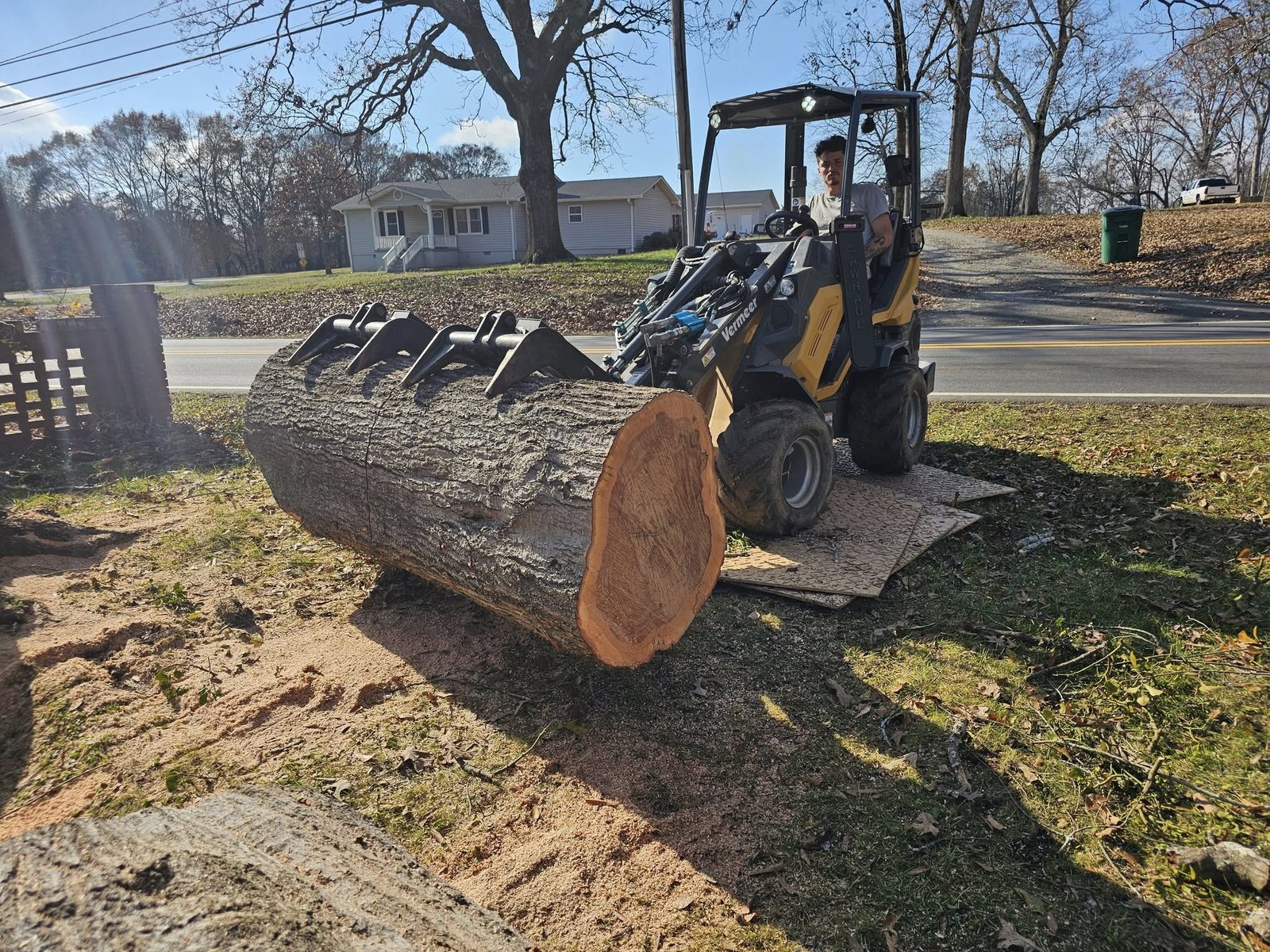
If a tree can't be climbed and the target below can't take a falling section, the safe path is lifting wood out rather than lowering it. Crews working with grapple-saw crane trucks can hold a heavy limb or whole trunk section, cut it, and swing it clear. A compact loader on ground mats keeps the yard from being torn up during cleanup. The tradeoff is cost and access, since the truck needs a stable approach. Read more about that method on our crane tree removal page.
Power lines change everything. OSHA's 10-foot rule binds workers, not homeowners, but it is the right distance for anyone, and only workers trained as line-clearance tree trimmers under 29 CFR 1910.269 may work inside it. If a tree is touching or near a service line, call the utility first and keep everyone back. OSHA's tree care safety page lays out the hazards crews are expected to manage.
Digging, such as removing a large root ball or setting up for replacement planting, calls for notice to SC811, which requires three full working days before excavation.
Storm seasons and the timing of a call
Pickens County has 23 federal disaster declarations on record, 2005-2026, and Hurricane Helene's September 2024 passage through the Upstate left many damaged trees standing that still haven't failed. Saturated ground is the common thread. The National Weather Service in Greenville-Spartanburg posts the forecasts that show when soaked soil meets high wind, which is when a lifting root plate is most likely to go.
If you suspect a tree is compromised, the best moment to call is before a forecast storm, not during one. Tree Wisemen is family owned, based in Easley, and has worked the Upstate since 2020, with 24-hour storm response for trees already down. You can call or text (415) 850-7584 and send photos of the base, the top and the target area, which often lets a crew understand the job before a visit.
Vetting a crew when there is no state license to check
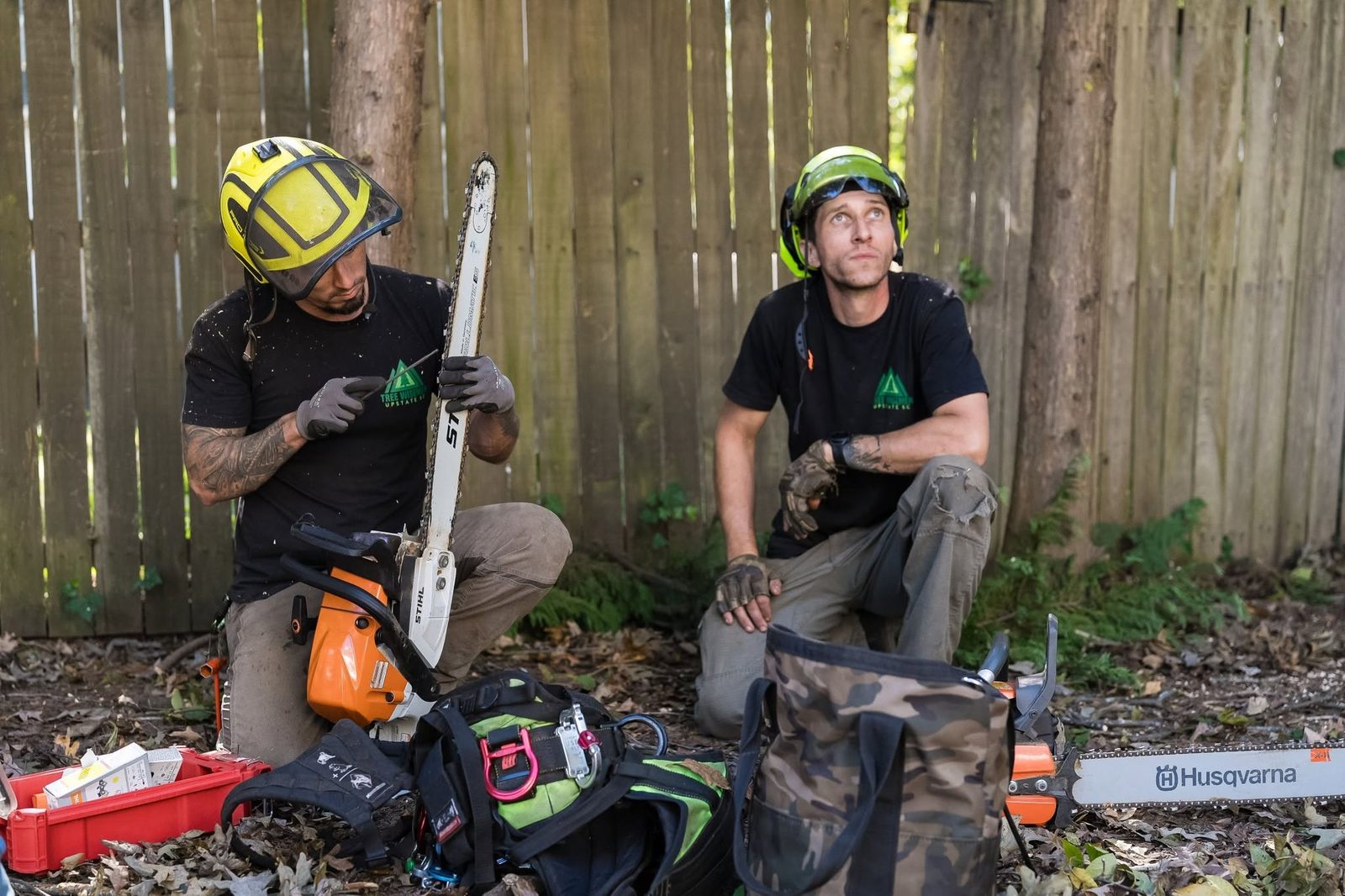
South Carolina has no state license for tree removal, trimming or stump grinding, so there is no board to look up. What protects you instead is paperwork and proof. Ask any crew, including us, for a current certificate of insurance showing general liability and workers' compensation before work starts, and have it sent from the insurer or agent. The SC Department of Insurance is a resource for understanding what coverage should look like. Then ask for references and photos of similar jobs, specifically jobs with rigging or cranes.
Tree Wisemen carries a 4.9 rating across 71 Google reviews, a BBB A+ accreditation since 2023, and Nextdoor Neighborhood Fave recognition in 2024 and 2025. Those are signals to weigh, not substitutes for the insurance certificate.