When the builder's saplings reach the gutters
Drive through almost any subdivision around Greer and you can read its age from the yard trees. A maple or pear that was a stake-supported twig on closing day is now a canopy leaning over the roofline, dropping leaves into the gutters and dragging a limb across the shingles in every wind. Builders tend to plant what is cheap, fast, and tidy at nursery size, and nobody was thinking about how it would look twenty-odd years later, ten feet from a bedroom wall.
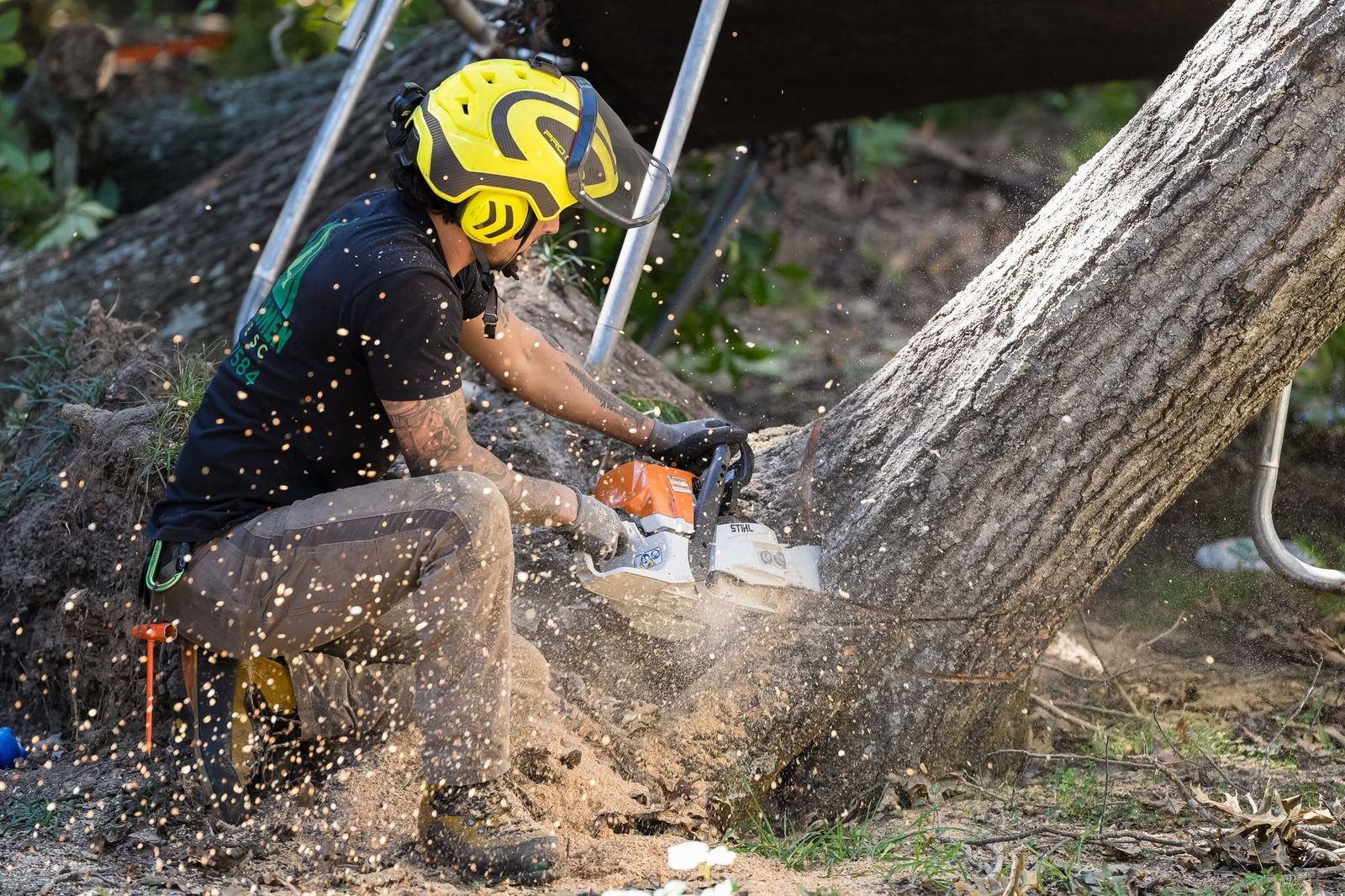
That is the usual trimming job here: not a neglected woodlot, but a handful of yard trees that outgrew the lot they were planted on. The warning signs are simple. Branches that touch the roof surface, limbs hanging over the chimney or HVAC unit, gutters that fill with debris within weeks of cleaning, and a canopy so dense it keeps a section of roof wet and mossy. Any one of them justifies a look. A branch that rubs shingles in a breeze will wear through the granules long before it ever breaks.
What shapes the price of a trim in Greer
Around Greer, typical tree trimming runs $250 to $900 per tree. Height, access, and what sits underneath the branches decide where a job falls. Tree Wisemen does not publish prices and quotes each job after a free estimate, so treat the table below as a typical Upstate SC guide, not a quote. The wider breakdown lives on our tree trimming cost page.
| Scope | Typical range per tree |
|---|---|
| Small ornamental, lift off roof and clear gutters | $250 to $400 |
| Mid-size yard tree, crown thinning and deadwood removal | $350 to $600 |
| Large tree reduced back from the roofline | $500 to $800 |
| Tall tree over a roof, fence, or service lines, rigging required | $700 to $900 |
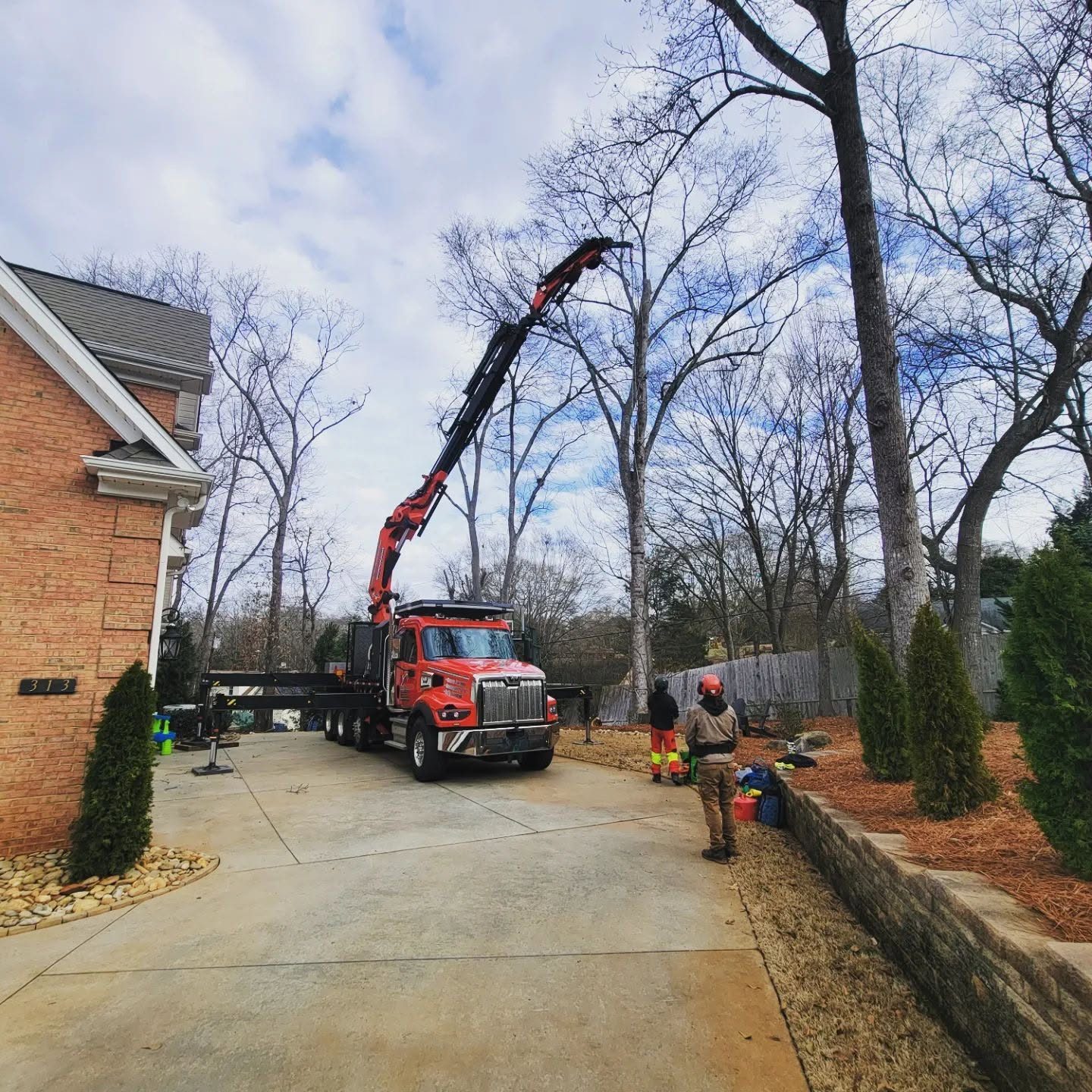
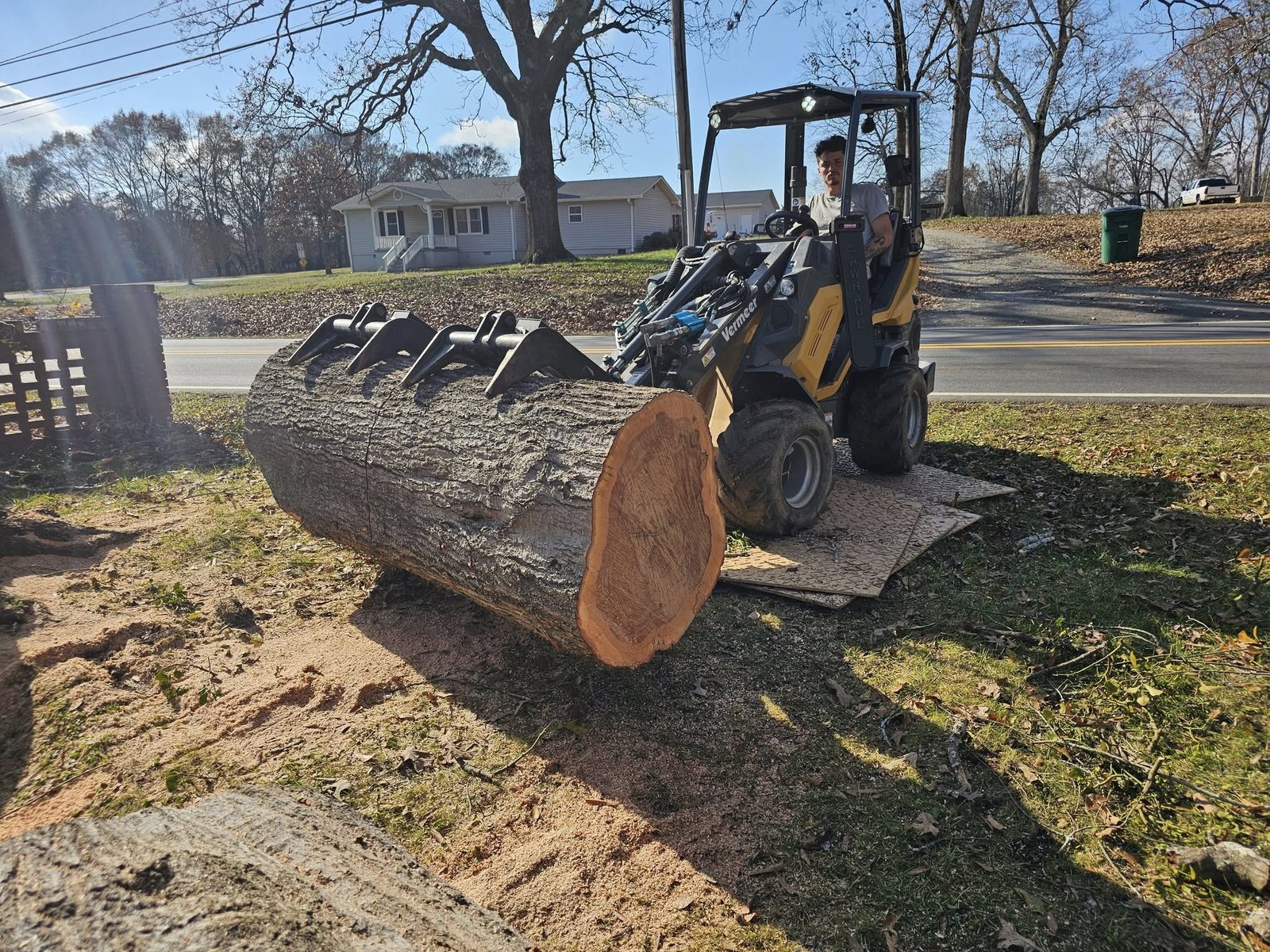
A crew that can park a truck beside the tree and use a chipper is cheaper than one that has to rope every limb out over a fenced backyard. Tight subdivision lots often mean a compact loader on ground mats, or hand-carrying brush to the curb, which adds labor to the bottom line. The overview on tree trimming explains what each cut type involves.
Cutting back without hurting the tree
The most common mistake on overgrown yard trees is topping, hacking the crown flat to get it off the house. It leaves ugly stubs, invites decay, and triggers a flush of weak, fast-growing shoots that are worse than what you removed. A better trim takes selected limbs back to a proper branch collar, opens the canopy so wind passes through, and keeps the tree's natural shape. The ISA's Trees Are Good pages explain good pruning practice in plain language, and the Clemson Home and Garden Information Center covers pruning timing for common Upstate species.
Some trees simply cannot be trimmed back far enough. If the trunk itself is within a few feet of the foundation, or a decayed main stem has been leaning toward the house for years, removal is the honest answer. A good estimator will tell you that rather than selling you a trim you will pay for again in three years. Once the tree is down, the stump and roots are a separate decision, usually handled by stump grinding.
Lines, storms, and the limbs that fail first
Many Greer subdivisions run service lines overhead, and trees planted decades ago have grown right up into them. Keep yourself and any ladder well away. OSHA's 10-foot rule technically binds workers, not homeowners, but it is the right distance for everyone, and only trained line-clearance trimmers may work inside it under OSHA's tree care rules. If branches are touching a line, call the utility first instead of a trimmer.
Storm history explains why the overhanging limbs matter. Greenville County has 23 federal disaster declarations on record (2003-2026), and Hurricane Helene's September 2024 passage across the Upstate left many homeowners staring at limbs that had been "fine for years" lying across roofs. Wet soil, gusts, and heavy canopies are a bad combination. Watch the forecast from the National Weather Service in Greenville-Spartanburg, and trim before the season, not after the limb lands. If something does come down, our tree service in Greer page covers storm and emergency work, and the crews run a 24-hour storm response.
Vetting a crew when SC doesn't license tree work
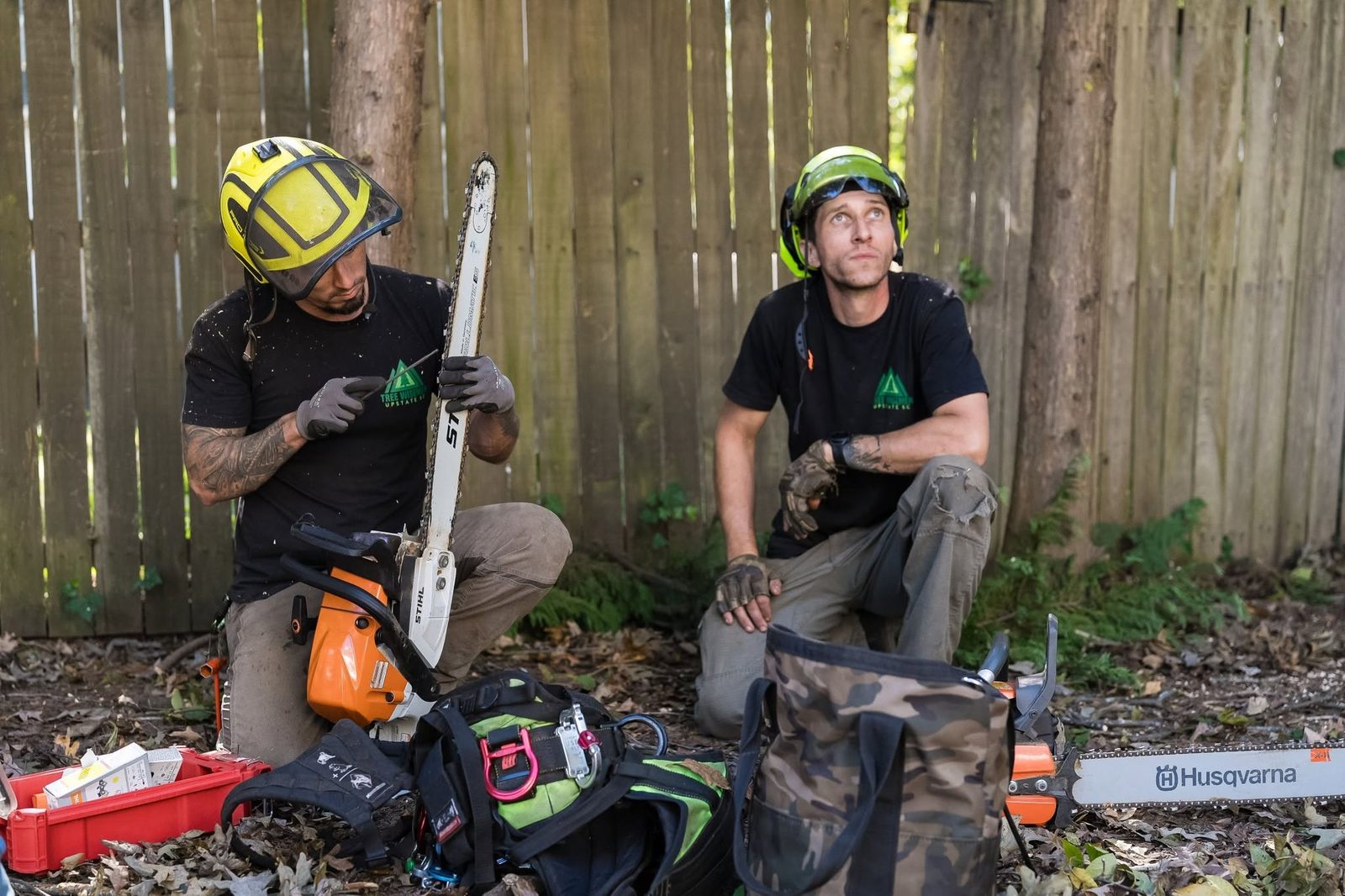
South Carolina has no state license for tree trimming, removal, or stump grinding, so a crew will not have a license number to show you, and none should claim one. What protects you is paperwork and proof: a current certificate of insurance covering general liability and workers' compensation, references from nearby jobs, and photos of similar work. Ask any crew, including us, for the certificate before work starts, and confirm coverage with the insurer if you want certainty. The SC Department of Insurance is the place to start with questions about coverage. If a limb has already damaged the roof, the repair itself is a licensed trade, separate from the tree work.
Tree Wisemen is family owned, based in Easley, and has worked the Upstate since 2020. Greer is about 21 miles east, well within the 50-mile free-estimate area. The easiest start is to text a few photos of the tree and the roof to (415) 850-7584, and they will tell you what the job looks like before anyone climbs a thing.