Check the city rules before the saw comes out
Greenville is the one place in this part of the Upstate where a homeowner can owe the city money for cutting their own tree. The city has its own tree ordinance, with fees per inch of trunk on covered properties, so the first step on a city lot is to read our Greenville tree ordinance guide and confirm with the city whether your property and your tree are covered. Do that before you book anyone, not after the stump is already on the ground.
A good crew will ask where the tree stands and will not treat the question as an annoyance. Photos help. You can text pictures of the tree, the lot and any nearby structures to (415) 850-7584 and get a straight read on scope, then sort out the paperwork question in parallel. If you want the general picture of what we do across the region, start at our tree service overview.
A practical way to approach it: walk the lot before you call anyone. Note which tree you mean, roughly how thick the trunk is at chest height, and whether it sits near the front, the back, or against a property line. Those are the details the city will want to hear about, and they are the same details a crew needs to price the work. Writing them down once saves you from answering the same questions three times.
It also helps to separate two questions that homeowners tend to blur together. The first is whether the tree is covered by the city's rules. The second is whether the tree is a problem worth solving now, such as a dead limb over a bedroom or a trunk with a visible crack. A hazard does not erase the ordinance question, so ask the city how it treats dangerous or dead trees on your kind of property rather than assuming either way. Getting that answer in writing, even as an email, is worth the few minutes it takes.
City lot versus a lot just past the limits
Greenville County is a mix of dense city blocks, older inner suburbs and rural edges, and the city boundary changes the job more than most people expect. Inside the limits, the ordinance is the gate: permission or fees may apply before a covered tree comes down. Just outside, you are in county territory, and the work is usually decided by access, size and what the tree is leaning toward.
Outside city or town limits, the other rule that matters is fire. South Carolina does not issue burn permits, but state law requires notifying the SC Forestry Commission before burning outdoors. The Forestry Commission's fire and burning page explains how to notify. Burning a brush pile next to woods or grass has its own requirements. For most suburban Greenville properties, hauling and chipping is the simpler answer.
Day to day, the difference shows up in the way the job is planned. A city lot near Cleveland Park or along the Swamp Rabbit Trail corridor tends to be tight, with neighbors close on every side, so crews think first about where the wood will land and how it gets out. A lot out toward the county edge, off US 25 or US 276, usually has more room to drop and process material but may mean a longer drive in and a longer haul out. Neither is automatically cheaper; they are simply different puzzles.
The practical advice is to confirm which side of the line you are on before you plan anything else. Mailing addresses with a Greenville label do not always sit inside the city, and a tax bill or the city's own mapping tools are better evidence than the name on your envelope. Once you know, you can follow the ordinance if it applies, or move straight to scoping the work if it does not. Tree Wisemen works within 50 miles of Easley, about 12.5 miles from Greenville, so either side of the line is within normal range for a free estimate.
What Greenville tree work typically costs
These are typical Upstate SC ranges for the Greenville area. They are not a Tree Wisemen quote; every job is priced after a free estimate within 50 miles of Easley.
| Scope | Typical range | What pushes it up |
|---|---|---|
| Tree removal | $300 to $2,000 per tree | Height, lean, tight access, a house or fence underneath |
| Trimming and pruning | $250 to $900 per tree | Crown size, deadwood, climbing versus lift access |
| Stump grinding | $100 to $400 per stump | Diameter, root flare, how many stumps in one visit |
City-lot jobs often sit toward the top of a range because yards are tight and a crane truck or loader has to work around fences and structures. For more on how removal is scoped, see tree removal in Greenville and stump grinding in Greenville.
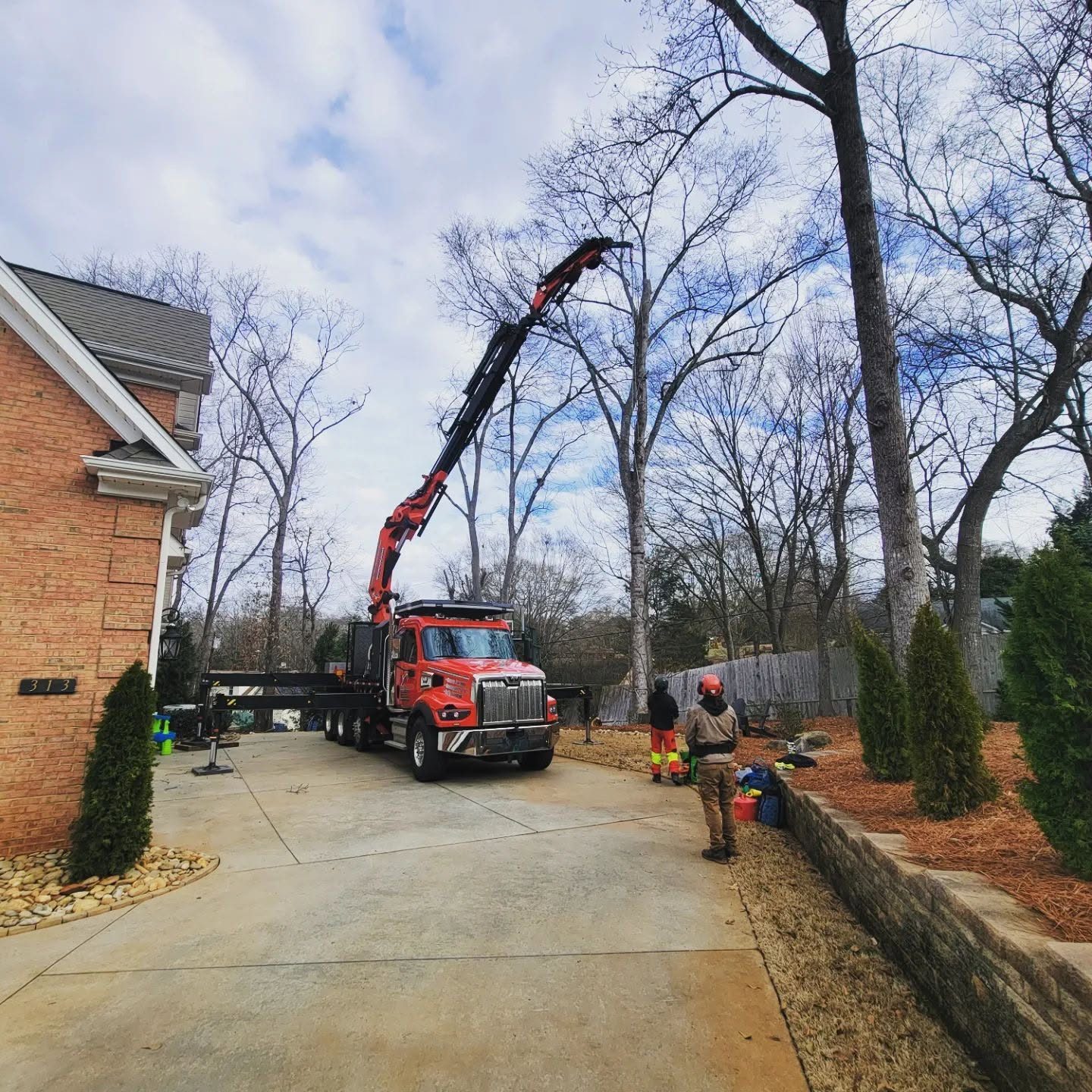
Where a tree sits matters as much as how big it is. A modest oak in an open back yard can cost less than a smaller tree hanging over a roof, because the second one has to be taken down in pieces and lowered carefully. A grapple-saw crane truck can lift sections out over a house without dropping them, which is why it is so useful on older city lots, but the setup and the time on site are reflected in the price.
Ask for the scope in plain terms: which trees, what gets hauled, whether the stump is included and whether the wood stays or goes. Two estimates that look far apart often differ only in what is left behind on the ground. If you are comparing, make sure each one covers cleanup and chipping the same way. Bundling several trees or a trim plus a removal into one visit is usually more efficient than scheduling separate trips, since the crew and equipment are already set up.
Storms, the Upstate's real tree problem
Greenville County has 23 federal disaster declarations on record (2003-2026), and storm and wind events account for much of the tree work in the Upstate. Hurricane Helene reached the region in September 2024, and many trees that were stressed, leaning or half-dead before that kind of wind are still standing. The National Weather Service Greenville-Spartanburg office is the place to watch when severe weather is forecast.
If a tree is already down on a house, call or text; Tree Wisemen runs 24-hour storm response. Roof or structural repair after a strike is a separate licensed trade, so expect to bring in a roofer or builder once the tree is off.
Between storms is the best time to look at your trees honestly. Walk around after a heavy rain or a windy week and watch for new leaning, soil heaving at the base, dead branches that stay bare in summer, or fungus growing on the trunk. Any of these can mean a tree is weaker than it looks. Catching a problem tree while it is still standing, and while the crew can plan the work calmly, is almost always easier and safer than dealing with it after it falls.
After a storm, resist the urge to climb up and cut a hanging limb yourself. Broken branches can be under tension and can swing or drop without warning, and anything near a service line should be treated as dangerous. Take photos for your records, keep people away from the area, and get a crew out to make it safe. Photos of the damage are also useful if you later talk with your insurer about the claim.
Power lines, insurance and hiring a crew
South Carolina has no state license for tree removal, trimming or stump grinding, so a license number tells you nothing here. Ask any crew, including us, for a current certificate of insurance covering general liability and workers' compensation before work starts, then ask for references and photos of similar jobs. The SC Department of Insurance is the right place for questions about coverage.
Keep clear of lines. OSHA's 10-foot rule binds workers, not homeowners, but it is the right distance for anyone, and only workers trained as line-clearance tree trimmers may work inside it. See OSHA's tree care safety guidance. If a stump or root work involves digging near utilities, SC811 requires three full working days' notice before excavation.
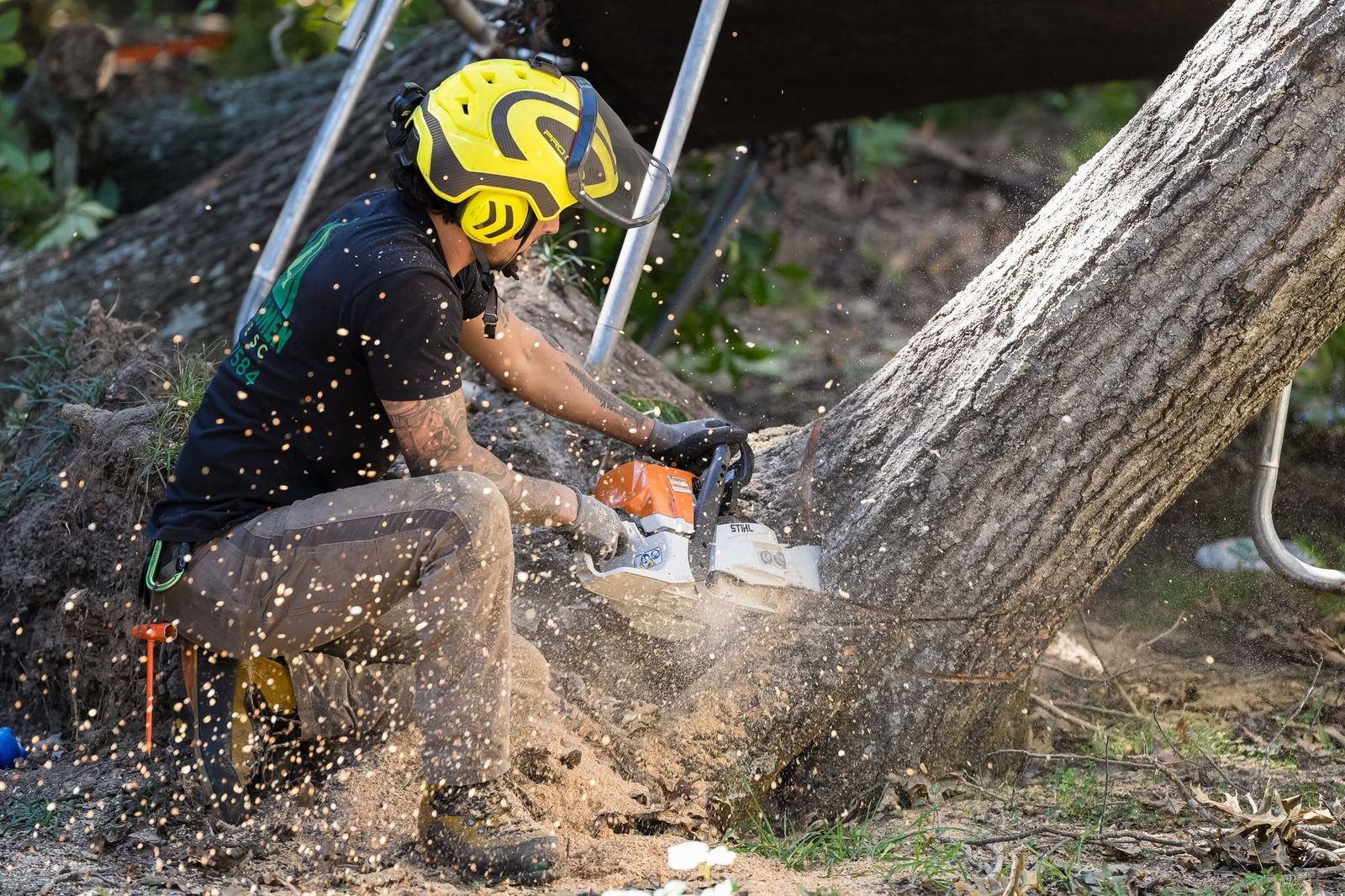
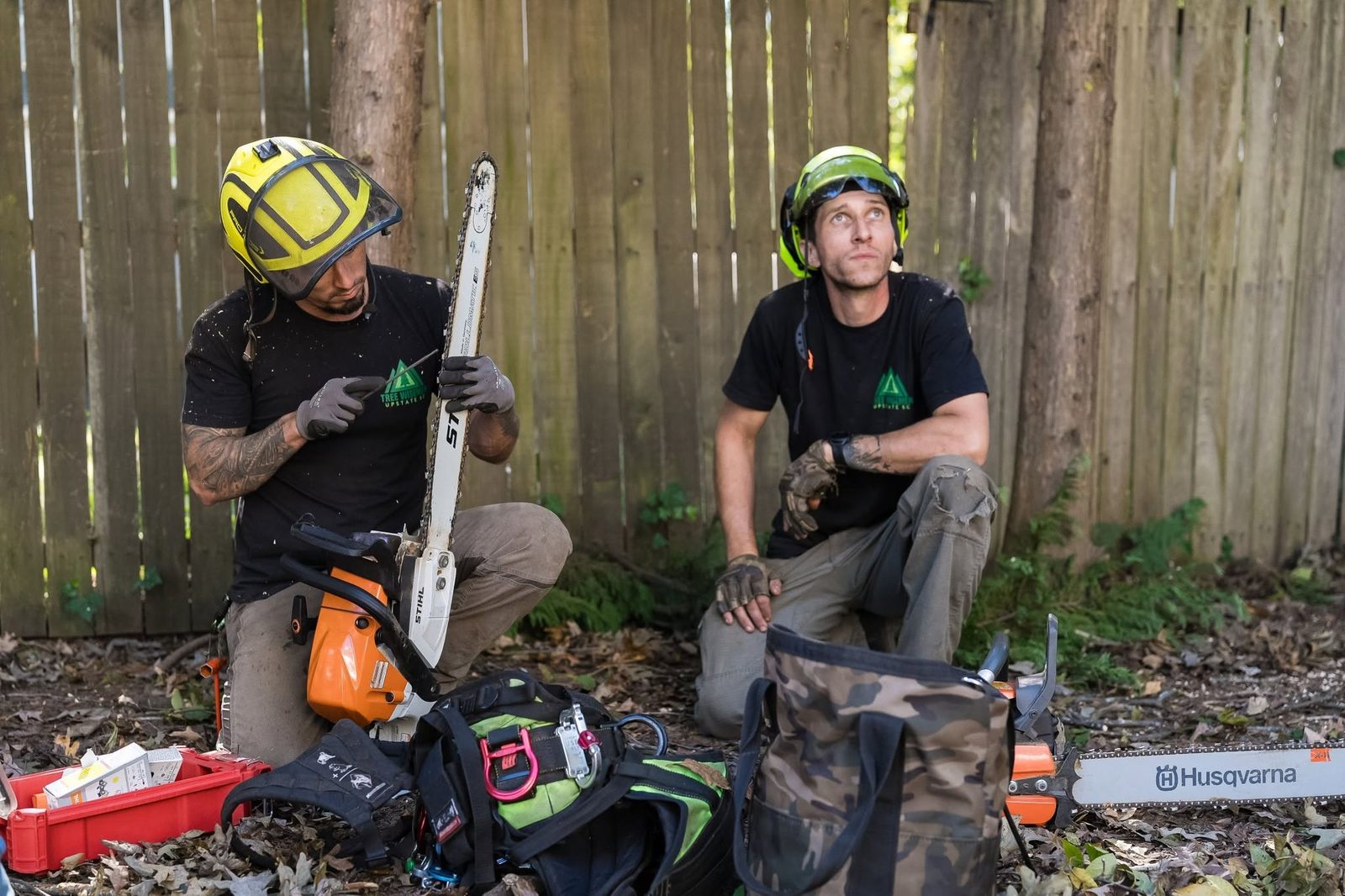
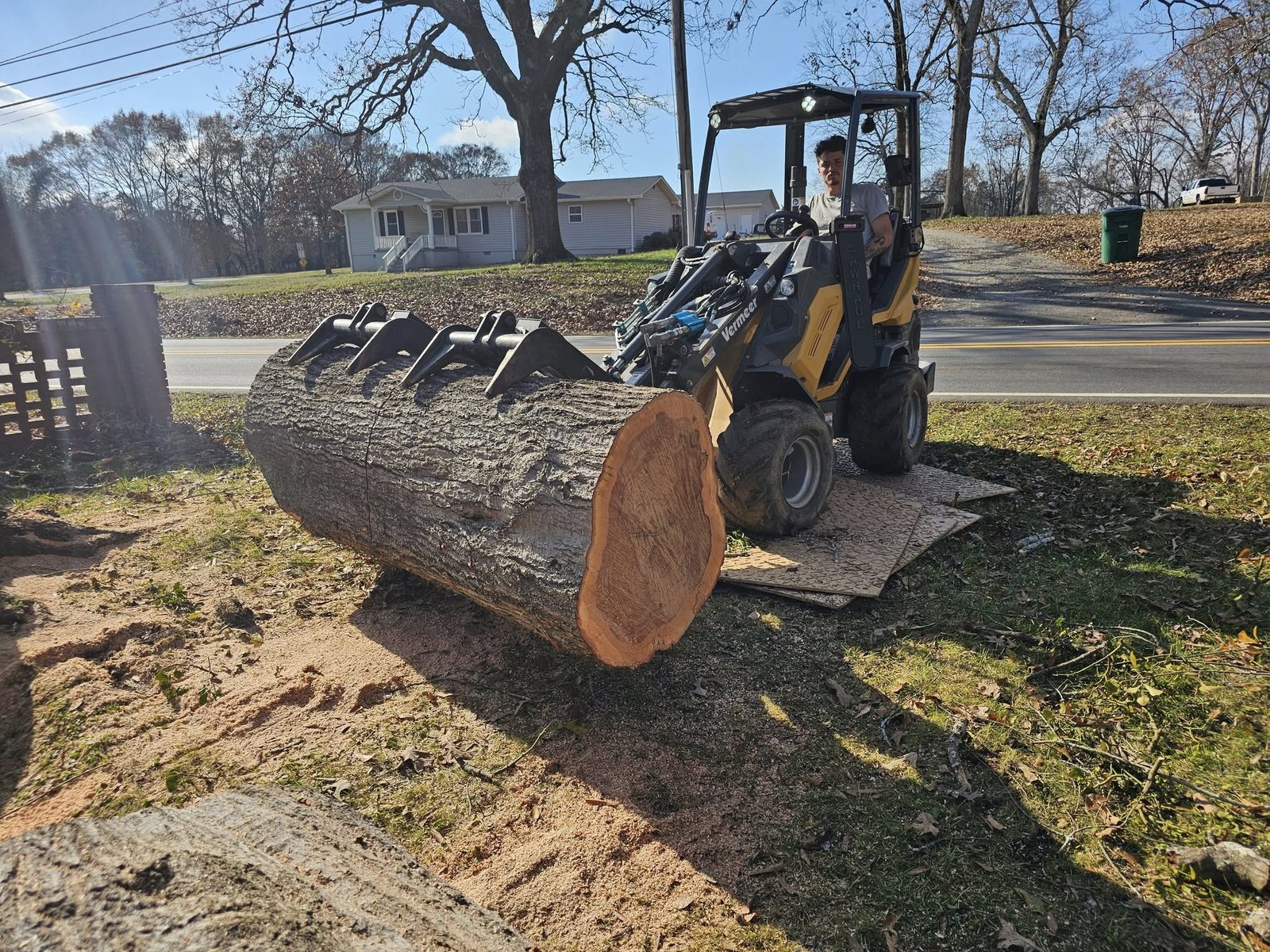
Tree Wisemen is family owned, based in Easley and working the Upstate since 2020, with a 4.9-star rating from 71 Google reviews and BBB A+ accreditation since 2023. The crew works with grapple-saw crane trucks, chippers, a stump grinder and a compact loader on ground mats to protect lawns.
When you compare crews, look at how they talk about the job as much as the number they give. A crew that walks the property, points out the lean, the lines and the likely drop zone, and tells you what could go wrong is showing you how they work. A crew that quotes a flat figure over the phone without asking a single question about access is guessing. Photos of finished jobs on tight lots, with lawns still intact, say more than any slogan.
Finally, think about what happens to the material. Chips can be left for mulch, logs can be hauled or left for firewood, and land clearing and mulching, demo and debris hauling and landscape installation are all part of what Tree Wisemen does if your project is bigger than a single tree. Settle those details before the day of the work so nothing is a surprise when the truck pulls out.