Why dead wood costs more to take down than green wood
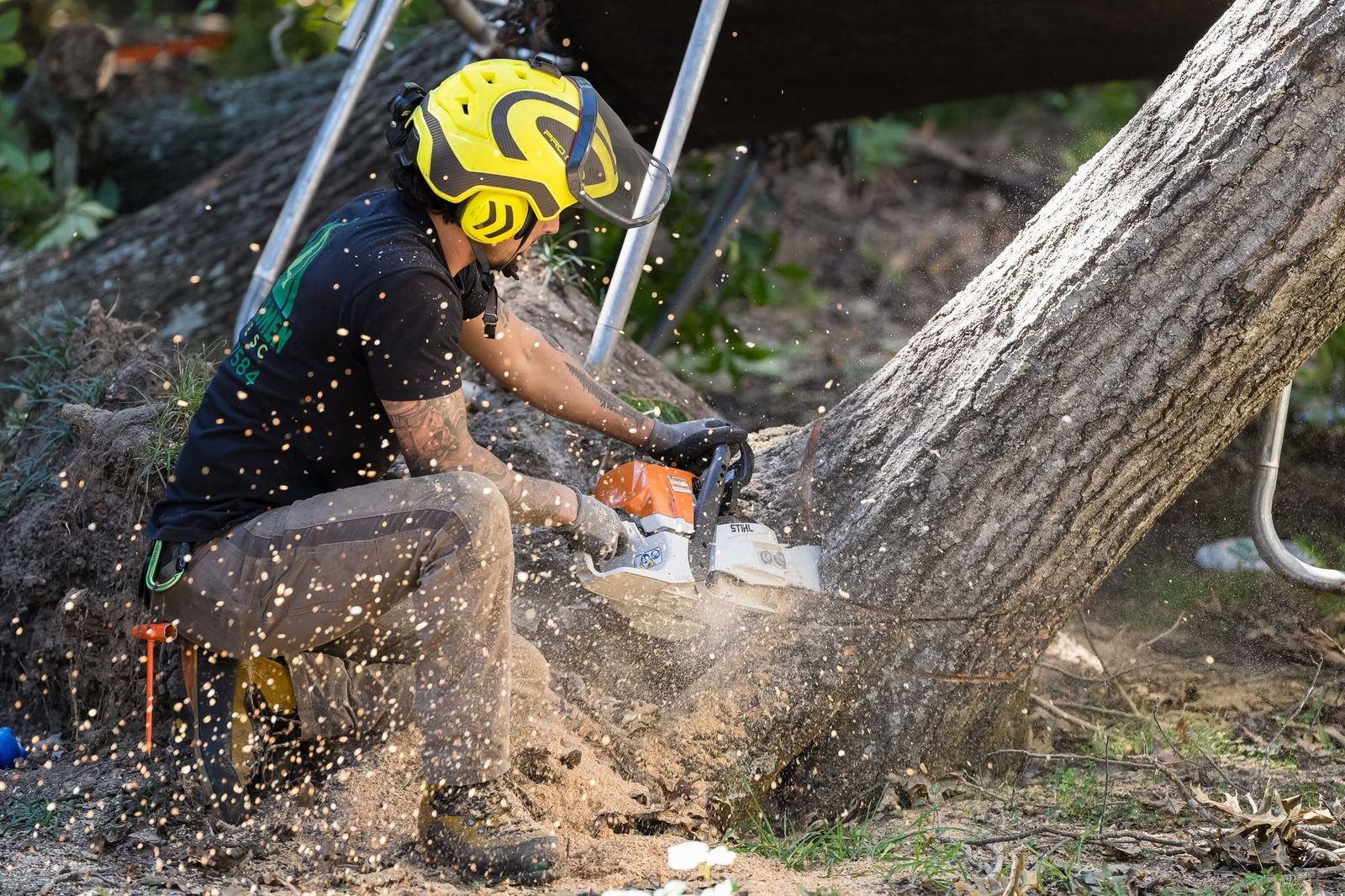
Homeowners around Easley are often surprised by the first dead-tree bid. They expect a discount because the tree is already gone, and the number comes back the same as a healthy oak of that size, or higher. The reason is the wood. A living limb flexes and warns a climber before it gives out. A dead limb can look solid and snap without notice, and a trunk with rot inside can shear while someone is on it. Crews can't trust the tree to hold a rope, a spur, or a person, so the work moves from climbing to rigging, lowering pieces in small sections, or putting a machine between the crew and the wood.
That is why the range for dead trees sits where it does. Our main tree removal cost guide covers live-tree pricing. Across Pickens County, a dead tree typically falls between $300 and $2,000, with the top of that band reserved for large, decayed, or hard-to-reach trees.
| Dead tree situation | Typical Pickens County range | What drives it |
|---|---|---|
| Small dead tree, open yard, easy drop | $300 – $700 | height, clear fall zone, brush volume |
| Medium dead tree near a fence, shed, or drive | $600 – $1,300 | sectional rigging, climber safety, cleanup |
| Large dead hardwood or pine over a house or lines | $1,200 – $2,000 | rot extent, targets below, crane or lift need |
| Very large, heavily decayed, or crane-only job | Top of the band; can pass $3,000 | crane time, ground protection, access |
Those are working ranges for the Upstate, not a quote from any one company. A firm number needs someone to look at the tree.
When a crane is the cheaper way to do it
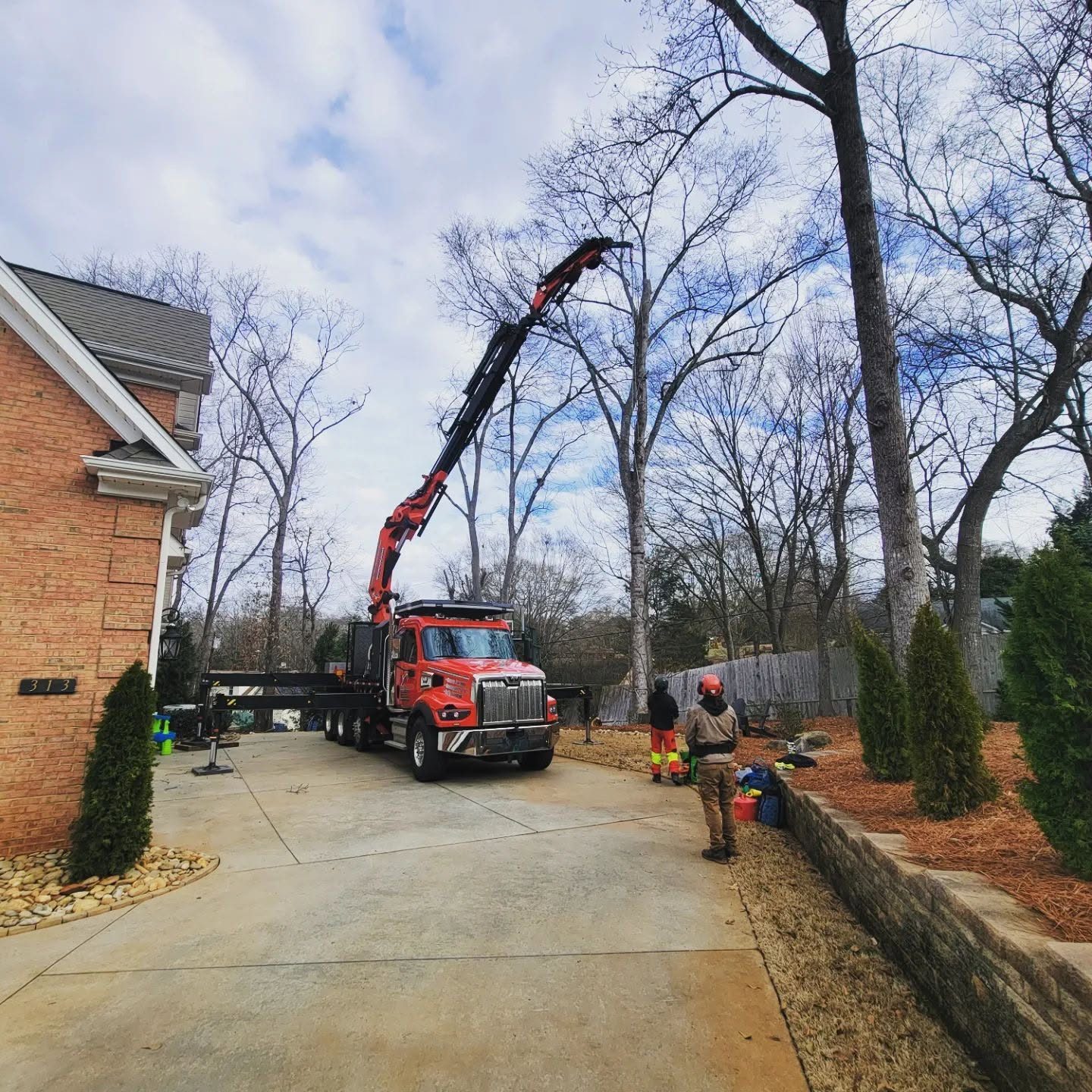
A crane sounds like the expensive option, and on paper the machine costs more per hour. On a dead tree, though, it often wins on total price. Without one, a crew has to climb a tree it doesn't trust, cut small pieces, and lower each one by hand. That takes a lot of labor hours, and it carries the risk of a failure mid-job. A grapple-saw crane truck can grip the trunk, cut it, and swing the section down in one motion, with nobody aloft in rotten wood.
The crane makes the most sense when the tree leans over a roof, sits behind a house with no truck access, or has a trunk too decayed to climb at all. It makes less sense when the tree has a clear fall zone, since the plain drop is cheaper than any machine. Pickens County lots vary a lot here. Some in and around Easley are open, flat yards where a tree can simply be felled. Others are foothill lots with slope, tight driveways, and hardwoods leaning over the house. The same dead oak can be a $600 job on one and a crane job on the other.
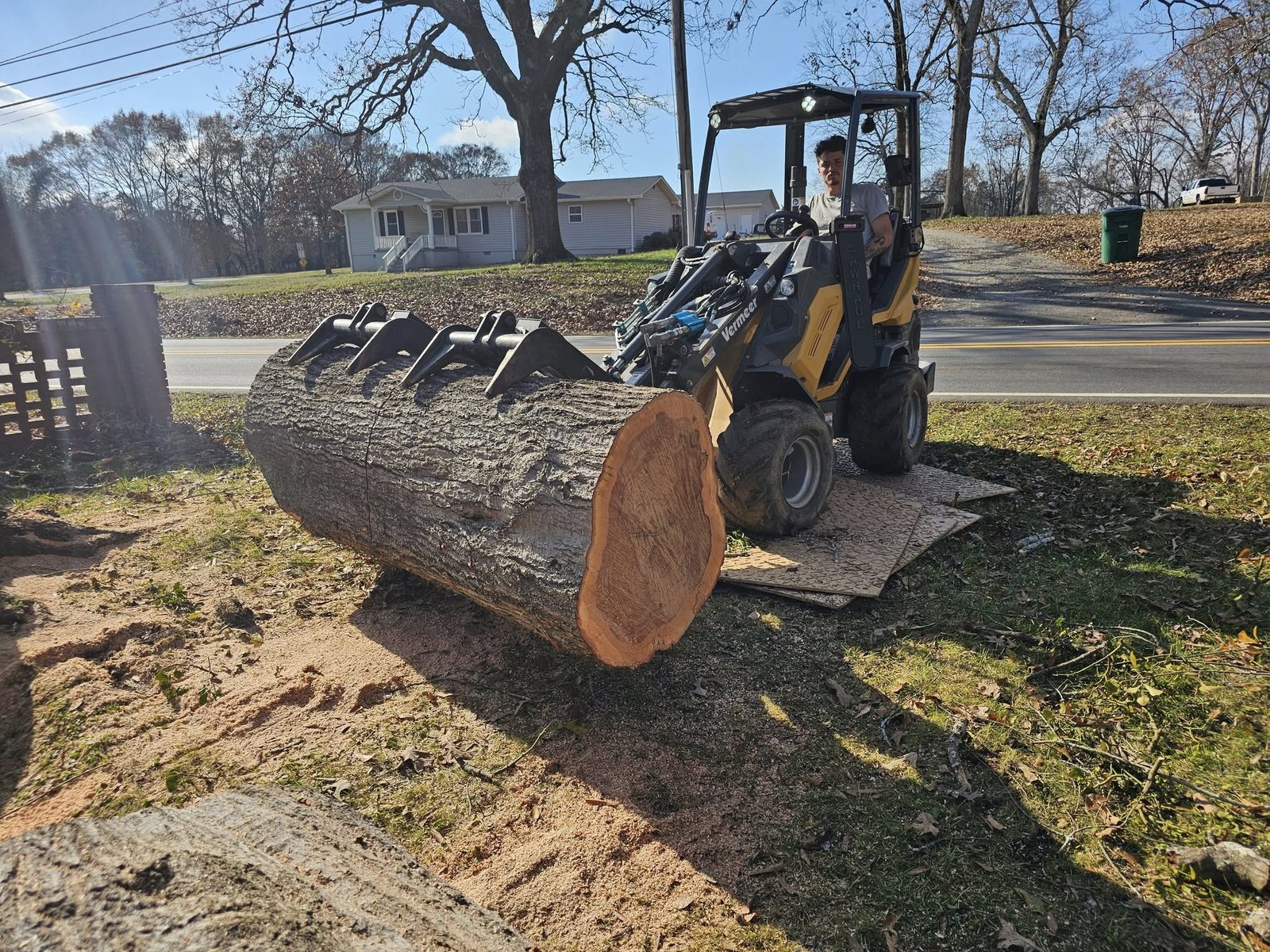
Compact loaders on ground mats help too. They move cut wood out of a soft or sloped yard without tearing up the turf, which matters after a wet stretch. If you aren't sure whether your tree is already past saving, our guide to telling a dead or dying tree apart walks through the signs, and Clemson Cooperative Extension's Home and Garden Information Center has plain-language diagnostics for tree decline in the Upstate.
How Upstate storms and soil leave dead trees standing
Dead and weakened trees accumulate here for a reason. Pickens County sits at the edge of the Blue Ridge foothills, where storms stall and soak the ground repeatedly. The federal record shows 23 federally declared disaster events touching the county (2005-2026), much of it storm and flood family. Saturated soil loosens roots, and drought stress in between kills trees slowly. Hurricane Helene reached the Upstate in September 2024, and trees that were cracked, root-heaved, or stripped of bark in that kind of wind often decline for seasons afterward. A tree that looked merely stressed can turn into a hazard by the next big storm.
That has a price consequence. A dead tree you remove on your schedule is a planned job. The same tree after it drops on a roof or fence is an emergency job with damage on top of it. The National Weather Service office in Greenville-Spartanburg issues the warnings that matter for planning. If your tree is already leaning, split, or hung up on other limbs, our hazardous tree removal page explains how those jobs are handled differently.
Power lines, utilities, and what changes the number
Three things push a dead-tree bid toward the top of the range even when the tree is not huge.
- Lines nearby. OSHA's 10-foot rule binds workers, not homeowners, but it is the right distance for anyone. Only workers trained as line-clearance tree trimmers under 29 CFR 1910.269 may work inside 10 feet of energized lines. A dead tree touching or near a service drop may need the utility involved before a crew starts. OSHA's tree care safety page lays out the hazards.
- Targets underneath. A house, a pool, a septic field, or a fence line within the fall zone means smaller sections and more rigging.
- Stump and debris. Removal does not automatically include grinding. If you want the stump gone, price it as part of the job. Before any digging, including a stump-grinder pass near buried lines, South Carolina's SC811 requires three full working days' notice.
Burning the wood yourself is another way people try to save money. South Carolina does not issue burn permits. Outside city or town limits, state law requires notifying the SC Forestry Commission before burning outdoors, and the details are on the fire and burning page. Large piles of dead hardwood next to woods or grass are a bigger risk than they look.
Getting a straight bid on a dead tree
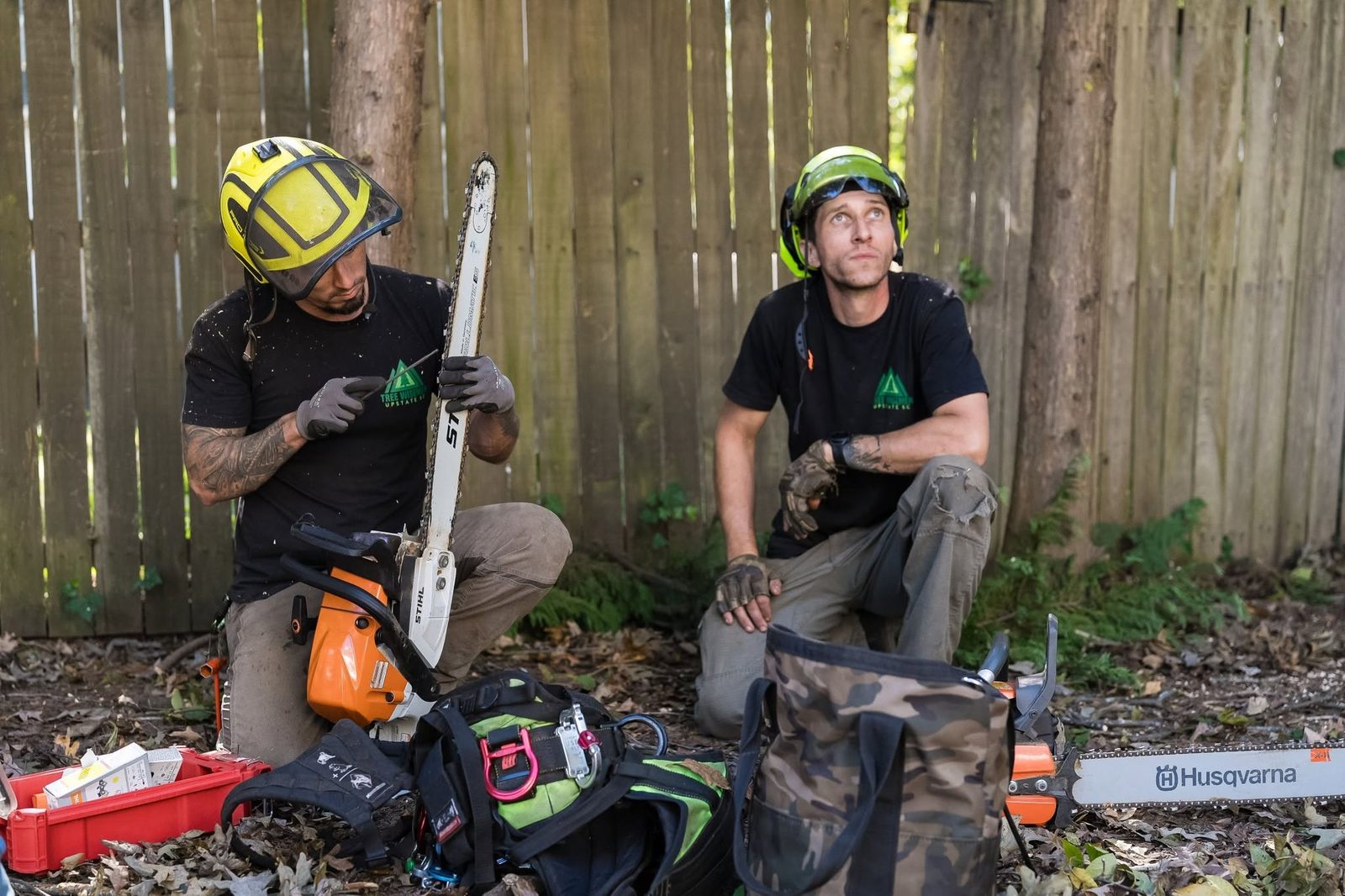
South Carolina has no state license for tree removal, trimming, or stump grinding, so a license number won't tell you who is safe to hire. What does protect you is paperwork and proof. Ask any crew, including us, for a current certificate of insurance showing general liability and workers' compensation before work starts, then check that the policy is current. The SC Department of Insurance is the right place for questions about coverage. Ask for references and photos of similar jobs, especially dead-wood and crane work.
Tree Wisemen is family owned, based in Easley, and has worked the Upstate since 2020. Estimates are free within 50 miles of Easley, and you can text photos of the tree to (415) 850-7584 to get the conversation started. A photo of the base, the crown, and whatever sits under the fall zone gives a crew most of what it needs. Storm calls are handled around the clock through the 24-hour response line. Roof or structural repair after a tree strike is a separate licensed trade, so keep that bid separate from the removal.
Compare any bid against the table above. If a number lands far outside it, ask the crew to explain the crane time, rot, or access issue behind it. For more on tree health and care standards, Trees Are Good from ISA is a solid neutral reference.