Notification is the word, and a permit is the myth
Ask around Easley or out toward Pickens and you will hear someone say they "need a burn permit." There is no such thing in South Carolina. The state does not issue burn permits at all. What it requires, for burning outdoors outside city or town limits, is a notification to the SC Forestry Commission before you light. You do it online at scfc.gov/notify or by calling the county phone line, and the details live on the Forestry Commission's fire and burning page.
The difference matters. A permit is permission: an office reviews your plan and says yes or no. A notification is a heads-up so dispatchers know a smoke column in your area is a planned fire and not a 911 call. Notifying does not approve your burn, does not make an illegal fire legal, and does not replace the open-burning rules in SCDES Regulation 61-62.2. Dispatchers at the Forestry Commission take the notification; they do not interpret SCDES regulations for you. Compliance is still your job.
Land-clearing debris is the other trigger. If you are burning cleared brush, limbs or stumps next to woods, brush or grassland, the same notification applies and the same Regulation 61-62.2 rules govern what you can burn and how. Pickens County has a lot of that kind of edge, with wooded lots and pasture running right up to residential property, so a pile that looks harmless can sit right beside fuel.
What changes the moment you are inside town limits
The state notification system is built for areas outside city or town limits. Once your property sits inside a municipality, local rules apply, and many towns restrict or outright prohibit open burning of yard debris. Easley, as the principal town in Pickens County, is the obvious example, but the same goes for every other incorporated town in the county. Your mailing address will not tell you which side of the line you are on. A Pickens address can be inside a town or out in the unincorporated county, and neighbors on the same road can be under different rules.
The practical order of operations is simple. First find out whether your parcel is inside a town. If it is, call the town first and ask what is allowed, when, and whether a fire department sign-off is needed. Do not assume that notifying the Forestry Commission covers you. If you are outside town limits, notify the Forestry Commission, then check that your fire fits SCDES open-burning rules before you light anything.
| Situation | What applies |
|---|---|
| Outside town limits, small yard-brush fire | Notify the SC Forestry Commission before burning; follow SCDES Regulation 61-62.2 |
| Outside town limits, land-clearing debris near woods, brush or grassland | Same notification, plus 61-62.2 rules for clearing debris |
| Inside Easley or another Pickens County town | Local rules first; many towns restrict burning, so call the town before doing anything |
| Anywhere: trash, treated lumber, tires, plastics, roofing | Not brush; do not burn it |
| Anywhere: fire gets away from you | Call 911 immediately; notification does not shield you from liability |
Foothills conditions that make a legal burn a bad idea
Being allowed to burn and being wise to burn are different questions. Pickens County sits in the Upstate foothills, with steep lots, hardwood and pine stands, and plenty of homes tucked against wooded slopes. Fire runs uphill fast, and a pile that behaves on flat ground can throw embers into the canopy on a slope. Dry, windy days after a stretch without rain are the worst. Check the forecast from the National Weather Service Greenville-Spartanburg for wind and humidity before you even consider it, and skip the burn if gusts are up or the leaf litter is crisp.
Storm years add their own pressure. Pickens County is among the places with a record of 23 federal disaster declarations, 2005-2026, and Hurricane Helene hit the Upstate in September 2024. Storms like that leave behind far more downed limbs than anyone should burn at once. Big green piles of fresh storm debris smoke heavily and burn badly, and stacking a season's worth of broken limbs into one fire is how small burns become reportable ones. If the debris is from a storm, that is usually a hauling or chipping job, not a bonfire.
Where the smoke goes: power lines, neighbors and your own roof
Keep fires well clear of overhead lines, structures and the trees you want to keep. Heat and smoke near energized lines can also cause problems for the line itself. If limbs hang near power lines, do not climb up to cut them to feed a pile. OSHA's 10-foot rule binds workers, not homeowners, but it is the right distance for anyone. Only workers trained as line-clearance tree trimmers under 29 CFR 1910.269 may work inside 10 feet of energized lines, and OSHA's tree care safety guidance explains why. Call the utility instead.
Neighbors are the other issue. Even a fully compliant fire can draw a complaint if smoke drifts onto a porch or a road. Smoke from green or wet brush is heavy and hangs low in valleys and hollows. A legal burn that sends smoke across a property line is the kind that ends in an unfriendly call to the fire department, and being right about the notification will not help much in that conversation.
Doing it without fire: haul, chip or mulch
Many Pickens County owners end up skipping the match. The alternatives are straightforward, and the right one depends on how much material you have and what you want left behind.
| Job | Typical Upstate SC range |
|---|---|
| Haul away a modest brush pile | $300-$800 |
| Large storm-debris pile, multiple loads | $800-$1,500 and up |
| Chip limbs on site, leave the chips | Often $300-$900, depending on volume and access |
| Mulch overgrown brush in place, per acre | Commonly $1,500-$4,000, driven by density and slope |
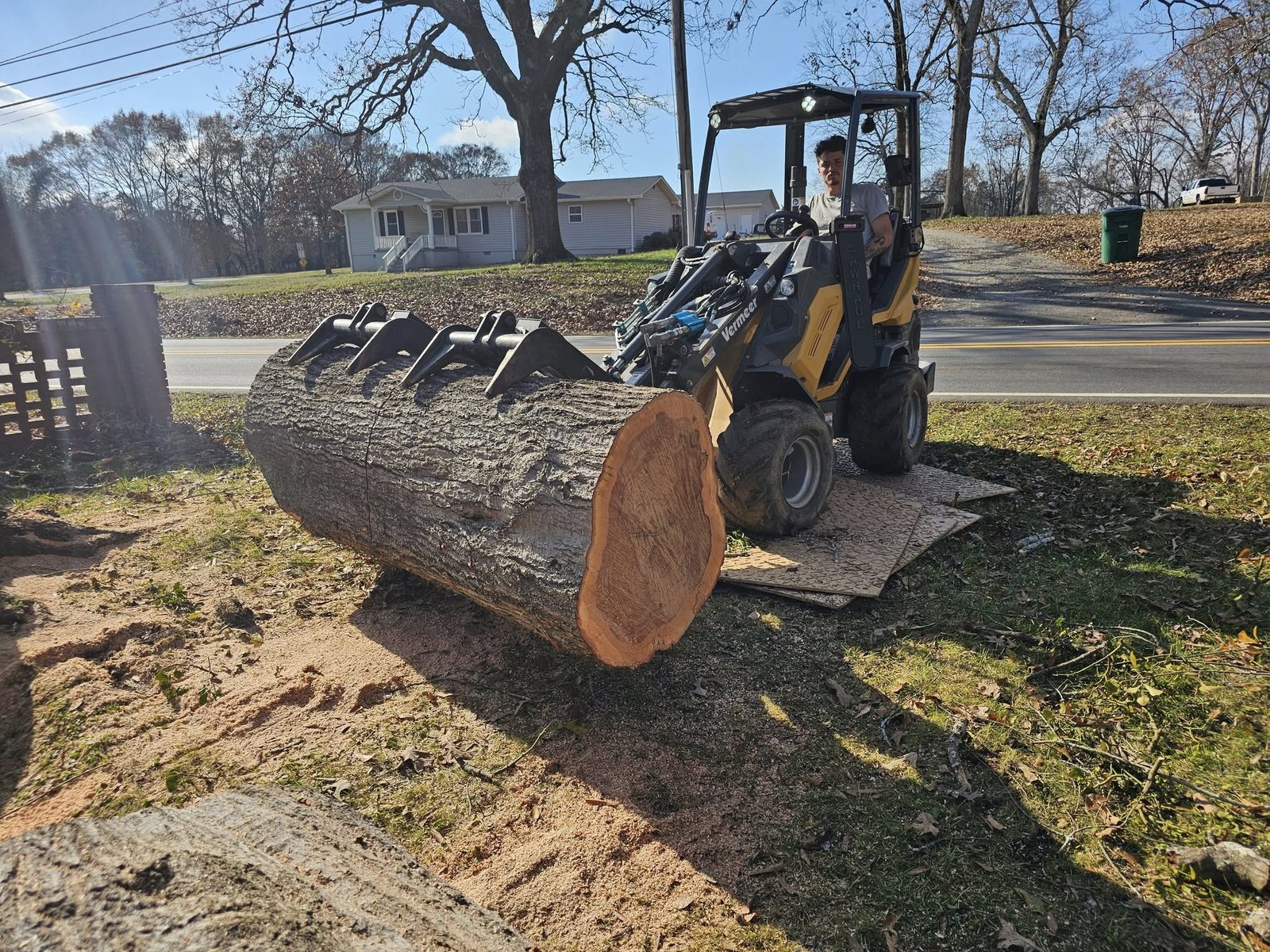
Our debris hauling page covers what gets taken and how loads are priced. If you have a whole overgrown lot rather than a pile, land clearing removes the problem at the source, and forestry mulching grinds brush and small trees in place so there is nothing to burn or haul. Mulching tends to suit steep or soft ground well because it avoids dragging material across the slope, and crews working with a compact loader on ground mats keep ruts down. Tree Wisemen is family owned, based in Easley, and gives free estimates within 50 miles. You can call or text (415) 850-7584 and send photos of the pile or lot.
Whoever you hire, ask for a current certificate of insurance covering general liability and workers' compensation before work starts, and ask any crew, including us, the same thing. South Carolina has no state license for tree removal, trimming or stump grinding, so that certificate, references and photos of similar jobs are what protect you. The SC Department of Insurance is a reasonable place to learn what those coverages mean. If a falling tree has damaged the roof or structure, that repair is a separate, licensed trade.
If you still plan to burn, a short checklist
Before lighting, confirm your parcel is outside town limits or that your town allows it. Notify the SC Forestry Commission through scfc.gov or the county phone line. Burn only dry plant material, never trash or treated wood. Keep water and a hand tool on site, stay with the fire until it is out, and stop if the wind comes up. If you are clearing ground and plan to dig stumps or set posts afterward, SC811 requires three full working days' notice before excavation, so schedule that early. And if the pile is bigger than you can safely watch, treat that as your answer.