Pines over the roof: what drops, and how high to raise the canopy
Drive through the subdivisions off I-385 or along SC 14 after a windy night and you will see the same thing in a lot of yards: pine needles and dead limbs on the shingles, a few branches across the driveway, and a tall trunk standing a few feet from the eaves. Pines in the Upstate are fast growers, and the lower limbs die off in the shade as the crown climbs. Those dead lower limbs are what come down first, and in a small suburban lot they land on a roof, a deck or a car.
Raising the canopy is the usual answer, but there is a limit that makes sense. A common rule of thumb in tree care is to keep at least about two-thirds of the tree's height in live crown, and to avoid removing more than roughly a quarter of the live foliage in one visit. For a pine, that means taking off the dead and dying lower limbs and any live limb that overhangs the roof or sits within a few feet of it, not stripping the trunk bare up to a tuft at the top. A tree cut that way is top-heavy and catches more wind. The ISA Trees Are Good site explains proper pruning cuts and why over-thinning hurts a tree.
Our general guide to tree trimming covers the cuts and timing in more detail. Here the point is simpler: in Simpsonville the right height is the one that clears the roofline and the gutters with room to spare, and no higher than the tree can tolerate.
What a Simpsonville trim usually costs
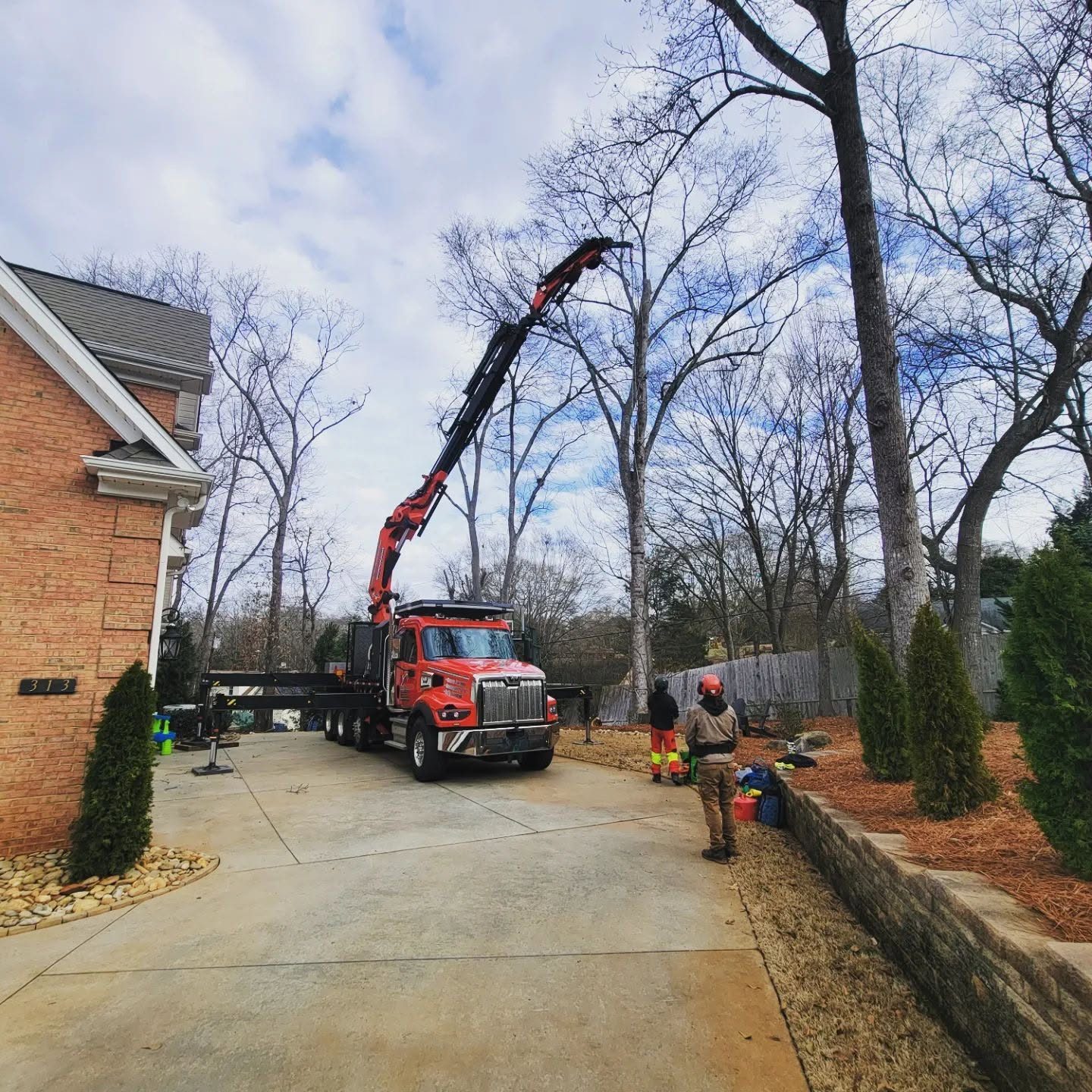
Most jobs here fall between $250 and $900 per tree. The low end is a smaller ornamental or a tree where a crew can reach everything from the ground or a short climb. The top end is a tall pine or oak with limbs over a house, or a tree whose limbs sit near service lines. Those jobs need rigging so cut limbs do not drop on the roof, and sometimes a crane truck.
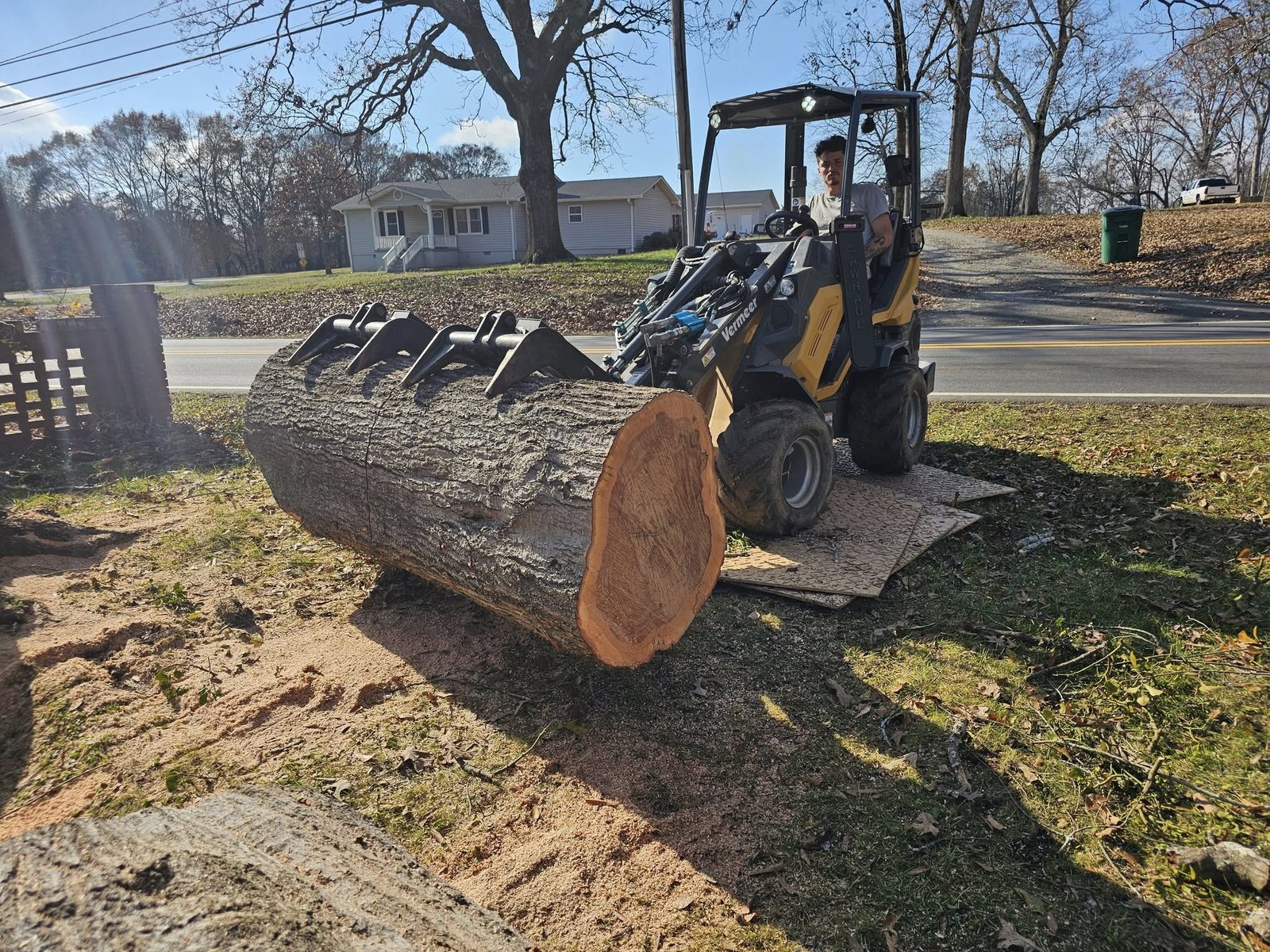
Three things move the number most. First is height and spread, because more crown means more hours and more debris to chip and haul. Second is access: a back-yard tree behind a fence and a pool is harder than a front-yard tree beside a driveway, and a compact loader running on ground mats can protect a lawn when the route is tight. Third is what is under the tree. A clear lawn is cheap to work over, while a roof, a screened porch or a play set means slower, more careful cuts.
The full breakdown of what drives price, with scope-by-scope examples, is on our tree trimming cost page. Tree Wisemen does not publish prices. Every job is priced after a free estimate within 50 miles of Easley, and Simpsonville is about 19.5 miles southeast of the shop, so it is well inside that range.
Storm limbs, wind and the Greenville County record
Greenville County has 23 federal disaster declarations on record (2003-2026), and storm and wind events make up much of that list. Hurricane Helene crossed the Upstate in September 2024, and many yards in this area still have trees that were stressed, leaning or partly broken by it. Limbs that looked fine afterward can fail a season or two later, especially on pines with shallow, saturated roots.
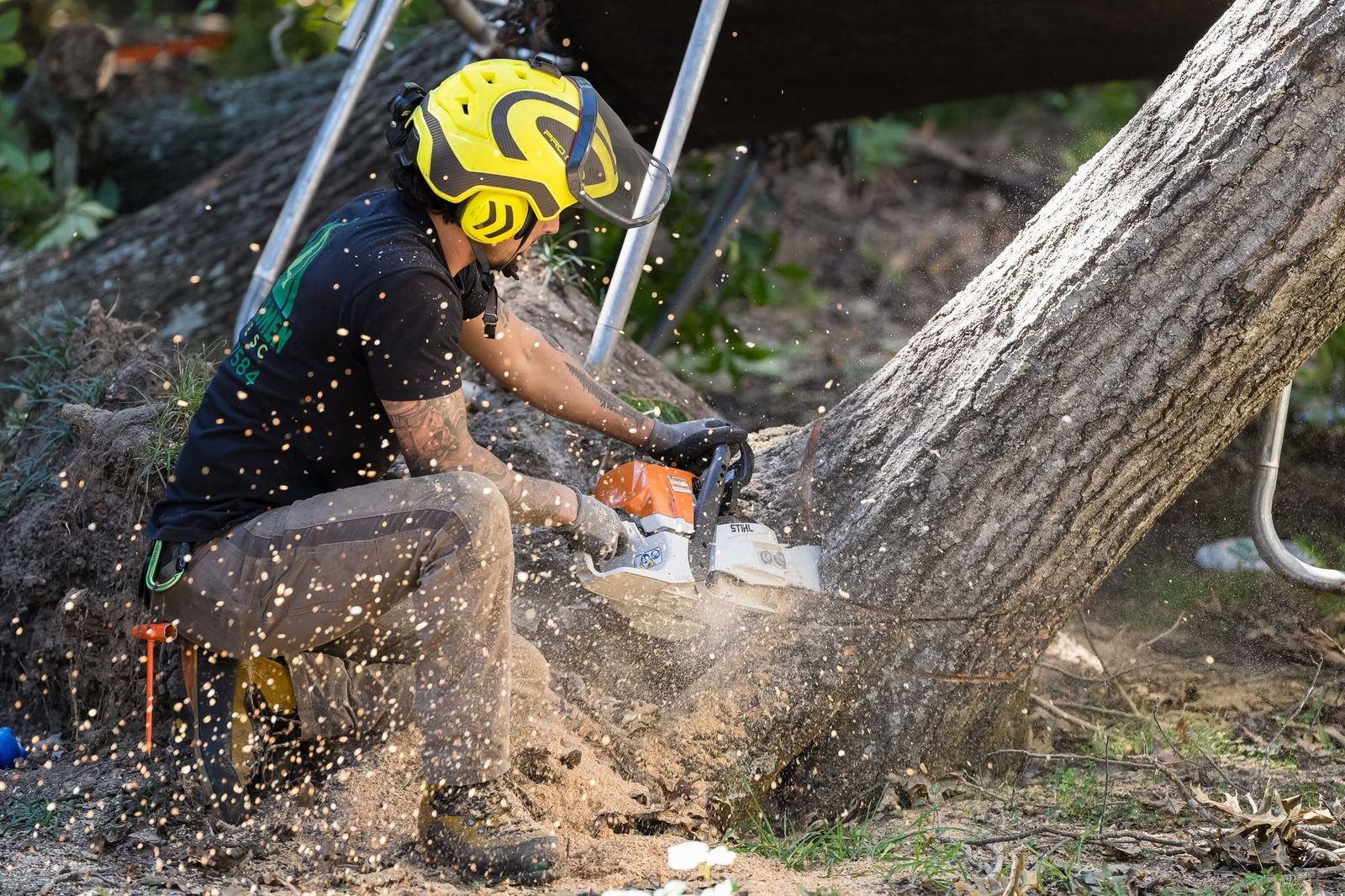
Before the next big system, the National Weather Service office in Greenville-Spartanburg is the place to watch for wind and severe-storm warnings. A trim done ahead of the season is much cheaper than emergency work after a limb is through the roof. If a tree has already come down or a hanging limb is over your house, Tree Wisemen offers 24-hour storm response. Call or text (415) 850-7584, and feel free to text photos so the crew can see what they are dealing with before arriving.
For wider storm work, from fallen trunks to limb cleanup, see our page on tree service in Simpsonville.
Power lines, drops and when to stop and call
Many Simpsonville streets have overhead service drops running to the house, and pines tend to grow right into them. Do not prune near them yourself. OSHA's 10-foot rule applies to workers rather than homeowners, but it is a sensible distance for anyone: only crews trained as line-clearance tree trimmers (29 CFR 1910.269) may work inside 10 feet of energized lines. The OSHA tree care safety page lays out the hazards, which also include chainsaw kickback and falls from ladders.
If limbs are touching a line, or you are not sure whether a wire is power, phone or cable, treat it as live and call your utility first. A good trimming crew will tell you the same thing and will not start work until the line question is settled.
If you plan to plant or dig after a trim, such as a replacement tree, a fence post or a drainage line, SC811 requires three full working days' notice before excavation.
Hiring a trimming crew without a license to check
South Carolina does not license tree trimming, removal or stump grinding. The state contractor board has no tree or landscaping class, so there is no license lookup to run. That puts the checking on you, and three things are worth asking for every time: a current certificate of insurance showing general liability and workers' compensation, references from nearby jobs, and photos of similar work. Ask any crew, including us, for a current certificate of insurance before work starts. If you want to confirm an insurer is real, the SC Department of Insurance is the place to start.
ISA Certified Arborist status is voluntary, so it is a plus when a crew has it, but not something the state requires. For tree health questions that are not about cutting, such as needle drop, disease or the right time to prune, Clemson Extension's Home and Garden Information Center is a solid free resource.
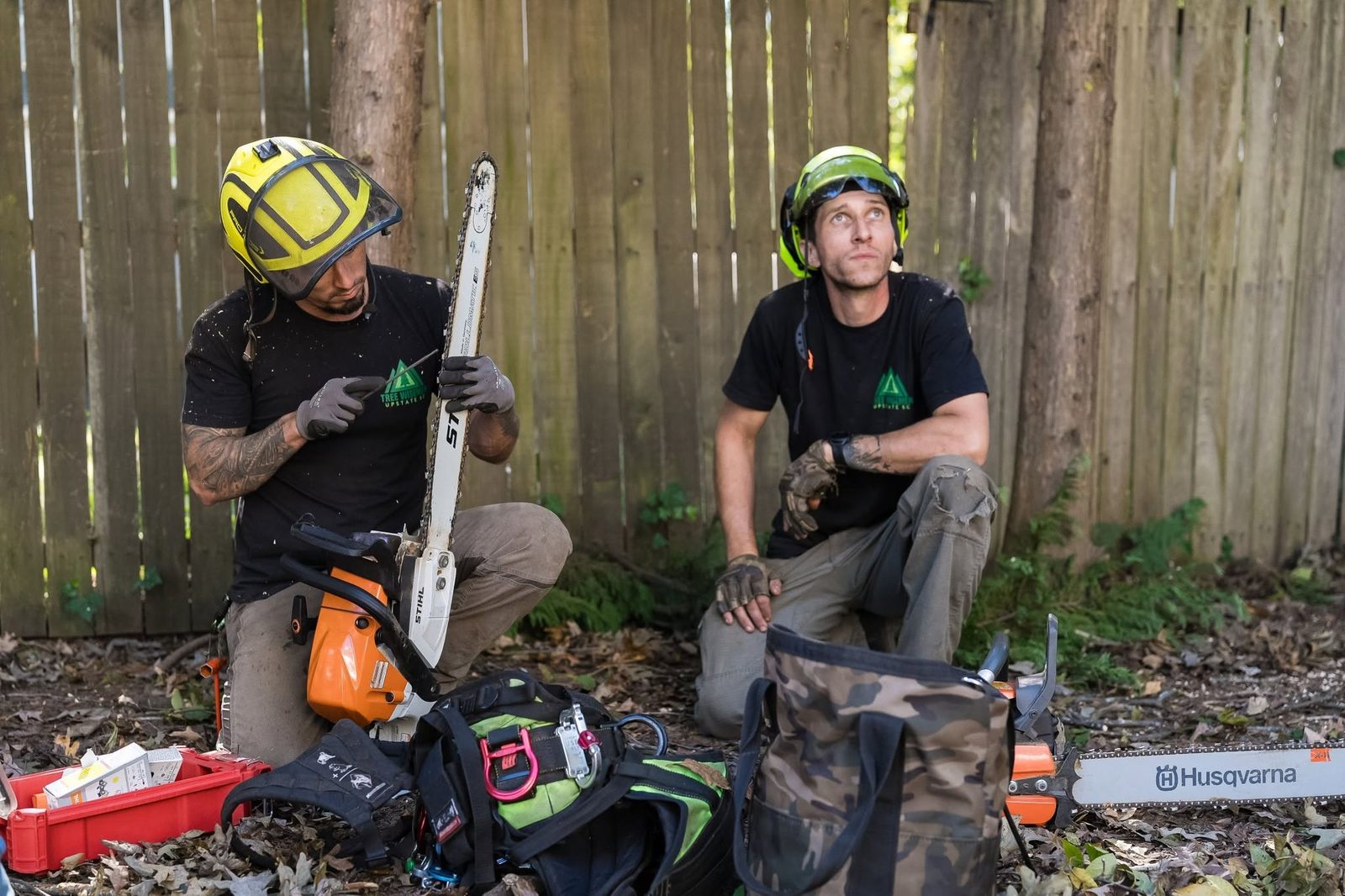
Tree Wisemen is a family-owned crew based in Easley that has worked the Upstate since 2020. It holds 4.9 stars across 71 Google reviews and has been BBB A+ accredited since 2023. If a pine is dropping limbs on your roof and you want a straight answer on how much to take off, text a photo and ask for a free estimate. If a strike has already damaged the roof or framing, that repair is a licensed trade and is separate from the tree work.