Same oak, two lots: town yard versus Lake Hartwell shoreline
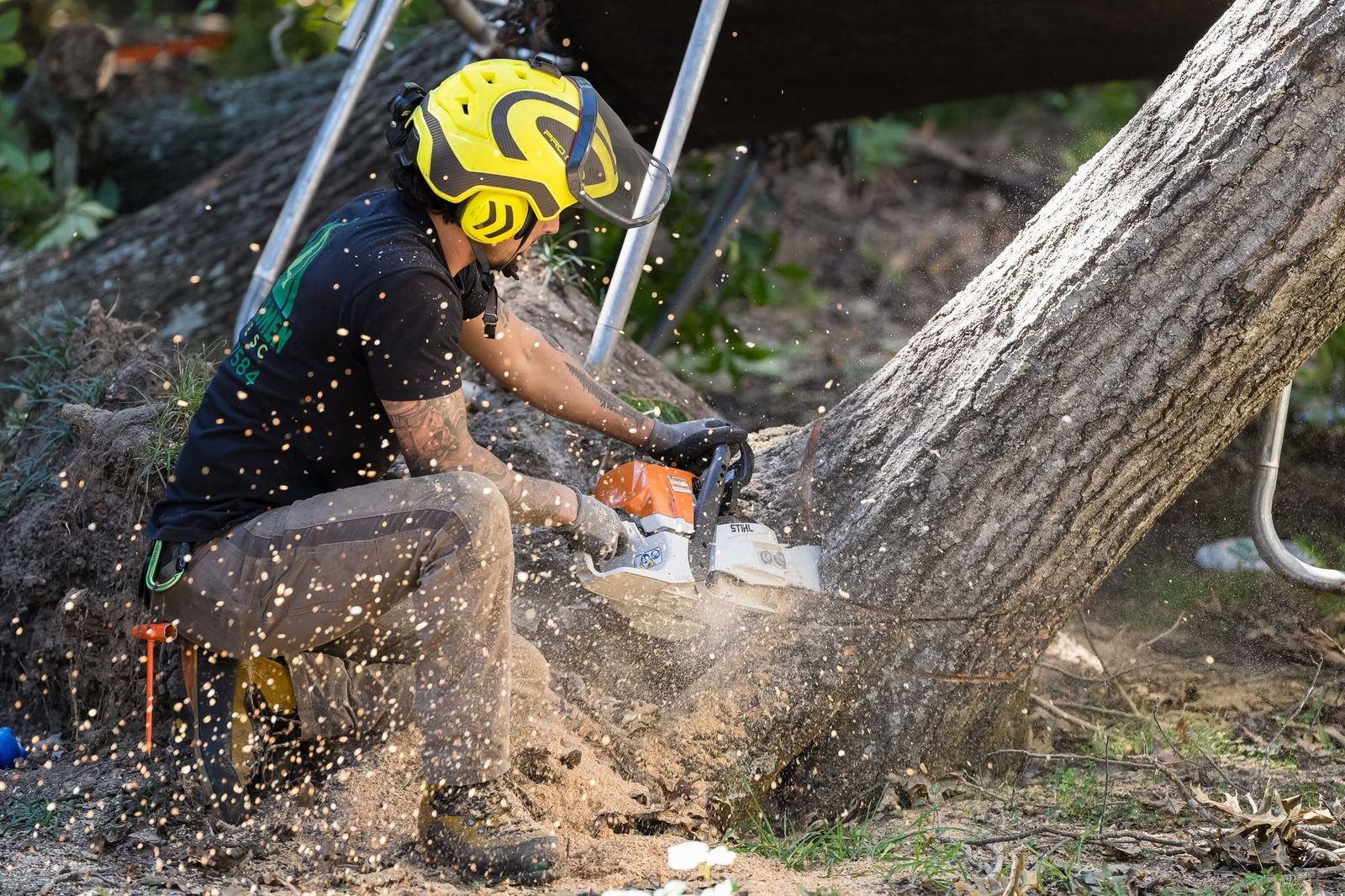
Drive a few miles from downtown Anderson toward Lake Hartwell and the same 60-foot oak can be a different job. On a town lot off US 76 or SC 28, a crew can usually back a truck close to the tree, set up a chipper at the curb and drop pieces into open lawn. On a lake lot, the tree may stand on a slope, behind a house, past a septic field or beside a dock path, and every piece has to be roped, lowered or lifted a long way before it can be chipped.
That is why a flat per-tree number is misleading. Across the Upstate, typical removal runs $300 to $2,000 per tree, and big or hazardous trees can pass $3,000. Where your lot lands in that band depends less on the species than on how hard it is to get the wood out. For the wider regional picture, see our tree removal cost guide, or our page on tree service in Anderson for how we work in the county.
Anderson is the county seat, and the housing around it is a real mix. Older in-town lots near the main corridors such as US 29 and SC 81 tend to have mature trees close to houses, fences and overhead lines. Out toward the lake to the west, lots are often more irregular, with grade changes, long drives and trees planted or left standing close to the water. Neither setting is automatically cheaper. They are expensive in different ways, and a good estimate names which way applies to your yard.
These figures are typical Upstate SC ranges, not a quote. Tree Wisemen prices every job after a free estimate, available within 50 miles of Easley, and Anderson sits about 21 miles southwest of us.
What the price table looks like by job type
Use this as a sanity check when you compare bids. The scope column matters more than the dollar column.
| Scope of work | Typical range | What pushes it up |
|---|---|---|
| Small tree, open yard, clear access | $300 – $600 | cleanup and haul-off, trunk under about 12 inches |
| Medium tree, town lot | $600 – $1,200 | fences, outbuildings, a tight drop zone |
| Large tree, climbing and rigging | $1,200 – $2,000 | height, spread, dead limbs, work over a roof |
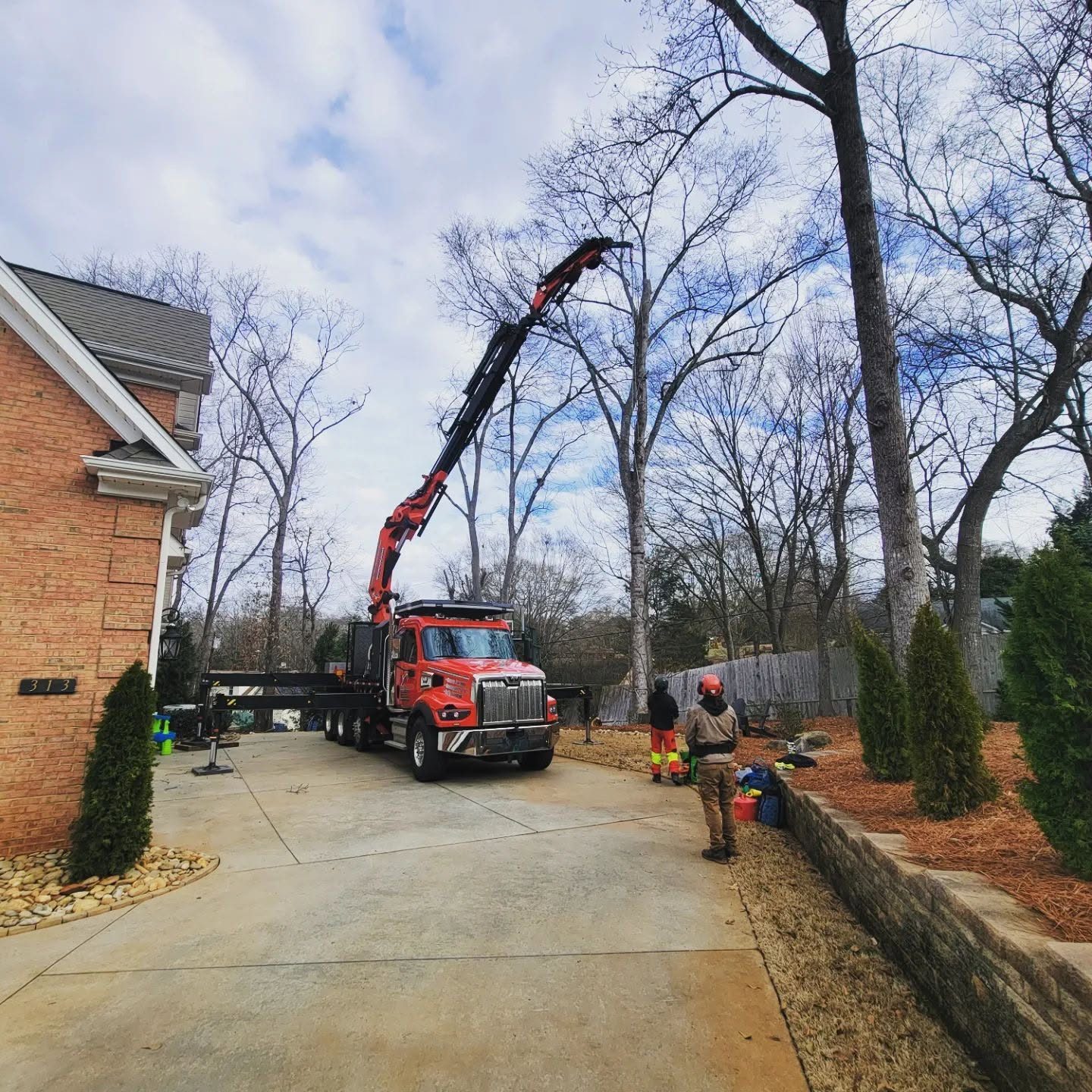
| Lake lot, slope or no truck access | $1,500 – $2,000+ | hand-carrying, grapple-saw crane truck, ground mats |
| Hazardous or storm-damaged giant | $2,000 – $3,000+ | leaning on structures, split trunks, near power lines |
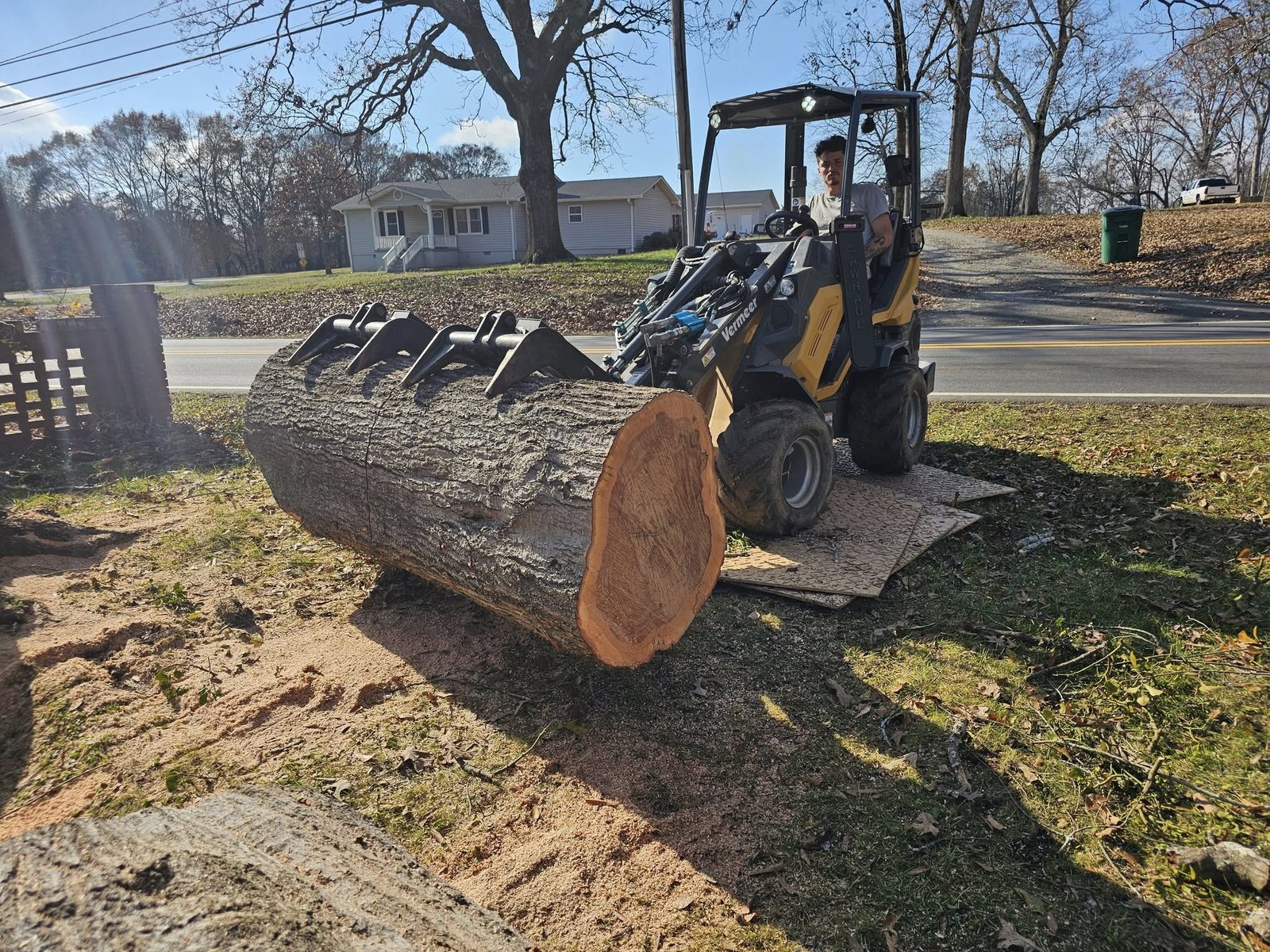
Notice that the lake-lot row is not about a different kind of tree. It reflects labor hours and equipment. A crew with a grapple-saw crane truck can lift sections over a house or off a slope, and a compact loader on ground mats can protect a lawn or soft ground while hauling out logs. Those tools are what make some lake-side jobs possible at all, and they are priced into the estimate.
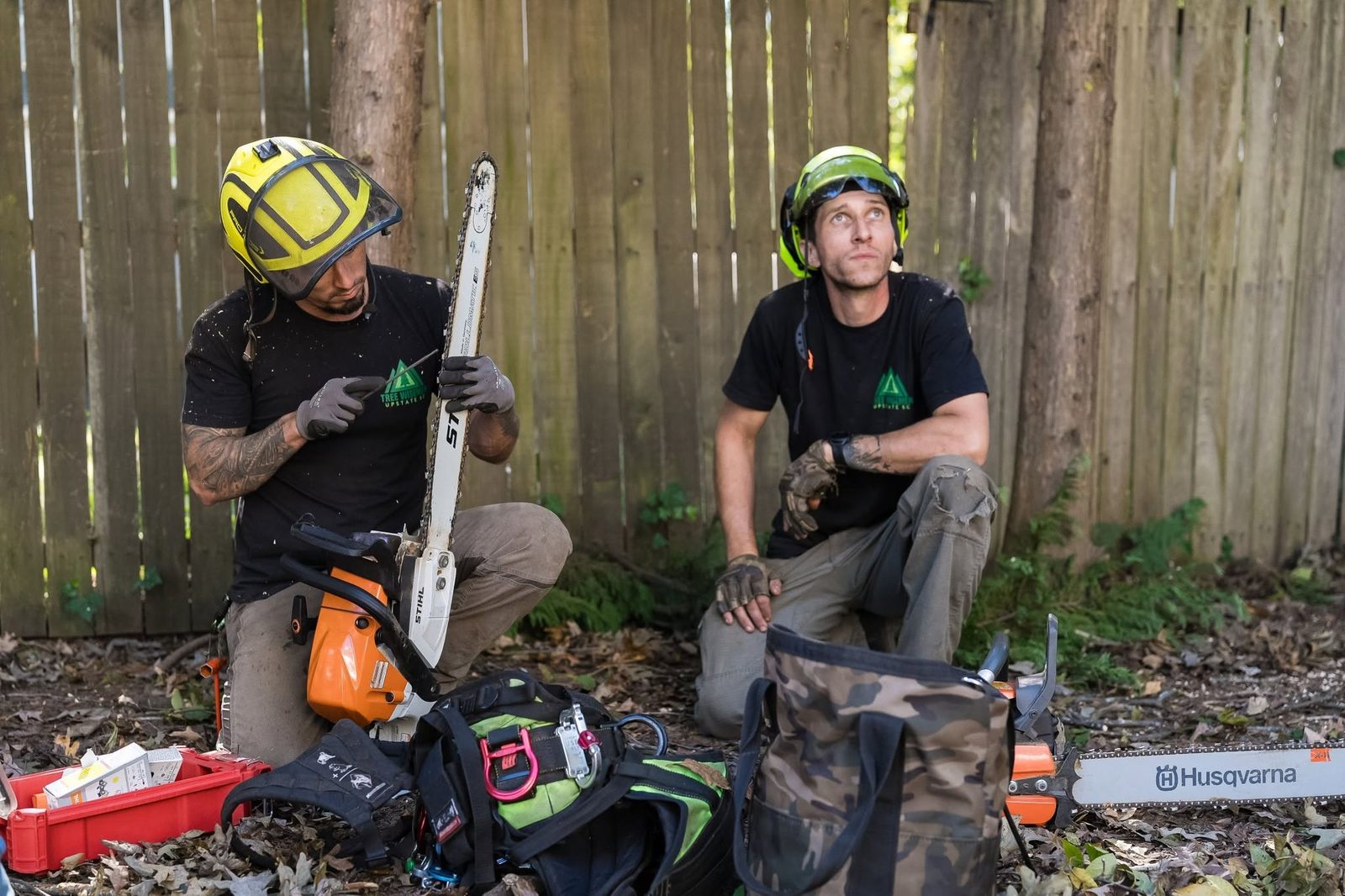
When two bids differ by a few hundred dollars, look at the equipment and the plan before the total. One crew may be climbing and hand-carrying every piece, while another is bringing a crane truck to shorten the day. A cheaper bid that skips cleanup, or assumes a clear drop zone that does not exist, can end up costing more after change orders.
Why lake lots add cost beyond the tree itself
Three things show up on lake-adjacent properties more often than in town. First, access: narrow lake roads, steep drives and gated or shared drives limit what trucks can reach. Second, targets: docks, boat lifts, retaining walls, decks and landscaping sit close to the drop zone, so the crew rigs pieces down instead of felling the whole tree. Third, rules and easements: some shoreline lots carry buffer, HOA or utility restrictions on what you can cut. We cannot tell you what applies to your parcel, so ask your HOA and whoever manages the shoreline before you book anything near the water's edge.
In town the extra cost tends to come from different places: overhead service drops, neighbors' fences, and tight lots where nothing can be dropped whole. A big pine over a roof in a small yard can cost as much as a lake-lot oak, for different reasons.
Ground conditions matter too. Soft, wet soil near the shoreline can rut under heavy equipment, which is why ground mats and a compact loader come into play, and why a job that is easy in a dry week can get slower after rain. If you have a view you want to keep, tell the estimator up front. Thinning or removing selected trees can open a view, but it changes the scope and the price.
Send photos if you can. You can text pictures of the tree, the approach and the area underneath to (415) 850-7584 and that often narrows the range before anyone drives out.
Power lines, utility locates and what to do before the saw starts
If a tree touches or leans into a service line, stop and call the utility. OSHA's 10-foot clearance rule binds workers rather than homeowners, but it is the right distance for anyone, and only workers trained as line-clearance tree trimmers under 29 CFR 1910.269 may work inside 10 feet of energized lines. OSHA's tree care safety page lays out the hazards crews face.
If the job includes grinding or any digging near the root zone, SC811 requires three full working days' notice before excavation, so call before the stump machine arrives. Stump work is priced separately from removal in most cases, and our stump grinding cost page shows what that adds.
Hauling logs and brush away costs more than leaving it, but burning is not a free alternative. South Carolina does not issue burn permits. Outside city or town limits, state law requires notifying the SC Forestry Commission before outdoor burning, and the details are on the fire and burning page. Land-clearing debris next to woods, brush or grassland also needs that notice and must follow SCDES Regulation 61-62.2.
On a lake lot, burning near the shoreline brings its own worries, with dry leaf litter, nearby houses and limited fire access on narrow roads. For many homeowners, paying for haul-off and chipping is the simpler path, and wood chips can often be left behind as mulch if you ask.
Storm damage, emergency pricing and checking a crew
Anderson County has 18 federally declared disaster events on record (2005-2026), and Hurricane Helene reached the Upstate in September 2024. Trees come down in saturated ground, and storm jobs often run toward the top of the band because the wood is under tension, lying across structures or tangled with lines. Watch the National Weather Service Greenville-Spartanburg forecast during wet spells so you can trim or remove a weak tree before it fails.
South Carolina has no state license for tree removal, trimming or stump grinding, so a license number is not what protects you. Ask any crew, including us, for a current certificate of insurance covering general liability and workers' compensation before work starts, then ask for references and photos of similar jobs. The SC Department of Insurance is the place to start with insurance questions. Repairs to a roof or structure after a tree strike are a licensed trade and should go to a qualified contractor.
Planning ahead is cheaper than emergency work. A tree that is leaning, shedding large dead limbs or sitting in standing water after storms is easier and safer to remove on a calm day than after it lands on a house or a boat lift.
Tree Wisemen is family owned, based in Easley and working the Upstate since 2020, with 24-hour storm response. We hold 4.9 stars from 71 Google reviews and a BBB A+ accreditation since 2023. Call or text (415) 850-7584 for a free estimate.
Keeping the quote fair
Whether you live in town or on the water, a few habits keep bids comparable:
- Ask what is included. Cleanup, wood haul-off, and stump grinding are often separate lines.
- Get the access plan in writing. A bid that assumes truck access on a lake lot may change once someone sees the slope.
- Compare against the table above. A number far outside the range deserves an explanation about the tree, the site or the equipment.
- Check species and health. Clemson's Home and Garden Information Center can help you judge whether a tree is declining or just stressed before you pay for removal.
If you have several trees to remove, say so at the estimate. Multiple trees on one visit can share setup time, and a crew can sequence the work so the easy trees do not wait on the hard one.
For the broader price picture, our general tree removal cost guide covers the Upstate as a whole.