Last town before the mountains, and the trees show it
Walhalla is the Oconee County seat, home to 4,199 people, and it sits 27 miles west of Easley right where the Upstate starts tilting toward the mountains. Drive out SC 28 or SC 183 and the lots change quickly: the ground pitches, the driveways get long, and the hardwoods behind the house are not the modest yard trees you see closer to Greenville. Tall oaks and poplars leaning over a roofline on a slope are a different job from the same species on flat ground.
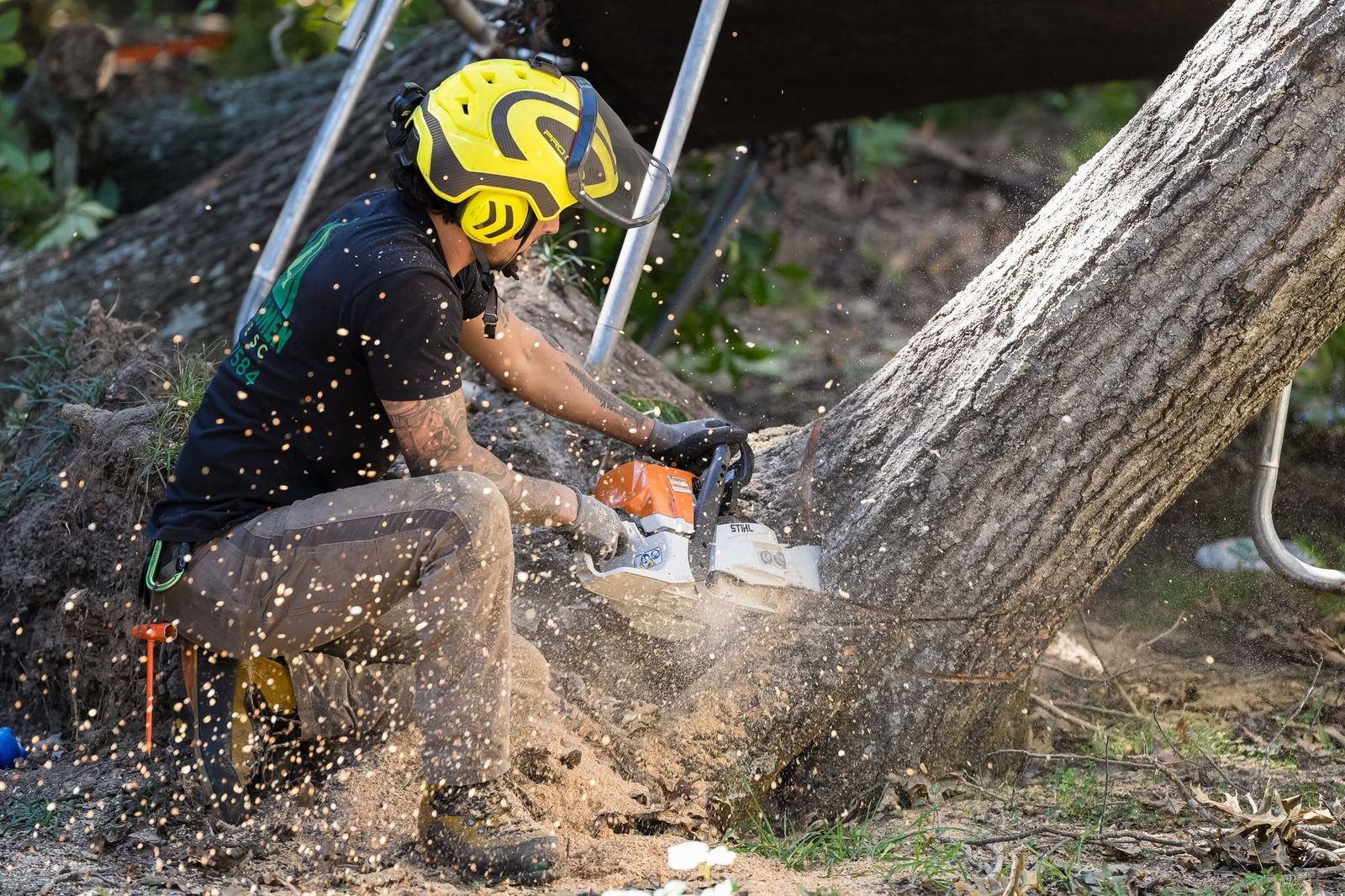
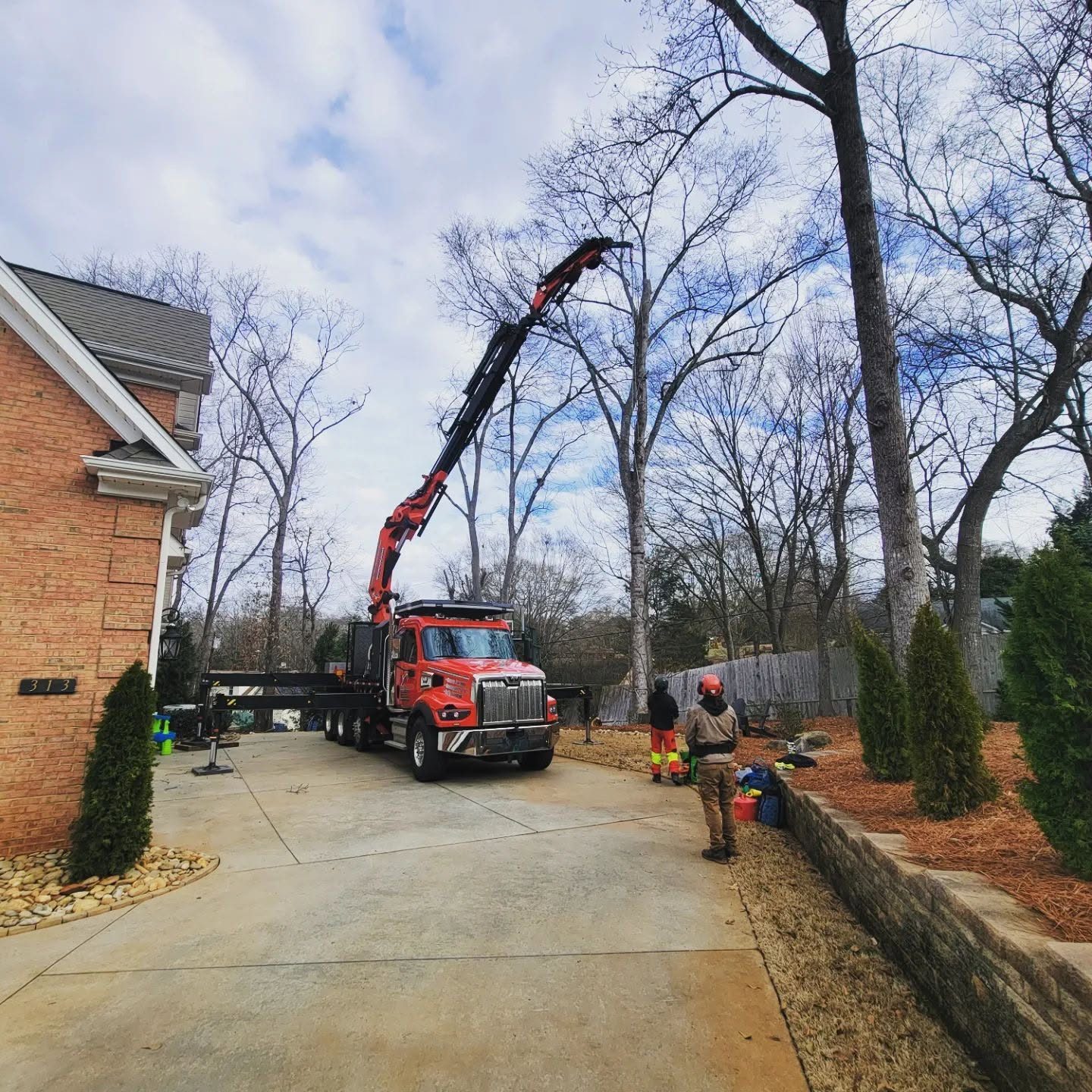
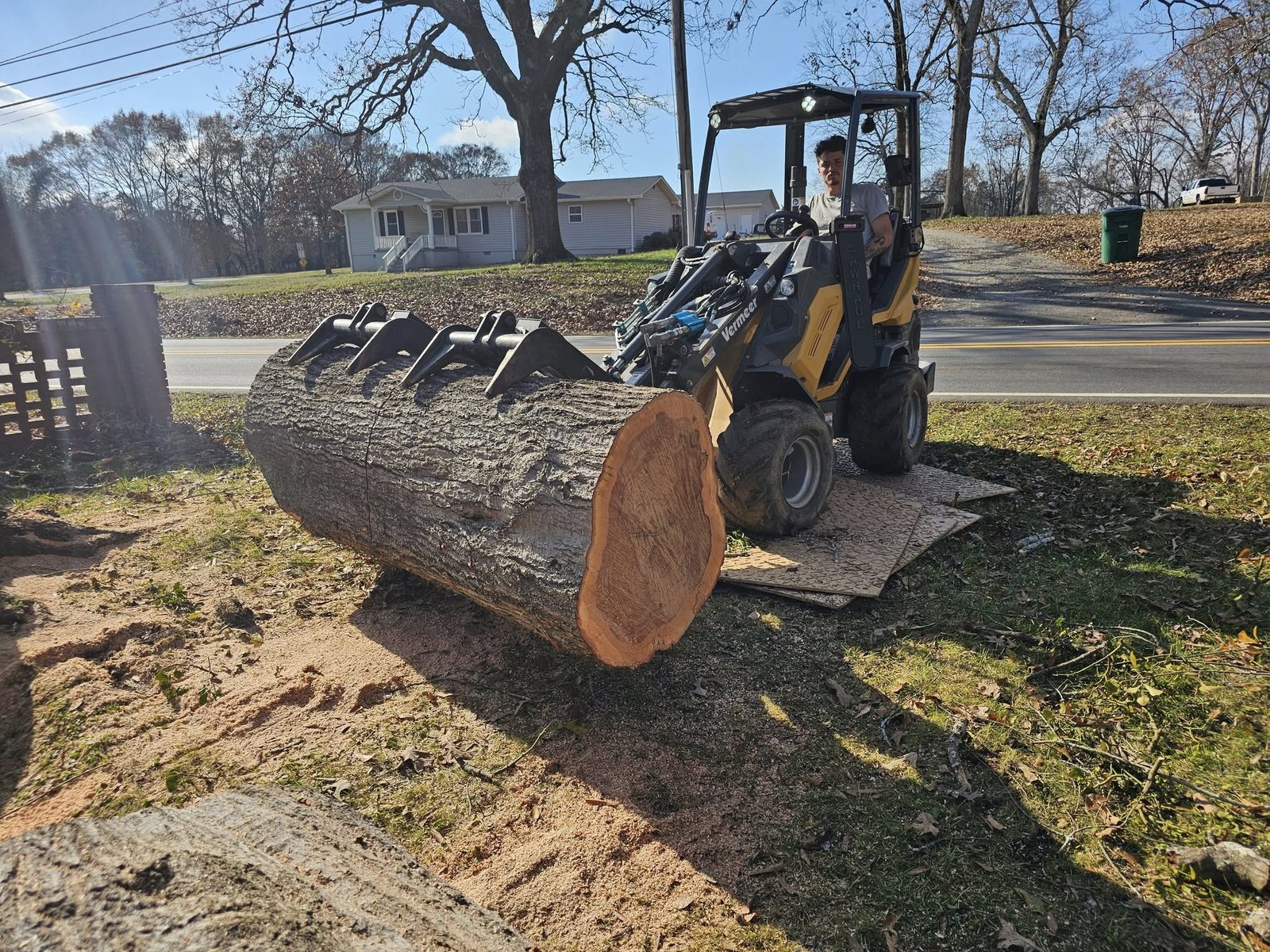
That difference drives almost everything about a quote. A crane truck can only reach what its mats and boom can reach, and a hillside lot sometimes puts the trunk where no truck can sit. When the rigging has to come down in sections and the debris has to travel a long way to a chipper, the hours add up. Our tree service overview explains how crews decide between climbing, crane work and the compact loader on ground mats.
Long driveways deserve their own mention. On many rural properties out here the house sits well back from the road, and the gravel or dirt drive may be narrow, steep or soft after rain. A chipper truck and a crane truck are heavy, and a crew has to judge whether the drive can carry them before anyone commits to a plan. Sometimes the answer is to stage equipment at the bottom of the grade and move the wood by hand and by loader, which is slower but protects the drive and the lawn. We would rather say so at the estimate than surprise you on the day of the job.
The other thing you notice around Walhalla is how close the trees stand to the house. Homes on sloped lots are often built into the hillside, with the uphill side sitting nearly level with the lower limbs of a big hardwood. That puts branches over the roof, over the gutters and sometimes over a deck. Removing or reducing those limbs is careful work, because a dropped section on a slope can roll or slide in a direction a flat-ground crew would never plan for.
What jobs cost on steep ground in Oconee County
The ranges below are typical for the Upstate, not a Tree Wisemen quote. Tree Wisemen does not publish prices; every job is priced after a free estimate within 50 miles of Easley. Where a Walhalla-area job lands inside each band depends on height, slope, access and what sits underneath the tree.
| Scope | Typical range | What pushes it higher |
|---|---|---|
| Small or open-yard removal | $300 to $800 | Few obstacles, truck access to the base |
| Large hardwood removal over a house or on a slope | $900 to $2,000 | Sectional rigging, crane time, long haul to the chipper |
| Trimming and pruning | $250 to $900 | Height, deadwood, limbs over the roof |
| Stump grinding | $100 to $400 | Diameter, roots on a grade, rocky ground |
For a fuller breakdown of how crews arrive at a number, read the tree removal cost guide. If a bid for a big overhanging hardwood comes in far under these figures, ask what is left out, because cleanup and haul-off are the usual omissions.
A few practical points help you read any estimate. First, ask whether the price includes hauling away the wood and chips or leaves them in the yard. Some homeowners with a wood stove or a garden want the chips and the cut rounds kept on site, and that can lower the figure. Second, ask whether stump grinding is part of the number or a separate line, since the stump is often the part people forget. Third, on a hillside job, ask how the crew plans to protect the lawn, the drive and any septic field or buried line, because that plan is a large part of what you are paying for.
Two trees of the same species and height can land far apart in price. A tall poplar standing in an open field behind the barn is a straightforward drop. The same poplar leaning toward a roofline, with a power service line crossing the yard and a slope under it, needs rigging, more hands and more time. That is why a photo or a quick phone description is only a starting point, and why the on-site visit matters.
Tall hardwoods, wet ground and mountain-edge weather
Oconee County weather arrives from the mountains side, and the storm record shows it: 21 federal disaster declarations touch this county (2004-2026). Hurricane Helene reached the Upstate in September 2024, and the lesson from that storm was how often saturated hillside soil lets a tall tree go whole, roots and all. A tree that looks sound can still be a risk after weeks of rain or a hard wind.
Watch the National Weather Service Greenville-Spartanburg forecasts before a big wind event, and walk your own lot afterward. Warning signs include a new lean, soil heaving at the base, hanging limbs, and cracks where a trunk splits. Tree Wisemen offers 24-hour storm response, and you can call or text (415) 850-7584 with photos so the crew can see what they are dealing with before arriving. If a tree has damaged the roof or structure, the repair itself is work for a licensed trade, separate from the tree removal.
On a slope, water is the quiet culprit. Runoff moves down the hillside and pools around the roots of trees on the lower side of a lot, and clay-heavy ground that stays wet can lose its grip on a big trunk long before the crown shows any trouble. If you see standing water around a large tree after rain, new cracks in the soil, or a trunk that seems to have shifted since last season, treat it as a reason to have someone look, not something to watch for another year.
Dead and dying limbs are another common find on older hardwoods above a house. Deadwood does not give much warning before it lets go, and a limb that breaks off high on a tall oak picks up real force by the time it reaches the roof. Pruning out dead wood and thinning end weight is often a better first step than full removal, and it is usually cheaper. A walk-around at the estimate will tell you whether the tree needs to come down or can be kept and maintained.
Power lines, utility locates and burning rules
Long rural drives in this part of the county often mean service lines crossing the yard. OSHA's tree care safety guidance sets a 10-foot rule that binds workers, not homeowners, but it is the right distance for anyone to keep. Only workers trained as line-clearance tree trimmers under 29 CFR 1910.269 may work inside 10 feet of energized lines. If a limb is touching a wire, stay clear and call the utility.
Before a stump or any ground work that involves digging, SC811 requires three full working days' notice. Stump work is usually shallow, but a call is cheap. See our stump grinding page for what a grinder does and does not reach.
Thinking of burning the brush instead of hauling it? South Carolina does not issue burn permits, but outside town limits state law requires notifying the SC Forestry Commission before you burn. Details are on the fire and burning page. Debris from land clearing next to woods or brush needs that notice and must follow SCDES Regulation 61-62.2. Many Walhalla-area homeowners find chipping and hauling simpler on a steep lot.
Burning on a hillside carries its own worry. Fire climbs a slope faster than it spreads across flat ground, and a pile left to smolder next to dry leaves and woods can get away from you. Wind coming over the ridges makes that worse. For most homeowners with a big hardwood down, a chipper and a haul-off is the safer and cleaner way to deal with the limbs.
Hiring a crew when no state license exists
South Carolina has no state license for tree removal, trimming or stump grinding, so the protection has to come from you. Ask any crew, including us, for a current certificate of insurance covering general liability and workers' compensation before work starts, and confirm it with the insurer. The SC Department of Insurance is a good starting point for questions about coverage. Then ask for references and photos of similar jobs, especially hillside removals.
Tree Wisemen is family owned, has worked the Upstate since 2020, and holds 4.9 stars from 71 Google reviews and a BBB A+ accreditation. Still, check the paperwork on every crew. For pruning questions, Clemson's Home and Garden Information Center is a reliable neutral source, and ISA's Trees Are Good explains what good pruning looks like.
On a steep lot, the photos of past work matter more than the sales pitch. Look for pictures that show the crew working on a slope, with ground protection down and wood being lowered in controlled sections rather than dropped. Ask how they would handle your specific tree, and notice whether they walk the whole property or just glance at the trunk. A good estimate on a Walhalla-area hillside usually involves looking at the fall zone, the drive, the lines overhead and the ground below, and the person giving it should be able to explain the plan in plain terms.